I Want More Lyrics — Lestat
I Want More Lyrics
Don't chastise me, I'm a child
Acting as a child does.
You ply me with lifeless dolls
When what I want is blood.
You took me from the streets to complete this union.
Do you expect some little saint kneeling for communion?
I want more! I want more!
Look at you, you disapprove, like two fussy mothers.
Who are you to criticize the habits of another.
Did I rock the family boat by dining on the help?
Aren't I just a little beast?
Well, I can't stop myself!
I want more! I want more!
I don't want their milk and honey
They can keep those fine herb teas.
I don't need their chocolate hot and sweet.
It's thick and red for me!
For everyone that comes along,
Knocking on this door.
Don't blame me - it's your fault
That I want more!
Louis
My darling, it's not your fault. It's Lestat's.
Lestat
My fault!?
Louis
You're not loving enough to her.
Lestat
I give her everything her black little heart desires, and still she does this!
CLAUDIA
Look at me, I'm so sweet.
I'm innocent and charming.
But all you see is some spoiled brat
A child so demanding.
Don't fuss so! You both know the rapture of the bite.
It's not monstrous!
It's just Claudia's healthy appetite!
And I want more! I want more!
Should I be the little miss
And while away the hours?
I think not, I'd rather hunt
Than cut up paper flowers.
Thanks to you the things I do verge on the obscene.
What a pair of hypocrites!
Well, this cat wants her cream!
I want more! I want more! I want more!
Lestat
You're too lenient!
Louis
You're too cold!
Lestat
She needs to be punished.
Louis
She needs love and kindness.
I'll wander through the streets at night
And find a charming couple.
Who'd fear that such an angel lost
Could find herself in trouble.
They can't resist my trembling lips
My eyes so filled with tears.
They rest my head upon their necks...
Oh, dear!
More!!
I want more! I want more!
I don't want their milk and honey.
They can keep those fine herb teas.
I don't need their chocolate hot and sweet.
Tt's thick and red for me!
For everyone that comes along,
Knocking on this door.
Don't blame me - it's your fault
That I want more!
I want more!
I want more! I want more!
I want more!
Song Overview
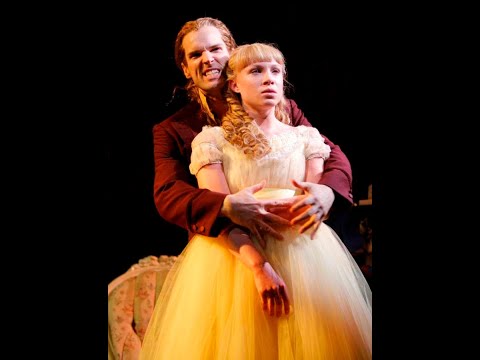
In the second act of the Broadway adaptation of Anne Rice's vampire saga, a deceptively angelic ten-year-old steps center stage and sinks her teeth into a star turn. "I Want More" is Claudia's calling card - a sly, swaggering demand set to Elton John's melodic theater writing and Bernie Taupin's character-driven text. On Broadway in 2006, Allison Fischer delivered it with a razor smile, Hugh Panaro's Lestat and Jim Stanek's Louis snapping back in spoken interjections as the household fractures. The tune became the show's breakout number, the one even skeptics grudgingly circled in their programs.
Review and Highlights
Quick summary
- Show-stopping Act II solo for Claudia - the eternally young vampire whose appetites outgrow her body.
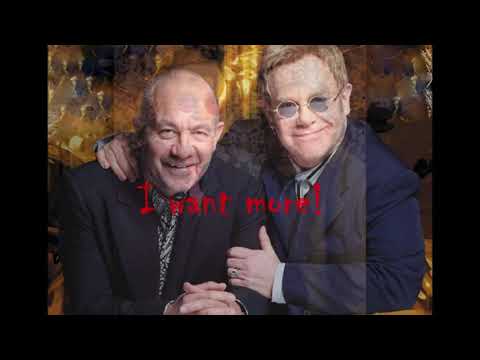
- Music by Elton John; lyrics by Bernie Taupin; book by Linda Woolverton; introduced in the 2005-2006 stage run.
- Performed on Broadway by Allison Fischer with spoken counters by Hugh Panaro (Lestat) and Jim Stanek (Louis).
- Studio cast recording was tracked for release but shelved; the number circulates via promotional audio and archival clips.
- Style blend: music hall snap meets pop-theatre drive, with a vampiric cabaret grin.
Creation History
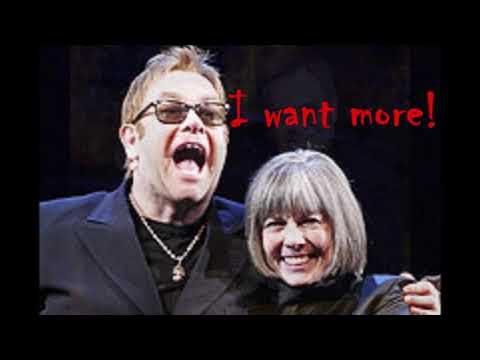
Elton John and Bernie Taupin took their long partnership into book-driven theater writing for this project. Taupin has said the shift from radio pop to narrative specificity required a new muscle: songs had to argue, advance plot, and reflect the singer's psychology in real time. "I Want More" arrived as a late-show ignition point, designed to clarify Claudia's hunger and force the family confrontation. That arc shows up in the score's structure: verse quips give way to a hook that keeps biting back, while short spoken lines from Lestat and Louis cut through the groove like sharp stage asides. The show's out-of-town tryout in San Francisco triggered extensive rewrites before Broadway; this number survived as one of the keepers because it told a clean, quick story and let the audience root for trouble.
As for recordings, a full original cast album was tracked with Mercury Records close to the Broadway closing. Plans shifted after the show shut its doors, leaving the soundtrack in limbo. Live clips, demo leaks, and circulating audio kept "I Want More" alive for fans, becoming a kind of proof that the material could kick even when the production around it stumbled. According to Playbill's coverage at the time, the album was slated, then delayed, then quietly put on ice. Reviewers often singled out Claudia's material as a bright spot - the place where the score's theatrical instincts felt most at home.
Why it hits
Claudia's number gives the show something it otherwise guards: wicked fun. The lyric is mischief in lace - jokes about "the help" and tea service - while the harmony nudges her from precocious kid to huntress. The accompaniment trots at a moderato tempo with a prowling bass pattern and crisp internal rhymes. Fischer's delivery sharpened the comic edge without sanding down the menace. The whole thing lands like a patter song that swallowed a torch song and grinned about it.
Key takeaways
- Character clarity: one song reframes Claudia not as victim but as agent.
- Pop-theater craft: clean hook, conversational verses, a vamp-friendly groove.
- Smart staging: intercut spoken lines make the family fight part of the rhythm.
- Legacy: even with the cast album stuck in the vault, this cut became the show's calling card.
Song Meaning and Annotations
Plot
Inside the New Orleans townhouse, a child with a century-old stare pleads her case. Claudia has tasted what the adults taste. She knows the speed of the hunt, the thrill of warm throats, the haze that follows. Yet she remains trapped in a body chosen for her. The song is a courtroom and a confession: she mocks the idea of dolls, skewers her guardians for hypocrisy, and names her desire without apology. Louis makes the case for tenderness. Lestat wants discipline. Claudia hears both and keeps walking toward the door.
Song Meaning
"I want more" is both literal and symbolic. Literal as in blood - the line between sustenance and lust blurs. Symbolic as in adulthood - agency, power, and the right to define appetite without asking permission. The number wrestles with the ugly truth at the center of Rice's mythos: immortality freezes you in place even as your wants grow. Claudia's body is a mask she never chose. The lyric flips Victorian manners into a weapon, trading tea for the thick red stuff, twisting polite society into a buffet. The mood is bright and cutting at once, like a parlor waltz with a knife under the napkin.
Annotations
"I want more"
Three words, a thesis. Repetition becomes percussion, not just emphasis. On stage it cues the orchestration to open up; in character terms, it turns a plea into a manifesto.
"milk and honey" vs. "thick and red"
Childhood sweets get swapped for the adult appetite. The allusion to milk and honey - a stock phrase for plenty - underlines how fully Claudia rejects human norms. The color shift sets the palette of the scene: warm tones, danger wrapped in comfort.
"Did I rob the family gold by dining on the help?"
The joke lands for the upper-crust setting. Claudia tweaks class codes while outing the household's dirty secret: they feed on labor as a matter of course. The rhyme snaps like a fan.
Spoken interjections from Louis and Lestat
These cutaways are more than staging devices. They frame Claudia's appetite as the couple's unsolved fight. Louis pleads for love; Lestat argues for control. The counterpoint pushes the song from solo to triangle, then back to Claudia for the final strike.
Genre and feel
Think pop-theatre with a bite: the tune leans on a steady two-and-four, clipped rhythmic diction, and a melody that sits high enough to flash a youthful sheen while leaving room for sly chest voice. There is a whiff of music hall in the way the punchlines ride the measure, and a dash of cabaret in the way the singer plays the room. The emotional arc is cunning rather than cathartic. No sobbing; just appetite getting sharper by the bar.
Instrumentation and staging
Typical Broadway pit colors the scene - reeds to curl around the vocal line, brass to punch the refrains, rhythm section to keep the trot. The orchestration keeps the texture nimble so Fischer's diction can do the comic work. When Louis and Lestat interject, the underscoring drops toward underscored recit, then ramps back for Claudia's exit line. It's a neat bit of musical dramaturgy that helps the plot jog forward without a scene change.
Key Facts
- Artist: Elton John, Allison Fischer, Hugh Panaro
- Featured: Jim Stanek (spoken as Louis)
- Composer: Elton John
- Lyricist: Bernie Taupin
- Producer: Guy Babylon, Matt Still (for the unreleased Broadway cast recording)
- Release Date: April 25, 2006 (Broadway opening; studio cast album tracked May 22, 2006, not released)
- Genre: Pop-theatre, musical drama
- Instruments: Broadway pit orchestra with rhythm section, woodwinds, brass, strings
- Label: Mercury Records (planned cast album)
- Mood: Arch, hungry, gleefully subversive
- Length: Approx. 4:15
- Track #: 17 on the Broadway sequence
- Language: English
- Album: Lestat the Musical
- Music style: Uptempo moderato with patter elements and cabaret inflection
- Poetic meter: Mixed; conversational verse against regular bar accents
Canonical Entities & Relations
- Elton John - composed music for the stage score Lestat.
- Bernie Taupin - wrote lyrics for the stage score Lestat.
- Linda Woolverton - wrote the book for the Broadway production.
- Allison Fischer - portrayed Claudia, introduced the solo on Broadway.
- Hugh Panaro - portrayed Lestat; appears in spoken lines in the number.
- Jim Stanek - portrayed Louis; appears in spoken lines in the number.
- Mercury Records - recorded the original Broadway cast album session.
- Palace Theatre, New York - Broadway venue for the production.
- Curran Theatre, San Francisco - pre-Broadway tryout venue.
Questions and Answers
- What part of the story does this number serve?
- It flips Claudia from ward to bellwether. Her appetite exposes a rift between her makers and propels the family toward betrayal.
- Why did audiences latch onto this cut even if they cooled on the show?
- It is tight, funny, and character-true. The hook lands, the verses crackle, and the stakes are clear. Even a harsh review cannot erase a song that knows exactly what it is.
- Who created the roles in New York?
- Allison Fischer played Claudia, Hugh Panaro played Lestat, and Jim Stanek played Louis in the Broadway company.
- Was an official single ever released?
- No single emerged. A full cast recording session took place late in the run, but the album never reached stores.
- How does the number relate to Anne Rice's themes?
- It distills the paradox of immortality without growth. Hunger evolves; bodies do not. Power and resentment sit in the same chair.
- What performance style works best for Claudia?
- Bright top notes with nimble diction, a hint of chest for bite, and a playful surface that slowly lets the menace show.
- Are there notable covers or adaptations?
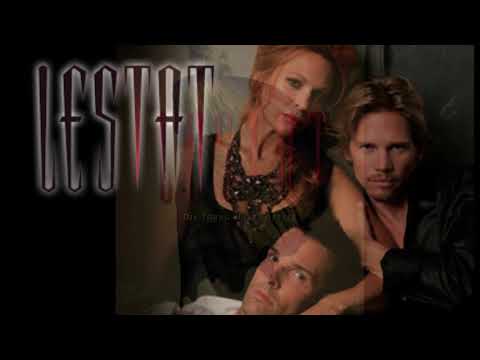
- Beyond regional and student productions, the most visible versions are live clips from the original run and fan edits that paired audio with imagery from screen adaptations of the saga.
- Why are Louis and Lestat speaking during her number?
- To keep the family dynamic alive inside the song. Their quick lines act like rebuttals, framing Claudia's case as both domestic and existential.
- What did contemporaneous press say about the musical?
- Major outlets were unkind to the production while often acknowledging select high points. Even skeptics recognized Claudia's material as one of the sharper tools in the kit.
- Was the score heavily revised from tryout to Broadway?
- Yes. The creative team reworked large portions between San Francisco and New York. This song survived with its function intact.
Awards and Chart Positions
The musical's brief Broadway run still netted several industry nods. While the song itself did not chart and received no stand-alone accolades, the production earned nominations in major theater circles. Carolee Carmello (Gabrielle) was cited by the Tony Awards and Drama Desk, and the costume design scored a Tony nod. The show closed after a short run, limiting any chart footprint. The number, however, remains the most cited selection when critics and fans look back at the score.
| Year | Award body | Category | Nominee | Result |
|---|---|---|---|---|
| 2006 | Tony Awards | Best Performance by a Featured Actress in a Musical | Carolee Carmello | Nominated |
| 2006 | Tony Awards | Best Costume Design of a Musical | Susan Hilferty | Nominated |
| 2006 | Drama Desk Awards | Outstanding Featured Actress in a Musical | Carolee Carmello | Nominated |
| 2006 | Outer Critics Circle | Outstanding Actor in a Musical | Hugh Panaro | Nominated |
How to Sing I Want More
Claudia's showpiece is a sprint in heels. The trick is to balance childlike sparkle with predator control - clean consonants, playful vowels, and a belt you can turn on for a half bar, then tuck away. Here is a working map for practice.
- Range & placement: Written for a young soprano with mix; sits largely in the upper middle voice with pops above, and quick dips for comic bite. Many singers carry a bright mix up to the mid E5 range; treat that as a ceiling you approach with airflow, not muscle.
- Tempo & key: Often performed around moderato near the mid 90s bpm; many charts place it in a minor tonality that flatters youthful brightness while keeping a shadow under the harmony.
- Diction: It is a lyric-first song. Shape consonants like you're tossing barbs at a dinner table. Keep vowels narrow on the hook so "more" does not spread.
- Breath: Plan two-bar phrases; sip air as if you were hiding it. The patter sections need tiny top-ups rather than deep resets.
- Flow & rhythm: Let the accompaniment be your metronome. Sit slightly ahead during the taunt lines, then settle back on the repeat of the hook.
- Accents: Punch the words that flip polite society into appetite - sweets vs. blood - without chewing them. The joke dies if you underline every line.
- Ensemble: If you have Louis and Lestat interjections, practice the handoffs like pickups in a jazz chart. Leave space; do not fight the underscoring.
- Mic craft: If amplified, keep the capsule just off-axis for the mix belt. Pull back a touch on the last repeat to avoid clipping the hook.
- Pitfalls: Overplaying the child voice. Aim for intelligence and charm, not caricature. The danger lives in what the audience reads between the lines.
Step-by-step practice plan
- Tempo: Start at ~85 bpm to lock patter clarity; inch toward ~95 once the tongue can keep up.
- Diction drills: Speak the verses in time. Add pitch on the third pass, keeping consonants identical.
- Breathing: Map silent sniffs before each punchline. Practice eight-bar cycles with no visible breath.
- Rhythm: Clap the backbeat through a full run; sing against your claps without losing placement.
- Accents & dynamics: Mark only three words per verse for extra attack. Everything else rides mezzo with a smug smile.
- Ensemble cues: Rehearse the spoken interruptions with the band so your last syllable lines up with their cue chords.
- Performance polish: Add a prop (a doll, a ribbon) to find physical timing, then remove it. The body memory will stay.
Additional Info
On Broadway, the show ran a short stretch before closing, but this cut became the souvenir people talked about on the sidewalk. According to NME magazine coverage across the years, John and Taupin have often stepped into theater with mixed box-office outcomes; here, the team brought a radio instinct for hooks to bear on character work, and you can hear it. As stated in the 2024 Rolling Stone's study of stage-to-pop crossovers, numbers that lock to a character with a clear desire curve tend to outlive their shows even when albums do not hit retail. That is what happened here. The album session existed, the production faltered, and Claudia still walked off with the scene. Anne Rice's own site later praised Fischer's turn, noting how the character's lack of compassion reads as chilling and captivating in equal measure - a fair take if you saw the way she laced the final repeat of the hook.
Sources: Playbill, Internet Broadway Database, The New Yorker, The Advocate, Wikipedia, Anne Rice official site.
Music video
Lestat Lyrics: Song List
- Act 1
- From the Dead
- Beautiful Boy
- In Paris
- The Thirst
- Right Before My Eyes
- Make Me As You Are
- To Live Like This
- The Crimson Kiss
- Right Before My Eyes (reprise)
- Act 2
- Welcome to the New World
- Embrace It
- I Want More
- I'll Never Have That Chance
- Sail Me Away
- To Kill Your Kind
- Embrace It (Reprise)
- After All This Time
- Finale