
Omar Sharif Lyrics
DinaOmar Sharif
[DINA]Umm Kulthum and Omar Sharif
Came floating on the jasmine wind
From the west, from the south
Honey in my ears
Spice in my mouth
Dark and thrilling
Strange and sweet
Cleopatra and the handsome thief
And they floated in on a jasmine wind
Umm Kulthum and Omar Sharif
And they floated in on a jasmine wind
Umm Kulthum and Omar Sharif
Friday evening, Omar Sharif
In black and white and blurry through tears
My mother and I would sit there in a trance
He was cool to the marrow, the pharaoh of romance
Sunday morning
Umm Kulthum
Her voice would fill our living room
The ship from Egypt always came
Sailing in on radio waves
And the jasmine wind, deep perfume
Umm Kulthum
And the living room becomes a garden
And the TV set becomes a fountain
And the music flows in the garden
And everything grows
Umm Kulthum and Omar Sharif
Came floating on a lemon leaf
Flying in on a jasmine wind
Umm Kulthum and Omar Sharif
And we dance with them on a jasmine scented wind
Umm Kulthum and Omar Sharif
Song Overview
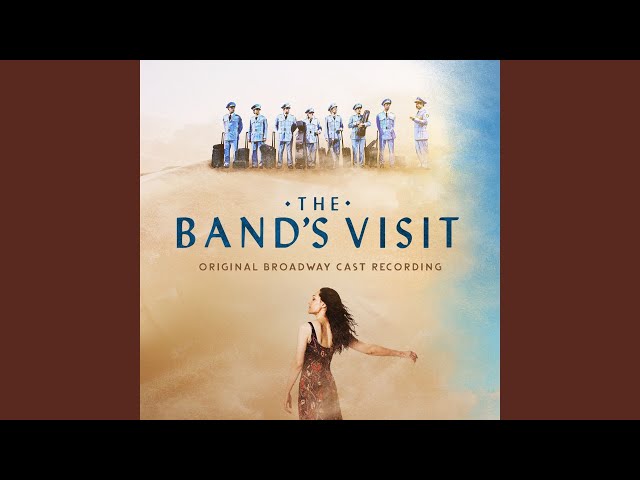
Omar Sharif is Dina's night song in The Band's Visit, the 2017 musical by David Yazbek and Itamar Moses. This is the number where her sarcasm drops, her memory opens, and the whole show seems to lean closer. She sings about the Arabic movies and radio broadcasts that lit up her childhood - especially the glamour of Omar Sharif and the voice of Umm Kulthum. In plain dramatic terms, it is a character ballad. In practice, it is much more than that. It is a song about longing shaped by culture, fantasy, and sound. It shows how music from far away can become part of a person's private life, almost like contraband tenderness.
Review and Highlights
This is the song that turns Dina from a dry wit into a fully open presence. David Yazbek said in Playbill that Katrina Lenk's take is "so intensely romantic yet so truthful," and that balance is exactly why the number lands. It never floats away into pure dream. Dina is remembering what Arabic culture meant to her as a girl in Israel - the thrill of voices on the radio, the cinema glow, the mystery of a larger world. The melody moves like a memory returning in waves. It does not rush. It hovers, circles, and pulls you in.
There is a sly dramatic payoff too. While Dina sings, Tewfiq becomes enchanted, and Yazbek notes that the audience does too. That is the scene's engine. A song about old movies becomes a live act of connection across distance, age, and national history. According to Vogue, this number was widely singled out as one of the production's standout moments, partly because it distilled the show's fascination with desire, stillness, and music as a shared language.
Key Takeaways:
- Dina reveals the private fantasy life beneath her deadpan exterior.
- The song links cinema, radio, memory, and desire.
- Katrina Lenk's performance was repeatedly highlighted in coverage of the show.
- The number deepens Dina and Tewfiq's bond without forcing the moment.
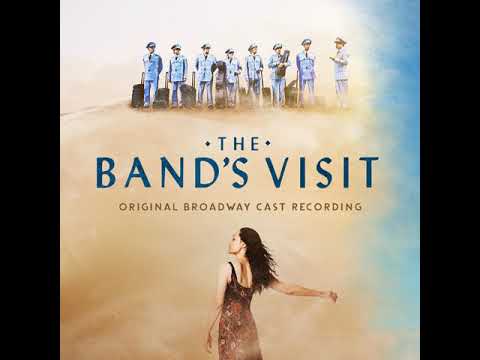
The Band's Visit (2017) - character ballad - diegetic-presentational. During Dina and Tewfiq's conversation, she recalls listening to Egyptian radio stars and watching Omar Sharif on screen as a girl, while Tewfiq recognizes the world she is describing. Why it matters: the song turns nostalgia into seduction, and private memory into a bridge between two people who would otherwise stay guarded.
Creation History
Omar Sharif was part of the musical's off-Broadway life before the Broadway transfer. Playbill's 2016 feature introducing the song described it as a tribute to Omar Sharif and Umm Kulthum in the Atlantic Theater staging, performed by Katrina Lenk. The Broadway production later opened at the Ethel Barrymore Theatre on November 9, 2017, and the original Broadway cast album was released on December 15, 2017 through Sh-K-Boom Records. In Yazbek's 2018 track-by-track notes, he focused less on compositional mechanics than on performance and dramatic truth, praising Lenk's musicianship and the way the song lets Dina's childhood memories of Arabic culture wash over the scene. That tells you something useful: this was written as revelation, not decoration.
Lyricist Analysis
Yazbek writes Dina here with a lyric voice quite different from her biting tone in Welcome to Nowhere. The diction loosens. The lines become sensuous and image-heavy. Names matter. Omar Sharif and Umm Kulthum are not just references. They are portals. The lyric keeps one foot in the ordinary and the other in fantasy, which suits Dina perfectly. She is not singing abstractly about desire. She is singing about what desire sounded like when she first heard it through media from somewhere else. The phrasing is patient and supple, built for breath and shimmer rather than belt-first attack. That makes the song feel intimate even at full theatrical scale.
Song Meaning and Annotations
Plot
Dina and Tewfiq sit together and talk about music. He explains that his orchestra specializes in classical Arab repertoire. That detail unlocks something in her. She starts remembering the Egyptian singers and film stars who drifted into her childhood through radio and television. The song is not a plot detour. It is the moment Dina stops being purely defensive and lets Tewfiq see the imaginative life she has carried all along.
Song Meaning
The meaning of Omar Sharif is bound up with longing at two levels. First, Dina longs for the glamour and mystery those names once represented. Second, she longs for the feeling of being carried beyond the limits of her own town and life. The song is about how art can enter a child early and stay there for years, half fantasy, half survival tool. In the scene, that memory becomes present tense. Tewfiq is no longer just a stranded visitor. He becomes someone who understands the world hidden inside her references.
Annotations
Umm Kulthum and Omar Sharif came floating on the jasmine wind.
The opening image does several jobs at once. It fuses star power with scent, breeze, and atmosphere. These are not names from a textbook. They arrive like weather, as if Arabic music and cinema were borne into Dina's childhood from another horizon.
As Dina sings about her childhood memories of the mysterious Arabic culture that came to her through the radio and TV, Tewfiq becomes deeply enchanted with her.
Yazbek's own note is crucial here. The song is not only memory. It is also action. Tewfiq hearing Dina remember his cultural world changes the chemistry between them.
The song pays tribute to iconic Egyptian artists Sharif and Umm Kulthum.
That early Playbill framing matters because the song works partly through real cultural touchstones. Omar Sharif brought Egyptian stardom into global cinema. Umm Kulthum stood for a towering vocal tradition that reached across the Arab world. Dina's memories are grounded in actual cultural icons, not invented placeholders.
Stylistically, the piece blends theater ballad writing with Arabic-flavored melodic turns and suspended phrasing. The rhythm does not drive hard. It lets the lines bloom and recede. The arc moves from recollection to attraction without a sharp break. Historically and culturally, the number matters because it treats Arab popular culture as intimate inheritance and shared memory, not as distant ornament. That is one reason the song still catches people off guard. It is gentle, but it is not small.
Fantasy and Recognition
Dina's memory is full of fantasy, but the scene does not mock that. Instead it shows fantasy becoming a route toward recognition. Through the song, she feels seen.
Names as Symbols
Omar Sharif stands for elegance, cinema, romance, and distance. Umm Kulthum stands for voice, longing, and deep musical memory. Put together, they form a whole private mythology.
Why the Song Works Onstage
The stillness is part of the power. Yazbek asked what the song's secret weapon was, then pointed to the musicians improvising from the heart. The performance feels lived, not merely executed.
Technical Information (Quick Facts)
- Song: Omar Sharif
- Artist: Katrina Lenk
- Featured: Original Broadway cast of The Band's Visit
- Composer: David Yazbek
- Producer: David Yazbek, Dean Sharenow
- Release Date: December 15, 2017
- Genre: Musical theater, cast recording, ballad
- Instruments: Voice, band ensemble, Arabic-colored instrumental texture
- Label: Sh-K-Boom Records
- Mood: Romantic, wistful, hypnotic
- Length: 3:24
- Track #: 7
- Language: English
- Album: The Band's Visit (Original Broadway Cast Recording)
- Music style: Intimate theater ballad with Arabic melodic color and suspended phrasing
- Poetic meter: Flexible lyric line shaped by long breaths and conversational rubato
Frequently Asked Questions
- Who sings Omar Sharif on the cast album?
- The original Broadway cast album credits Katrina Lenk on the track.
- What is the song about?
- Dina remembers the Arabic songs and films that shaped her imagination as a girl, especially the pull of Umm Kulthum and Omar Sharif.
- Why is the song important in the musical?
- It reveals Dina's inner life and deepens her connection with Tewfiq. Without it, their scenes would have less voltage.
- Is Omar Sharif the actor really part of the song's meaning?
- Yes. He functions as a real cultural icon and also as a symbol of glamour, distance, and romantic projection.
- Why is Umm Kulthum mentioned too?
- Because the song is not only about film-star glamour. It is also about music, voice, and the Arab cultural world Dina absorbed through radio and television.
- What did David Yazbek say about the number?
- In Playbill, he praised Katrina Lenk's rendering as intensely romantic and truthful, and explained that the scene shows Tewfiq becoming enchanted as Dina sings about childhood memories tied to Arabic culture.
- Was the song around before the Broadway transfer?
- Yes. A Playbill feature from December 2016 introduced the song during the Atlantic Theater run and described it as paying tribute to Omar Sharif and Umm Kulthum.
- How long is the track?
- Amazon Music lists the runtime at 3:24, and it appears as track 7 on the original Broadway cast album.
- Was it released as a standalone single?
- I did not find a reliable record of a separate single release. It is documented as part of the cast album issued on December 15, 2017.
- Why does the song still stand out years later?
- Because it is specific. It names real artists, trusts stillness, and lets memory do the dramatic work without forcing a giant climax.
Awards and Chart Positions
Omar Sharif was not promoted as a standalone chart single, so the measurable awards and chart data attach to the parent musical and its cast album.
| Year | Entity | Recognition | Result |
|---|---|---|---|
| 2018 | The Band's Visit | Tony Award - Best Original Score | Won |
| 2018 | The Band's Visit | Tony Award - Best Musical | Won |
| 2018 | The Band's Visit | Tony Award - Best Orchestrations | Won |
| 2019 | The Band's Visit (Original Broadway Cast Recording) | Grammy Award - Best Musical Theater Album | Won |
| 2017-2018 | The Band's Visit (Original Broadway Cast Recording) | Billboard Cast Albums | No. 3 peak |
| 2017-2018 | The Band's Visit (Original Broadway Cast Recording) | Top Current Album Sales | No. 62 peak |
Additional Info
- According to Playbill, Yazbek saw the song's power less as a compositional trick than as a live connection made by performers and players listening from the heart.
- Press coverage during the Atlantic Theater run already treated the number as a defining Dina moment, before the show even reached Broadway.
- Vogue singled the song out when discussing how the musical turned muted longing and cross-cultural memory into stage language.
- The song's references carry weight beyond Broadway shorthand. Omar Sharif and Umm Kulthum are not random exotic signposts. They are central to the memory world Dina is naming.
Key Contributors
| Entity | Relationship | Statement |
|---|---|---|
| David Yazbek | composed | David Yazbek wrote the music and lyrics for Omar Sharif. |
| Itamar Moses | wrote | Itamar Moses wrote the book for the musical adaptation. |
| Eran Kolirin | originated | Eran Kolirin wrote the screenplay for the source film. |
| Katrina Lenk | performed | Katrina Lenk performed the song on the original Broadway cast album and created Dina in the stage production. |
| Tony Shalhoub | scene partner | Tony Shalhoub's Tewfiq is the character Dina opens up to during the number. |
| Jamshied Sharifi | orchestrated | Jamshied Sharifi provided orchestrations for the score. |
| Dean Sharenow | produced | Dean Sharenow co-produced the original Broadway cast album. |
| Sh-K-Boom Records | released | Sh-K-Boom Records released the original Broadway cast recording. |
How to Sing Omar Sharif
There is enough public evidence from the cast recording and live performance clips to say this number is less about vocal force than control, line, and atmosphere. The challenge is staying intimate while carrying a long theatrical phrase. Katrina Lenk's approach, as documented in the cast album and performance coverage, leans on musicianship, patience, and text clarity rather than sheer volume.
- Start with tempo - Keep the pulse steady but unhurried. The song lives in suspension. Do not rush the line endings.
- Shape the diction - Treat the proper names with care. Omar Sharif and Umm Kulthum are anchors, not passing ornaments.
- Plan breathing - Mark breaths before the longest images so the phrases can bloom instead of breaking mid-thought.
- Protect the legato - The line should glide. Avoid over-accenting every syllable.
- Use light dynamic growth - Build by color and intensity, not by brute volume.
- Let the rubato stay modest - A little elasticity helps, but too much will blur the scene's truthfulness.
- Keep the acting inward - This is memory becoming speech, not a concert-showstopper planted downstage.
- Watch the climax - The number works when the biggest moment feels discovered, not pre-announced.
- Rehearse with accompaniment - Because the scene depends on shared listening, practice with piano or track, not only a cappella.
- Avoid common pitfalls - Do not oversing the romance, flatten the names, or turn the song into generic yearning. Specificity is the whole point.
Sources
Data verified via Playbill track-by-track notes and the 2016 song feature, Apple Music and Amazon Music listings, IBDB production records, Grammy records, Tony Awards records, and critical coverage discussing the song's place in the musical.