Think How It's Gonna Be Lyrics — Applause
Think How It's Gonna Be Lyrics
Dry your pretty eyes and let me have a smile think how
its gonna be when were together again
i dont wanna go but planes
come back you know think how
its gonna be when were together again
OHHHHHHHHHH
we will take A LONG LONG WALK
AND HONEY YOU KNOW WERE WE WILL GO SO THINK HOWS
ITS GONNA BE WHEN WERE TOGETHER
again! HE KISSES HER BUT YOU KNOW
I NEED TO GO SO MAKE PRETEND
ITS ME AND YOU AND YOU WILL LOVE IT WHEN WERE TOGETHER
Song Overview
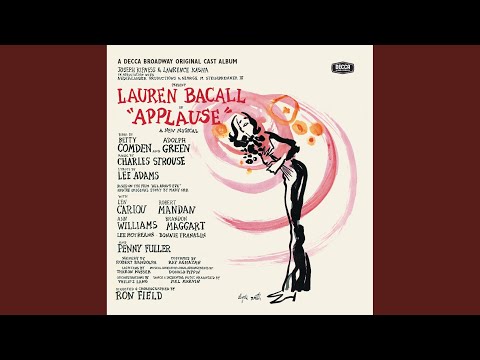
Review and Highlights
Quick summary
- What it is: A farewell ballad from the 1970 Broadway musical Applause, written as a calm counterweight to the dressing-room frenzy that comes right before it.
- Who carries the scene: Bill Sampson (performed on the original cast recording by Len Cariou), speaking to Margo Channing as he heads off to a film job.
- Where it sits: Act 1, after the crowd thins and the room finally lets the private truth leak in.
- Why it hits: It is not a grand speech. It is a practical goodbye dressed in soft promises and stage-door tenderness.
Applause (1970) - stage musical - diegetic. In the dressing room, Margo tries to keep Bill close, but he has to leave for Rome to direct a movie. The song matters because it turns the show from bright public adoration to the quieter cost of that lifestyle - the goodbyes you learn to make quickly, because the curtain keeps rising.
This is the kind of Broadway ballad that pretends it is not trying. No fireworks, no big belt-showdown. The writing leans on reassurance, the way someone talks when they do not want a scene, but also do not want to lie. Bill is steady, almost stubbornly gentle. Margo is the star, yet in this moment she cannot control anything except her face.
The melody sits comfortably, almost conversational, which is exactly the trick. It lets the lyric do its job: turn separation into a plan. Think of it as a love song aimed at the calendar. Even the title feels like a stage manager note: hold on, we will pick this up later.
- Key takeaway: The ballad gives Bill weight - he is not just a romantic interest, he is the one adult in the room.
- Key takeaway: It sets up the show’s central tension: fame creates crowds, and crowds create distance.
- Key takeaway: The lyric reads like comfort, but it also reads like a boundary.
Creation History
Applause opened on Broadway on March 30, 1970 at the Palace Theatre, with music by Charles Strouse and lyrics by Lee Adams, and the song list places this number in Act 1 for Bill Sampson. The original cast recording documents Len Cariou’s performance and became the baseline reference for later revivals and staged concerts. On the pop side, the song crossed the footlights fast: Tony Bennett released a studio version as a 1970 Columbia single, and trade coverage in Billboard framed it as a polished ballad pick from the new show.
Song Meaning and Annotations
Plot
In the musical’s Act 1 flashback structure, Margo’s opening-night dressing room is crowded with admirers, including Eve, who is already studying the room. When Margo finally gets a moment alone with Bill, she tries to pull him into her orbit. Bill chooses the job and the departure, and the scene becomes a private negotiation: love versus momentum. The song is the goodbye that keeps the peace, at least on the surface.
Song Meaning
The message is simple and not simple at the same time: do not panic, we will be fine, picture the reunion. The subtext is tougher. Bill is asking Margo to accept a reality where her star life does not automatically set the schedule. Margo, for all her power, has to practice being left. The mood lands between warmth and restraint, like someone holding your hand while already reaching for the door.
Annotations
-
"Bill firmly but lovingly tells her goodbye."
The writing makes the tenderness active. He does not drift out. He chooses the exit, and the lyric softens that choice so it will not bruise as much.
-
"Dry your pretty eyes and let me have a smile."
The opening line is both caring and slightly bossy, which feels real for a couple that knows each other well. It is comfort, but it is also stage direction: keep it together.
-
"Ballad beauty from the Tony winning show."
Trade reviews clocked what the number is doing: a classic, singable theater ballad that can live outside the plot. That portability is why it attracted a pop cover so quickly.
Rhythm and style
Compared to the fast ensemble writing elsewhere in the score, this one eases back into a steady pulse. It is Broadway ballad craft with a pop-leaning plainness. No fancy maze of internal rhymes - just clean reassurance over a melody that stays in reach.
Symbols and touchpoints
The central symbol is travel as proof of ambition. Planes, cities, schedules - the romance is filtered through logistics. That fits a show built from All About Eve DNA: careers are seductive, and they demand payment. As stated in Billboard’s 1970 singles coverage, the song was already being marketed as a standalone emotional piece, not just a scene.
Technical Information (Quick Facts)
- Song: Think How It's Gonna Be
- Artist: Len Cariou
- Featured: Original Broadway Cast (Bill Sampson role)
- Composer: Charles Strouse
- Producer: Thomas Z. Shepard (cast recording)
- Release Date: April 1970
- Genre: Musical theater, show tune
- Instruments: Orchestra, lead vocal
- Label: ABC Records (original cast LP issue)
- Mood: Warm, steady, bittersweet
- Length: 2:18
- Track #: 3 (common cast-album sequencing)
- Language: English
- Album (if any): Applause (Original Broadway Cast Recording)
- Music style: Mid-tempo Broadway ballad with pop-friendly phrasing
- Poetic meter: Mixed stress with conversational phrasing
Frequently Asked Questions
- Who sings the song in the story?
- Bill Sampson sings it to Margo Channing as he leaves for a directing job, with the moment framed as a gentle but firm goodbye.
- Who performs it on the original cast recording?
- Len Cariou performs the cast-album version associated with the Bill Sampson role.
- What is the scene right before it?
- The show has just thrown you into a noisy opening-night dressing-room crowd, so the ballad lands like the door finally closing and the truth getting quieter.
- Is it a solo or a duet?
- It is staged as Bill’s number, sung to Margo. Some references describe it as Bill to Margo, and performance histories can stage the moment with Margo reacting closely rather than singing long passages.
- Why does the lyric focus on future reunion?
- Because it is conflict management. Bill is choosing the job, and the promise of "together again" is how he makes that choice feel survivable.
- Did the song have life outside the theater?
- Yes. Tony Bennett recorded it in 1970 and issued it on Columbia singles and on his album Tony Bennett's Something.
- What key and tempo are commonly published for singers?
- Common lead-sheet listings put it in G major at a moderate tempo, with a metronome marking around 108.
- What vocal range should a singer expect?
- A widely circulated lead-sheet range sits around B3 to E5, which keeps it accessible while still offering a few lifted moments at the top.
- Does the song connect to the show’s larger theme?
- It does. Applause is about how a spotlight reshapes relationships, and this number shows that reshaping in plain, domestic language.
Awards and Chart Positions
The song’s prestige mostly rides on the show it serves. Applause won the 1970 Tony Award for Best Musical, and the original Broadway production also won Tonys for Lauren Bacall (leading actress) and for Ron Field (direction and choreography). That awards haul helps explain why the score was quickly mined for outside recordings.
For a notable cover, Tony Bennett released a studio version in 1970 on Columbia as a 45 single pairing, and Billboard’s singles pages described it as a high-grade ballad pick from the Tony-winning production. Reliable chart peak data for the single is not consistently documented across public discographies, so it is best treated as a well-publicized release rather than a confirmed chart hit.
| Year | Category | Item | Note |
|---|---|---|---|
| 1970 | Award | Applause | Tony Award - Best Musical (won) |
| 1970 | Award | Applause | Tony Awards - Lauren Bacall (won), Ron Field direction and choreography (won) |
| 1970 | Notable release | Tony Bennett single | Columbia 45 issue documented in discographies and trade listings |
Additional Info
I like how the number quietly does two jobs at once. It gives Bill a full human shape, and it gives Margo a crack in the armor without making her beg. That is hard to write without sliding into melodrama, and Strouse and Adams keep it clean.
The song also became a small standard for Strouse fans outside theater circles. A 2008 concert review of a City Center Encores staging lists it as Bill’s featured moment, and a jazz press recap from a Lincoln Center salute points out how naturally it sits in a cabaret setting - proof that the melody can survive without the plot scaffolding. According to All About Jazz, the tune was singled out in a Strouse tribute lineup as one of the pieces that still lands on memory alone.
Key Contributors
| Entity | Type | Relationship (S-V-O) |
|---|---|---|
| Charles Strouse | Person | Charles Strouse composed the music for the song. |
| Lee Adams | Person | Lee Adams wrote the lyrics for the song. |
| Len Cariou | Person | Len Cariou performed Bill Sampson on the original cast recording. |
| Betty Comden | Person | Betty Comden co-wrote the book of Applause. |
| Adolph Green | Person | Adolph Green co-wrote the book of Applause. |
| Ron Field | Person | Ron Field directed and choreographed the original Broadway production. |
| ABC Records | Organization | ABC Records issued the original cast LP. |
| Columbia Records | Organization | Columbia Records released Tony Bennett's single cover in 1970. |
| Palace Theatre | Venue | The Palace Theatre hosted the original Broadway opening run. |
| Applause | Work | Applause contains the song in Act 1 as Bill's goodbye number. |
Sources
Sources: IBDB production page and song list, Applause musical encyclopedia entry, Musicnotes lead sheet listing, Billboard (May 9, 1970) single review page, Discogs Tony Bennett single entry, CurtainUp Encores review, All About Jazz Strouse tribute recap, YouTube audio upload metadata
How to Sing Think How It's Gonna Be
Published lead sheets commonly place the song in G major at a moderate tempo, with a metronome marking around q = 108. A frequently listed vocal range is B3 to E5, which means the job is less about extreme notes and more about control - keeping the line supported while the emotion stays conversational.
- Tempo: Start under tempo. Practice at 96 first, then move toward 108 once the phrasing feels settled and you are not rushing the consonants.
- Diction: Keep the text crisp but unforced. The lyric reads like reassurance, so over-articulation can make it sound like a lecture.
- Breathing: Plan breaths around the long reassurance lines. Take a low, quiet breath before the start of each main thought, not mid-thought.
- Flow and rhythm: Let the pulse carry you, but do not march. Think of it as walking someone to the door: steady steps, no sprinting.
- Accents: Lean slightly on words that imply time and return - "when" and "again" moments tend to be the emotional hinges.
- Ensemble and doubles: If you are staging it, allow the other character to react physically instead of adding extra vocal weight. The power is in restraint.
- Mic and placement: A closer, warmer tone suits this number. If amplified, back off on volume and let intimacy do the work.
- Pitfalls: The common mistake is to oversell the sentiment. Keep it truthful. The song is persuasive because it sounds like normal speech that learned to sing.