The Best Night of My Life Lyrics — Applause
The Best Night of My Life Lyrics
Is here, is now,
knowing you has got to be the greatest thing that ever happened to me
If I could freeze this moment,
and take it home with me,
I would, I would, but time goes by
And oh,
I know that I never can live this moment again, this moment again
The best night of my life,
Don't go, don't go
There's no way to say, "Thank you"
It wouldn't come out right
But, thank you for the best night of my life
Song Overview
Review and Highlights
Quick summary
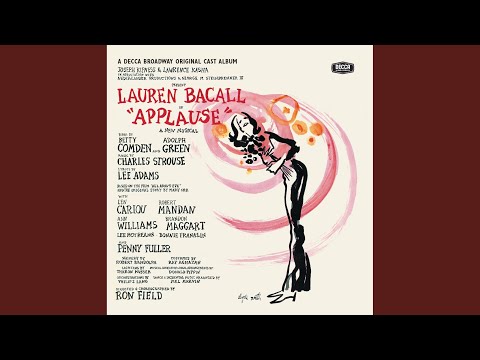
- What it is: A compact thank-you ballad from Applause (1970), written to sound like a confession you blurt out before the door clicks shut.
- Who sings it: Eve Harrington, performed on the original cast recording by Penny Fuller.
- Where it appears: Act 1, right after the night out in Greenwich Village, back at Margo Channing's place.
- What makes it different: It is not a belt number. It is a soft trap set with a smile, the kind of gratitude that arrives with a tiny hook inside.
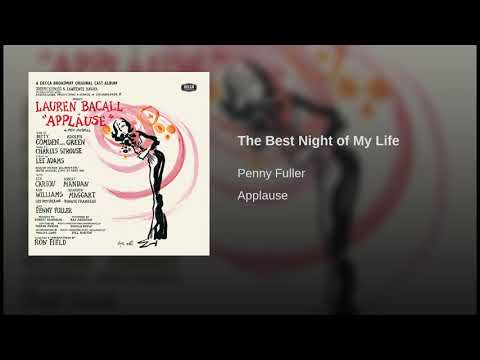
Applause (1970) - stage musical - diegetic. After Margo, Duane, and Eve come home from the club, Eve labels the evening as life-changing. It matters because it is the first time the show lets Eve speak in pure warmth while the audience can still feel the gears turning.
The song works because it is small. It does not try to win the room with technique. It tries to win it with timing. Strouse and Adams keep the melodic line simple and direct, like Eve is learning how to sound sincere in real time. That simplicity is the mask, and the mask is the point.
It is also a clever pause in the score. You get the bustle, the jokes, the nightlife, and then this quiet little candle. The harmony feels like a slow exhale, and Eve uses that calm to turn gratitude into intimacy. The lyric is polite, but the subtext is personal: now you know me, now you will keep me.
- Key takeaway: Eve is not selling ambition here, she is selling closeness.
- Key takeaway: The melody stays conversational so the words can land like a direct look.
- Key takeaway: The scene gives Margo a reason to trust, which makes the later betrayal sting harder.
Creation History
Applause opened on Broadway on March 30, 1970, and the published full score labels this as No. 5 with a tempo direction of "Slowly" at the top of the number. The song was issued in sheet-music form in 1970 by Edwin H. Morris and Company, and the original cast recording preserved Penny Fuller's performance as the defining reference. As stated in Concord Theatricals licensing materials, the song sits immediately after the club sequence, functioning as a narrative hinge between the night's fun and the show's sharper psychological turn.
Song Meaning and Annotations
Plot
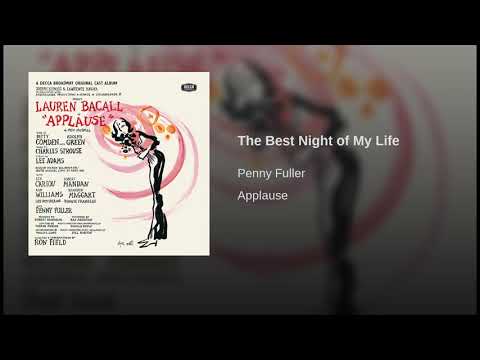
The musical frames its story as a flashback from an awards moment. In Act 1, Margo's dressing room is packed, Eve is welcomed in, and Bill leaves for a film job. Margo cannot bear the party alone and drags Duane and Eve out to a Greenwich Village club. When the night winds down and they return home, Eve speaks up with a burst of heartfelt thanks. The song is that burst, and it lands right before Margo turns inward and looks at her own younger image in "Who's That Girl?"
Song Meaning
On the surface, it is gratitude: Eve is overwhelmed and wants Margo to understand what the evening meant. Under that surface, it is bonding by language. Eve uses big, bright phrases to create a shared memory, then tries to freeze it so she can keep her place in Margo's life. The mood is tender, but the function is strategic. Eve is building the story she will later use as proof that she belongs.
Annotations
-
"The best night of my life is here, is now."
The phrasing sounds like a toast, but it is also a claim. Eve is declaring ownership of the moment, and by extension, of the person who provided it.
-
"If I could freeze this moment and take it home with me."
This is the tell. It is not only happiness, it is hunger. The lyric turns memory into a collectible, and that fits Eve's pattern in the story: she collects access.
-
"There's no way to say thank you, it wouldn't come out right."
A smart bit of self-protection. By admitting she cannot express it, she makes any awkwardness seem authentic. It is a performer move, delivered as innocence.
Rhythm and arrangement
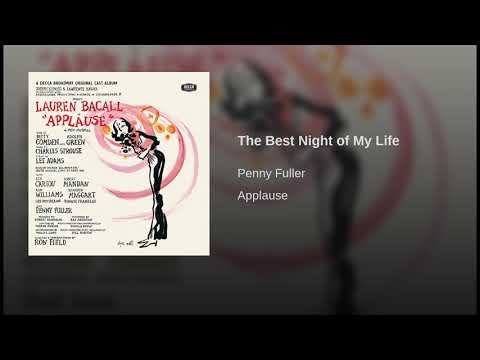
The number is marked "Slowly" in the score, and that tempo choice changes everything. The line has space to breathe, which lets Eve lean into natural speech rhythms. Orchestration touches like delicate keyboard color and light accompaniment keep the focus on the lyric, not the volume.
Emotional arc
It begins as a simple statement of joy, then tightens into something more urgent. The last lines carry a faint edge of fear: do not leave, do not end the night, do not let this closeness evaporate. That turn is the emotional engine of the scene. Eve is not only thankful. She is attaching.
Cultural touchpoints
The show has been discussed for how it frames queer nightlife as a space that the straight star visits for release, then retreats from. One academic survey of LGBTQ plus representation points to this moment as part of the "night out" framing that can read like a tourist lens, even when the scene is played warmly.
Technical Information (Quick Facts)
- Song: The Best Night of My Life
- Artist: Penny Fuller
- Featured: Original Broadway Cast (Eve Harrington role)
- Composer: Charles Strouse
- Producer: Thomas Z. Shepard (cast recording)
- Release Date: April 1970
- Genre: Musical theater, show tune
- Instruments: Orchestra, lead vocal
- Label: ABC Records (original cast LP issue)
- Mood: Tender, bright, slightly possessive
- Length: 1:45
- Track #: 5
- Language: English
- Album (if any): Applause (Original Broadway Cast Recording)
- Music style: Intimate Broadway ballad with direct phrasing
- Poetic meter: Mixed stress, speech-led lines
Frequently Asked Questions
- Who sings the song in Applause?
- Eve Harrington sings it, thanking Margo after the night out, and the original cast recording features Penny Fuller.
- Where does it land in Act 1?
- It comes right after the Greenwich Village club sequence, back at Margo's home, before "Who's That Girl?" shifts the spotlight to Margo's fears about age.
- Is it a love song?
- Not in the romantic sense. It is devotion aimed at access, a gratitude speech that doubles as a request to stay close.
- What is the main idea behind the lyric?
- Eve tries to turn a single evening into a permanent bond, naming it as the peak moment of her life so it cannot be dismissed as casual.
- Does the score specify the feel?
- Yes. The published score marks the number "Slowly," reinforcing the intimate, conversational delivery.
- Did it appear in the 1973 television adaptation?
- The TV film includes the score and lists the song among its featured numbers in standard references for the adaptation.
- Is there a reprise?
- Yes. Licensing materials for the show list a reprise of the number later in the running order.
- Why do performers like it?
- It is short, dramatic, and clear. You can play it as pure sweetness or let a faint edge show, and both readings fit the story.
- What makes it a turning-point song?
- Because it is the first time Eve puts emotional weight on the relationship in a way Margo can hardly refuse.
Awards and Chart Positions
There is no consistent evidence that this song was pushed as a standalone pop single with a documented chart run. Its public profile comes from the success of Applause itself, which won the 1970 Tony Award for Best Musical and delivered a Tony-winning lead performance for Lauren Bacall. The cast recording kept the number in circulation through reissues, and it is still singled out in program notes and anniversary concerts as a key Eve moment.
| Year | Category | Item | Result |
|---|---|---|---|
| 1970 | Tony Awards | Applause | Best Musical (won) |
| 1970 | Tony Awards | Lauren Bacall | Best Actress in a Musical (won) |
| 1970 | Publication | The Best Night of My Life | Sheet music issued by Edwin H. Morris and Company |
Additional Info
The best part of the writing is how it makes sincerity feel performative without making it fake. Eve is a young actress, and the song lets her rehearse gratitude like a scene partner. When she says she wants to freeze the moment, it is sweet, but it is also a warning label that only becomes readable later.
The number has a quiet afterlife in concert settings. A 54 Below event announcement for a cast reunion frames it as one of the songs audiences still expect to hear when original stars revisit the score. That tells you what kind of theater song it is: not a showstopper, but a scene you remember.
Key Contributors
| Entity | Type | Relationship (S-V-O) |
|---|---|---|
| Penny Fuller | Person | Penny Fuller originated Eve Harrington on the cast recording for the song. |
| Charles Strouse | Person | Charles Strouse composed the music. |
| Lee Adams | Person | Lee Adams wrote the lyrics. |
| Thomas Z. Shepard | Person | Thomas Z. Shepard produced the original cast recording. |
| Edwin H. Morris and Company | Organization | Edwin H. Morris and Company issued the 1970 sheet music. |
| ABC Records | Organization | ABC Records released the original cast album. |
| Concord Theatricals | Organization | Concord Theatricals lists the song and its reprise in licensing materials. |
| Applause | Work | Applause places the song in Act 1 for Eve after the nightclub sequence. |
Sources
Sources: Applause song list and plot summary reference, Concord Theatricals song list and synopsis, full score PDF (number header and tempo marking), National Library of Australia catalog entry for 1970 sheet music, Apple Music Classical track listing, 54 Below event announcement, 1973 TV film reference page
How to Sing The Best Night of My Life
The score marks the number Slowly and opens with a four-sharp key signature, often treated as an E-major center in performance. A common published range note for this song is roughly C4 to F5, which keeps it friendly for many voices, but demands control in the middle where the lyric needs to sound spoken, not sung at.
- Tempo: Pick a slow pulse that still moves. If it drags, the gratitude turns syrupy. If it rushes, Eve sounds calculating.
- Diction: Aim for clean consonants without hard edges. This character is trying to sound open, so soften the starts of phrases.
- Breathing: Take quiet breaths before the long "freeze this moment" thoughts. Do not chop the sentence in half. Let it feel like one continuous confession.
- Flow and rhythm: Let the line sit on the beat, then lean slightly forward when the lyric gets more urgent near the end.
- Accents: Highlight the time words gently: "here," "now," "moment," "again." Those are the anchors of the character's attempt to hold the night in place.
- Mic and placement: If amplified, sing closer and lighter. The song plays best when it feels like it is meant for one person, not the balcony.
- Pitfalls: The biggest mistake is playing it as pure innocence with no thought behind it. Give Eve warmth, then let a faint need show underneath.
- Practice materials: Speak the lyric as a monologue first. Then sing it on a neutral vowel to smooth the legato. Finally, put the consonants back in while keeping the breath line continuous.