But Alive Lyrics — Applause
But Alive Lyrics
I feel happy, teary, and manic,
chaeted on by peter jane austin
Thats the the thing Im ALIVE I bitchty hey fuck you hey but thats ok your ALIVE
this girl has a strumption felling
i am a million peoplke every single is really im a millon smoker im ALIVE
Boys:
She will stand up on the stage alright i hope you no She ALIVE
Boys:
Shes Alive
WOO
Margo:
I am a
Million different
Fellings
Boys:
MARGO!!!!!!!!!!
Song Overview
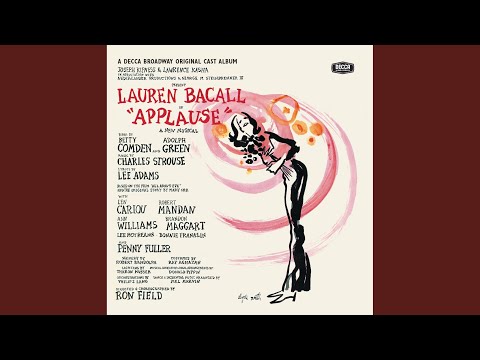
Review and Highlights
Quick summary
- What it is: An Act 1 nightclub burst from Applause (1970), built like a comic monologue that learns to dance.
- Who drives it: Margo Channing, performed on the original cast recording by Lauren Bacall, with a rowdy supporting crowd in the room.
- Where it happens: A Greenwich Village gay club, staged as a night out that turns into a reset button for Margo.
- How it plays: Fast, wordy, and elastic - a catalog of moods that lands on one stubborn verdict: still here.
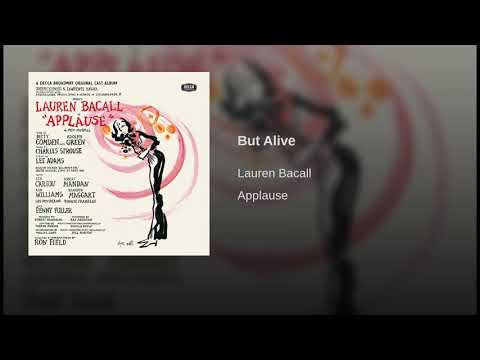
Applause (1970) - stage musical - diegetic. After a tricky opening-night stretch, Margo pulls Duane and Eve into a Village club. The number matters because it lets her spin anxiety into showmanship, right in front of the one person watching her the closest.
The craft here is that it never pretends Margo is serene. She is a walking weather report: groggy, twitchy, brash, shaky, then suddenly laughing at herself. Strouse and Adams write it like a vaudeville patter song wearing a nightclub dress, and Bacall sells it with timing more than prettiness. The lyric keeps stacking contradictions until the word "alive" starts to sound like a dare.
I hear it as a survival anthem that refuses to turn saintly. It is not tidy courage - it is messy momentum. One line pushes forward, the next line undercuts it, and the beat keeps the whole thing moving like a crowded sidewalk at midnight.
- Key takeaway: The hook is not romance - it is self-reporting with bite.
- Key takeaway: The song makes Margo look fearless while quietly admitting she is rattled.
- Key takeaway: The setting is a story engine: a place where she can perform relief, and Eve can study the method.
Creation History
Applause opened on Broadway on March 30, 1970 at the Palace Theatre, and the IBDB song list credits this number to Margo with ensemble support. The cast recording preserves Bacall's delivery, later reissued in remastered editions that keep the nightclub energy intact. A later television adaptation in 1973 staged the sequence on camera, and clips of that performance still circulate as a snapshot of Ron Field's stage-to-screen style.
Song Meaning and Annotations
Plot
The musical flashes back from Margo presenting an award to Eve. In the earlier timeline, Margo's dressing room fills with admirers, Eve gets invited into her orbit, and Bill leaves for a film job. Margo does not want to sit alone with that kind of night, so she drags Duane and Eve out. The club scene becomes a pressure valve: a public room where she can turn tension into performance.
Song Meaning
The meaning is a single sentence dressed in a dozen disguises: Margo is overwhelmed, but she is still moving. The repeated phrase works like a hand on the railing. Each time she lists a new mood swing, she snaps back to the same conclusion, not as serenity but as insistence. The club setting adds another layer: she is seeking a space where she can be loud, contradictory, and accepted without explanation.
Annotations
-
"A kaleidoscope of feelings whirls around inside my brain."
The line is the whole technique. The lyric turns volatility into a punchline, but it also admits how thin the line is between performance energy and panic.
-
"Half Tijuana, half Boston."
That name-check humor is not random. It paints her as cosmopolitan and scrambled at the same time, like she is trying on personalities the way she tries on costumes.
-
"But it’s dull to be too sane."
Under the joke is a worldview: Margo prefers intensity to numbness. In story terms, that intensity is also what Eve wants to borrow, then replace.
Rhythm and arrangement
This is patter-driven writing with a dance pulse underneath. The consonants are part of the percussion, and the orchestra feels like it is nudging Margo through each new mood swing. The emotional arc is not a climb to a big note - it is a sprint through contradictions that ends on stubborn breath.
Cultural touchpoints
The scene is often noted for placing a gay club and a sympathetic gay character in a mainstream, Tony-winning Broadway context in 1970. That matters because the song is not played as a morality lesson. It is played as a real night out, with Margo using the room to find her footing. According to Playbill, the performance history keeps this number close to the show's identity because it captures the mix of star power and sharp social observation.
Technical Information (Quick Facts)
- Song: But Alive
- Artist: Lauren Bacall
- Featured: Margo Channing and Boys
- Composer: Charles Strouse
- Producer: Thomas Z. Shepard (cast recording)
- Release Date: April 1970
- Genre: Musical theater, show tune
- Instruments: Orchestra, lead vocal, ensemble vocals
- Label: ABC Records (original cast LP issue)
- Mood: Wry, kinetic, a little wild
- Length: 3:56
- Track #: 4
- Language: English
- Album (if any): Applause (Original Broadway Cast Recording)
- Music style: Nightclub patter with Broadway punch
- Poetic meter: Mixed stress, patter phrasing
Frequently Asked Questions
- Who sings the song in the story?
- Margo Channing leads it, backed by the men in the club scene, with the moment staged as part of a night out in Greenwich Village.
- Where does it appear in the musical?
- It is an Act 1 number, placed after the opening-night pressures tighten and Margo tries to shake off the tension by going out with Duane and Eve.
- What is the song really saying?
- That Margo feels everything at once, but refuses to shut down. The repeated phrase works as a stubborn reality check.
- Is it played as a comedy song or a serious song?
- Both. The jokes are real, but the comedy is doing a job: keeping panic from winning the scene.
- Why is the setting important?
- Because the club gives Margo a public room where contradiction is allowed. It also gives Eve a laboratory to watch how Margo performs confidence.
- Is there a filmed version?
- Yes. The 1973 television adaptation included a staged performance that is widely referenced in discussions of the show.
- Has anyone notable performed it recently?
- Alan Cumming performed it in 2025 for PBS as part of the Movies for Grownups presentation.
- What is a commonly published key and tempo for singers?
- Lead-sheet listings commonly show G major with a moderately fast marking around q = 120.
- What vocal range is commonly listed on sheet music?
- A typical published range is C4 to D5, which makes diction and stamina more important than extreme notes.
Awards and Chart Positions
The number is best known through the show that carries it. Applause won the 1970 Tony Award for Best Musical, and the cast recording was a Grammy nominee in the early-1970s musical-theater album field. In practice, that awards context is part of why this track stayed in circulation across reissues and tributes.
| Year | Honor | Work | Result |
|---|---|---|---|
| 1970 | Tony Awards | Applause | Best Musical (won) |
| 1971 | Grammy Awards (musical-theater album field) | Applause (cast recording) | Nominated |
Additional Info
There is a practical reason performers keep returning to this number: it reads like a character study you can stage anywhere. You can play it as glamorous chaos, as nerves disguised as swagger, or as a comic pep talk that starts to believe itself halfway through.
The performance afterlife is unusually visible. Playbill has circulated archival footage of Bacall with the song, and PBS published Alan Cumming's 2025 rendition as a short, punchy opener. A separate strand of commentary treats the club scene as a marker of Broadway shifting toward more open portrayals of gay life onstage, which changes how modern stagings frame the room around Margo.
Key Contributors
| Entity | Type | Relationship (S-V-O) |
|---|---|---|
| Lauren Bacall | Person | Lauren Bacall performed the song on the original cast recording. |
| Charles Strouse | Person | Charles Strouse composed the music for the song. |
| Lee Adams | Person | Lee Adams wrote the lyrics for the song. |
| Thomas Z. Shepard | Person | Thomas Z. Shepard produced the cast recording. |
| Ron Field | Person | Ron Field directed and choreographed the original Broadway production. |
| ABC Records | Organization | ABC Records released the original cast album. |
| Palace Theatre | Venue | The Palace Theatre hosted the original Broadway run. |
| Great Performances (PBS) | Organization | PBS published Alan Cumming's 2025 performance clip. |
| Applause | Work | Applause contains the song as an Act 1 nightclub scene. |
Sources
Sources: IBDB production song list, Applause musical encyclopedia entry, Playbill video archive, Apple Music Classical track listing, Musicnotes digital sheet music listing, PBS Great Performances clip page, Grammy Awards official site
How to Sing But Alive
Published sheet music commonly lists G major with a moderately fast marking around q = 120. The printed vocal range is often given as C4 to D5, so the challenge is less about top notes and more about clarity, breath planning, and comic timing at speed.
- Tempo: Start at 104-108 to lock the text, then step up to 120 once every consonant lands cleanly.
- Diction: Treat consonants like drum hits. Crisp does not mean harsh - keep the jaw loose and let the tongue do the work.
- Breathing: Mark breaths by thought, not by bar line. Take quick, silent breaths before the long lists of adjectives.
- Flow and rhythm: Keep the patter buoyant. If it feels rushed, you are probably pushing volume instead of letting the beat carry you.
- Accents: Give extra snap to the last word of each mood list, then let the repeated phrase land with a grin, not a shout.
- Ensemble and doubles: If staged, use the room - glances, reactions, tiny pauses. This song loves an audience inside the scene.
- Mic: If amplified, aim for conversational level and let proximity add bite. Too much volume flattens the jokes.
- Pitfalls: Do not oversell the madness. The number works when the performer sounds truthful, even while the lyric is spinning.