You Are Never Away Lyrics — Allegro
You Are Never Away Lyrics
There is never a day when you don't play a part
In a word that I say, or a sight that I see.
You are never away and I'll never be free.
You're the smile on my face, or a song that I sing;
You're a rainbow I chase on a morning in Spring;
You're a star in the lace of a wild willow tree,
In the green leafy lace of a wild willow tree.
But tonight you're no star, nor a song that I sing.
In my arms where you are, you are sweeter than Spring;
In my arms where you are clinging closely to me,
You are lovelier by far, than I dreamed you could be.
You are lovelier, my darling than I dreamed you could be!
Song Overview
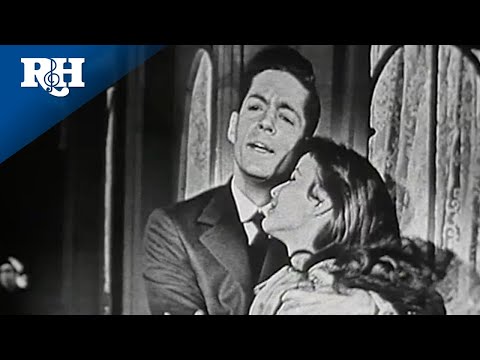
Review and Highlights
Quick summary
- Work: Allegro (Broadway musical, 1947) by Richard Rodgers (music) and Oscar Hammerstein II (book and lyrics).
- Number: "You Are Never Away" - Joe's confession song, written for the moment when the plot finally stops dodging the obvious.
- Where it appears: Act I, when Jennie tells Joe her European romance has ended, and he admits he has never stopped thinking about her.
- Why it lands: It is a direct-to-the-heart lyric, but the tune keeps enough forward motion to feel like a decision, not a wallow.
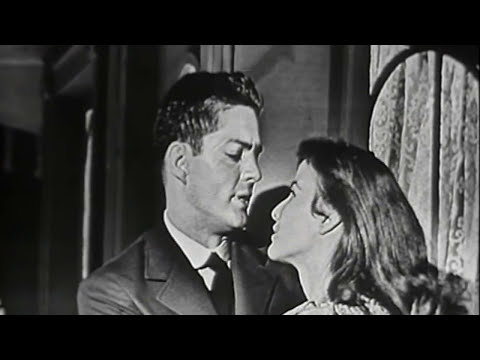
Allegro (1947) - stage musical - non-diegetic. Late Act I: Jennie returns from her ill-fated European detour and the show gives Joe permission to say the thing he has been acting around for an hour. The official Rodgers and Hammerstein song note spells it out: Jennie ends the romance, Joe confesses, and the dramatic air clears. That kind of clarity is rare in Allegro, a musical that enjoys chorus commentary and moral cross-currents. Here, the chorus steps back and the lead character finally speaks in full sentences.
The lyric is classic Hammerstein but with a slightly sharper edge. The opening image, "home in my heart," risks sounding like greeting-card furniture. Then the song tightens: the beloved has invaded "a word that I say" and "a sight that I see." That is not just romance, it is obsession dressed in spring imagery. Rodgers meets that with a melody that climbs in long, singable arcs. It is tender without turning syrupy. I keep noticing the pivot at "But tonight" - the poetic metaphors get dismissed, because the real thing is right there in the arms. The song is theatre craft disguised as simplicity: metaphors, then a clean stage-direction line that says, in effect, stop describing her and hold her.
Creation History
Allegro opened on Broadway on October 10, 1947, and the original cast album appeared in an abbreviated form soon after. "You Are Never Away" became one of the score's portable ballads, praised even by writers who had doubts about the show. As stated in Cash Box magazine's jukebox survey, the title circulated in the record world through multiple band and vocal versions in early 1948, a sign that the tune was already being treated as usable material outside the theatre.
Song Meaning and Annotations
Plot
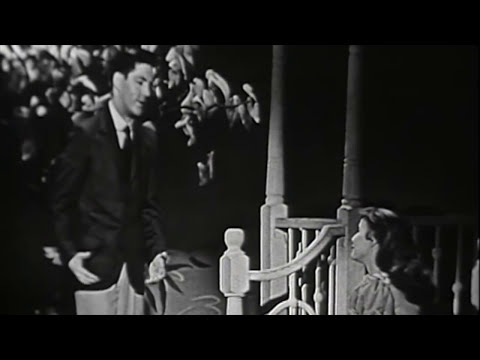
Allegro follows Joseph Taylor Jr. from birth into adulthood, using an ensemble chorus to compress time and to comment on the social pressures that shape him. Joe's relationship with Jennie is a long thread, repeatedly tested by distance, ambition, and temptation. In this scene, Jennie returns and explains that her European romance is finished. Joe answers with the song: an admission that she has been present in his mind throughout the separation. The official song note places the moment precisely and leaves little ambiguity about intent.
Song Meaning
The song frames love as unavoidable presence. Jennie is not just remembered, she is embedded in perception itself: words, sights, and small daily choices. The emotional arc moves from restless fixation toward a calmer, embodied truth. The first half is all metaphors and chasing. The second half rejects the metaphors and insists on physical reality, "in my arms." That shift matters dramatically: Joe stops narrating his feelings and begins living them, at least for one scene. In a musical that often warns about distraction, this is a rare moment of focus.
Annotations
"You are never away from your home in my heart; there is never a day when you don't play a part."
It reads like a vow, but it also reads like evidence. Hammerstein turns an abstract claim into a daily condition: she is not a memory, she is a constant factor.
"You're a star in the lace of a wild willow tree - in the green, leafy lace of a wild willow tree."
This is Hammerstein doing pastoral imagery with a slightly obsessive repetition. The detail is pretty, but the repeated phrase has a mind-loop quality, like the thought cannot let go.
"But tonight you're no star, nor a song that I sing; in my arms, where you are, you are sweeter than spring."
The best kind of theatrical pivot: the poet fires himself. The metaphors are dismissed because the staging is doing the job now. This is where a director can simply let bodies and silence carry the heat.
Driving rhythm and orchestral shape
Even as a ballad, the song stays purposeful. Rodgers writes the phrases to travel, rising and settling with clear landing points. That makes the number useful on recordings: it has a clean outline, and a singer can shape it without excessive rubato. The cast album track length, around three minutes, suggests a complete statement rather than a fragment.
Historical touchpoints
The tune moved quickly into the mid-century pop ecosystem. The 1947-48 record market was hungry for theatre ballads, and discographical listings show the title issued as a Columbia 78 by Buddy Clark (catalog 37985). The story is familiar: a Broadway song gets re-homed in bandstands and living rooms, while the stage show remains controversial.
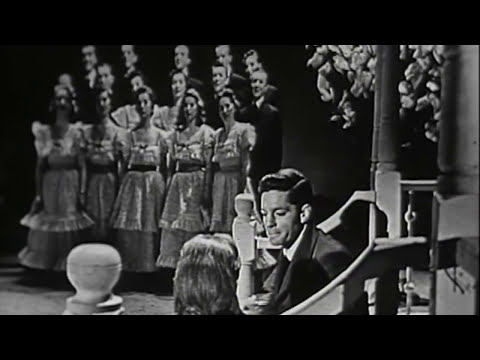
Technical Information (Quick Facts)
- Song: You Are Never Away
- Artist: Original Broadway cast recording credit commonly lists John Battles with Allegro Ensemble
- Featured: Joseph Taylor Jr. and Jennie Brinker (scene context)
- Composer: Richard Rodgers
- Producer: Cast-album production varies by reissue; major digital editions associate the 1947 cast album with later catalog remastering
- Release Date: October 10, 1947 (Broadway premiere date and common album listing date for the original cast album)
- Genre: Broadway musical; show tune; ballad
- Instruments: Orchestra and vocal solo (with ensemble support on some editions)
- Label: RCA Victor (original cast album issues); Columbia (notable 78 single cover release)
- Mood: Devoted, restless, then grounded
- Length: About 3 minutes 12 seconds (original cast album track timing on major listings)
- Track #: Often Track 5 on the 1947 cast album sequence
- Language: English
- Album (if any): Allegro (Original 1947 Broadway Cast Recording)
- Music style: Lyric-forward ballad with a clear melodic rise and release
- Poetic meter: Accentual with extended lyrical lines shaped for speech stress
Frequently Asked Questions
- Who sings this song in the story?
- Joe sings it to Jennie after she says her European romance is over, and the scene is framed as his confession.
- Is it a solo or a duet?
- It is primarily Joe's statement, though staging often places Jennie as the immediate dramatic partner and listener.
- What is the lyric's main trick?
- It starts with images and metaphors, then rejects them in favor of the concrete moment: "in my arms, where you are."
- Where is it on the original cast album?
- Major track listings place it as Track 5 with a duration around 3 minutes 12 seconds.
- Did the song have a recording life outside theatre?
- Yes. Discographical listings document a Columbia 78 release by Buddy Clark, and trade papers list the title among popular jukebox selections.
- Why does the lyric repeat "wild willow tree"?
- The repetition functions like a thought that cannot stop circling, giving the pastoral image a slightly obsessive flavor.
- Is there a reprise?
- The score includes a reprise variant on song lists, used to echo the confession later in the narrative.
- What makes it different from the show's chorus numbers?
- It is intimate and personal. The chorus-driven machinery pauses so the lead character can speak plainly.
- What kind of singer does it favor?
- A lyric-focused performer with long-breath phrasing and clear consonants, more actor-singer than belter.
Awards and Chart Positions
At the show level, Allegro won three 1947 Donaldson Awards for Best Book of a Musical, Best Lyrics, and Best Score, as listed on the official Rodgers and Hammerstein production page. Later, a major regional revival was recognized with Helen Hayes Awards, noted in Concord Theatricals' show listing.
| Item | Recognition | Year | Notes |
|---|---|---|---|
| Allegro | Donaldson Awards: Best Book, Best Lyrics, Best Score | 1947 | Show-level writing and composition recognition |
| Rodgers and Hammerstein's Allegro (revival) | Helen Hayes Awards: Outstanding Resident Musical; Outstanding Director | 2005 | Regional production accolades listed by Concord Theatricals |
For chart-like circulation evidence, Cash Box magazine listed "You Are Never Away" among its weekly jukebox popularity tabulations in February 1948, credited to multiple label and artist releases in the trade listing.
How to Sing You Are Never Away
Sheet-music listings for "You Are Never Away" commonly cite an original published key of G major, a Vivace tempo with metronome marking quarter note equals 144, and a vocal range of B3 to G5. Use those numbers as a starting point, then follow your production's orchestration and cuts.
- Tempo: Set quarter note equals 144 and keep the line buoyant. Even as a confession, it is not a slow sob story.
- Diction: Treat "home", "heart", "day", "part", and "free" as structural pillars. The vowels carry the tenderness, the consonants carry the meaning.
- Breathing: Mark breaths before the inventory phrases ("word that I say", "sight that I see") so the thought does not fracture.
- Flow and rhythm: Keep the first verse gently forward. If you over-stretch the rubato, the lyric turns dreamy when it should feel unavoidable.
- Imagery color: Paint the "rainbow" and "wild willow tree" lines lightly. The point is presence, not postcard scenery.
- Pivot moment: On "But tonight", change your stance and your sound. Less describing, more claiming the moment.
- Range strategy: Save resonance for the top notes near G5, but keep the tone speech-connected so it remains Joe, not a concert aria.
- Common pitfalls: Do not flatten the repeated "wild willow tree" phrase. Make the second pass different: either more insistent or more private.
Additional Info
There is a small irony I enjoy: Allegro is often described as a concept-forward show, but its most durable souvenirs are the ballads. A Billboard review excerpt later pointed out that even a so-called flop can boast multiple strong songs, and "You Are Never Away" is singled out in that kind of company. That is the Rodgers and Hammerstein paradox in miniature: the structure divides opinion, the tunes keep showing up at the party.
Recording breadcrumbs show how quickly the song entered pop circulation. Discogs documents a Buddy Clark Columbia 78 (catalog 37985) pairing the tune with "All Dressed Up With a Broken Heart," dated December 1947. In trade-paper terms, Cash Box listed the title in its "Disc-Hits Box Score" survey in February 1948, with multiple label and artist entries, the kind of list that made a song feel ubiquitous even if you never set foot in the Majestic Theatre.
Key Contributors
| Entity | Type | Relationship (S-V-O) |
|---|---|---|
| Richard Rodgers | Person | Rodgers - composed - You Are Never Away |
| Oscar Hammerstein II | Person | Hammerstein - wrote lyrics and book for - Allegro |
| John Battles | Person | Battles - performed - Joseph Taylor Jr. and recorded - You Are Never Away (cast album credit) |
| Rodgers and Hammerstein catalog (Concord) | Organization | Catalog - published and documented - You Are Never Away song note and media |
| Buddy Clark | Person | Clark - recorded - You Are Never Away (Columbia 78 release) |
| Columbia Records | Organization | Columbia - released - Buddy Clark 78 catalog 37985 |
| Cash Box magazine | Organization | Cash Box - listed - You Are Never Away in jukebox popularity survey |
Sources
Sources: Rodgers and Hammerstein official song page for "You Are Never Away"; Rodgers and Hammerstein official production page (1947 Broadway honors); Masterworks Broadway album notes for Allegro (1947 cast recording); Apple Music track listing for Allegro (Original 1947 Broadway Cast Recording); Discogs listing for Buddy Clark Columbia 37985; Cash Box (Automatic Music Section, Disc-Hits Box Score, February 21, 1948); Musicnotes sheet listing for "You Are Never Away"; Concord Theatricals show page for Rodgers and Hammerstein's Allegro.
Music video
Allegro Lyrics: Song List
- Act 1
- Overture
- Joseph Taylor, Jr
-
I Know It Can Happen Again
- Pudgy Legs
- One Foot, Other Foot
- Children's Dance
- Grandmother's Death: I Know It Can Happen Again (Reprise)
- Winters Go By
- Poor Joe
- Diploma
- A Fellow Needs a Girl
- Dance: Freshmen Get Togethe
- A Darn Nice Campus
- Wildcats
- Jennie Reads Letter: A Darn Nice Campus (Reprise)
- Scene of Professors
- So Far
- You Are Never Away
- You Are Never Away (Encore)
- Poor Joe (Reprise)
-
What a Lovely Day for a Wedding
- It May Be a Good Idea for Joe
- Finale Act I: I Know It Can Happen Again/To Have and To Hold/Wish Them Well
- Act 2
- Entr'acte
- Money Isn't Everything
- Dance: Money Isn't Everything
- Poor Joe (Reprise)
- You're Never Away (Reprise)
-
A Fellow Needs a Girl (Reprise)
- Ya-ta-ta
- The Gentleman Is a Dope
- Allegro
- Allegro Balle
- Come Home
- Finale Ultimo: Ya-ta-ta/Come Home/One Foot, Other Foo