Come Home Lyrics — Allegro
Come Home Lyrics
We can bring happiness and peace to your mind
[DR. TAYLOR]
We want you, Joe
[ENSEMBLE]
We want you
To come home
Come home
[MARJORIE TAYLOR]
Come home, come home
Where the brown birds fly
Through a pale blue sky
To a tall, green tree
There is no finer sight
For a man to see
Come home, Joe
Come home
Come home and lie
By a laughing spring
Where the breezes sing
And caress your ear
There is no sweeter sound
For a man to hear
Come home, Joe
Come home
You will find a world of honest friends who miss you
You will shake the hands of men whose hands are strong
And when all their wives and kids run up and kiss you
You will know that you are back where you belong
You'll know you're back
Where there's work to do
Where there's love for you
For the love you give
There is no better life
For a man to live
Come home, son
Come home
Come home, son
Come home
Song Overview
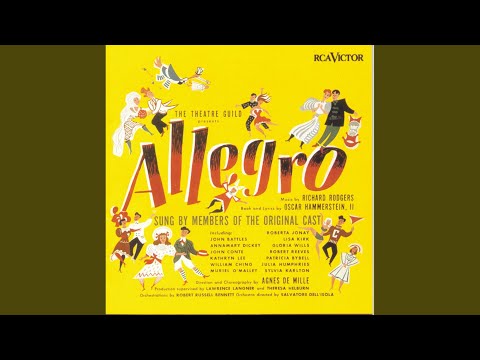
Review and Highlights
Quick summary
- Work: Allegro (Broadway musical, 1947) by Richard Rodgers (music) and Oscar Hammerstein II (book and lyrics).
- Number: "Come Home" - Marjorie, Dr. Taylor, and ensemble, with Joe pulled into the undertow.
- Where it appears: Act II, after Joe learns Jennie has been having an affair with his boss and his city life curdles into disgust.
- Why it matters: The show stops spinning and speaks in plain, pastoral images - a direct invitation to choose a different life.
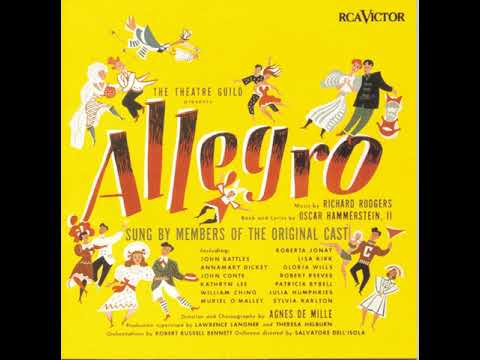
Allegro (1947) - stage musical - non-diegetic. This is the score tightening its grip. The official song note frames Joe as increasingly disillusioned in the big city; the breaking point is Jennie's affair with his boss, and the answer arrives as a summons from the people he left behind - led by his mother. It is not subtle, and it does not need to be. In a show fascinated by noise, this number uses quiet as persuasion.
Hammerstein writes the hometown like a stage picture you can smell: brown birds, pale blue sky, tall green tree, laughing spring. Those are not decorations. They are a rebuttal to Chicago's cocktail-party slogans. Rodgers matches that with a line that moves patiently, an andante that refuses to be hurried. The trick, theatrically, is that the song is both memory and action. It is not a postcard. It is pressure. Joe is being asked to decide, and the music makes the decision feel like gravity rather than heroism.
Key takeaways
- Best dramatic use: A moral pivot staged as a lullaby for an adult who forgot how to rest.
- Why it stays with listeners: The refrain keeps returning without sounding like a lecture.
- Performance note: The song rewards restraint - sincerity, not volume, is the engine.
Creation History
Allegro opened October 10, 1947, and the original cast recording was made shortly after opening, conducted by Salvatore Dell'Isola, with orchestrations by Robert Russell Bennett and dance arrangements by Trude Rittmann, as stated on the official production page. The 1947 album track list places "Come Home" near the end, sung by Annamary Dickey with the ensemble. Decades later, the first complete recording (released February 3, 2009) returned the number to full dramatic context; Playbill lists Audra McDonald and Nathan Gunn among the leads on that project and identifies the production team and orchestra leadership.
Song Meaning and Annotations
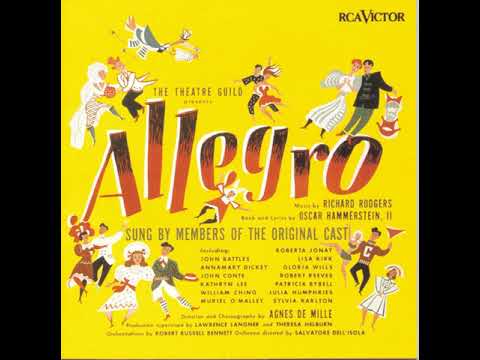
Plot
Joe has climbed into a Chicago practice that demands social performance as much as medicine. When he learns Jennie is having an affair with his boss, the veneer shatters. The official song note describes him yearning for the comforts of home and hearing his mother's call. The ensemble joins as the friends he left behind, turning private longing into a communal appeal. It is the town speaking, but it is also Joe's own conscience finding a voice.
Song Meaning
The meaning is not "small town good, big city bad." It is more pointed: a life can become so busy that it stops being yours. The refrain is an instruction to return to work that matters and to relationships with mutual obligation - "we need you" is as important as "you need us." The mood moves from ache to clarity. By the end, the song has not solved Joe's life. It has reminded him what his life was for.
Annotations
"Increasingly disillusioned by his job in the big city, Joe finally reaches his limit when he learns that Jennie has been having an affair with his boss."
This is the dramatic trigger, straight from the official song note: betrayal is not just romantic here, it is the last straw in a stack of compromises.
"We are the friends that you left behind."
Hammerstein makes the chorus personal. These are not abstract villagers. They are specific bonds, and the line frames leaving as a wound with two sides.
"There is no better life for a man to live - come home, Joe, come home."
The line risks sounding like a motto. In context it reads like a plea: choose a life where love and labor line up, even if it costs prestige.
Driving rhythm and emotional arc
Andante is not just a tempo marking here, it is an ethical stance. The song slows the world down long enough for Joe to hear himself think. That is why it works in Allegro: it is the opposite of "Ya-ta-ta" and the title number, which treat speed as addiction.
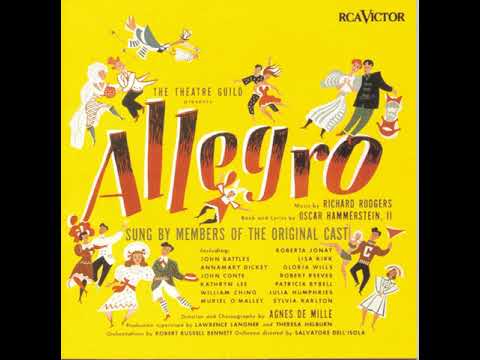
Technical Information (Quick Facts)
- Song: Come Home
- Artist: 1947 cast album context: Annamary Dickey with Allegro Ensemble; 2009 complete recording: Audra McDonald and Nathan Gunn with ensemble
- Featured: Marjorie (Joe's mother), Dr. Taylor (Joe's father), ensemble, and Joe in scene focus
- Composer: Richard Rodgers
- Release Date: October 10, 1947 (Broadway opening); February 3, 2009 (first complete recording release date)
- Genre: Broadway musical; choral appeal; reflective ballad
- Instruments: Orchestra with chorus and featured solo lines
- Label: Original cast album associated with RCA Victor; complete recording released via Sony Masterworks Broadway under the Rodgers and Hammerstein organization
- Mood: Reflective, urging, resolute
- Length: 3 minutes 43 seconds on the 1947 cast album listing; 3 minutes 28 seconds on the 2009 complete recording listing
- Language: English
- Album (if any): Allegro (Original 1947 Broadway Cast Recording); Allegro (First Complete Recording)
- Music style: Pastoral imagery over steady forward motion
- Poetic meter: Accentual, shaped to long, singable lines
Frequently Asked Questions
- Who sings "Come Home" in the story?
- Marjorie and Dr. Taylor lead the appeal with the ensemble representing the friends Joe left behind.
- What pushes Joe to the breaking point?
- He is already disillusioned with the big-city job, and the final trigger is learning Jennie has been having an affair with his boss.
- Is it a literal phone call or a memory sequence?
- It functions as an appeal from beyond ordinary realism - the show uses chorus commentary and Joe's mother as a guiding presence rather than a realistic message.
- Why does the song use pastoral images?
- Because the images are a rebuttal to Chicago noise: birds, sky, and spring become shorthand for clarity and honest work.
- How does the ensemble function here?
- They make the call mutual: "we need you" turns the return into responsibility, not escape.
- Which recording is easiest to reference today?
- The official Rodgers and Hammerstein video clip and the 2009 complete recording track listing are the most accessible modern references.
- Does the number resolve the plot?
- No, it triggers Joe's pivot. The later scenes still require him to refuse the prestige offer and act on what he has heard.
- Is this an audition song?
- Yes, it appears in soprano anthology materials, typically as a lyrical, sustained selection that tests line and sincerity.
Awards and Chart Positions
"Come Home" is not typically documented as a pop-chart single, but the parent production has clear honors. The official production page lists three 1947 Donaldson Award wins for Allegro: Best Book of a Musical, Best Lyrics, and Best Score. In recorded history, the number is anchored by the 1947 cast album track listing (Annamary Dickey with ensemble) and by the February 3, 2009 first complete recording, which Playbill framed as an all-star restoration with original orchestrations and dance arrangements.
| Item | Year | Detail | Notes |
|---|---|---|---|
| Donaldson Awards | 1947 | Best Book, Best Lyrics, Best Score | Show-level honors listed on the official production page |
| Recording footprint | 1947 | Cast album track listed at 3:43 | Annamary Dickey with Allegro Ensemble |
| Recording footprint | 2009 | Complete recording track listed at 3:28 | Audra McDonald and Nathan Gunn with ensemble |
How to Sing Come Home
Musicnotes lists an original published key of E-flat major, tempo Andante, and a vocal range of E-flat 4 to F5 for a common vocal edition. That range sits in the soprano sweet spot: sustained line with a bright top that should sound like breath, not effort.
- Tempo: Keep Andante honest. The song is a walk, not a sprint. Let the phrases arrive.
- Diction: Prioritize "come home" and the image words (birds, sky, tree, spring). Clean consonants, long vowels.
- Breath plan: Mark breaths before long image chains so you do not chop the painting into fragments.
- Line and legato: Think of the melody as one ribbon. Avoid scooping into pitches unless your production style demands it.
- Dynamic shape: Start intimate, then broaden as the ensemble joins. The persuasion grows by accumulation, not by sudden volume.
- Top notes: On the higher phrases near F5, keep the tone buoyant. This is invitation, not accusation.
- Story clarity: The refrain repeats, so vary intention: first as comfort, then as insistence, then as certainty.
- Pitfalls: Do not over-sentimentalize. The text is already warm. Your job is to keep it believable.
Additional Info
There is a reason this one is often singled out when people defend Allegro. The show can feel like a laboratory, but "Come Home" is not an experiment. It is a direct address, the kind Rodgers could write in his sleep and Hammerstein could sharpen into narrative necessity. As stated in the 2010 Edward Seckerson review, the Audra McDonald performance on the complete recording was praised as a standout, and that reaction tracks with how the song works: it makes the listener want to stop moving.
For collectors, there is also a tidy discographic contrast. The 1947 cast album listing ties the track to Annamary Dickey and the ensemble, while the 2009 complete recording lists Audra McDonald and Nathan Gunn. The two versions frame the same moment differently: one as classic cast-album closure, the other as restored dramatic hinge.
Key Contributors
| Entity | Type | Relationship (S-V-O) |
|---|---|---|
| Richard Rodgers | Person | Rodgers - composed - Come Home |
| Oscar Hammerstein II | Person | Hammerstein - wrote lyrics for - Come Home |
| Annamary Dickey | Person | Dickey - performed - Marjorie on the 1947 cast recording track listing |
| Salvatore Dell'Isola | Person | Dell'Isola - conducted - the 1947 cast recording sessions |
| Robert Russell Bennett | Person | Bennett - provided orchestrations for - Allegro recordings |
| Trude Rittmann | Person | Rittmann - provided dance arrangements for - Allegro recordings |
| Audra McDonald | Person | McDonald - performed - Come Home on the 2009 complete recording |
| Nathan Gunn | Person | Gunn - performed - Come Home on the 2009 complete recording |
| Rodgers and Hammerstein Organization | Organization | Organization - published - official song note and recordings information |
Sources
Sources: Rodgers and Hammerstein official song page for "Come Home"; Rodgers and Hammerstein official production page for Allegro (1947); Masterworks Broadway track notes for Allegro (1947 cast recording); Playbill announcement of the complete Allegro recording (December 8, 2008); Musicnotes listing for "Come Home" (original key, tempo, vocal range); Apple Music listing for "Come Home (Remastered)" (1947 track length); Concord Theatricals song list and track timing for the 2009 recording; Edward Seckerson review of the complete recording.
Music video
Allegro Lyrics: Song List
- Act 1
- Overture
- Joseph Taylor, Jr
-
I Know It Can Happen Again
- Pudgy Legs
- One Foot, Other Foot
- Children's Dance
- Grandmother's Death: I Know It Can Happen Again (Reprise)
- Winters Go By
- Poor Joe
- Diploma
- A Fellow Needs a Girl
- Dance: Freshmen Get Togethe
- A Darn Nice Campus
- Wildcats
- Jennie Reads Letter: A Darn Nice Campus (Reprise)
- Scene of Professors
- So Far
- You Are Never Away
- You Are Never Away (Encore)
- Poor Joe (Reprise)
-
What a Lovely Day for a Wedding
- It May Be a Good Idea for Joe
- Finale Act I: I Know It Can Happen Again/To Have and To Hold/Wish Them Well
- Act 2
- Entr'acte
- Money Isn't Everything
- Dance: Money Isn't Everything
- Poor Joe (Reprise)
- You're Never Away (Reprise)
-
A Fellow Needs a Girl (Reprise)
- Ya-ta-ta
- The Gentleman Is a Dope
- Allegro
- Allegro Balle
- Come Home
- Finale Ultimo: Ya-ta-ta/Come Home/One Foot, Other Foo