Allegro Lyrics – All Songs from the Musical
Allegro Lyrics: Song List
- Act 1
- Overture
- Joseph Taylor, Jr
-
I Know It Can Happen Again
- Pudgy Legs
- One Foot, Other Foot
- Children's Dance
- Grandmother's Death: I Know It Can Happen Again (Reprise)
- Winters Go By
- Poor Joe
- Diploma
- A Fellow Needs a Girl
- Dance: Freshmen Get Togethe
- A Darn Nice Campus
- Wildcats
- Jennie Reads Letter: A Darn Nice Campus (Reprise)
- Scene of Professors
- So Far
- You Are Never Away
- You Are Never Away (Encore)
- Poor Joe (Reprise)
-
What a Lovely Day for a Wedding
- It May Be a Good Idea for Joe
- Finale Act I: I Know It Can Happen Again/To Have and To Hold/Wish Them Well
- Act 2
- Entr'acte
- Money Isn't Everything
- Dance: Money Isn't Everything
- Poor Joe (Reprise)
- You're Never Away (Reprise)
-
A Fellow Needs a Girl (Reprise)
- Ya-ta-ta
- The Gentleman Is a Dope
- Allegro
- Allegro Balle
- Come Home
- Finale Ultimo: Ya-ta-ta/Come Home/One Foot, Other Foo
About the "Allegro" Stage Show
Richard Rodgers wrote music and O. Hammerstein II made the book & lyrics. These people have already collaborated in the production of musicals – this is their third work together. Opening on Broadway took place shortly after the end of WWII, in October 1947. The musical tells the story of life and mental anguish of a man named Joseph Taylor, Junior, who was born in 1905 and during the Great Depression initially worked with his father, but then he moved to the big city, where there was much more opportunities, which he abandoned, as a result of being thoughtless. In fact, many researchers give data that the Great Depression and the economic downturn of 2008 – 2012 are incomparable things – the second was much larger and more catastrophic. The ratio of positive news in the crisis of the 20th century was 3 positive to 1 negative, and in 21st C. there were 90% of negative. Therefore, this piece should be, as for us, rethought after the new realization of this musical – if any – suddenly will be played on Broadway again in the future.The main problem, which is revealed in this piece, is a problem of conflict of little human and rapidly changing big world in which there are some opportunities, but you have to forget part of your old familiar world forever to take advantage of them. The play had a great success, but, as for us, is entirely dependent on what actors do on stage and how they sing. Because comparing the voices of many who have participated in this musical, to those who really have vivid voices allow immediately understand the difference in presentation of information, and how a viewer will be immersed in the performance.
The play was recognized by too many as too moral and distant from real life and after 9 months of Broadway shows, it closed (with a very small subsequent tour within USA) and very rarely came back to life.
Release date: 1947
“Allegro Lyrics” – Soundtrack Guide & Song Meanings
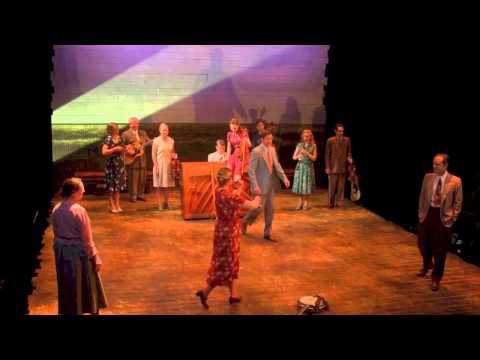
Review
How do you write a musical about an ordinary life without turning it into a scrapbook? “Allegro” (1947) answers with speed. It moves in episodes. It lets a chorus narrate, nag, celebrate, and sometimes judge. The result is less “plot machine” and more moral weather report: sunny when community is close, cloudy when ambition starts doing the talking.
Hammerstein’s lyrics are blunt on purpose. He writes in plain American sentences, then twists them into something sharper. When the town sings over a newborn, it sounds like a blessing and a sales pitch at the same time. When adulthood arrives, the language tightens: work, status, money, reputation. Even the love songs in “Allegro” carry an anxious edge, because they are sung by people who already know what time does to ideals.
Musically, Rodgers leans into a fluid, vignette-driven structure that feels closer to montage than to the standard “big number, big applause” rhythm. Press notes for the 2009 complete studio recording describe a score that drops fragments of melody into scenes like thoughts passing through the mind, while the chorus voices inner commentary. That structural choice is the point. Joe Taylor Jr. is not a hero who drives the room. He is a man being pushed through rooms, and the music keeps track of the pushes.
How It Was Made
“Allegro” was Rodgers & Hammerstein’s third stage collaboration and one of their most daring formal experiments. Concord’s title description flags the show as theatrically ahead of its time, built around an ensemble and a life-spanning structure rather than a conventional romance engine. The original staging, directed and choreographed by Agnes de Mille, leaned hard into suggestion: platforms, projections, and lighting rather than literal scenery. Later accounts of that original production emphasize scale, including an enormous lighting plot that became part of the show’s legend.
The writing process has its own odd travelogue. Biographical reporting collected in theatre-history summaries notes that Hammerstein researched the medical world by interviewing his own doctor and mailed portions of the script to Rodgers while traveling abroad, prompting Rodgers to compose quickly once pages arrived. That story matters because it explains why “Allegro” can feel like two impulses at once: intimate childhood memory in Act I, then an accelerated, pressure-cooked Act II in the city.
And then there is the apprentice in the room. Stephen Sondheim later recalled working as a gopher on “Allegro,” watching a highly experimental show struggle in real time. In a PBS interview excerpt, he also notes that in that production “singers had to dance and dancers had to sing,” a practical hint of how integrated the physical storytelling was meant to be from the start.
Key Tracks & Scenes
“Joseph Taylor, Jr.” (Ensemble)
- The Scene:
- Lights rise slowly and focus on Marjorie in bed, content after childbirth. A second pool of light reveals the choral group, narrating the town’s joy and projecting a future onto a baby who cannot speak yet.
- Lyrical Meaning:
- Hammerstein starts the show with a public voice. The chorus names the child before the child can name himself. It is affectionate, but it is also destiny-setting. The lyric teaches you the central conflict: Joe will spend decades trying to separate his own wants from everyone else’s plan.
“One Foot, Other Foot” (Ensemble)
- The Scene:
- Marjorie and her mother reach out toward the audience as if young Joe is taking his first steps right at the footlights. The chorus turns encouragement into a bright march.
- Lyrical Meaning:
- It is a nursery milestone staged like a civic event. That is the trick of “Allegro”: private life is always being watched. The lyric makes “learning to walk” sound like the first rehearsal for learning to perform adulthood.
“A Fellow Needs a Girl” (Dr. & Mrs. Taylor)
- The Scene:
- The night before Joe leaves for college. His parents sit on the porch in moonlight, singing about the kind of partner he will choose, and about the marriage they built before he was old enough to notice it.
- Lyrical Meaning:
- It looks like a standard love song until you realize the son is offstage. The lyric is parental projection with a romantic melody. It frames love as stability, not as adventure, which later makes Joe’s urban “success” feel like betrayal even when nobody says the word.
“So Far” (Beulah)
- The Scene:
- College. Joe tries to summon the nerve to kiss Beulah. He takes out a flask. She drinks too, then breaks into song with a confidence Joe cannot borrow for long.
- Lyrical Meaning:
- Beulah’s lyric is flirtation that doubles as warning. The song sells bravado, but its calm assurance also underlines Joe’s weakness: he is easily steered by mood, crowd, and moment. “So far” is not a promise. It is a shrug disguised as romance.
“You Are Never Away” (Joe)
- The Scene:
- A letter arrives: Jennie has broken her engagement to a local boy. The scene shifts to a garden. Jennie stands by a bench, radiant. Joe looks at her in rapture, with the chorus quietly assisting the atmosphere.
- Lyrical Meaning:
- Joe finally gets a solo lyric that feels fully his. The metaphors are simple and direct, but the effect is intense because “Allegro” has withheld this kind of private declaration. The song is also a trap: it convinces Joe that love will remain constant even as the show is built to prove that circumstances rewrite love’s terms.
“Money Isn’t Everything” (Jennie and Friends)
- The Scene:
- Act II opens in the backyard of the newly married Taylors. Jennie is doing laundry. Friends drop in and complain about housework, taking aim at women who have it easier.
- Lyrical Meaning:
- Hammerstein writes satire with a smile that hurts. The lyric is social pressure in a circle, turning envy into common sense. For Jennie, it becomes the emotional logic behind the move to Chicago. She does not “turn bad” in one decision. She is coached by a culture that confuses comfort with worth.
“The Gentleman Is a Dope” (Emily)
- The Scene:
- Emily leaves a hospital executives’ cocktail party and stops on the street, disgusted by the self-importance and chatter she has just watched. Imaginary cabs rush by as she pulls up her coat collar and sings to herself.
- Lyrical Meaning:
- This is “Allegro” at its most modern. The lyric is workplace frustration that exposes desire. Emily sees Joe clearly, and that clarity is romantic in its own harsh way. She is not singing about destiny. She is singing about a man failing in real time, and she cannot stop caring anyway.
“Allegro” (Joe, Emily, Charlie, Ensemble)
- The Scene:
- Joe starts to look at the hospital politics with open eyes. He joins Emily and Charlie in a lively, scornful burst that summarizes the frantic emptiness of the world he has entered.
- Lyrical Meaning:
- The title becomes irony. The lyric is a list of symptoms: speed, noise, status, and the weird hunger to be praised for being exhausted. It is also the moment the show admits its own form: quick scenes, quick judgments, a life moving too fast to feel lived.
Live Updates
As of January 13, 2026, “Allegro” is not sitting inside the usual commercial pipeline. No Broadway or large-scale touring production is announced on the major rights-holder listing, and Concord’s title page shows a “Now Playing” section without any populated entries at the time of writing. That is typical for this piece. It appears in short-run revivals, concert presentations, and academic or enthusiast-led projects more often than in long engagements.
What has changed is the way the Rodgers & Hammerstein ecosystem curates it. A London concert celebration at Theatre Royal Drury Lane was announced as including material from “Allegro,” placing its songs alongside the canon titles in a legacy framing. Separately, dance programming has also pulled from “Allegro,” including a 2025 triple-bill built around Rodgers & Hammerstein dream ballets that explicitly cites “Allegro” as a source title. The show is no longer treated only as “the one that didn’t work.” It is treated as a quarry: you mine it for technique, mood, and a few startling lyrics.
If you are looking for the most accessible “soundtrack” experience, the 2009 all-star studio set remains the cleanest doorway, created as the first complete recording and built to clarify how the score connects across scenes. It is also the recording that pulled big-name performers into “Allegro” without asking the market to buy a full revival ticket.
Notes & Trivia
- The original Broadway production opened October 10, 1947 at the Majestic Theatre and ran 315 performances.
- A contemporary account of the 1947 staging cites over 500 lighting cues, described as a Broadway record at the time.
- The 1947 Masterworks track notes describe the opening as lights focusing first on Marjorie’s bed, then revealing the chorus in a separate pool of light.
- The abridged 1947 cast recording captured only a slice of the score, shaped by the physical limits of the 78rpm era.
- Stephen Sondheim later confirmed he worked as a gopher on “Allegro,” and recalled that performers had to both sing and dance.
- The 2009 studio recording was produced for Sony Masterworks Broadway and billed as the first complete recording, with Patrick Wilson and Audra McDonald among the leads.
- Concord’s licensing listing highlights the show’s awards history, including 1947 Donaldson wins for Book, Lyrics, and Score.
Reception
“Allegro” has always lived in the gap between admiration and impatience. In 1947, critics could recognize the ambition while resisting the sermon. Decades later, reviewers often respond to the very same qualities as strengths, especially when a director leans into the piece’s spare, expressionistic framework rather than apologizing for it.
“As if Our Town were written to music.”
“Beautiful, imaginative, original and honestly moving.”
Modern revivals have helped the case by cutting clutter and clarifying intention. A 2014 revival page for Classic Stage Company preserves a New York Times pull-quote that calls the experience “glowing,” and multiple contemporary notices emphasize the show’s structural experimentation rather than treating it as a curiosity. That arc matters for lyric readers: “Allegro” lands hardest when you listen to how Hammerstein makes the chorus talk like a community that loves you and limits you in the same breath.
Technical Info
- Title: Allegro
- Year: 1947 (opened October 10, 1947)
- Type: Full-length musical (ensemble-driven, vignette structure)
- Composer: Richard Rodgers
- Book & Lyricist: Oscar Hammerstein II
- Original director/choreographer: Agnes de Mille (noted as an early example of a director also serving as choreographer)
- Notable musical architecture: Chorus commentary and recurring melodic fragments across scenes (described in 2009 recording press notes)
- Selected notable placements (story locations): Marjorie’s bedroom, the Taylors’ porch, the college gym, Jennie’s garden, Chicago medical offices (listed in licensing materials)
- Recordings: 1947 abridged cast recording (RCA Victor era context via Masterworks), 2009 complete studio recording (Sony Masterworks Broadway)
- Availability: The 2009 studio recording is promoted by Rodgers & Hammerstein’s official site as the first complete recording; performance rights are handled via Concord Theatricals
- Recent programming signal: Rodgers & Hammerstein legacy concert announcements list “Allegro” material alongside core canon titles
FAQ
- Is “Allegro” a concept musical?
- Not by the later, branded definition, but it behaves like one. It uses a chorus to comment on the action and moves through a life in snapshots, prioritizing theme and pressure over linear plot mechanics.
- Who wrote the lyrics to “Allegro”?
- Oscar Hammerstein II wrote the book and lyrics, with music by Richard Rodgers.
- What is the most famous song from “Allegro”?
- “The Gentleman Is a Dope” has had the longest afterlife outside the show, but “You Are Never Away” and the title number carry the central emotional and thematic argument inside the piece.
- Is there a movie of “Allegro”?
- No major feature-film adaptation exists. The show’s life has been in stage revivals, concert or studio recordings, and licensed productions.
- Where should I start if I want the full score?
- The 2009 studio recording is the most complete listening experience and was built specifically to present the entire musical arc in audio form.
Key Contributors
| Name | Role | Contribution |
|---|---|---|
| Richard Rodgers | Composer | Wrote a score designed to flow through short scenes, with recurring musical ideas that stitch the life-story structure together. |
| Oscar Hammerstein II | Book & Lyrics | Created an original, life-spanning narrative with a chorus that frames Joe’s choices as a community argument, not just personal drama. |
| Agnes de Mille | Original Director/Choreographer | Staged the 1947 production with dance and expressionistic theatrical tools, helping define the piece’s hybrid of narration and movement. |
| Robert Russell Bennett | Orchestrations | Provided orchestrations associated with the original score and preserved in later complete-recording projects. |
| Trude Rittmann | Dance Arrangements | Shaped dance-related musical material that supports the show’s movement language. |
| Salvatore Dell’Isola | Original Musical Director (recording) | Conducted the original cast recording session shortly after the Broadway opening, per Rodgers & Hammerstein production notes. |
| John Doyle | Director/Designer (2014 CSC revival) | Reframed the show in a modern, stripped approach that helped re-sell its structure to contemporary ears. |
| Bruce Pomahac | Music Director (2009 studio recording) | Led the all-star complete studio recording highlighted by Rodgers & Hammerstein’s official recording page. |
| Stephen Sondheim | Production assistant (historical) | Later confirmed he worked as a gopher on “Allegro,” an early vantage point on experimental Broadway craft. |
Sources: Masterworks Broadway (track notes; Peter Filichia essay), Concord Theatricals, Rodgers & Hammerstein Official Site, Playbill, Musical Theatre Review, TheaterMania, Observer, PBS American Masters (Sondheim interview), Academy of Achievement (Sondheim interview).