
One Jump Ahead Lyrics
One Jump Ahead
[Aladdin:] Gotta keepOne jump ahead of the breadline
One swing ahead of the sword
I steal only what I can't afford
( That's Everything! )
One jump ahead of the lawmen
That's all, and that's no joke
These guys don't appreciate I'm broke
[Crowd:] Riffraff! Street rat! Scoundrel! Take that!
[Aladdin:] Just a little snack, guys
[Crowd:] Rip him open, take it back, guys
[Aladdin:] I can take a hint, gotta face the facts
I can use a friend or two!
[Crowd:] True!
Oh it's that Aladdin's hit the bottom.
He's become a one-man rise in crime
I'd blame parents except he hasn't got 'em
[Aladdin:] Gotta eat to live, gotta steal to eat
Tell you all about it when I got the time!
One jump ahead of the slowpokes
One skip ahead of my doom
Next time gonna use a nom de plume
One jump ahead of the hitmen
One hit ahead of the flock
I think I'll take a stroll around the block
[Crowd:] Stop, thief! Vandal! Outrage! Scandal!
[Aladdin:] Let's not be too hasty
[Lady:] Still I think he's rather tasty
[Aladdin:] Gotta eat to live, gotta steal to eat
Otherwise we'd get along
[Crowd:] Wrong!
[Aladdin:] One jump ahead of the hoofbeats
(Vandal!)
One hop ahead of the hump
(Street rat!)
One trick ahead of disaster
(Scoundrel!)
They're quick, but I'm much faster
(Take that!)
Here goes, better throw my hand in
Wish me happy landin'
All I gotta do is jump
Song Overview
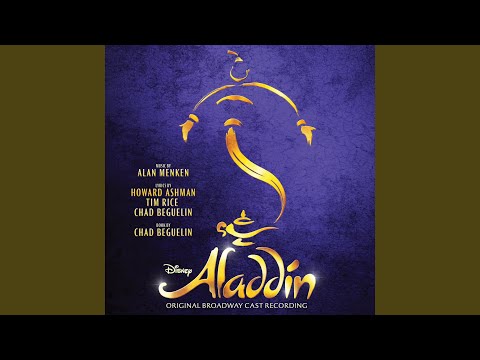
Review and Highlights
Quick summary
- What it is: A comic sprint song for Aladdin that doubles as a street-level character intro.
- Where it appears: Act I, early, as a marketplace chase with ensemble and guards.
- Stage context: The full-length musical premiered in Seattle in July 2011; the Broadway cast album arrived in 2014.
- How it differs from the film: The stage version keeps the familiar engine but leans harder into theatre choreography cues and ensemble layering.
Aladdin (2011) - stage musical - non-diegetic. Played as a bustling marketplace sequence: Aladdin is chased, bargains mid-stride, and sells the audience his own moral math while dodging trouble. It matters because it makes the hero legible at speed: charm, cheek, and a whiff of danger, all before the plot asks us to care about him.
This number is stagecraft with a grin. You can feel the choreographer's pencil behind the phrases: little musical corners where bodies can pivot, tumble, or freeze into a sight gag. The melody stays bright, but the real hook is the patter momentum. In a house that wants spectacle, this is the kind of craft that earns it without begging for applause every eight bars.
Key takeaways
- Character work in motion: The song argues Aladdin is clever, not cruel - a thief who keeps the audience on his side by never stopping to sulk.
- Ensemble as scenery: Crowd lines turn the marketplace into a living set piece, not wallpaper.
- Rhythm as narrative: The pulse does the storytelling as much as the words do.
Creation History
The tune was written for the 1992 animated film by Alan Menken with lyrics by Tim Rice, and it migrated into the stage score as one of the anchor set pieces. By the time the full musical premiered in Seattle (2011), reviewers were already listing it among the show's retained film favorites. The Broadway cast recording followed in May 2014, giving the theatre arrangement a widely circulated reference performance and locking in its brisk pacing for a generation of audition rooms.
Song Meaning and Annotations
Plot
Aladdin steals food, gets spotted, and sparks a chase through the marketplace. He keeps talking to the crowd while he runs, turning pursuit into a running commentary on survival. The ensemble answers back, sometimes as townspeople, sometimes as a judgmental chorus, sometimes as the moving maze he slips through.
Song Meaning
The meaning is simple, but the delivery is slippery: Aladdin refuses to be defined by what he does with his hands. He frames theft as necessity, performance as protection, and speed as his only safety net. The number also sets the show's class divide in one gulp - the palace may glitter later, but the opening street economy runs on hunger and hustle.
Annotations
"Gotta keep one jump ahead of the breadline, one swing ahead of the sword."
That internal rhyme is not just cute writing. It is a thesis: poverty and violence sit side by side, and the hero lives in the narrow gap between them.
"I steal only what I can't afford - and that's everything."
A punchline that lands because it is also a social snapshot. The laugh comes with a sting, which is why the song reads as comedy but plays as character defense.
"One trick ahead of disaster."
Onstage, this line often coincides with a physical turn: a duck, a flip, a dodge. The staging makes "trick" literal, and suddenly the lyric sounds like a job description.
Genre blend and rhythmic engine
Menken builds this like classic Broadway chase writing: bright harmonic turns, quick phrase lengths, and orchestration that keeps the feet honest. The groove has to be steady enough for choreography, yet nimble enough to feel improvised. That balancing act is why the number can sound effortless while requiring disciplined breath and diction.
Key phrases and imagery
"Breadline" and "sword" put the stakes in plain objects. No philosophy lecture, just the hunger cue and the threat cue. In theatre terms, it is efficient: the lyric gives the actor permission to be charming without pretending the world is kind.
Technical Information (Quick Facts)
- Song: One Jump Ahead
- Artist: Adam Jacobs and Aladdin Original Broadway Cast (cast album credit)
- Featured: Ensemble
- Composer: Alan Menken
- Producer: Alan Menken; Michael Kosarin; Frank Filipetti; Chris Montan (cast album)
- Release Date: May 27, 2014
- Genre: Musical theatre; show tune
- Instruments: Theatre orchestra; prominent rhythm section and brass accents
- Label: Walt Disney Records
- Mood: Comic urgency; streetwise
- Length: About 2 minutes 09 seconds (cast album track)
- Track #: 3
- Language: English
- Album (if any): Aladdin (Original Broadway Cast Recording)
- Music style: Patter chase number with ensemble callouts
- Poetic meter: Mixed conversational meter (patter-driven, not a single strict foot)
Frequently Asked Questions
- Where does this number sit in the show?
- Early in Act I, right after the opening establishes the world. It is the first full, kinetic "meet the hero" moment.
- Is it the same song as the 1992 film version?
- It is the same core composition, adapted for stage pacing, orchestration, and choreography needs.
- Who sings it on the Broadway cast album?
- Adam Jacobs leads, with the company shaping the marketplace texture and commentary.
- What is the character reveal in the first verse?
- Aladdin is not asking permission. He is narrating his own case while he runs, so the audience meets his charm and his survival instincts at once.
- Why do the crowd lines matter so much?
- They function like a moving set: they block, judge, and occasionally help, making the city feel active rather than decorative.
- Is the song meant to be funny or serious?
- Both. The jokes keep the scene buoyant, but the economic stakes are not hidden.
- What key is commonly used in published arrangements?
- Published stage sheet music listings commonly show E minor as the original key.
- What vocal skills does it test in auditions?
- Speed with clean diction, stable pitch while moving, and the ability to sell patter without losing character intention.
- Does the show include a reprise?
- Yes. The stage score includes a brief reprise that pivots from swagger toward self-reflection.
Awards and Chart Positions
The song itself is not a chart single in the Broadway sense, but it sits inside two measurable success stories: the Broadway production's awards profile and the cast album's chart run. The production won a 2014 Tony Award for Featured Actor in a Musical (James Monroe Iglehart as Genie). The original Broadway cast album was released May 27, 2014 and peaked at number 45 on the Billboard 200.
| Item | Year | Result |
|---|---|---|
| Tony Awards - Featured Actor in a Musical (James Monroe Iglehart, Aladdin) | 2014 | Won |
| Cast album - Billboard 200 peak (Aladdin Original Broadway Cast Recording) | 2014 | Peak: 45 |
How to Sing One Jump Ahead
Published arrangements and stage references commonly put the tune in E minor, and sheet music listings also provide a metronome marking near 120. That means your technique has to be practical: this is not about long, floated phrases. It is about accuracy at speed.
- Tempo first: Set a metronome around 120 and speak the text in rhythm before you sing a note. If the consonants are late, the whole scene looks slower than it is.
- Diction planning: Mark your hardest clusters (plosives and sibilants). Aim for clean starts to words without punching the tone sharp.
- Breath map: Decide where you breathe based on meaning, not panic. Quick inhales between thoughts will read as character energy, not vocal desperation.
- Rhythm lock: Treat the accompaniment like a moving sidewalk. If you rush, you collide with it. If you drag, it leaves you behind.
- Accent choices: Pop the internal rhymes and repeated sounds, but do not underline every joke. Save emphasis for the lines that reveal the survival logic.
- Range management: Many published listings place the line range roughly from B3 up to around A5. Work the top with bright, speech-like placement rather than heavy chest pulling.
- Movement practice: Add light jogging-in-place or simple stage crosses while singing. The number is built for motion, and your breath has to prove it.
- Pitfalls: Swallowed vowels, clipped endings, and over-acting the patter until pitch suffers. Keep the character alive, but keep the notes honest.
Additional Info
Variety's 2011 review of the Seattle tryout listed this number among the recognizable musical selections, which tells you something about Disney stage strategy: keep the crowd-pleasers, then build new material around them. In a way, this song is the show's handshake. It says, "Yes, you know this world," then immediately asks the actor to do it live, with bodies flying and breath running out. That is where musical theatre stops being nostalgia and starts being athletics.
As stated in a Playbill announcement about the cast album release, the 2014 recording rollout was structured like a Broadway event: digital release first, then physical release. That matters for performers, because the album became a default reference track - a shared tempo memory across auditions, school showcases, and community productions.
Key Contributors
| Entity | Type | Relationship (S-V-O) |
|---|---|---|
| Alan Menken | Person | Menken - composed - the music for the song and the stage score. |
| Tim Rice | Person | Rice - wrote - the lyrics for the song. |
| Adam Jacobs | Person | Jacobs - performed - the lead vocal on the original Broadway cast album track. |
| James Monroe Iglehart | Person | Iglehart - won - the 2014 Tony Award for Featured Actor in a Musical for Aladdin. |
| Walt Disney Records | Organization | Walt Disney Records - released - the Original Broadway Cast Recording in 2014. |
| 5th Avenue Theatre (Seattle) | Venue | 5th Avenue Theatre - hosted - the full musical premiere in July 2011. |
Sources
Sources: Wikipedia - Aladdin (2011 musical) musical numbers list, Variety - 2011 Seattle review, Playbill - cast album release note, Musicnotes - published key and metronome marking, YouTube - topic upload for the cast album track, BroadwayWorld - 2014 Tony win report