
Kimberly Akimbo Lyrics: Song List
About the "Kimberly Akimbo" Stage Show
Release date of the musical: 2022
"Kimberly Akimbo" – The Musical Guide & Song Meanings
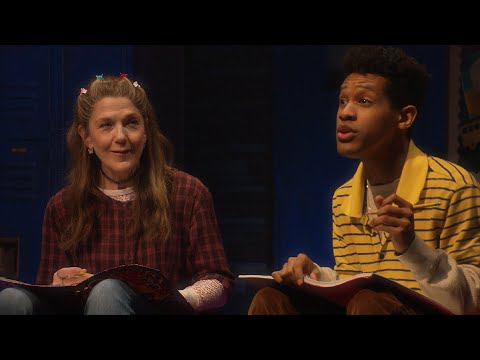
Review: the show that turns jokes into oxygen
How do you write a musical about a teenager with a body that keeps skipping ahead in time without turning it into a lecture, or worse, a pity party? Kimberly Akimbo answers with craft and nerve. David Lindsay-Abaire’s lyrics do not “decorate” Jeanine Tesori’s score. They steer it. The words keep returning to the same obsession: what you can control when you cannot control time. Sometimes that is a wish list. Sometimes it is a crime. Sometimes it is a tuba kid deciding, with real terror, to be “a little bad” for someone else.
The lyric-writing is sharp in a very specific way. It treats ordinary speech as musical material. Pattie’s spiraling video-diary vocabulary becomes rhythm. Seth’s anagram brain becomes form. Debra’s hustler logic becomes seduction-as-argument. Even when a song is funny, it is usually funny because it is precise, not because it is loud. Tesori matches that precision with a score that can pivot from pop-inflected bounce to intimate, almost confessional lines, sometimes inside the same number. The musical style matters here because the characters are not trying to sound impressive. They are trying to survive being themselves.
Listener tip, if you are meeting this show through the album first: follow the “time” spine. Start with “Skater Planet,” then jump to “Make a Wish,” then “Father Time,” then “Good Kid,” then “Before I Go,” and end on “Great Adventure.” You will hear the central argument: youth is not a mood, it is access.
How it was made: a brighter opening, a hidden voice, and a goodbye that became a finale
Two origin stories tell you almost everything about how this score works. First: the opening. The early version began with Kimberly alone outside the rink, singing something reflective about waiting and time. The writers kept the idea, ditched the tone, and rebuilt the start as “Skater Planet,” a funnier welcome that still sneaks longing in under the neon. The note that cracked it came from director Sammi Cannold at Sundance: make it brighter, make it tell the audience what kind of show this is. Tesori and Lindsay-Abaire resisted, then caved, then won.
Second: “Anagram.” The song’s key “Seth” lines are not just performed as if they are spoken. They are literally spoken by Lindsay-Abaire. Tesori recorded him making an anagram in real time, then built the number around that audio. It is a small prank with big thematic weight: the person who wrote the story becomes the boy who rearranges a name into possibility.
And then there is “Great Adventure,” the closer. Lindsay-Abaire has said the lyric arrived after saying goodbye to a close friend dying of cancer. Memories of trips, the texture of shared life, and the blunt math of loss turned into the show’s last word. That is why the finale lands. It is not “optimism.” It is an artist deciding that the right ending is motion.
Key tracks and scenes
"Skater Planet" (Ensemble)
- The Scene:
- A suburban ice rink. Bright signage. Teen bodies in motion. The misfit show-choir kids claim the space like it is the only country that will issue them passports.
- Lyrical Meaning:
- The lyric sets the contract: this story will be funny, full of longing, and allergic to sentimentality. It introduces “outcasts” as a chorus, not a side note, and makes the rink a metaphor for time you can almost glide on.
"Make a Wish" (Kimberly)
- The Scene:
- Kim writes. The stage narrows. The light feels like a desk lamp at midnight. The voice is both teen-giddy and frighteningly practical.
- Lyrical Meaning:
- This is the show’s “I Want” number, and it weaponizes specificity. The list starts like a normal fantasy, then turns desperate as she realizes how little time she has. The punch is not the jokes. It is the erasure of the “normal family” wish and the choice of a safer one.
"Anagram" (Seth and Kimberly)
- The Scene:
- A school library vibe, all fluorescent patience. Seth works letters like a locksmith. Kim watches him, then realizes the trick is not the wordplay. It is attention.
- Lyrical Meaning:
- The lyric uses rearranged letters as an emotional form: identity as something you can re-see. For Kim, it is not romance as rescue. It is romance as recognition. The show keeps repeating that difference.
"Better" (Debra, Kimberly, and Company)
- The Scene:
- Debra arrives like a weather system. The air changes. Her comedy is aggressive, and the staging tends to move faster just to keep up.
- Lyrical Meaning:
- The lyric sells a scheme the way Debra sells herself: persuasion by momentum. The trick is that “better” is not moral. It is practical. In a show obsessed with time, Debra’s philosophy is brutally coherent: do it now, feel bad later.
"How to Wash a Check" (Debra and Teens)
- The Scene:
- In the basement, the criminal tutorial becomes a group project from hell. They fumble the mechanics, complain, and keep going anyway. The lighting feels like a laundry room turned into a cabaret.
- Lyrical Meaning:
- It is comic instruction as character exposure. The lyric turns the scam into choreography: rules, steps, a rhythm you can hide inside. Tesori has described the musical attitude as “Peggy Lee on crack,” and you can hear why: cool phrasing with chaotic intent.
"Good Kid" (Seth)
- The Scene:
- After the others leave, Seth is alone. No jokes to lean on. Just a kid deciding what kind of person he is willing to be for someone else.
- Lyrical Meaning:
- The lyric is a moral self-audit. It gives Seth the interiority the plot needs: the moment where a “good kid” rationalizes a bad act as love. It is also the show’s quiet thesis about adolescence: your brain is unfinished, your feelings are not.
"Father Time" (Pattie)
- The Scene:
- Late at night. A parent alone. The humor drains out, and what is left is terror dressed as control.
- Lyrical Meaning:
- Placed earlier in the musical to earn empathy, the lyric reframes Pattie’s chaotic behavior as fear of losing Kim. It is not an excuse. It is a diagnosis. The song shows how the show writes adults: not as villains, as symptoms.
"The Inevitable Turn" (Family and Teens)
- The Scene:
- An ensemble blow-up where everyone talks at once, only in tune. Anger becomes a dance step. The number can feel like a family argument filmed with a wide-angle lens.
- Lyrical Meaning:
- The lyric gives the title its weight. It is not fate as poetry. It is consequence as rhythm. Everybody has been making choices “for good reasons,” and then the bill arrives.
"Before I Go" and "Great Adventure" (Kimberly and Company)
- The Scene:
- “Before I Go” plays like a goodbye scene that refuses to stay still. Then “Great Adventure” opens the stage back up, like air rushing in after a long held breath.
- Lyrical Meaning:
- These lyrics do two jobs at once: permission and release. Kim is not asking to be saved. She is asking to be seen, and then to be allowed to leave. The finale’s buoyancy is earned because it is built on loss, not denial.
Live updates: 2025-2026 tour, casting, licensing
Tour status: The first North American tour launched in 2024 and continued through 2025, with casting tracked by IBDB. In 2025, Washington Post coverage praised the tour’s balance of comedy and fragility, spotlighting numbers like “Good Kid.” The tour calendar keeps stretching into 2026 with regional Broadway-presenter stops already on sale in some markets.
Cast shifts: Early tour leads included Carolee Carmello as Kimberly and Miguel Gil as Seth. By late 2025, new tour footage and regional reviews indicated Ann Morrison stepping into the title role, with Gil continuing as Seth in multiple reports.
Ticket reality check: On Broadway, the show’s intimacy was a feature and a business constraint. Commentary around the closing pointed to the limits of demand in a smaller house even after major awards. If you are seeing it on tour, pick seats that let you read faces. This show lives in micro-reactions, not just big belting.
Licensing: MTI has announced licensing availability, a signal that the show’s next life will be in regional and school ecosystems where its teenage ensemble can hit especially hard.
Notes & trivia
- The original opening was a reflective solo outside the rink; the team replaced it with “Skater Planet” to set a funnier tone.
- In “Anagram,” the recorded voice doing the anagram is actually David Lindsay-Abaire, embedded in the song as a hidden signature.
- Tesori reset “How to Wash a Check” after disliking an earlier musical approach, keeping the lyric engine but changing the score’s attitude.
- “Good Kid” exists because Lindsay-Abaire felt Seth needed a private decision moment; it was added to solve a character-structure problem.
- “Father Time” was moved earlier so the audience could understand Pattie’s fear sooner.
- “Great Adventure” drew directly from Lindsay-Abaire’s experience saying goodbye to a dying friend, which helped define the show’s ending.
- The cast album was released digitally in February 2023, with production credits listing Tesori, John Clancy, and David Stone among the album producers.
Reception: then vs. now
From the start, critics responded to the tonal high-wire act: jokes that do not dodge grief, and songs that do not over-explain the premise. Over time, the conversation shifted from “Can this work?” to “Why does this land so hard?” The answer tends to come back to lyric specificity: Kimberly is not a symbol. She is a kid with a wishlist and a deadline.
“Hilarious and heartbreaking,” and “wise, original, moving.”
“The show manages to stay on the brink, always laughing, never quite weeping.”
“The score finds sneaky ways to break your heart even as it maintains a general air of cheer.”
Quick facts
- Title: Kimberly Akimbo
- Broadway year: 2022 (opened Nov. 10, 2022; closed Apr. 28, 2024)
- Type: Original musical (adapted from Lindsay-Abaire’s play)
- Book & lyrics: David Lindsay-Abaire
- Music: Jeanine Tesori
- Director: Jessica Stone
- Choreography: Danny Mefford
- Orchestrations: John Clancy (additional orchestrations noted by Playbill)
- Original Broadway cast album: Released Feb. 14, 2023 (19 tracks)
- Label/rights line: Digital release reported via Ghostlight Records; ? line on Apple Music credits Sh-K-Boom Records LLC and Stone Productions Inc.
- Selected notable song placements in story: Ice rink opener (“Skater Planet”); late-night parent solo (“Father Time”); basement scam tutorial (“How to Wash a Check”); school presentation (“Our Disease”); finale escape (“Great Adventure”).
- Touring: First national tour launched 2024 and continues with 2025-2026 presenter dates in multiple markets.
Frequently asked questions
- Is there an official cast recording?
- Yes. The Original Broadway Cast Recording was released digitally on February 14, 2023, with 19 tracks.
- Who sings “Better”?
- On the Broadway album, “Better” is credited to Bonnie Milligan with Victoria Clark and other company voices, matching the number’s Debra-driven takeover.
- Where in the story does “How to Wash a Check” happen?
- It is staged in Kimberly’s basement as Debra teaches the teenagers the check-washing scam, with the group struggling through the steps before they finally get it together.
- Did the show close on Broadway?
- Yes. The Broadway run ended April 28, 2024 at the Booth Theatre, after a Tony-winning season and a comparatively intimate house size.
- Is the show touring in 2025-2026?
- Yes. The first national tour began in 2024 and continued through 2025, with additional 2026 presenter dates advertised by venues and press outlets.
- Can my school or regional theatre license it?
- MTI has announced licensing availability, which typically signals upcoming regional, community, and educational productions.
Key contributors
| Name | Role | Contribution |
|---|---|---|
| David Lindsay-Abaire | Book & Lyrics | Adapted his play; wrote lyrics built from speech patterns, puzzles, and time imagery. |
| Jeanine Tesori | Composer | Character-driven score; structural decisions that sharpen tone and pacing. |
| Jessica Stone | Director | Staging that keeps the world intimate while letting the comedy pop. |
| Danny Mefford | Choreographer | Movement that turns suburban spaces (rink, school, basement) into storytelling engines. |
| John Clancy | Orchestrations; Album Producer (credited) | Orchestral color that supports quick tonal pivots; album production credit on official store listing. |
| Chris Fenwick | Music Director (Broadway credit noted by Playbill) | Led musical preparation and performance for the Broadway production. |
| Kai Harada | Sound Design (Broadway credit noted by Playbill) | Clarity for lyric-first writing in an intentionally small-scale show. |
| David Zinn | Scenic Design (Broadway credit noted by Playbill) | 1999 suburbia as playable architecture. |
| Sarah Laux | Costume Design (Broadway credit noted by Playbill) | Teen culture specificity that supports the show’s timeline. |
| Jeanette Oi-Suk Yew | Lighting Design (Broadway credit noted by Playbill) | Shifts from rink-bright comedy to late-night dread without changing the show’s scale. |
| Ryan Edward Wise | Music Director (Tour, per official site bio listings) | Maintains musical identity across venues and cast transitions. |
Sources: Playbill, IBDB, The Washington Post, Time Out, Vulture (New York Magazine), Broadway Direct, Ghostlight Records, Apple Music, Official Site, BroadwayWorld, MTI, venue presenter sites.