Joseph And The Amazing Technicolor Dreamcoat Lyrics – All Songs from the Musical
Joseph And The Amazing Technicolor Dreamcoat Lyrics: Song List
- Prologue
- Any Dream Will Do
- Jacob & Sons
- Joseph's Coat
- Joseph's Dreams
- Poor, Poor Joseph
- One More Angel in Heaven
- Potiphar
- Close Every Door
- Go, Go, Go Joseph
- Pharaoh Story
- Poor, Poor Pharaoh
- Song of the King (Seven Fat Cows)
- Pharaoh's Dreams Explained
- Stone the Crows
- Those Canaan Days
- Brothers Come to Egypt
- Grovel, Grovel
- Who's the Thief?
- Benjamin Calypso
- Joseph All the Time
- Jacob in Egypt
- Finale
- Joseph Megamix
About the "Joseph And The Amazing Technicolor Dreamcoat" Stage Show
This musical is the second work by Andrew Lloyd Webber and Tim Rice, but initially it was a short fifteen-minute histrionics, which began to grow in time. The musical, like every decent child, grew and developed. Less than in a year, the brainchild of two talented directors was expanded to thirty-five minutes, and eventually has been modified to complete, full-fledged play.The first performance was shown in 1976 at the Boston Academy of Music, in New York. Show arrived on Broadway after a long six years, in January 1982 at the stage of Royale Theatre. It has survived 747 performances per year and a half, including preliminaries. The official closing took place on September 1983.
Musical has been revived repeatedly, until 2014, when the show has gone round the US with tour. Musical includes 24 tracks, and show itself lasts for 90 minutes. In 1982, the show was nominated for six Tony Awards and for 3 Drama Desk Aws, but did not take a single victory. After one of the revivals of productions in London in 1991, the play was nominated for 6 Laurence Oliviers, but production took only one amongst them for best scenic sets (M. Thompson).
Even a film adaptation of the musical was appointed. One of the directors in 2013 stated that Joseph & the Amazing Technicolor Dreamcoat was adapted for the screen, and it's been discussed for many years. In 2014, Rocket Pictures received the rights to the musical.
Release date: 1982
"Joseph and the Amazing Technicolor Dreamcoat" – The Musical Guide & Song Meanings
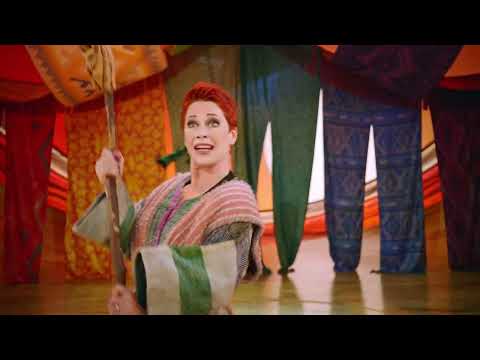
Review
“Joseph” is the rare Lloyd Webber title that looks like a children’s pageant, sounds like a radio station flipping formats, and still lands its emotional punches. The show’s trick is not plot. Everyone knows the coat, the pit, the jail, the dream reading, the reunion. The trick is speed and tone. Tim Rice writes with a wink, then turns around and hands Joseph a genuine lament. Lloyd Webber sets it to tunes so sticky you can feel the glucose.
Lyrically, the piece lives on contrast. The Narrator gives you clean story beats, then the brothers explode into self-justifying groupthink, then the show drops into solitary language for Joseph, who is often the only character allowed to stop joking. That balance keeps the story from becoming pure Sunday-school certainty. The text repeatedly asks a modern question in an ancient setting: when a family decides someone is “special,” who pays for it?
Musically, it is a genre tasting menu: country hoedown, faux-French cabaret, calypso, Elvis pastiche, and pop balladry. That variety is not random. It turns each episode into a theatrical thumbnail, and it makes the storytelling readable for first-timers. You can hear a new style arrive and know, instinctively, that the scene has changed and the rules have shifted.
How It Was Made
The origin story is unusually tidy, because it began small on purpose. “Joseph” started life as a short cantata for a school audience, first performed on 1 March 1968, and it was only about 22 minutes long. The show expanded after people asked to hear it again, which is the most polite form of “commercial demand” theatre ever gets. The official Lloyd Webber history also points to an early “Elvis” flavor for Pharaoh, which explains why the score has always treated parody as a storytelling tool, not an extra.
One detail worth keeping in your pocket: the official timeline notes that the second song added was “Go Go Go Joseph,” framed as a 60s-style number built to carry Joseph’s rise as a problem-solver. That is the show’s blueprint in miniature. It writes in chunks that can explain plot fast, because the piece is designed to move like a children’s story being told at a sprint.
By the time it reached Broadway in 1982, the material had been retooled into a full-length entertainment machine, anchored by a Narrator who can steer the pace and keep the tone buoyant even when the story turns bleak.
Key Tracks & Scenes
"Prologue" / "Any Dream Will Do" (Narrator, Joseph)
- The Scene:
- The Narrator opens the story, then Joseph steps forward as “the dreamer.” In many productions, the light is clean and direct, like a storybook page turning toward you.
- Lyrical Meaning:
- It sells optimism with a faint edge of stubbornness. Joseph’s language is simple because the show wants the audience to understand him immediately. That simplicity becomes its own vulnerability later.
"Jacob and Sons" / "Joseph’s Coat" (Narrator, Jacob, Company)
- The Scene:
- The family is introduced like a roll call, then Jacob gifts Joseph the multicolored coat. The stage picture often brightens hard here, as if favoritism has a spotlight.
- Lyrical Meaning:
- Rice makes envy sound practical. The brothers do not describe themselves as villains. They describe themselves as overlooked. The coat is not just fabric. It is a public ranking system.
"Joseph’s Dreams" / "Poor, Poor Joseph" (Joseph, Narrator, Company)
- The Scene:
- Joseph announces dreams that imply dominance, the brothers react, and the sale to the Ishmaelites follows. Lighting usually cools as the story leaves “family teasing” and enters consequence.
- Lyrical Meaning:
- “Poor, Poor Joseph” is a deceptively breezy narrative aside. It is the show telling you, with a smile, that the hero is powerless against the story everyone else is writing about him.
"One More Angel in Heaven" / "Hoedown" (Reuben, Company)
- The Scene:
- The brothers present the bloodied coat as proof of death, then pivot into a celebration number. The staging can feel intentionally vulgar: grief at one end of the stage, revelry at the other.
- Lyrical Meaning:
- The lyric is moral whiplash. It shows how quickly a group can convince itself that a cruel decision was a necessary one, and then reward itself for making it.
"Potiphar" (Narrator, Joseph, Potiphar, Mrs. Potiphar)
- The Scene:
- Joseph rises in Potiphar’s household, then Mrs. Potiphar’s pursuit detonates the situation. Productions often stage it with comic heat, then slam into a sudden shift when Joseph is blamed.
- Lyrical Meaning:
- The lyric treats reputation as a weapon. Joseph’s virtue is irrelevant once a powerful man decides what he “saw.” The show makes injustice sound casual, because that is how it often works.
"Close Every Door" (Joseph)
- The Scene:
- Joseph is in prison, isolated, and the stage typically narrows to a lone pool of light. The noise of the earlier numbers falls away, leaving breath and line.
- Lyrical Meaning:
- This is the piece’s emotional spine. Rice drops the jokes and writes direct despair. It proves the show is not only pastiche; it can sit with loneliness without trying to distract you.
"Pharaoh Story" / "Poor, Poor Pharaoh" / "Song of the King" (Narrator, Butler, Pharaoh, Company)
- The Scene:
- Act II opens with Pharaoh’s dreams and a court in mild panic. The vibe is often showbiz-meets-government: big entrances, bright lighting, a boss who wants to be entertained while he is terrified.
- Lyrical Meaning:
- The lyrics make power look childish. Pharaoh is not seeking wisdom; he is seeking a solution that preserves his authority. Joseph’s gift becomes currency.
"Pharaoh’s Dreams Explained" / "Stone the Crows" (Joseph, Company)
- The Scene:
- Joseph interprets the cows and corn as a famine forecast, then is elevated to Pharaoh’s right-hand man. The staging often turns ceremonial, with light widening as Joseph regains agency.
- Lyrical Meaning:
- Joseph’s language becomes functional, almost managerial. The show frames survival as planning, not prophecy. It is a pragmatic hero turn, which is why it plays so well for modern audiences.
"Those Canaan Days" / "The Brothers Come to Egypt" / "Grovel, Grovel" (Brothers, Narrator, Joseph, Company)
- The Scene:
- Back home, famine forces the brothers into regret, then into Egypt. “Those Canaan Days” often arrives as a knowingly stylized detour, with costumes and movement doing part of the joke.
- Lyrical Meaning:
- The lyric lets the show laugh at itself while the plot tightens. The brothers are no longer swaggering. They are bargaining. The comedy becomes a mask for guilt.
Live Updates
Information current as of 28 January 2026. If you are looking for an active “official tour” calendar, the current UK tour site’s Tour Dates page shows “No items found.” That is a quiet way of saying the last public schedule has cleared, at least for now. The same Palladium-branded production that toured heavily through 2025 leaned on rotating star casting for Pharaoh, including Jason Donovan for a Southampton run in May 2025, and that kind of casting strategy usually returns when dates return.
What is absolutely still alive is the title’s ecosystem. Regional and repertory theatres keep programming it as dependable family box office. Example: Skylight Music Theatre in Milwaukee announced a run from 14 November through 28 December 2025. Across the UK, US, and Australia, licensed and community productions continue to stack up for 2026, which is the show’s real business model at this point: less “one forever tour,” more constant local life.
Notes & Trivia
- The first performance was on 1 March 1968 for about 200 parents, and the original version ran roughly 22 minutes.
- The official timeline calls “Go Go Go Joseph” the second song added, designed as a 60s-style storytelling engine for Joseph’s dream-solving rise.
- The original Broadway production opened 27 January 1982 and ran 747 performances, closing 4 September 1983.
- The 1982 Broadway opening cast included Bill Hutton as Joseph and Laurie Beechman as the Narrator.
- Tim Rice later pointed to one of his own “pyjamas” couplets as an example of a rhyme that is funnier than he realized at the time.
- The show’s official licensing numbers list underlines how sung-through it is, with plot delivered by continuous music rather than long dialogue scenes.
- The 1982 Original Broadway Cast recording is commonly listed as a Chrysalis release and remains widely available on streaming platforms.
Reception
Reviewers tend to agree on the fundamentals even when they disagree on taste. The best notices praise the show’s speed, its color, and Rice’s ability to sound clever without sounding smug. The harsher takes usually argue that the genre-hopping is the whole point, and therefore also the limitation: you get a brilliant sampler platter, but you rarely get quiet time to chew.
“Tim Rice’s lyrics are impishly clever.”
“The tunes are unpretentious and frankly pastiche.”
“Heart and humour.”
Quick Facts
- Title: Joseph and the Amazing Technicolor Dreamcoat
- Year (Broadway opening): 1982
- Type: Family musical / pop-leaning sung-through comedy
- Music: Andrew Lloyd Webber
- Lyrics: Tim Rice
- Story spine: Genesis tale of Joseph, framed by a Narrator who drives pace and tone
- Selected notable placements: “Joseph’s Coat” as the spark; “Potiphar” as the reputational collapse; “Close Every Door” as the emotional low point; “Pharaoh’s Dreams Explained” as the pivot into power; “Joseph All the Time” as the reveal and forgiveness
- Original Broadway run: Royale Theatre, 27 Jan 1982 to 4 Sep 1983 (747 performances)
- Key album (1982): “Joseph and the Amazing Technicolor Dreamcoat (Original Broadway Cast)”
- Album label (commonly listed): Chrysalis
- Streaming availability: Listed on Spotify and Apple Music as the 1982 Original Broadway Cast recording
- Official song list reference: ALW Show Licensing “Musical Numbers” list
Frequently Asked Questions
- Who wrote the lyrics for “Joseph”?
- Tim Rice wrote the lyrics, with music by Andrew Lloyd Webber.
- Why does the show jump between so many music styles?
- It uses genre as scene-setting shorthand. Each style signals a new episode, a new mood, or a new kind of joke, so the story stays clear even at high speed.
- Where does “Close Every Door” sit in the plot?
- After the “Potiphar” sequence, Joseph is jailed and sings it as a solitary lament before the dream-interpreter storyline begins in earnest.
- Is the 1982 Broadway album the only major recording?
- No. There are earlier concept and cast recordings, plus later London recordings that became especially popular. The 1982 album is the key document of the original Broadway production.
- Is there an active official tour in 2026?
- As of 28 January 2026, the UK tour’s official Tour Dates page shows no listings. The title remains extremely active through regional and licensed productions.
- What is the show’s most important lyric theme?
- Envy and storytelling. The brothers narrate themselves into righteousness, Joseph sings through isolation, and the Narrator keeps the whole machine moving while quietly judging everyone.
Key Contributors
| Name | Role | Contribution |
|---|---|---|
| Andrew Lloyd Webber | Composer | Pop-forward score that uses genre shifts as narrative signposts. |
| Tim Rice | Lyricist | Joke-smart, story-clear lyrics; anchors the show’s tone from parody to pain. |
| Bill Hutton | Original Broadway cast | Originated Joseph on Broadway (1982), shaping the role’s bright sincerity. |
| Laurie Beechman | Original Broadway cast | Early definitive Narrator presence; sets the template for the role’s control and punch. |
| Laurence Connor | Director (UK tour revival package) | Helmed the London Palladium-branded staging that toured widely in 2024 to 2025. |
| JoAnn M. Hunter | Choreographer (UK tour revival package) | Movement style designed for speed, comedy beats, and family-scale spectacle. |
| Morgan Large | Set & Costume Designer (UK tour revival package) | Visual identity built around bold color and quick-change theatrical storytelling. |
| Ben Cracknell | Lighting Designer (UK tour revival package) | Lighting language that supports rapid tonal pivots and “storybook” clarity. |
Sources: IBDB, Andrew Lloyd Webber (official site), ALW Show Licensing, The Guardian, LeftLion, HEC-TV, Playbill, MusicBrainz, Spotify, Apple Music, UK Joseph tour official site, What’s On Stage, BroadwayWorld.