
Hairspray Lyrics: Song List
- Act 1
- Good Morning Baltimore
- The Nicest Kids In Town
- Mama, I'm A Big Girl Now
- I Can Hear The Bells
- (The Legend of) Miss Baltimore Crabs
- It Takes Two
- Welcome To The 60's
- Run And Tell That!
- Big, Blonde And Beautiful
- Act 2
- The Big Dollhouse
- Good Morning Baltimore (Reprise)
- (You're) Timeless To Me
- Without Love
- I Know Where I've Been
- (It's) Hairspray
- Cooties
- You Can't Stop The Beat
About the "Hairspray" Stage Show
Release date of the musical: 2002
"Hairspray" – The Musical Guide & Song Meanings
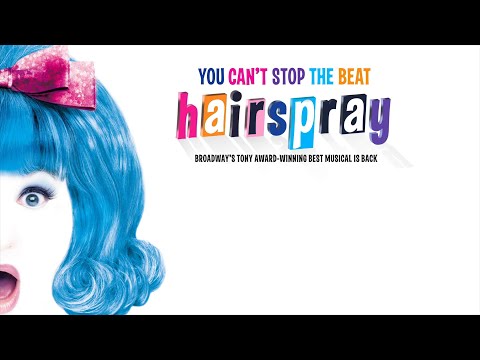
Review: what the lyrics are really doing
“Hairspray” is loud on purpose. It is a musical comedy that refuses to whisper about cruelty. The lyrics keep the jokes bright and the stakes blunt, so you laugh, then notice what you just laughed past. Body shame is a running gag until it is not. Integration is a goal until it becomes a risk. The show’s pop sparkle is not a mask. It is the delivery system.
Marc Shaiman and Scott Wittman write in clean shapes. Couplets you can remember. Rhymes that feel like dance steps. That accessibility is strategic. Tracy’s language has the forward momentum of a teenager who thinks the world is improvable. Velma’s lyric voice is sharper, managerial, obsessed with control. Motormouth’s words slow the score down and make the room listen, which is exactly why that moment matters.
There is also a technical trick in the writing: most numbers are not “about” feelings. They are about choices. Audition. Protest. Escape. Live broadcast. The lyrics keep pushing characters into public space, where identity stops being private and becomes political.
How it was made
The Broadway musical is an adaptation of John Waters’ 1988 film, but it is not simply a stage copy. It expands the social argument and reshapes the story around a theatrical engine: the TV studio, the school, and the record shop as three competing “stages” where Baltimore performs itself.
Behind the scenes, the songwriting partnership is unusually fused. In a Playbill interview published the same day the cast album was released, Shaiman described how he and Wittman avoided the classic “words vs. music” fight, because they communicate almost too easily. That shared rhythm shows up in the lyric craft. The punchlines land musically, not only verbally.
The project also faced early skepticism about marketability. A later anniversary interview recounts a particularly blunt dismissal tied to Tracy’s size. The irony is that the final score became a crowd magnet precisely because it refuses to make her small. It makes the city adjust to her, not the other way around.
Key tracks & scenes
"Good Morning Baltimore" (Tracy)
- The Scene:
- 7 a.m., Monday, 1962. Tracy narrates her neighborhood like it is already a stage. The light feels fresh and uncomplicated, the kind that makes you believe the day will cooperate.
- Lyrical Meaning:
- This is Tracy’s thesis statement. The lyrics teach you how she survives: she praises the world until it starts acting worthy of the praise.
"The Nicest Kids in Town" (Corny Collins, Company)
- The Scene:
- After school, Tracy and Penny sprint home to the TV. The broadcast is shiny, timed, and slightly cruel. Off-camera adults hover like traffic cops.
- Lyrical Meaning:
- The lyrics sell teen innocence as a product. The joke is the title. The danger is how quickly “nice” becomes a gate.
"Mama, I’m a Big Girl Now" (Tracy, Penny, Amber)
- The Scene:
- Three daughters argue with three mothers at once. The stage becomes a living room battlefield, lit with the heat of embarrassment and love.
- Lyrical Meaning:
- It is autonomy disguised as bubblegum. The lyrics treat growing up as a demand for visibility, not permission.
"I Can Hear the Bells" (Tracy)
- The Scene:
- At the auditions, Tracy literally bumps into Link and the world turns into a romantic daydream. Everything softens. Her imagination adds its own spotlight.
- Lyrical Meaning:
- The lyric voice is all forward projection. It is funny, yes, but also revealing: Tracy believes desire is allowed to be optimistic.
"Welcome to the 60s" (Edna, Tracy, Company)
- The Scene:
- Edna has been inside for years. Then the phone starts ringing, and Tracy pushes her mother toward the door. The makeover is not vanity. It is movement.
- Lyrical Meaning:
- The lyrics flip “change” into a personal verb. The decade is a metaphor, but the point is concrete: step outside, take up space, let people stare.
"Run and Tell That" (Seaweed)
- The Scene:
- After a gym-class dodgeball mess, Seaweed leads the group toward his neighborhood and the record shop. It is a guided tour with a warning baked in.
- Lyrical Meaning:
- Seaweed’s lyrics are swagger with a purpose. He is naming an obvious truth the white kids have never had to think about: belonging is not evenly distributed.
"I Know Where I’ve Been" (Motormouth Maybelle)
- The Scene:
- Act Two. The friends consider giving up. Motormouth stops the momentum and turns the room into a march. The lighting often narrows here, like a path being drawn in real time.
- Lyrical Meaning:
- The lyric is memory as fuel. It refuses the comfort of vague hope. It names struggle, then insists on continuing anyway.
"You Can’t Stop the Beat" (Company)
- The Scene:
- The live, primetime spectacular. Amber performs “Cooties,” then Tracy storms onto the set with Link, Penny, Seaweed, Little Inez, and the rest. The finale happens inside TV logic: time is tight, stakes are public, and the country is watching.
- Lyrical Meaning:
- The lyrics turn social change into a physical law. The song’s genius is its certainty. It sounds like celebration, but it is also a dare: try to stop it and look ridiculous trying.
Live updates (2025/2026)
Information current as of January 27, 2026.
In the UK, the official tour site states the tour is finished. That does not mean the show is “gone.” It means the current commercial touring cycle has ended, and the title returns to its other life: a high-frequency licensing and regional staple.
In the U.S. and beyond, Music Theatre International’s productions map lists a steady stream of 2026 engagements (community, youth, regional, and special venues). That list is the clearest proof of the show’s present-tense footprint: “Hairspray” keeps getting produced because it still fills seats and still gives ensembles something to say together.
If you are tracking the soundtrack album side, the 2002 Original Broadway Cast Recording remains widely distributed via Sony Classical and related catalog reissues, and it is still the fastest way to hear the score as Broadway first sold it.
Notes & trivia
- The MTI synopsis pins the opening at “7 a.m. on a Monday morning in 1962 Baltimore,” with “Good Morning Baltimore” as Tracy’s first statement of intent.
- The book’s structure treats TV as a battleground: the climax is explicitly a live, primetime broadcast, with Tracy and company storming the set before the finale.
- The cast album “Hairspray: Original Broadway Cast Recording” was released August 13, 2002, recorded June 29 to July 1, 2002, and released by Sony Classical.
- NPR’s 2003 Tony Awards report notes the show won eight Tonys, including major categories like score and book.
- A widely cited early critical framing described the show as “Nice,” but in neon, not bland. That line stuck because it explains the trick: pleasure first, message attached.
- The official UK tour site now labels the tour “finished,” even while older “tourdate” pages remain archived as news items.
- MTI’s production map entries show 2026 runs across multiple states and venues, which is a useful snapshot of where the show is actively being staged right now.
Reception
“Hairspray” arrived with a weirdly tricky task: be a party without trivializing its politics. Critics generally praised how the score’s bounce carried serious material without turning it into homework. Over time, the reception story has shifted again. The songs that once read as “retro fun” now land as craft exercises in how to smuggle an argument into a hook.
“Nice … spelled out in neon.”
“I Know Where I’ve Been … brings the audience to its feet.”
The creators recall “Good Morning Baltimore” and “I Know Where I’ve Been” arriving fast once the project clicked.
Quick facts
- Title: Hairspray
- Year: 2002 (Original Broadway version)
- Book: Mark O’Donnell, Thomas Meehan
- Music: Marc Shaiman
- Lyrics: Scott Wittman and Marc Shaiman
- Based on: John Waters’ 1988 film “Hairspray”
- Musical palette: 1960s dance-pop, R&B, and gospel influence (especially for Motormouth’s major number)
- Selected notable placements (story points): Auditions (“I Can Hear the Bells” setup); Edna’s reentry into the world (“Welcome to the 60s”); protest and recommitment (“I Know Where I’ve Been”); live broadcast climax (“You Can’t Stop the Beat”)
- Album: Hairspray: Original Broadway Cast Recording (release date: Aug. 13, 2002; label: Sony Classical)
- Availability: Licensed via Music Theatre International (MTI)
Frequently asked questions
- Can you publish the full “Hairspray” lyrics here?
- No. Full lyrics are copyrighted text. I can help with song meanings, where each number lands in the story, and what the lyrics are doing dramatically.
- Is “Hairspray” really a civil rights musical or is that just background?
- It is central, not decorative. The plot’s TV integration campaign drives Act Two, and “I Know Where I’ve Been” functions as the show’s moral spine.
- Where does “Welcome to the 60s” happen?
- At the Turnblad apartment, when Tracy pushes Edna into the public world and Edna receives a makeover as Tracy’s popularity explodes.
- What is the climactic “TV moment”?
- The live, primetime spectacular of “The Corny Collins Show,” where Tracy and company storm the set and the finale seals integration on-air.
- Is the UK tour still running in 2026?
- The official UK tour site says the tour is now finished as of January 27, 2026.
- How active is the show on stages right now?
- Very active at the licensing level. MTI’s productions map lists numerous 2026 engagements across multiple venues.
Key contributors
| Name | Role | Contribution |
|---|---|---|
| Marc Shaiman | Composer, co-lyricist | Built a 60s-pop and R&B score with Broadway lift, calibrated for big ensemble punch. |
| Scott Wittman | Lyricist, co-lyricist | Wrote lyric language that stays catchy while carrying sharp social observation. |
| Mark O’Donnell | Book | Structured the TV-and-streets story engine and its comedy timing. |
| Thomas Meehan | Book | Co-shaped the adaptation from film to stage, emphasizing momentum and clarity. |
| Music Theatre International (MTI) | Licensing | Licenses the show and publishes synopsis and production listings for current stagings. |
| Sony Classical | Record label | Released the Original Broadway Cast Recording (2002), the core audio document of the Broadway score. |
| John Waters | Source creator | Wrote and directed the 1988 film that the musical adapts and re-frames for stage. |
Sources: MTI (full synopsis, show page, productions map); Playbill; Entertainment Weekly; The Guardian; NPR; Masterworks Broadway; AllMusic; Official Hairspray UK Tour site; YouTube.