
Funny Girl Lyrics: Song List
- Act 1
- Overture
- If A Girl Isn't Pretty
- I'm The Greatest Star
- Cornet Man
- Who Taught Her Everything
- His Love Makes Me Beautiful
- I Want To Be Seen With You Tonight
- Henry Street
- People
- You Are Woman
- Don't Rain On My Parade
- Act 2
- Sadie, Sadie
- Find Yourself A Man
- Rat-tat-tat-tat
- Who Are You Now?
- The Music That Makes Me Dance
- Don't Rain On My Parade (Reprise)
About the "Funny Girl" Stage Show
Ray Stark, during several years and 12 different variants of cooperation with various writers wanted to do this story much. As a result, it only led to embezzlement of personal $ 50 thousand. However, the 12th on account version succeed, and he decided to satisfy his demand in upcoming film, sold it for 0.4 million dollars (+%) to one of the film studios. On the basis of the film, a musical was made, which in 1964 has been taken to the stage after 17 previews. It visited 3 different theaters, including the Majestic. Closure was held at The Broadway Theatre, after a fantastically successful 1340+ exhibitions. G. Kanin was the director, C. Haney – was responsible for the choreography. In addition to the main star, Barbra Streisand, the cast list also included: J. Desmond, L. Kazan, K. Medford, J. Stapleton & D. Meehan. M. Hines later replaced Streisand, also bringing her husband along, P. Ford.
In 1966, Streisand returned briefly in the musical to be seen in its cast in the West End, under the leadership of director L. Kasha. L. Shane replaced Streisand after her pregnancy and continued to play there until closure.
US tour began in 1996, 32 years after the start on Broadway, now presenting a show as Broadway’s classics (of what, in fact, musical was at that time). Despite the planned visit to thirty cities, the show attended only a few before its closure in the same in 1996 (obviously, because of the reason of box office failure).
Among subsequent resurrections of production, was a concerto of 2002 in New Amsterdam Theatre, with top stars Kristin Chenoweth, Whoopi Goldberg and Idina Menzel. Among the other actors were: R. Lake, G. Beach, C. Carmello, P. Gallagher, S. Foster, L. Cariou, A. Gasteyer, L. White, J. Krakowski, A. Playten, J. Kuhn, B. Neuwirth, J. Murney, A. Martin, LaChanze & The Rockettes. By the way, the The Rockettes band spawned followers, which were especially numerous among the girly music bands, the same frivolous.
Release date of the musical: 1964
"Funny Girl" – The Musical Guide & Song Meanings
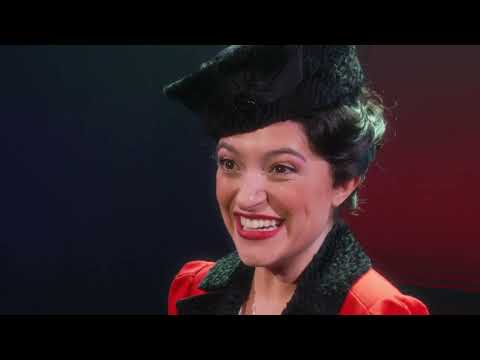
Review: what the lyrics really reveal
“Funny Girl” sells you a star origin story, then quietly admits the cost of being watched for a living. Bob Merrill’s lyrics are built for velocity. Punchlines land fast. Rhymes turn on a dime. But the best lines are the ones that stumble, because Fanny Brice is never fully fluent in the kind of femininity the industry expects. The songs do not “fix” her. They turn her refusal into fuel.
Jule Styne writes melody like a spotlight operator. He knows exactly when to widen the beam and when to cut it down to one face. Listen to how quickly the score pivots from brassy showbiz chatter to lonely, almost conversational confession. That tension is the show’s engine: Fanny is funniest when she is cornered, and most romantic when she is already losing.
There is a structural truth “Funny Girl” does not hide. Nicky Arnstein is a mood, not a motor. The lyric writing gives him charm and a few elegant phrases, but the show’s language belongs to Fanny, her mother, and Eddie Ryan. That imbalance is part of the point. Fanny can sing her way into a room. She cannot sing her way into equality inside a marriage.
Listener tip: if you only know the 1968 film, start with the 1964 cast album for plot clarity, then sample the 2022 Broadway cast recording for revised pacing and updated comic shape. You will hear where the book tightens and where the show still depends on sheer personality.
How it was made
The 1964 musical was shaped as a semi-biographical vehicle for Fanny Brice’s story, produced by Ray Stark, with a book by Isobel Lennart, music by Jule Styne, and lyrics by Bob Merrill. It opened at the Winter Garden Theatre on March 26, 1964, then moved to the Majestic and later the Broadway Theatre during its run. It became an unusually durable hit for a property so identified with one performer, and that identity shadowed every revival conversation for decades.
The songwriting process left behind a revealing paper trail of ideas that did not survive. Out-of-town versions and “trunk songs” show how hard the creators pushed to find the correct “big ballad” moment for Fanny, and how fiercely Streisand’s taste shaped what stayed. The show’s emotional center is not a single number. It is the way the score keeps letting Fanny win the room, then letting silence return the moment she is alone.
For the 2022 Broadway revival, Harvey Fierstein revised the book and, in at least one well-noted case, the production shifted where certain numbers land to rebalance Act II momentum. That kind of change matters for lyric interpretation because it changes who “owns” the moral of a scene.
Key tracks & scenes
"I’m the Greatest Star" (Fanny)
- The Scene:
- Early in the story, before anyone powerful agrees with her. Fanny storms the stage with raw confidence and slightly desperate timing. Lights snap brighter as if the theatre itself is arguing back.
- Lyrical Meaning:
- This lyric is ambition as self-defense. She is not bragging because she feels safe. She is bragging because she has to. The comedy masks a true fear: if she pauses, the world will decide she does not belong.
"People" (Fanny)
- The Scene:
- On Henry Street, away from the glitter. The staging often strips down to a simple street tableau, warmer light, fewer distractions, like the show is giving her permission to speak plainly.
- Lyrical Meaning:
- Fanny admits she needs connection, and she hates herself for needing it. The lyric is famous for its softness, but the sharper truth is underneath: she has made a career out of being laughed at, and now wants to be held.
"You Are Woman, I Am Man" (Fanny, Nick)
- The Scene:
- A flirtation staged like a negotiation. Their bodies circle, close, retreat, return. Lighting goes golden and slightly unreal, as if romance is a costume they try on together.
- Lyrical Meaning:
- The lyric is gender role-play with a wink, but it also foreshadows the trap. Nick’s masculinity is treated as inevitable. Fanny’s “womanhood” is treated as something she must accept to be loved.
"Don’t Rain on My Parade" (Fanny)
- The Scene:
- Fanny chooses marriage anyway, and the show frames that choice as a sprint. The tempo is forward motion. Lights flare like marquee bulbs. The orchestra sounds like a dare.
- Lyrical Meaning:
- It is usually heard as triumph. In context, it is also self-persuasion. She is talking to herself as much as to the world, insisting that love will not cost her autonomy.
"Sadie, Sadie" (Fanny, Company)
- The Scene:
- Long Island domestic fantasy with a celebratory polish. The scene is often lit like a magazine spread, too clean, too curated. Guests rotate around her as if she is on display again.
- Lyrical Meaning:
- The lyric celebrates the ring, then quietly reveals her awareness of risk. Fanny has always understood performance. Marriage asks her to perform normalcy, and that is harder than a Ziegfeld entrance.
"Rat-Tat-Tat-Tat" (Fanny, Ziegfeld Company)
- The Scene:
- Ziegfeld spectacle. Symmetry, feathers, precision tap. Bright white light bounces off costumes so the stage looks like it is sparkling even when nobody moves.
- Lyrical Meaning:
- This is Fanny inside the machine, leading it. The lyric is about glamour, but the deeper point is control. Here, she knows the rules and breaks them on purpose, in public.
"The Music That Makes Me Dance" (Fanny)
- The Scene:
- After bad news about Nick, she is alone. Many stagings isolate her downstage with a curtain or bare space behind, a performer left with nothing but breath and truth.
- Lyrical Meaning:
- The lyric is surrender without collapse. She confesses that love has trained her body, not just her heart. The song stings because it admits how deeply she has rearranged herself for someone who cannot stay.
"Who Are You Now? / People (Reprise)" (Fanny, Nick)
- The Scene:
- Late-stage fracture. The lighting cools. The stage picture gets less ornate, as if the show is taking away the “period” comfort and leaving only consequence.
- Lyrical Meaning:
- The lyric is a relationship audit. “People” returns, but the warmth is compromised. She still needs people. She is learning that needing the wrong person can feel like hunger.
Live updates 2025/2026
Information current as of January 24, 2026. The 2022 Broadway revival closed on September 3, 2023. A North American tour launched September 9, 2023 and concluded April 13, 2025, and its later casting included Hannah Shankman as Fanny Brice with Stephen Mark Lucas as Nick Arnstein in 2024 and into 2025.
For now, “Funny Girl” is positioned for regional life. Concord Theatricals lists the title for licensing, which is the practical signal that the show’s post-revival future is moving from star vehicle to repertory option. That shift changes how audiences meet the lyrics: without celebrity mythology, Fanny’s lines read less like a legend and more like a worker’s survival humor.
On record, the modern anchor is the 2022 “New Broadway Cast Recording,” released digitally November 18, 2022 with a physical release on January 20, 2023. It is a useful complement to the 1964 album, not because it replaces it, but because it documents how contemporary pacing and orchestrational polish can sharpen jokes and slightly reframe emotional timing.
Notes & trivia
- The original Broadway production opened March 26, 1964 and ran 1,348 performances, closing July 1, 1967 after transfers to multiple theatres.
- The 1964 original Broadway cast recording was recorded April 5, 1964 and released that same month, a rapid turnaround that helped freeze the “original” vocal blueprint in public memory.
- Myth-check: “My Man” is iconic in the 1968 film, but it is not part of the 1964 stage score. The movie imported it, and even that choice had internal debate.
- The 2022 Broadway revival used a revised book by Harvey Fierstein, and contemporary reviews noted that some numbers were shifted in placement, affecting Act II flow.
- In the stage version, “People” is placed on Henry Street, a grounded location that makes the lyric feel like a private admission rather than a showbiz statement.
- The 2022 “New Broadway Cast Recording” includes 22 tracks and became the first new Broadway cast album for the show since 1964.
- The 2022-2023 Broadway run became a case study in how casting changes can alter both critical narrative and commercial fate.
Reception
Then and now, the consensus splits in a revealing way: critics often admire the score more than the book, and they often treat the show as a referendum on whoever is playing Fanny. That habit is unfair, but it is also the point of the property. “Funny Girl” is written as a star system thriller. It flatters the performer, then traps her inside comparison.
“Vivacious and delightfully glitzy, all bright lights and dazzling tap numbers.”
“There are high points to this new Funny Girl… But this is Broadway; the bar is higher than that.”
“She’s vulnerable, with big quivering eyes.”
Quick facts
- Title: Funny Girl
- Year: 1964 (original Broadway opening)
- Type: Musical comedy
- Music: Jule Styne
- Lyrics: Bob Merrill
- Book: Isobel Lennart (revised for 2022 Broadway by Harvey Fierstein)
- Basis: The life and career of Fanny Brice and her relationship with Nicky Arnstein
- Original Broadway run: Mar 26, 1964 to Jul 1, 1967; 1,348 performances
- Original cast album: Recorded Apr 5, 1964; released Apr 1964; 17 tracks
- Selected notable placements: “People” on Henry Street; “Don’t Rain on My Parade” as Fanny commits to Nick; “Rat-Tat-Tat-Tat” inside Ziegfeld spectacle; “The Music That Makes Me Dance” as the relationship collapses
- Modern cast album: “Funny Girl (New Broadway Cast Recording)” released digitally Nov 18, 2022; 22 tracks
- Licensing: Available via Concord Theatricals
| Version | What you learn by listening | Why lyric meaning shifts |
|---|---|---|
| 1964 Original Broadway Cast Recording (Capitol) | Cleaner plotline, brisker period patter, the foundational vocal phrasing that shaped public expectation. | Fanny’s humor reads as armor first, romance second, because the album moves fast and rarely lingers. |
| 2022 New Broadway Cast Recording (Masterworks Broadway) | Revised pacing and modern sound capture, with a performance style shaped by contemporary Broadway vocal production. | Jokes can land sharper, and certain emotional turns feel more overt because the recording aesthetic is less “roomy” and more close-miked. |
Frequently asked questions
- Is “Funny Girl” based on a true story?
- Yes, loosely. The plot draws from Fanny Brice’s career and her relationship with Nicky Arnstein, shaped into a theatrical rise-and-fall romance.
- Is “My Man” in the stage musical?
- No. It is strongly associated with the 1968 film, but it is not part of the 1964 stage score. The stage show’s emotional breakup centerpiece is “The Music That Makes Me Dance.”
- Where does “People” happen in the story?
- On Henry Street, in a grounded neighborhood setting that frames the lyric as private vulnerability rather than showbiz polish.
- Why is “Don’t Rain on My Parade” not just a victory song?
- Because it arrives at a moment where Fanny is choosing a life path. The lyric sounds like triumph, but it also carries the pressure of self-persuasion.
- What is the most useful album for first-time listeners?
- The 1964 original cast album is the clearest entry point for story and classic phrasing. The 2022 cast recording is best as a second listen to compare updated timing and sound.
- Is “Funny Girl” touring in 2026?
- The major North American tour that began in 2023 closed on April 13, 2025. As of January 24, 2026, the show’s momentum is primarily through licensing and regional productions.
Key contributors
| Name | Role | Contribution |
|---|---|---|
| Jule Styne | Composer | Wrote a score that toggles between brassy showbiz drive and intimate confession. |
| Bob Merrill | Lyricist | Created fast, joke-ready lyrics that also expose Fanny’s need for love and control. |
| Isobel Lennart | Book writer | Built the narrative frame of Fanny’s rise and the romance that complicates it. |
| Ray Stark | Producer (original Broadway) | Steered the property into Broadway life and shaped its long afterlife as a star vehicle. |
| Garson Kanin | Director (original Broadway) | Directed the original staging that established the show’s performance rhythm. |
| Carol Haney | Choreographer (original Broadway) | Created movement language that bridged vaudeville energy and Broadway polish. |
| Harvey Fierstein | Book reviser (2022 Broadway) | Reworked dialogue and comic structure for contemporary audiences and pacing needs. |
| Michael Mayer | Director (2022 Broadway revival) | Guided the modern staging grammar that fed the revival and its tour. |
| Masterworks Broadway (Sony) | Label (2022 cast recording) | Released the modern cast recording that documents the revival-era interpretation. |
Sources: IBDB, Playbill, Masterworks Broadway, Apple Music, Concord Theatricals, Variety, The Guardian, Vogue, The New Yorker, Funny Girl official site, Barbra Archives, BroadwayWorld, Tours to You.