
Follies Lyrics: Song List
- Prologue
- Overture
- Beautiful Girls
- Don't Look At Me
- Waiting For The Girls Upstairs
- Rain on the Roof
- Ah! Paris
- Broadway Baby
- The Road You Didn't Take
- In Buddy's Eyes
- Who's That Woman?
- I'm Still Here
- Too Many Mornings
- The Right Girl
- One More Kiss
- Could I Leave You?
- You're Gonna Love Tomorow/Love Will See Us Through
- The God Why-Don't-You-Love-Me Blues
- Losing My Mind
- The Story Of Lucy & Jessie
- Chaos
- Live, Laugh & Love
- Finale
About the "Follies" Stage Show
The opening took place on Broadway in 1971, after a preview in Boston in 1971. Winter Garden hosted premiere, Michael Bennett was its developer (choreographer & co-director), S. Sondheim did music, B. Aronson designed the scene, F. Klotz was a costume designer, T. Musser was illuminator. Actors: A. Smith, J. McMartin, D. Collins, G. Nelson, Y. D. Carlo, F. D'Orsay, J. Johnston, M. McCarty, A. Moss, E. Shutta, M. Stringer, C. Welch, T. Whitman.
The closure was a year later, after 534 shows, including 12 preliminary ones. Although a good number of hits, the show was a financial failure, bringing its producers almost USD 0.8 million losses. The show did not go on tour or moved across the ocean, as in Los Angeles the show didn’t succeed. Broadway’s staging room was not filled to the required percentage, although the show is now considered classics, more than 40 years after its premiere.
Recording of music was cutted during recording and some songs were not only cut, but discarded at all in an attempt to fit a long music party on 1 disc instead of the two previously planned – due to the commercial failure of the musical.
Subsequent noticeable plays were: 1972 (LA), 1985 (Lincoln Center, twice), 1987–1989 (West End, Shaftesbury Theatre, 644 show, reworked version), 1988 (Michigan Opera Theatre), 1995 (Houston, Texas and 5th Avenue Theatre), 1996 and 1998 (Dublin), 1996 (London), 1998 (Sydney), 2001 (Broadway, Belasco Theatre, 140 hits, including preliminary), 2002 (London), 2002 (Los Angeles), 2005 (Massachusetts), 2007 (New York City), 2011 (Broadway – this show brought its creators USD 7 million), 2011 (Kennedy Center), 2012 (Los Angeles), 2013 (France).
Release date of the musical: 1971
"Follies" – The Musical Guide & Song Meanings
Review
What hurts more: the life you lived, or the life you rehearsed in your head for decades? "Follies" traps its characters in a reunion party inside a theatre marked for demolition, then makes the language do the demolition. Stephen Sondheim’s lyrics do not decorate the plot. They accuse it. Every rhyme feels like a choice someone avoided, every punchline feels like a bruise someone learned to hide.
The score plays a double game. The book scenes are written in Sondheim’s own voice, sharp and conversational, with lines that tilt from charm to cruelty in the span of a breath. Then the pastiche numbers arrive: love letters to early 20th-century song forms, built with period manners and modern psychology. That friction is the engine. When a character slides into a torch song or a vaudeville turn, it is not nostalgia. It is a mask. The show keeps asking why we prefer the mask.
Listen for how the lyrics turn memory into stagecraft. Names become props. Places become punchlines. Sondheim uses internal rhymes and clipped phrasing to mimic how people talk when they are lying to themselves. The biggest trick is that the tunes sound like yesterday while the words sound like now. That is why the show still lands. The sentimentality is always interrupted by precision.
Viewer tip: pick a seat with a clean view of the upstage picture frame and any scrim or mirror effects. "Follies" often plays its ghosting in layers. Mid-orchestra or front mezzanine can be ideal for catching both the living faces and the younger doubles.
How It Was Made
"Follies" came out of a director’s provocation and a writer’s obsession with theatrical history. Harold Prince wanted a musical about aging showgirls and the machinery that once made them glitter. James Goldman supplied the book’s marital realism. Sondheim answered with two interlocked vocabularies: contemporary confession, and period pastiche engineered down to harmonic habits and lyrical etiquette.
What reads effortless on the page was often solved under pressure. During the early run, Sondheim described writing major sections of the late show sequence while the production team wrestled with how to return from fantasy to reality. His solution was blunt and theatrical: break the spell onstage. That idea became one of the show’s most famous structural jolts.
There is also a practical, performer-driven origin story inside the most famous survival anthem in the score. "I’m Still Here" was shaped to suit Yvonne De Carlo, who needed a number that could carry both comeback charisma and bruised autobiography. The lyric’s list of cultural touchstones is funny, then quietly savage. The joke is that history keeps happening to her. The sting is that she outlasts it.
Key Tracks & Scenes
"Beautiful Girls" (Roscoe)
- The Scene:
- A crumbling theatre. Folding chairs. Old friends re-entering like they own the place, even as the walls give up. The lighting often flatters the space first, then betrays it as faces come into focus.
- Lyrical Meaning:
- The lyric sells glamour the way an emcee sells time. It is advertising as self-defense. The refrain insists on beauty because the room is already arguing back.
"Broadway Baby" (Hattie)
- The Scene:
- A bright pocket of stage light, as if the theatre briefly remembers what it used to do. Hattie performs for the room and for the ghosts at once, with a grin that is part hope, part habit.
- Lyrical Meaning:
- Optimism becomes a technique. The lyric is all forward motion, but the subtext is hunger. It captures the industry’s promise and the performer’s willingness to believe it one more time.
"I’m Still Here" (Carlotta)
- The Scene:
- Carlotta steps out of the party chatter and into something like testimony. The room listens differently. The spotlight tightens. The laughter dries up, then returns with an edge.
- Lyrical Meaning:
- This is a list song that becomes a biography. The lyric treats survival as a career path. Each reference is a scar disguised as a joke, and the final effect is defiant rather than sentimental.
"Too Many Mornings" (Ben and Sally)
- The Scene:
- Time slows. The ghosts are close now, sometimes visible as younger doubles hovering in the same space. The staging often softens into dusk tones, as if the building itself is eavesdropping.
- Lyrical Meaning:
- The lyric is regret in present tense. It does not say, "we were wrong." It says, "we kept choosing the wrong next thing." The language is plain, which makes it brutal.
"Could I Leave You?" (Phyllis)
- The Scene:
- A controlled room turns unsafe. Phyllis is still, then suddenly surgical. Lighting often isolates her from Ben, even when they are inches apart. The temperature drops.
- Lyrical Meaning:
- The song is a legal brief disguised as wit. The lyric’s conditional phrasing is the point: she is not deciding whether to leave. She is cataloguing what he has already done to the marriage.
"Losing My Mind" (Sally)
- The Scene:
- The party has slid into "Loveland," a glamorous breakdown staged as a period revue. Sally becomes a torch singer under a lonely beam, with movement around her that feels like a hallucination.
- Lyrical Meaning:
- The lyric is obsession rendered as repetition. The syntax circles, the images narrow, and the vocabulary turns inward. It is not romance. It is fixation with the manners of romance.
"The Story of Lucy and Jessie" (Phyllis)
- The Scene:
- A brassy burst with chorus boys and sharp angles. Choreography sells polish while the lyric confesses fracture. The stage becomes a magazine cover that keeps tearing.
- Lyrical Meaning:
- Two selves argue inside one body. The lyric is clever, fast, and slightly cruel, because self-knowledge is not always gentle. It frames identity as a duet you cannot stop singing.
"Live, Laugh, Love" (Ben)
- The Scene:
- Ben presents himself as a debonair leading man in a classic show number, until the scene ruptures. In some stagings, the band keeps going as his confidence collapses, making the disconnect feel cruelly comic.
- Lyrical Meaning:
- The lyric is a slogan that cannot carry real life. When Ben loses the words, it is not a gag. It is the show admitting that fantasy has limits, and the body pays the bill.
Live Updates
Information current as of January 2026. "Follies" remains a prestige title that turns up in opera houses, major subsidized theatres, and high-end regional runs because the material rewards large forces and mature performers. In 2025, multiple European and UK-adjacent institutions have programmed or discussed productions, including opera-company stagings and a clearly advertised September 2025 run in Belfast. That pattern matters: the show’s lyric density plays well in houses that trust audiences to listen closely.
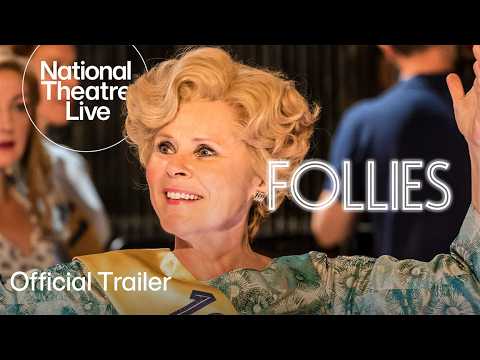
Streaming and event-cinema releases also keep the score circulating. The National Theatre Live capture has functioned as a reference point for a newer generation of listeners, and it has reshaped expectations around the scale and clarity of "Loveland." Meanwhile, licensed productions continue through the standard theatrical rights ecosystem, keeping the show active even when Broadway is quiet.
Notes & Trivia
- Many people misfile "Send in the Clowns" under "Follies." It is from "A Little Night Music." The mix-up happens because both songs became adult-pop standards.
- "Loveland" is written as a full internal revue, with its own emotional logic and period manners, not simply a finale medley.
- "I’m Still Here" was shaped for Yvonne De Carlo and written to land as both comic patter and personal history.
- Early runs and later revivals have differed on intermission placement, which changes how "Too Many Mornings" lands as an Act One capstone.
- The original 1971 cast album is famous for what it could not fit. Format limits forced cuts, which is why later recordings became essential for hearing the full architecture.
- Orchestrations by Jonathan Tunick are a major part of the storytelling, because the sound itself signals which "era" the scene is claiming.
- If "Losing My Mind" feels like it knows Gershwin, that is not accidental. Sondheim openly described borrowing its torch-song DNA from an earlier standard.
Reception
"Follies" has always been a critic magnet because it refuses easy comfort. Some writers praised the ambition and the writing at once. Others admired the craft while resisting the book’s bleakness. Over time, the balance has shifted toward respect, partly because revivals clarified the staging, and partly because Sondheim’s lyric style became the language of modern musical theatre.
"It is stylish, innovative... it has some of the best lyrics I have ever encountered."
"By the end... 'Losing My Mind'... her voice seems to dissolve on the song’s final syllable."
"The transitional high point is Phyllis' seething rebuke to Ben, 'Could I Leave You?'"
Quick Facts
- Title: Follies
- Year: 1971 (Broadway premiere)
- Type: Book musical with integrated pastiche revue sequences
- Music & Lyrics: Stephen Sondheim
- Book: James Goldman
- Original Broadway director: Harold Prince (co-directed with Michael Bennett)
- Choreography: Michael Bennett
- Orchestrations: Jonathan Tunick
- Notable staging vocabulary: "ghosting" younger selves alongside present characters
- Original cast album: Recorded April 11, 1971; produced by Dick Jones; issued on Capitol (SO-761) in its initial LP form
- Later key recordings: major concert and revival albums (including 1985 and later stage revivals) that restore more of the score
- Selected notable placements: "Broadway Baby" as a showbiz credo; "I’m Still Here" as the veteran survival anthem; "Losing My Mind" as the obsession torch song inside "Loveland"
Frequently Asked Questions
- Is "Follies" based on a true reunion?
- Not a single documented event. It is a composite fantasy built from Broadway revue history and the social ritual of the cast reunion, then sharpened into a drama about marriage and memory.
- Who wrote the lyrics?
- Stephen Sondheim wrote both music and lyrics. The book is by James Goldman.
- Why are there two "styles" of songs?
- The show splits its musical language. The present-day scenes sound like contemporary Sondheim. The performance numbers echo earlier Broadway idioms, as if the characters can only tell the truth when they dress it up.
- What is "Loveland"?
- A late-show fantasia that turns the characters’ emotional crises into a staged revue. It is where denial becomes production design.
- Which recording should I start with if I care about lyrics?
- If you want the original vocal colors, start with the 1971 cast album, while knowing it is incomplete. Then move to a later revival or concert recording for fuller narrative context.
- Is there a movie?
- There is no standard feature-film adaptation. The most widely circulated screen version is the professionally filmed stage production released through event-cinema and streaming channels.
Key Contributors
| Name | Role | Contribution |
|---|---|---|
| Stephen Sondheim | Composer & Lyricist | Wrote the dual-language score: contemporary confession plus period pastiche. |
| James Goldman | Book Writer | Built the reunion framework and the marital pressure cooker. |
| Harold Prince | Director / Producer (original Broadway) | Shaped the concept and the haunting theatrical grammar. |
| Michael Bennett | Director / Choreographer (original Broadway) | Balanced realism with showbiz spectacle, especially in large ensembles. |
| Jonathan Tunick | Orchestrator | Delivered era-specific orchestral color that helps distinguish memory from now. |
| Tharon Musser | Lighting Designer (original Broadway) | Defined how the show "ghosts" the stage through light and shadow. |
| Boris Aronson | Scenic Designer (original Broadway) | Created the iconic decayed-theatre environment that frames every regret. |
| Florence Klotz | Costume Designer (original Broadway) | Helped distinguish eras and identities through silhouette and sheen. |
| Dick Jones | Original Cast Album Producer | Produced the 1971 cast recording session. |
| Bob Arnold | Original Cast Album Engineer | Engineered the 1971 cast recording. |
Sources: Playbill Vault, Music Theatre International, National Theatre (YouTube trailer), Sondheim Society, Sondheim Guide, PBS American Masters, The New Yorker, The Guardian, The Hollywood Reporter, OVRTUR.