
Fantasticks, The Lyrics: Song List
About the "Fantasticks, The" Stage Show
There were quite a lot of productions of musical and it even holds the record for the number of off-Broadway plays, showing fantastic 17000+ for all time! It was first exhibited in 1956 in New Mexico as an amateur staging, where the main antagonist was El Gallo, which eventually turned into a narrator. Setting was unusual: the scene has been extended into the audience so that beholders were not sitting on one side but three; not involved at some stages actors were just sitting on chairs; freezing techniques have been used on environment – the moon, the sun and their light. After reconsideration of the show, it was opened again in 1959, and Off-Broadway was opened in 1960 in New York, with actors T. Jones (one of the creators, making the libretto), J. Orbach, K. Nelson & R. Gardner.
The spectacle itself also included a lot of styles, from classics to techniques of modern comedy. The first production was extremely low-budget (a total of USD 0.9 thousand at the design of stage and another half a thousand for the costumes, while the usual Broadway shows demand in average for 280 times more). Producers shrank themselves to a curious USD 2.000 collectively for a full release of show, hiring only 2 or 3 people to do everything. However, it all looked quite intimate, and this has won the loyalty of viewers. So the show, which opened in 1960, was completed only in 2002 (lasting for phenomenal 42 years!), showing 17162 times. Truly brilliant result!
For all its staging, following actor were involved in it: Elliott Gould, Kristin Chenoweth, Glenn Close & Liza Minnelli, among other celebrities.
Productions of 1961 and of 1990 were in London, the resurrection of Off-Broadway was 4 years after the closing, in 2006 and it lasted to its 50th anniversary (in 2010), and even further, to 2011. In the memory after one of its actors, a theatre was named – Jerry Orbach Theater.
Release date of the musical: 1960
"The Fantasticks" – The Musical Guide & Song Meanings
Review
Why does a show built from a stick, a bench, and a cardboard moon still land like a punch? Because “The Fantasticks” is honest about the one thing most love stories hide: somebody is always staging the scene. Tom Jones’ lyrics act like a friendly narrator, then slowly admit they are also a warning label. The language is simple until you notice how often it turns, how often it corrects itself, how often it says “remember” as if memory is a form of consent.
The score by Harvey Schmidt carries a tight network of recurring ideas. Seasons are not decoration here. They are structure. “Try to Remember” opens on September, when the world feels soft and possible. The reprise returns in December, when the same images get colder and sharper, and the lyric finally says the quiet truth: pain is not a twist, it is the price of depth. The show’s famous minimalism is not a budget story, it is a lyrical stance. If the audience supplies the scenery, the audience also shares the blame when fantasy turns into harm.
Musically, Schmidt writes tuneful lines that can pass as folk-inflected waltz one moment and musical comedy patter the next. That shift matters. Innocence sings in long vowels. Disillusionment snaps into lists, bargains, and sales pitches. El Gallo’s material is the hinge. He can sound like a poet, then like a contractor quoting options. That duality is the show’s engine.
How It Was Made
Before it was “The Fantasticks,” it was a Western-leaning adaptation with a different title and a bigger footprint than the team could afford. Over time, Jones and Schmidt condensed, cut, and reinvented the piece into something that could survive off-Broadway realities: a small cast, a small band, and staging that depends on imagination instead of mechanics. Jones later wrote about meeting Schmidt at the University of Texas and realizing a piano player mattered more than another actor. That practical instinct became an aesthetic.
The origin stories carry a useful contradiction. The show’s famous opening song was not the first plan. “Try to Remember” arrived late in the process, and Schmidt described writing it in a single afternoon after earlier attempts went nowhere. It sounds effortless because it was finally the right solution, not because the work was easy. The show also borrowed methods from theatre outside musicals: a narrator who addresses the audience, actors who sit stage-side, and stage pictures built from iconic objects like sun and moon. All of it feeds the same thesis: theatre is an agreement, and love is an agreement too.
Key Tracks & Scenes
"Try to Remember" (El Gallo)
- The Scene:
- The company finishes setting the stage. Paper confetti drifts in the air. A tableau breaks, and El Gallo sings straight to the audience, inviting them to supply what the set refuses to give.
- Lyrical Meaning:
- The lyric sells nostalgia as a doorway. It also plants the show’s moral logic: imagination makes beauty, and imagination can also make trouble. The word “remember” becomes a spell and a warning.
"Much More" (Luisa)
- The Scene:
- Luisa steps forward with teenage certainty. The world around her is plain, so she narrates the world she believes she deserves, as if naming it will summon it.
- Lyrical Meaning:
- It is not vanity. It is hunger. The lyric treats domestic life as a trap, and fantasy as oxygen. Later, the show punishes her for wanting “more,” then forgives her for being human.
"Metaphor" (Matt & Luisa)
- The Scene:
- The wall appears as a stick held by The Mute. The lovers treat the obstacle like a game, savoring the danger because it makes the romance feel earned.
- Lyrical Meaning:
- The lyric is a parody of heroic love language, and also an admission that young lovers learn emotion through borrowed lines. It is cute until it becomes revealing.
"It Depends on What You Pay" (El Gallo)
- The Scene:
- The fathers negotiate with El Gallo like they are ordering a service. He lays out pricing tiers for a staged abduction, with cheerful theatrical confidence.
- Lyrical Meaning:
- This is the show turning its pockets inside out. Romance gets itemized. Risk becomes a commodity. The lyric’s smiles hide a brutal idea: fantasy is never free.
"Soon It’s Gonna Rain" (Matt & Luisa)
- The Scene:
- El Gallo hangs a wooden moon. The lighting softens into blue. The lovers meet in a secluded glen, and The Mute sprinkles confetti “rain” as they pretend the forest is a castle.
- Lyrical Meaning:
- The lyric is tender because it stays specific. It does not promise forever. It promises a moment before weather changes. The song knows it is temporary, and that knowledge is the romance.
"Round and Round" (Luisa)
- The Scene:
- After the staged adventure, the fantasy engine overheats. Luisa spins through images of experience that feel thrilling, then exhausting, then frightening, as the show darkens its own fairy tale.
- Lyrical Meaning:
- The lyric is desire turning into motion sickness. It is the price of wanting sensation without understanding consequence. The number prepares the audience for Act II’s colder air.
"Plant a Radish" (Hucklebee & Bellomy)
- The Scene:
- The fathers try to sound wise after making a mess. Gardening becomes their philosophy lecture, offered with comic warmth and real regret underneath.
- Lyrical Meaning:
- The lyric argues for patience and limits, which is ironic because these men tried to rush love by manufacturing obstacles. It is their apology in metaphor, because direct apology is hard.
"They Were You" (Matt & Luisa)
- The Scene:
- After being hurt, abandoned, and disoriented, they reunite without fireworks. The staging often looks smaller here, as if the show is stripping away tricks in real time.
- Lyrical Meaning:
- The lyric rewrites the whole plot in one calm revelation: the adventure was never the point. The point was learning what is real when the props disappear.
Live Updates
On January 7, 2026, multiple theatre outlets reported that a reimagined “The Fantasticks,” reframed as a contemporary gay love story, is in development for Broadway. The new version shifts the central couple to Matt and Lewis, and retools the scheming parents as mothers. Christopher Gattelli is attached to direct and choreograph, with new orchestrations by Sam Davis and scenic design by Jason Sherwood. A Broadway opening date has not been announced, and casting is still pending.
At the same time, the “classic” version remains a licensing workhorse. MTI continues to list fresh productions in 2025 and 2026, the kind of steady pipeline that explains why these songs never fully leave the bloodstream of American theatre training. If the Broadway plan moves forward, it will arrive into a culture already fluent in the show’s language, which raises the stakes for any lyric revisions. Fans will notice every altered rhyme.
Notes & Trivia
- The original Off-Broadway production opened May 3, 1960 at the 153-seat Sullivan Street Playhouse and ran 17,162 performances before closing January 13, 2002.
- The show was built around radical thrift: the original production’s reported spending included $900 for the set and $541 for costumes, with Ed Wittstein handling multiple design jobs.
- “Try to Remember” was added during redevelopment, and Schmidt described writing it in a single afternoon after earlier attempts stalled.
- In the MTI study guide’s staging description, the moon is literally hung, the glen lighting shifts to blue, and confetti becomes rainfall. The illusion is manual on purpose.
- The Off-Broadway revival opened in 2006 at what became the Jerry Orbach Theater and closed in 2017.
- The 2006 revival cast album was recorded August 22, 2006 and released November 14, 2006 on Ghostlight Records.
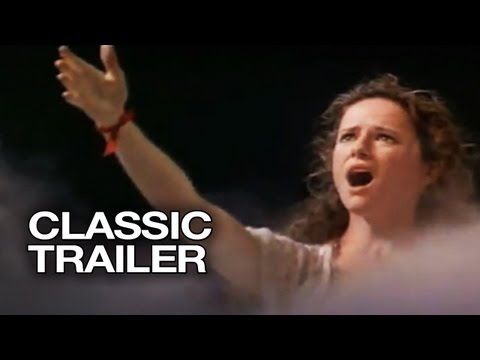
- A feature film was completed in 1995 but not released until 2000 in an edited form.
Reception
Critics tend to split into two camps: those who treat the show as a near-perfect fable about growing up, and those who bristle at how the piece can feel like a charm bracelet of theatrical tricks. The dividing line is often the lyrics. If you hear Jones’ plain words as clarity, the show feels timeless. If you hear them as preciousness, the spell breaks.
“‘Try to Remember’ is as evocative as one could wish.”
“Otherwise, it’s a gem.”
“Those who enjoyed the original should try to remember it as it was.”
Quick Facts
- Title: The Fantasticks
- Year: 1960 (Off-Broadway premiere)
- Type: Musical play / allegorical fable
- Book & Lyrics: Tom Jones
- Music: Harvey Schmidt
- Based on: Edmond Rostand’s Les Romanesques (The Romancers)
- Original venue: Sullivan Street Playhouse, Greenwich Village (153 seats)
- Original run: May 3, 1960 to January 13, 2002 (17,162 performances)
- Notable original cast: Jerry Orbach (El Gallo), Rita Gardner (Luisa), Kenneth Nelson (Matt)
- Signature staging grammar: Wall as a stick held by The Mute; moon hung onstage; confetti as rain; actors visibly “make” the world
- Cast album context: MGM recorded the original Off-Broadway cast album on June 13, 1960
- Modern recording: 2006 Off-Broadway revival recording (Ghostlight Records), released November 14, 2006
- Film status: Completed in 1995, released in 2000 in an edited cut
- 2026 note: A Broadway-bound reimagining has been reported as in development; dates and casting not yet announced
Frequently Asked Questions
- What are the lyrics really saying in “Try to Remember”?
- They are inviting the audience to collaborate. The song frames memory as a tool for building the world, then later reframes memory as a lesson learned through pain.
- Why is the show so minimalist?
- It was born from practical limits, then turned that limitation into meaning. If a stick can be a wall, then love can also be a story people tell themselves, for better and worse.
- Is there a Broadway production right now?
- As of January 2026, a Broadway production has been reported as in development, but performance dates and casting have not been announced.
- Is there a movie version?
- Yes. A feature film was completed in 1995 and released in 2000 in an edited form, with the story shifted to a different visual world than the stage original.
- Where does “Soon It’s Gonna Rain” happen in the story?
- It sits inside the lovers’ dream-space: the moon is hung, the lighting cools to blue, and confetti “rain” marks the moment as theatre you can see being made.
- Who licenses the show for theatres and schools?
- MTI (Music Theatre International) licenses “The Fantasticks” and provides production materials, authorized songs, and show information.
Key Contributors
| Name | Role | Contribution |
|---|---|---|
| Tom Jones | Book & Lyrics | Wrote a direct, deceptively plain lyric style that turns nostalgia into a moral argument. |
| Harvey Schmidt | Composer | Built a flexible score that moves between fable, comedy, and bruised realism while keeping recurring seasonal motifs. |
| Word Baker | Original Director | Helped shape the stripped-down theatrical language that became the show’s identity. |
| Lore Noto | Producer | Steered the original Off-Broadway production into long-run sustainability and defended its economics for decades. |
| Ed Wittstein | Design (original production) | Created the spare visual world, including iconic props and multi-role design work that matched the show’s anti-spectacle ethos. |
| Christopher Gattelli | Director-Choreographer (reported, Broadway development) | Attached to the 2026-reported Broadway development of a reimagined version. |
| Sam Davis | Orchestrations (reported, Broadway development) | New orchestrations reported for the Broadway-in-development reimagining. |
| Jason Sherwood | Scenic Design (reported, Broadway development) | Scenic designer reported for the Broadway-in-development reimagining. |
Sources: Playbill; MTI (Music Theatre International); American Theatre; Variety; The Wall Street Journal; Time Out New York; Broadway.com; Deadline; TheaterMania; New York Theatre Guide; Wikipedia; Barnes & Noble; AllMusic; Cherry Red Records; Musik & Bühne (study guide PDF).