
Damn Yankees Lyrics: Song List
- Act 1
- Overture
- Six Months Out of Every Year
- Goodbye, Old Girl
- Heart
- Shoeless Joe from Hannibal, Mo.
- Little Brains, a Little Talent
- Man Doesn't Know
- Whatever Lola Wants
- Act 2
- Who's Got the Pain?
- Game
- Near to You
- Those Were the Good Old Days
- Two Lost Souls
- Man Doesn't Know (Reprise)
- Finale
- Heart (Reprise)
About the "Damn Yankees" Stage Show
Initially, the musical on Broadway in 1955 came out, then was the film, and in 1994 a modified musical on Broadway was released. They are the most notable productions. In 1955, the recording of music from the show was made, but after 10 years, it has been rewritten since mono tracks did not meet the needs of the time, and therefore a stereo version was created. However, it has never been released due to a number of circumstances. A new recording of stereo was produced only in 1989 and was released this time. Recording of CD from the show in 1994 was done in the same year.
The film of 1958 was on the basis of the musical, almost with no difference from its plot. 1994’s version was other, so it has even a separate page on Wikipedia, which explicitly warns the reader that substantial distinctions exist between these versions.
Although it was announced that in the future a motion picture with Jim Carrey and Jake Gyllenhaal will be released, these plans yet didn’t come true.
Producers selected for the role of Devil’s seductress a dancer and a few of those to whom they were addressed, consistently rejected their proposals. As a result, one of them, Gwen Verdon, agreed, but with many conditions. It seemed that the circumstances did not want that this musical took place.
It received a great success – almost 1020 regular shows for 1955 – 1957 years. The legendary George Abbott was the director of the show, B. Fosse was responsible for the musical numbers and choreography. R. Adams was the musical arranger, D. Walker – conductor, H. Hastings – musical director. The actors were as follows: J. Stapleton, R. Walston, J. Janvier, G. Verdon, R. Bishop, S. Bolin, D. Horstmann, R. Shafer, C. Davis, E. Howell, R. Allen, S. Douglass, J. Komack, A. Lanti, R. Brown, E. Phillips, A. Linville & N. Frey.
The opening of performance took place in the West End in 1957, but it hadn’t manage to repeat the success on Broadway by hits quantity – only 258 exhibitions.
Release date of the musical: 1994
"Damn Yankees" – The Musical Guide & Song Meanings
Review
Why does a baseball musical keep feeling like a marriage drama with stadium lights? Because the lyrics never treat the pennant race as the real prize. They treat it as an excuse. Joe Boyd’s bargain is framed as fandom, but the words keep dragging him back to the cost at home, in the living room, in the silences between innings. Even when the show is at its most cheerful, there’s a quiet moral accounting underneath.
Adler and Ross write with a hard, bright clarity. Their rhymes land like jokes, then linger like consequences. “Six Months Out of Every Year” turns domestic resentment into a hook you can hum, and that is the show’s signature move: emotional truth delivered as entertainment. “Heart” is pure pep talk, but it is also a denial song. It insists the team already has what it needs, because it cannot face how far behind it is.
Then the score opens the trap door. Applegate’s language is sales language, full of certainty and timing. Lola’s lyrics weaponize desire, but they also expose how bored she is with her own routine. The show keeps insisting that temptation is glamorous, then slips in the idea that glamour is labor. That tension is why “Whatever Lola Wants” still plays. It does not ask politely. It negotiates.
How It Was Made
Damn Yankees started as a baseball fable with literary bones. It is based on Douglass Wallop’s novel The Year the Yankees Lost the Pennant, a Faust retelling set in Washington during the era when the Yankees felt inevitable. MTI’s production notes emphasize how unusual the premise was for Broadway at the time, and how much of a risk it was to build a musical around a sport. The bet paid off, and the piece became a fixture in the American musical repertory.
There’s a harsher footnote, too. A 2012 rebroadcast of Terry Gross’s 1990 interview with Richard Adler notes that Jerry Ross died in 1955 at 29, only months after the show opened. That fact changes how you hear the score’s confidence. The writing sounds young because it was. It also explains why later revivals often treat the material with a kind of reverence even when they are sanding down the dated edges.
The 1994 Broadway revival is the version your “1994” tag points toward: it opened March 3, 1994 at the Marquis and ran through August 6, 1995, with Victor Garber, Bebe Neuwirth, and Jarrod Emick featured in the early run. Playbill credits director Jack O’Brien and choreographer Rob Marshall, and IBDB documents the production’s hiatus and official March 12, 1995 re-opening. That restart matters, because it’s where the show’s pop-culture mythology snapped into place: Jerry Lewis stepping into Applegate and turning the revival into a fresh headline engine.
Key Tracks & Scenes
"Six Months Out of Every Year" (Meg)
- The Scene:
- A living room at night. The TV glow does most of the lighting. Meg sews beside Joe, trying to reach him, but the game keeps stealing his attention until it feels like a third person on the couch.
- Lyrical Meaning:
- The lyric frames baseball as emotional abandonment. It is funny, but it is also specific about loneliness. Meg doesn’t hate the sport; she hates what it does to her marriage.
"Goodbye, Old Girl" (Joe Boyd)
- The Scene:
- Joe alone after Meg goes to bed, writing a note. The air is still. He is about to vanish from his own life, and the stillness reads like guilt.
- Lyrical Meaning:
- A farewell song that refuses melodrama. The words sound practical, which makes them sadder. This is a man turning love into paperwork so he can justify betrayal.
"Heart" (Van Buren and the Senators)
- The Scene:
- The dugout. Locker-room bulbs. Men trying to talk themselves into believing. The number hits like a chant meant to drown out panic.
- Lyrical Meaning:
- The lyric makes morale into strategy. It’s the show’s thesis about American optimism: if you say it hard enough, it becomes true, at least for eight bars.
"Shoeless Joe From Hannibal, Mo." (Gloria and Company)
- The Scene:
- Reporters circling, flashbulbs popping, a new star being invented in real time. The staging tends to move like publicity, fast and slightly fake.
- Lyrical Meaning:
- The lyric is a press release with rhythm. It shows how myth is manufactured, and how quickly a man can be replaced by a headline version of himself.
"Whatever Lola Wants" (Lola)
- The Scene:
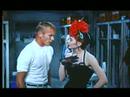
- A locker-room corridor turned into a private stage. Lola advances, Joe retreats. The lighting often narrows into a hot spotlight, as if the building itself is watching.
- Lyrical Meaning:
- This is seduction as contract negotiation. Lola’s words promise inevitability, and the threat is in the certainty. The song is a portrait of desire that has learned sales tactics.
"Who's Got the Pain?" (Lola)
- The Scene:
- A pep rally act that becomes a public performance of heat. Bodies push into dance breaks. The number reads like a party staged to distract everyone from the plot closing in.
- Lyrical Meaning:
- The lyric laughs at suffering while flirting with it. It’s a song about how easily audiences will clap for pain if you put it in time.
"Those Were the Good Old Days" (Applegate)
- The Scene:
- Applegate at home, remembering chaos with nostalgia. The room can feel elegant or barren depending on production, but the mood is the same: a devil bored with modern life.
- Lyrical Meaning:
- The lyric is a mission statement for cruelty dressed as memory. It reveals that Applegate isn’t only evil; he’s sentimental about evil.
"Two Lost Souls" (Joe Hardy and Lola)
- The Scene:
- After midnight, after the trap closes, Lola finds Joe crushed. They dance anyway. The staging often turns the space into a nightclub dream, with darkness around the edges.
- Lyrical Meaning:
- The lyric admits loneliness without asking for rescue. It’s the show’s most adult idea: two people can connect even when neither is free.
"A Man Doesn't Know" (Finale) (Meg and Joe)
- The Scene:
- Back home. Meg crying on the sofa. Joe returns as himself, and the reunion lands in domestic light, not theatrical glow. Applegate arrives, but the couple refuses to step out of their own truth.
- Lyrical Meaning:
- The lyric resolves the Faust story with intimacy, not spectacle. The show ends by insisting that the marriage, not the pennant, is the point.
Live Updates
2025-2026 status: Damn Yankees is in active reinvention mode, not just repertory rotation. Arena Stage mounted a major “revisal” in fall 2025 (Sept. 9 to Nov. 9), with a revised book by Will Power and Doug Wright and additional lyrics by Lynn Ahrens, under director-choreographer Sergio Trujillo. Reporting from The Washington Post and Playbill frames this as a Broadway-aimed development path, with the Post describing a tentative fall 2026 Broadway target. BroadwayWorld’s coverage of Arena Stage footage repeats the same intent, and lists the principal cast for the D.C. run.
The artistic signal is clear: keep the core score, fix what time has made awkward, and let the story reflect the America watching baseball now. The Washington Post describes the update shifting the setting to 2000 and moving the team to Baltimore, while also rewriting character motivations and gender politics. That means lyric adjustments are part of the production’s identity in 2025-2026, not a footnote.
Notes & Trivia
- MTI’s full synopsis places “Six Months Out of Every Year” in Joe and Meg’s living room, with Joe glued to the game and Meg trying to get his attention.
- MTI’s synopsis sets Joe’s escape clause at midnight on September 24, making the clock a literal plot engine that keeps the lyrics under pressure.
- The 1994 Broadway revival opened March 3, 1994 and closed August 6, 1995 at the Marquis Theatre, with 33 previews and 519 performances.
- Playbill notes the 1994 revival was directed by Jack O’Brien and choreographed by Rob Marshall, with Jarrod Emick winning a Tony for Featured Actor.
- MTI’s trivia notes that an early cast-album cover image was replaced with a more provocative Lola image, and sales rose sharply after the change.
- MTI also notes that Jerry Lewis became, in 1995, the highest paid performer in Broadway history for his turn as Applegate.
- MTI’s production page lists a featured vocal range of F3 to G5 in its show specifications.
Reception
The show’s critical life has always split into two conversations: the craft, and the temperature. Critics tend to admire how efficiently it’s built, then argue about how sexy or silly the devilish elements should feel in any given era.
“Yet even with too little vamp and too much camp, this Damn Yankees is damn good.”
“A winning reinvention of a classic pitched squarely at the present.”
“The production was directed by Jack O’Brien and choreographed by Rob Marshall.”
What changes over time is what we hear as “the problem.” In 1955, the engine was novelty: baseball plus the devil. In 1994, the question was how to modernize the tone without losing the snap. In 2025, the conversation is about what the story implies about gender and power, and whether the lyrics can be responsibly adjusted without flattening the bite.
Quick Facts
- Title: Damn Yankees
- Year (tag): 1994 Broadway revival (original Broadway production 1955)
- Type: Musical comedy; Faust retelling set in the world of baseball
- Words and Music: Richard Adler and Jerry Ross
- Book: George Abbott and Douglass Wallop
- Based on: The Year the Yankees Lost the Pennant (Douglass Wallop)
- 1994 Broadway revival: Marquis Theatre; opened Mar 3, 1994; closed Aug 6, 1995; 33 previews; 519 performances
- 1994 revival creative leads: Director Jack O’Brien; choreographer Rob Marshall
- 1994 revival principal casting (early run): Victor Garber (Applegate), Bebe Neuwirth (Lola), Jarrod Emick (Joe Hardy)
- Album status: 1994 Broadway revival cast recording released May 17, 1994 (Mercury; now associated with Decca Broadway)
- Selected notable placements (story): “Six Months Out of Every Year” (living room fracture), “Heart” (dugout manifesto), “Whatever Lola Wants” (temptation campaign), “Two Lost Souls” (after the deadline), “A Man Doesn’t Know” Finale (marriage restored)
- 2025 revisal (D.C.): Arena Stage, Sept 9 to Nov 9, 2025; revised book (Will Power, Doug Wright); additional lyrics (Lynn Ahrens); directed and choreographed by Sergio Trujillo
Frequently Asked Questions
- Is “Damn Yankees” based on a book?
- Yes. MTI notes it is based on Douglass Wallop’s novel The Year the Yankees Lost the Pennant, a modern Faust retelling set in Washington baseball culture.
- What is the 1994 version, and why do people reference it?
- The 1994 Broadway revival at the Marquis ran from March 1994 to August 1995, and it shaped how many modern audiences picture the show’s pacing, staging, and comic tone.
- Is there a 1994 cast album?
- Yes. The 1994 Broadway revival cast recording was released May 17, 1994, and it remains the go-to audio snapshot of that revival era.
- Where does “Whatever Lola Wants” happen in the story?
- In MTI’s synopsis, Lola corners Joe in a locker-room corridor and presses a full seduction campaign while Applegate watches the outcome like a wager.
- What changed in the 2025-2026 Arena Stage version?
- Reporting from Playbill and The Washington Post describes a revised book and additional lyrics, a time shift to 2000, a move to Baltimore, and character rewrites meant to address race and gender politics while keeping the classic score’s spine.
- Is a Broadway return planned?
- The Washington Post reports the Arena Stage production is tentatively eyeing a fall 2026 Broadway bow.
Key Contributors
| Name | Role | Contribution |
|---|---|---|
| Richard Adler | Composer-Lyricist | Co-wrote the score’s crisp, joke-forward lyric style and melodic punch. |
| Jerry Ross | Composer-Lyricist | Co-wrote the score; remembered in later commentary for the show’s early-career brilliance. |
| George Abbott | Book (co-author) | Co-shaped the theatrical engine that keeps the Faust bargain moving like a comedy. |
| Douglass Wallop | Book (co-author) and source novelist | Wrote the original novel and co-authored the stage book adaptation. |
| Jack O’Brien | Director (1994 Broadway revival) | Led the revival’s tone and revision strategy for a modern Broadway audience. |
| Rob Marshall | Choreographer (1994 Broadway revival) | Built the revival’s dance language, balancing athletic comedy and Lola-era heat. |
| Will Power | Co-adaptor (2025 revisal) | Co-wrote the revised book for Arena Stage’s 2025-2026 update path. |
| Doug Wright | Co-adaptor (2025 revisal) | Co-wrote the revised book and helped reframe character motives for a contemporary lens. |
| Lynn Ahrens | Additional lyrics (2025 revisal) | Wrote new lyric material for the Arena Stage revisal, per trade and major-press reporting. |
| Sergio Trujillo | Director-Choreographer (2025 revisal) | Staged the revisal with explicit homage to legacy movement while reshaping the storytelling. |
Sources: Music Theatre International (MTI), IBDB, Playbill, TIME, The Washington Post, BroadwayWorld, WAMC (Fresh Air archive), Wikipedia.