
Cannibal Lyrics: Song List
About the "Cannibal" Stage Show
The first time the musical was done in 1996 in the form of a film, which is implemented by the same guys that made South Park a few years later after this. They have done another musical before, but not in the form of a film but on the stage, which had an average success and was stuffed to the eyeballs with scabrousness and greasy jokes in the style of South Park. After that, to this day there were several amateur plays on stage in Northern California, which received good reviews of both critics and viewers. In 2001, it was released for 6-month tour on USA, which was called «off-off-Broadway» – something the same ironic in the style of South Park. But this production has gained popularity and flamboyant reviews – because the guys are doing something for the sake of the public and they are very successful in it.
2004 was marked by the arrival of a musical in Rome, and it was displayed in Tucson, Arizona in 2005. Germany took it in the same 2005 with open arms, and in 2006 the show was in Minneapolis and Canada. During this time, to this day, the musical has been staged over the world. It is loved to be staged by both amateurs and by professionals, because its very essence is a "folk art".
Release date of the musical: 1996
"Cannibal! The Musical" – The Musical Guide & Song Meanings
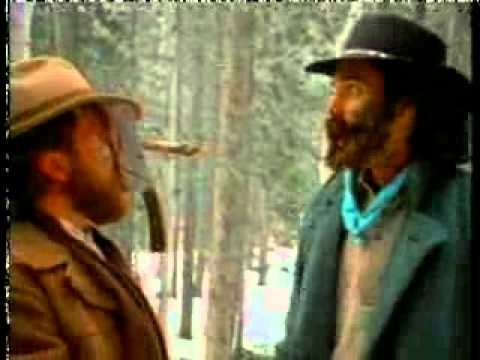
Review: why the lyrics work when the budget doesn’t
“Cannibal! The Musical” has a perverse talent: it sings like a sunny frontier fantasy while it stages starvation, panic, and people making choices they will never outrun. That mismatch is the joke, but it is also the structure. Trey Parker writes lyrics that sound like community theater optimism, then pushes that optimism into scenes where it cannot possibly survive. The rhymes keep smiling. The plot keeps freezing.
The score’s main tactic is escalation through innocence. “Shpadoinkle” is engineered as a bright opening motto, the kind of number that tells you the world is safe because the chorus says so. Later, that same vocal cheer reads like denial. The film keeps doing this: a tune sells emotional certainty, then the story puts that certainty on trial.
Musically, it borrows the grammar of classic American musical comedy, then smears it with splatter-movie timing. The melodies are short and sticky. The lyrics are simple on purpose, because simplicity is what makes the violence land harder. When the show finally shifts into a public-judgment number, it does not get more “serious.” It gets louder, as if volume can replace ethics.
How it was made: a student-film operetta with a Troma afterlife
The piece began life as “Alferd Packer: The Musical,” created while Parker and collaborators were at the University of Colorado Boulder. Accounts of its origin stress the scrappy DNA: it started as a short trailer for a class, then grew into a feature shot largely on weekends and spring break, funded at a low-budget scale. The 1996 date matters because that is when Troma picked it up for broader release and retitled it “Cannibal! The Musical,” partly out of fear that “Alferd Packer” meant nothing outside Colorado.
That retitle is the whole strategy in miniature. “Cannibal!” is a blunt headline. The songs, by contrast, are written like postcards. That tension is not accidental. Sources on the production note that Parker was leaning into parody of mid-century musical language, including a clear wink at Rodgers and Hammerstein-style morning optimism. The film treats that language like a costume. It looks wholesome until you notice the stains.
The “making-of” literature around the film keeps the legend alive. Jason McHugh’s “Shpadoinkle: The Making of Cannibal! The Musical” is repeatedly cited as the detailed chronicle of how the project was mounted with friends, borrowed resources, and a stubborn belief that musical-comedy form could carry something gross. Later journalism about the film often frames it as the early lab where Parker and Stone tested the musical instincts that would reappear in their later work.
Key tracks & scenes: 8 lyrical pressure points
"Shpadoinkle" (Alferd)
- The Scene:
- Early on, the film opens bright. Outdoor light, open space, a horse in motion. The camera treats the landscape like a promise. Alferd sings as if the day itself is on his side.
- Lyrical Meaning:
- This is optimism as brand identity. The lyric is deliberately clean, almost childish, because the story needs a baseline to corrupt. It also establishes Alferd as a man who narrates his own life with forced cheer.
"That's All I'm Asking For" (The miners)
- The Scene:
- A group-number in travel mode. Tight clusters of men, frontier bravado, and a rhythm that behaves like marching. The lighting tends to stay straightforward, a “we are fine” look that will later feel sarcastic.
- Lyrical Meaning:
- The lyric is a catalog of small wants that start sounding like desperation. It’s also a social contract: sing together, believe together, and pretend hunger is negotiable.
"When I Was on Top of You" (Alferd)
- The Scene:
- A romantic-comic number with a narrow emotional focus. Staging and framing often isolate Alferd, leaning into awkward sincerity rather than glamour. The tone is tender, then abruptly ridiculous.
- Lyrical Meaning:
- It’s crude on purpose, but it’s also character logic. Alferd expresses intimacy with the vocabulary he has, and the lyric makes that limitation visible. The joke is the phrasing. The subtext is loneliness.
"Trapper Song" (Frenchy and trappers)
- The Scene:
- Boastful trouble enters the story. The energy turns sideways: faster cuts, louder gestures, a performative swagger. The scene is staged like an intrusion, a musical number that doesn’t belong and knows it.
- Lyrical Meaning:
- The lyric is status theater. The trappers sing their worldview as a threat, using humor as intimidation. It’s the moment the film admits that violence is already in the room, even before anyone eats anyone.
"This Side of Me" (Polly)
- The Scene:
- The framing device tightens. We are back near the courtroom and jailhouse world, a colder palette, controlled interiors. Polly sings with a stillness the film rarely allows itself.
- Lyrical Meaning:
- Polly’s lyric is the film’s closest approach to sincerity without a punchline. It tries to make empathy feel plausible inside a story built on disbelief. That effort matters because it complicates the audience’s laughter.
"Let's Build a Snowman" (Swan)
- The Scene:
- Whiteout wilderness. Low visibility, harsh light, bodies shrinking inside coats. Swan’s cheer lands like a hallucination. The scene’s emotional temperature drops even as the melody stays bouncy.
- Lyrical Meaning:
- This is denial sung at full volume. The lyric refuses the facts in front of it, which turns the number into both coping mechanism and provocation. The film makes the audience watch optimism fail in real time.
"Hang the Bastard" (Company)
- The Scene:
- A public spectacle number. Crowds, anger, and show-trial momentum. Staging usually pushes forward motion, as if the town’s judgment is a machine that cannot brake.
- Lyrical Meaning:
- The lyric turns punishment into entertainment, which is the film’s sharpest satire. It is also the clearest bridge to Parker and Stone’s later work: a chorus that laughs while it condemns.
"Shpadoinkle (Finale Reprise)" (Polly, Alferd, Company)
- The Scene:
- The story tries to resolve itself with musical symmetry. Familiar melodic material returns under a new emotional weight. Lighting often softens, but the events we’ve seen do not vanish.
- Lyrical Meaning:
- Repetition becomes irony. The film dares you to accept a “happy” musical ending while remembering exactly what it took to get there.
Live updates 2025/2026: screenings, reissues, and how it survives
In 2025, “Cannibal! The Musical” behaved like a cult item with calendar power. It showed up in one-night screenings tied to anniversaries and niche festival programming. Circle Cinema’s Twisted Arts Film Fest promoted a special screening with a record shop partner on-site, explicitly framing the film as an event and pairing it with soundtrack sales.
Other 2025 listings point to the same pattern: fan-driven one-nighters, often booked in conventional multiplex spaces for a single evening. The signal is not box office dominance. The signal is repeatability. People program it because audiences treat it like a shared in-joke with songs.
On the music side, the soundtrack continues to circulate as a collectible object. Expanded vinyl listings and retail pages publish detailed track sequencing, including score cues and dialogue snippets, which matters for search-driven listening and for collectors who want the film’s musical architecture preserved. In 2026, social accounts for film clubs have already teased members-only screenings, suggesting the title’s afterlife is still being actively scheduled rather than passively streamed.
Notes & trivia
- The film was shot in Colorado locations and uses real regional landscapes as production value.
- The project began as a short trailer for a film class before expanding into a feature.
- Troma’s 1996 release is the reason the “Cannibal!” title became the recognizable brand name.
- Song lists for the film consistently include “Shpadoinkle,” “That’s All I’m Asking For,” “Trapper Song,” “This Side of Me,” “Let’s Build a Snowman,” and “Hang the Bastard.”
- Production notes and fan documentation cite two cut songs, including one described as a rap number, removed because it shifted the lead character’s persona.
- The soundtrack tracklists published for modern vinyl editions include score cues and dialogue, not only standalone songs.
Reception: critics on the “toe-tap / gag reflex” combo
Critical responses tend to land on the same paradox: “Cannibal!” is amateurish and still effective. Some reviews treat the roughness as a limitation. Others treat it as the engine that keeps the jokes dangerous, because nothing feels protected by polish.
“If you took the gore out, you’d almost have Oklahoma Part Deux!”
“It’s rough around the edges… but the good outweighs the bad.”
“Guaranteed to make your toes tap… and your gag reflex respond.”
Quick facts: film, soundtrack album, availability
- Title: Cannibal! The Musical
- Year: 1996 (U.S. general release date widely listed); originally produced earlier
- Type: Musical Western black comedy film
- Writer / Director: Trey Parker
- Music: Trey Parker; co-scored with Rich Sanders (credit varies by listing)
- Distributor (1996 release): Troma Entertainment
- Runtime: Commonly listed around 95–97 minutes
- Signature tracks: “Shpadoinkle,” “That’s All I’m Asking For,” “Let’s Build a Snowman,” “Hang the Bastard”
- Soundtrack album: An “Original Motion Picture Soundtrack” playlist edition circulates online, and expanded vinyl editions publish full track sequencing
- Availability: Commonly found via cult-home-video channels, streaming rentals, and collector vinyl retailers (availability varies by region)
Frequently asked questions
- Is this a stage musical or a movie?
- It’s a film musical first. Stage versions have been mounted by fans and small companies, but the best-known form is the movie.
- Why is the year listed as 1996 if it was made earlier?
- The feature was produced earlier, but many listings emphasize 1996 because that’s when it received broader release under the “Cannibal! The Musical” title through Troma.
- Who wrote the lyrics?
- Trey Parker wrote the songs’ music and lyrics, and the film’s songwriting style intentionally parodies classic American musical language.
- What is “Shpadoinkle” supposed to mean?
- It’s nonsense slang used as pure positivity. The point is how quickly a happy word becomes a mask once the story turns brutal.
- Is the soundtrack available?
- Yes. Track listings and reissues circulate, including modern vinyl editions that include score cues and dialogue along with the songs.
- What should I watch for in the lyrics?
- Listen for denial. The funniest lines often work because they insist everything is fine while the images prove the opposite.
Key contributors
| Name | Role | Contribution |
|---|---|---|
| Trey Parker | Writer, director, composer-lyricist, actor | Created the film and wrote the songs that define its tonal contradiction. |
| Matt Stone | Producer, actor | Key collaborator and on-screen presence in the ensemble. |
| Jason McHugh | Producer, actor, author | Produced and documented the production history in “Shpadoinkle.” |
| Rich Sanders | Co-composer (score credit) | Co-scored the film, supporting the musical texture around the songs. |
| Troma Entertainment | Distributor | Released the film broadly in 1996 and cemented the “Cannibal!” title. |
Sources: IMDb, CannibalTheMusical.net, The Austin Chronicle, Gizmodo, PopMatters, Wikipedia, YouTube (soundtrack playlist and trailer), Circle Cinema, Enjoy The Ride Records, Vinegar Syndrome, Collider.