
Boy Friend, The Lyrics: Song List
- Act 1
- Perfect Young Ladies
- The Boyfriend
- Won't You Charleston With Me?
- Fancy Forgetting
- I Could Be Happy With You
- Act 2
- Sur La Plage
- A Room In Bloomsbury
-
Nicer In Nice

- The 'You-Don't-Want-To-Play-With-Me' Blues
- Act 3
- Safety in Numbers
- The Riviera
- It's Never Too Late To Fall In Love
- Never Too Late To Fall In Love (Reprise)
- Poor Little Pierrette
- Finale
About the "Boy Friend, The" Stage Show
The premiere of the play by Sandy Wilson was in 1953 in the Players' Theatre, and after a while, the show circled in such theaters as the Swiss Cottage & Embassy Theatre. In January of the next year, the opening took place in the West End. John Heawood was responsible for the choreography in all these productions that were very successful, and lasted for 5 years, with the number of shows a little less than 2,100 just in London.
The musical made Anne Rogers a star – before that, she played a small & unpretentious role, but once actress, depicting Polly, became ill just before the premiere, Anne did not lose courage and volunteered to replace her, proving that she knows the role. And played the next night so amazingly well that was in this musical throughout all its play. The rest of the main actors were Hugh Paddick and J. Sterndale-Bennett.
After 30 years, the play was re-opened at the Churchill Theatre and the main characters were Glynis Johns & Derek Waring. Ed Mirvish Theatre hosted a musical in Toronto and in the West End it occupied The Albery Theatre. After another 10 years, production has returned to The Players' Theatre, where it was staged so close to the original 1953, as possible. Geoffrey Webb was responsible for the choreography, and the director was Maria Charles. Larry Drew, who 40 years ago was playing Bobby, had to choreograph it, but died suddenly in the development of the musical. This re-thinking was followed by a national tour, which was very successful.
In 2006 and 2011, the musical was resurrected again in London. On Broadway it was introduced with almost the same frequency as in the UK: in 1954, 1970, 2003 and 2005. In addition, there were numerous national tours and branched displays in amateur theaters.
Release date of the musical: 1954
"The Boy Friend" – The Musical Guide & Song Meanings
Review
Can a show be a parody and still be romantic, without winking itself to death? “The Boy Friend” answers yes, because Sandy Wilson writes his jokes as love. The lyrics mimic 1920s musical-comedy etiquette: polite declarations, tidy rhymes, and emotions that arrive dressed for dinner. But the text keeps letting air in. These girls are trained to behave. The men are trained to perform. Everyone is “acting” even before the carnival ball makes it literal.
The score’s style is deliberate imitation: Charleston pep, foxtrot bounce, and bright ensemble writing that moves like a group photo coming to life. That matters because the plot is light by design. A wealthy girl invents a boyfriend to save face, then falls for a delivery boy who seems penniless, while the adults rekindle their own old sparks. The lyrics carry the real story: class as flirtation, romance as social proof, and the private panic underneath “perfect young ladies.”
Wilson’s best lyric trick is restraint. He rarely begs for tears. He keeps the sentences short, the intentions clear, and the irony gentle. When a character finally says what they want, it sounds simple because the whole show has been practicing simplicity as a mask.
How It Was Made
“The Boy Friend” started small and got big fast. It first played at London’s Players’ Theatre Club in April 1953, then expanded and moved through venues before landing in the West End at Wyndham’s Theatre in January 1954. That growth story fits the writing: a piece that looks like confection, but is engineered with serious craft. The show’s success also created its most famous career footnote. On Broadway, it became Julie Andrews’ American stage debut, and the musical’s “freshness” began to be read through her new-star glow.
There is a practical, almost accidental kind of legend baked into the show’s early life: casting emergencies, quick replacements, and performers stepping into larger responsibilities as the production scaled up. It’s the opposite of a mythic “genius in a room” narrative. The show feels built by people who understood what audiences missed: old-fashioned melody, clean lyric setups, and comedy that doesn’t require cruelty to land.
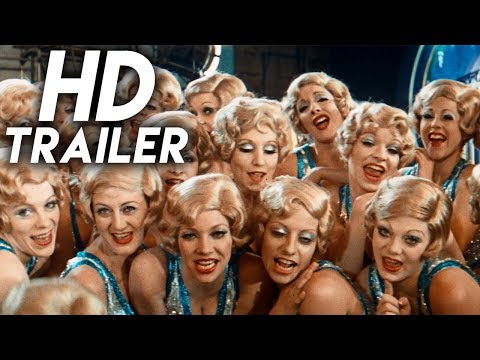
It’s also a show with two parallel afterlives. One is theatre, through revivals that test how far nostalgia can travel. The other is screen, via Ken Russell’s 1971 film adaptation, which turns the stage pastiche into an even stranger commentary on performance itself.
Key Tracks & Scenes
"Perfect Young Ladies" (Hortense, The Girls)
- The Scene:
- Morning at Madame Dubonnet’s finishing school on the French Riviera. Bright light, prim posture, synchronized manners. It plays like a drill disguised as charm.
- Lyrical Meaning:
- The lyric is a postcard that folds into a critique. “Perfect” is an instruction, not a compliment. The number defines the show’s comic tension: training versus desire.
"The Boy Friend" (Polly, Ensemble)
- The Scene:
- Polly’s entrance into the school’s social ecosystem. The girls crowd in, hungry for gossip. Polly invents a boyfriend as a protective spell, and the room instantly believes the spell.
- Lyrical Meaning:
- It’s a lie sung so prettily it becomes momentarily true. The lyric shows how romance functions as status. Polly’s “story” is social armor.
"Won’t You Charleston With Me?" (Bobby, Maisie)
- The Scene:
- A flirtation staged as dance homework. Bodies do what mouths won’t. The lighting tends to soften, but the rhythm stays bright, like nerves pretending to be fun.
- Lyrical Meaning:
- Consent becomes choreography. The lyric makes courtship sound casual, yet the invitation is charged: join me, match me, choose me.
"Fancy Forgetting" (Madame Dubonnet, Percival)
- The Scene:
- Two adults recognizing each other, then pretending they don’t. The staging often gives them a slightly separate space, as if the youngsters’ world is a different key.
- Lyrical Meaning:
- A comedy of memory with a sting. The lyric treats denial as a flirtation tactic, and it suggests these people have been rehearsing self-deception longer than the students have.
"I Could Be Happy with You" (Polly, Tony)
- The Scene:
- Tony delivers a Pierrette costume. It’s the show’s romantic hinge: a practical errand turns into a private agreement. Lighting narrows. The noise of the school falls away.
- Lyrical Meaning:
- One of Wilson’s cleanest love-song moves: modest phrasing that implies enormous stakes. The lyric is not “forever.” It is “enough.” That makes it ache.
"Safety in Numbers" (Ensemble)
- The Scene:
- As the carnival ball approaches, pairs and plans multiply. The ensemble closes in around the leads, like society itself tightening the laces.
- Lyrical Meaning:
- Group behavior as comfort and threat. The lyric sells togetherness, but it also reveals how easily a crowd can decide what is “proper.”
"The Riviera" (Ensemble)
- The Scene:
- A travel-poster number. Sunlight, seaside swagger, and the sense that the setting is part of the fantasy the characters are trying to live inside.
- Lyrical Meaning:
- Place becomes promise. The lyric is lifestyle marketing before marketing had a name, which is why it still reads as funny.
"It’s Never Too Late to Fall in Love" (Company)
- The Scene:
- Late-show warmth, as the adults and youngsters mirror each other’s choices. The room feels more forgiving. The rhythm relaxes into reassurance.
- Lyrical Meaning:
- The lyric is optimistic without being naive. It argues that romance is not just for the young, and it quietly widens the show’s emotional age-range.
Live Updates
As of January 14, 2026, “The Boy Friend” is not sitting in an active Broadway or West End commercial run. The last widely covered “major London revival” was the Menier Chocolate Factory production that ran into early March 2020. The property’s current life is more often regional, concert-style, and educational, rather than headline commercial.
Licensing is also a tale of territories. In the UK, Concord Theatricals lists “The Boy Friend” with licensing and rental materials quoted upon application. In the US, MTI lists the “Original Broadway Version (1954)” as currently unavailable for licensing, with release timing not specified. If you are programming the title in 2026, that split is the first practical fact that shapes everything: what version you can do, and where.
For audiences, the most stable access point remains the recordings and the film. The Original Broadway Cast Recording is kept in circulation through reissue channels and catalog pages, while the 1971 film continues to function as a separate, stylized gateway, especially for listeners who want to “see” the 1920s pastiche pushed into surreal cinema.
Notes & Trivia
- The show began at Players’ Theatre Club in London on April 14, 1953, then moved and expanded before opening at Wyndham’s Theatre in the West End on January 14, 1954.
- The original Broadway production opened at the Royale Theatre on September 30, 1954 and closed November 26, 1955, running 485 performances.
- Julie Andrews made her American stage debut as Polly in the Broadway production.
- The Menier Chocolate Factory’s revival (previews from November 2019) was framed in coverage as the first major London revival of the show in over a decade.
- The 1971 film adaptation was written and directed by Ken Russell and stars Twiggy; it is famous for turning the stage story into a “show-within-a-show” cinematic construction.
- The Original Broadway Cast Recording is associated with RCA Victor catalog numbering (including LOC-1018) and has been re-presented through later catalog platforms.
- Concord notes the piece as a deliberate “send-up” of earlier musical comedy styles, which is exactly why the lyrics stay “period” even when the jokes are modern.
Reception
“The Boy Friend” is often praised for the same reason it is sometimes underestimated: it makes lightness look easy. Critics tend to value it most when a production respects the score’s intelligence. If you play it as pure sugar, it can feel trivial. If you play it as an affectionate imitation with a sharp edge, the lyrics land as craft, not kitsch.
“This pitch-perfect revival of Sandy Wilson’s 1953 musical is a positive invitation to dance.”
“The show still holds up… as it fondly ridicules the lightness and simplicity of the ‘roaring’ decade.”
“It’s also irresistibly bright, hilariously funny, and gorgeously tuneful.”
Technical Info
- Title: The Boy Friend
- Year: 1954 (Broadway opening year; London origins 1953)
- Type: Musical comedy; 1920s pastiche
- Book / Music / Lyrics: Sandy Wilson
- Broadway theatre and run: Royale Theatre; September 30, 1954 to November 26, 1955; 485 performances
- Premise: French Riviera finishing school romances, mistaken identities, and a “made-up boyfriend” that becomes real trouble
- Selected notable placements: School introduction (“Perfect Young Ladies”); Polly’s invented romance (“The Boy Friend”); dance-flirtation (“Won’t You Charleston With Me?”); adult rekindling (“Fancy Forgetting”); central love duet (“I Could Be Happy with You”); ensemble conformity (“Safety in Numbers”)
- Album / label / status: Original Broadway Cast Recording (cataloged and reissued through major label catalog channels; frequently surfaced under RCA Victor-era metadata)
- Screen adaptation: 1971 film directed by Ken Russell
- Licensing notes (2026): UK licensing listed by Concord Theatricals; US “Original Broadway Version (1954)” listed by MTI as currently unavailable
FAQ
- Who wrote the lyrics for “The Boy Friend”?
- Sandy Wilson wrote the book, music, and lyrics.
- Is “The Boy Friend” the show that launched Julie Andrews?
- It is strongly associated with her American stage breakthrough: she made her Broadway debut as Polly in the 1954 production.
- Is there a movie version?
- Yes. Ken Russell directed a 1971 film adaptation starring Twiggy, which reimagines the stage story with a highly stylized screen structure.
- What are the most famous songs?
- “Perfect Young Ladies,” “The Boy Friend,” “Won’t You Charleston With Me?,” “Fancy Forgetting,” “I Could Be Happy with You,” and “Safety in Numbers” are frequent entry points.
- Can theatres license “The Boy Friend” in 2026?
- It depends on territory and version. Concord lists UK licensing upon application, while MTI lists the US “Original Broadway Version (1954)” as currently unavailable.
Key Contributors
| Name | Role | Contribution |
|---|---|---|
| Sandy Wilson | Book / Music / Lyrics | Builds a 1920s musical-comedy imitation with 1950s control: clean jokes, clean rhymes, and real romantic stakes beneath the period manners. |
| Julie Andrews | Original Broadway Polly | Anchored the Broadway production’s ingénue energy and became part of the show’s lasting public identity. |
| Matthew White | Director (Menier revival) | Led a major London revival that emphasized dance sparkle and affectionate parody without cheap mockery. |
| Ken Russell | Film writer-director (1971) | Turned the stage pastiche into a cinematic performance puzzle, expanding the show’s cultural footprint beyond theatre. |
| Concord Theatricals | Licensing (UK) | Lists the title for licensing and materials quotation upon application. |
| Music Theatre International (MTI) | Licensing listing (US) | Lists the 1954 “Original Broadway Version” as currently unavailable for licensing. |
Sources: IBDB; Playbill; Concord Theatricals; MTI; Theatricalia; The Guardian; The Stage; LondonTheatre; Official Masterworks Broadway; AFI Catalog; WhatsOnStage; Official London Theatre; Warner Archive (YouTube).