
Who's Tommy, The Lyrics: Song List
- Act 1
- Overture / Captain Walker
- It's A Boy / We've Won
- Twenty-One
- Amazing Journey
- Courtroom Scene
- Sparks
-
Amazing Journey (Reprise)

- Christmas
- Do You Think It's Alright
- Fiddle About
- See Me, Feel Me
- Cousin Kevin
- Sensation
-
Sparks (Reprise)
- Eyesight To The Blind
- Acid Queen
- Pinball Wizard
- Act 2
- Underture
- It's A Boy (Reprise)
- Go To The Mirror
- Tommy, Can You Hear Me?
- I Believe My Own Eyes
- Smash The Mirror
- I'm Free
- Streets Of London 1961-63 / Miracle Cure
-
Sensation (Reprise)
-
I'm Free/Pinball Wizard (Reprise)
- Tommy's Holiday Camp
- Sally Simpson
- Welcome
- Sally Simpson's Question
- We're Not Gonna Take It /See Me, Feel Me (Reprise)
About the "Who's Tommy, The" Stage Show
Songs to this rock musical wrote P. Townshend. Libretto composed P. Townshend and D. McAnuff. Also were used additional materials by J. Entwistle, S. B. Williamson and K. Moon. From July to August 1992, the play took place in the Mandell Weiss Theater, under the direction of D. McAnuff and choreographed by W. Cilento. The musical involved cast: P. Kandel, M. Mitzman, A. Barrile, N. Carin, M. Cerveris, J. Dukochitz, R. Fitts & T. Flynn. Trials on Broadway began in St. James Theatre at the end of March 1993. The play lasted from April 1993 to June 1995 with 27 preliminaries and almost 900 regular performances. They were developed by D. McAnuff & W. Cilento. The cast of actors was: M. Cerveris, M. Mitzman, J. Dokuchitz, A. Barrile, C. Freeman & P. Kandel.
Between March 1996 and February 1997, the Shaftesbury Theatre hosted the London production, realized by D. McAnuff and W. Cilento. The cast was the following: P. Keating, I. Bartholomew, K. Wilde & A. Robins. In 2001, they launched the North American tour. The theatrical has been developed by a film director and choreographer T. Stevens. The cast was: M. Seelbach, L. Capps, M. Berry, C. Russo, J. S. Porter & D. C. Levine. In December 2008, the August Wilson Theatre hosted a concerto with the participation of artists from Broadway show. From May to October 2013, a musical showed in Avon Theatre as part of the Canadian ‘Stratford Festival’. The performance had cast: R. Markus, K. Guloien, J. Kushnier, P. Nolan & S. Ross. From July to August 2015, Greenwich Theatre hosted a revised London production. Musical was prepared by director M. Strassen & choreographer M. Smith. This theatrical had such cast: A. Birchall, J. Barr, J. Sinclair & M. Wilford. Staging has received a number of awards.
Release date of the musical: 1992
"The Who’s Tommy" – The Musical Guide & Song Meanings
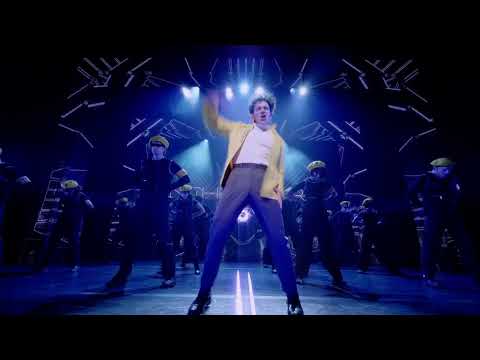
Review: what the lyrics are really doing
“The Who’s Tommy” is a show about a boy who stops responding to the world, then gets turned into content. That arc is the lyric spine. Pete Townshend writes in imperatives and slogans when adults are in charge, and in sensory verbs when Tommy is trying to rejoin his own body. The words keep circling the same three actions: see, feel, hear. Those aren’t poetic flourishes. They are the entire plot.
The show’s lyric trick is that it sounds like communal truth while constantly exposing communal cruelty. Crowd voices are written as hooks, chants, and easy rhymes, the kind you can shout in a stadium. That is also the danger. The writing makes it simple to join the chorus, then quietly suggests the chorus is how Tommy gets used. When the score gets “uplifting,” the lyrics stay mildly suspicious. It is pop spirituality with a receipt stapled to it.
Musically, this is rock with theatrical engineering. On stage, the repeated musical motifs become a system: war montage turns into domestic catastrophe, domestic catastrophe turns into spectacle, spectacle turns into a quasi-religion. The lyrics are the handrails. Without them, the evening is just noise and a pinball machine. With them, the noise becomes an argument about trauma, attention, and the market value of someone else’s pain.
Viewer tip: sit far enough back to read the projections as storytelling, not wallpaper. The staging has always leaned on visuals, from Wendall K. Harrington’s original projection work in 1993 to the 2024 revival’s video-driven design language. Your ears will do the emotional work; your eyes need the full frame.
How it was made
The stage version premiered at La Jolla Playhouse in 1992, after a development period Townshend dates to late 1991 through mid-1992. The Broadway transfer followed in 1993, with Townshend credited for music and lyrics and sharing book credit with director Des McAnuff. The essential move was structural: take the 1969 rock opera and make its narrative beats legible in a theatre, scene by scene, without sanding off its abrasiveness. That meant rewriting, reordering, and staging the album’s jump-cuts as actual events.
There is also a credit detail that matters to lyric nerds: the stage musical formally acknowledges additional music and lyrics by John Entwistle and Keith Moon, and it incorporates “Eyesight to the Blind,” tied to Sonny Boy Williamson II. In plain terms: this is not a “one author” lyric universe, even if Townshend is the dominant voice. The show’s language is a collage, which helps explain why it can pivot from hymn-like yearning to grotesque comedy in a single track list.
The 1992 La Jolla reporting framed the project as a “resurrection,” not a simple adaptation, and that tone still fits. The stage version keeps the story’s spiritual ambition while placing it under harsher lighting: adults fail repeatedly, and the crowd is not automatically wise. It is a redemption tale that never stops side-eyeing redemption tales.
Key tracks & scenes
"Overture" (Company)
- The Scene:
- 1940 London becomes a fast montage: courtship, marriage, and war. Projections and movement do the heavy lifting, with a militarized pulse that feels like history turning people into extras.
- Lyrical Meaning:
- Even without text, this sets the lyric rulebook: the world is loud, fast, and indifferent. When the words arrive, they will arrive like orders.
"It’s a Boy" / "We’ve Won" (Nurses, Mrs. Walker, Captain Walker, Ensemble)
- The Scene:
- 1941: a nurse places newborn Tommy in Mrs. Walker’s arms. 1945: the POW camp is liberated; victory is staged as public celebration.
- Lyrical Meaning:
- The lyrics treat “birth” and “victory” as slogans that do not protect anyone. The show is already hinting that big, reassuring phrases often show up right before damage.
"Twenty-One" / "What About the Boy?" (Mrs. Walker, Captain Walker)
- The Scene:
- Mrs. Walker celebrates her 21st birthday with her lover and young Tommy. Captain Walker returns and finds the domestic picture violently rearranged.
- Lyrical Meaning:
- The lyric pivot is moral panic. Adult language becomes accusation, not comfort. The question in the title lands like a failed attempt at responsibility.
"Amazing Journey" (Tommy)
- The Scene:
- Tommy retreats inward. Stage space often empties or abstracts; the lighting becomes interior, as if we are inside someone’s skull rather than a room.
- Lyrical Meaning:
- This is Townshend’s central lyric engine: sensory imagery as both escape and prayer. The words offer transcendence while quietly admitting the price of retreat.
"Christmas" / "See Me, Feel Me" (Company, Tommy)
- The Scene:
- A holiday tableau turns sour. Adults attempt ritual as cure. The music swells toward something like a hymn, but the staging keeps the family’s fracture visible.
- Lyrical Meaning:
- The lyric tension is brutal: public faith versus private abandonment. The repeated sensory verbs read as a demand for recognition, not a miracle.
"Pinball Wizard" (Ensemble)
- The Scene:
- Tommy’s talent becomes spectacle. The light gets brighter, more showbiz. The crowd energy shifts from concern to consumption.
- Lyrical Meaning:
- The lyrics are celebratory on the surface and transactional underneath. The number is the moment Tommy stops being a person in the community and becomes the community’s product.
"The Acid Queen" (The Gypsy)
- The Scene:
- A “cure” attempt staged like a nightclub inferno. The scene often leans on saturated color, aggressive rhythm, and a sense of predation disguised as glamour.
- Lyrical Meaning:
- The lyric voice is salesmanship with fangs. It promises transformation, then exposes the adult world’s habit of calling exploitation “help.”
"Sally Simpson" (Cousin Kevin, Ensemble)
- The Scene:
- Kevin narrates Sally’s teen obsession as we watch it happen: sneaking out, riding a scooter, arriving at a stadium with security and police forming a protective wall around Tommy.
- Lyrical Meaning:
- The song is about fandom before the word got corporate. The lyric makes the crowd’s hunger feel funny, then dangerous, because the hunger does not care what it breaks.
"We’re Not Gonna Take It" / "Listening to You" (Company, Tommy)
- The Scene:
- The cult cracks. The stage picture shifts from adoration to revolt, then to a quieter, searching aftermath. The last moments try to locate something real after all the chanting.
- Lyrical Meaning:
- The show’s closing language tries to separate rebellion from noise. The lyric offers release, then asks what anyone actually learned once the volume drops.
Live updates
Information current as of 2 February 2026. “The Who’s Tommy” is in a post-revival holding pattern, with momentum pointed toward the road. The 2024 Broadway revival opened March 28 and closed July 21 at the Nederlander Theatre. Reports tied the closing to softening sales after launch, even with Tony attention, and producers had announced a tour plan. The North American tour was later postponed to fall 2026, with Providence’s PPAC still positioned as the launch point in coverage.
What that means for listeners in 2026: the cast album remains the cleanest way to “see” the show’s storytelling without a ticket. If you want the stage logic, use the 1993 Original Cast Recording and follow along with a scene guide. The score is engineered for momentum, and you feel that engineering most clearly when you hear how quickly one moral slogan becomes the next.
Notes & trivia
- The stage musical premiered at La Jolla Playhouse on July 1, 1992, with a run that extended into early October at the Mandell Weiss Theatre, per production databases.
- Pete Townshend’s own production notes date the stage-development window to November 1991 through June 1992.
- IBDB credits the original Broadway production with music orchestrated by Steve Margoshes and musical direction by Joseph Church.
- The licensed stage version credits additional music and lyrics by John Entwistle and Keith Moon, and it features “Eyesight to the Blind,” linked to Sonny Boy Williamson II.
- MTI’s study materials spell out “Sally Simpson” staging as a narrated event we watch in real time, including guards and police protecting Tommy as he appears.
- The Original Cast Recording was produced for records by George Martin and released in 1993, with multiple discography sources citing July 13 as the release date.
- The 2024 revival’s Broadway run length is documented at 20 previews and 132 regular performances.
Reception
Across decades of criticism, the recurring compliment is energy and the recurring complaint is clarity. Reviewers tend to agree the music still hits, and they argue about whether the theatrical storytelling stays coherent once the spectacle ramps up. That is a fair fight. “Tommy” has always flirted with concert logic, and every staging has to decide how much plot to enforce versus how much sensation to unleash.
“Pure sensory overload, with lights flashing, scrims rising and falling.”
Variety (2024)
A revival that leans on callbacks, sometimes at the expense of storytelling clarity.
The New Yorker (2024)
A vivid, electrifying rock opera, updated with modern video language.
The Wall Street Journal (2024)
Awards
- Tony Awards (1993): Won Best Direction of a Musical (Des McAnuff), Best Choreography (Wayne Cilento), Best Original Score (Pete Townshend), Best Scenic Design (John Arnone), Best Lighting Design (Chris Parry). Additional nominations included Best Musical and featured performance categories.
- Drama Desk Awards (1993): Winners included choreography, lighting design, sound design, orchestrations (Steve Margoshes), and design categories, per Playbill’s production archive.
Quick facts
- Title: The Who’s Tommy
- Stage premiere: La Jolla Playhouse, July 1992
- Broadway opening: April 22, 1993 (St. James Theatre)
- Type: Rock musical (sung-through rock opera staging)
- Music & lyrics: Pete Townshend
- Book: Pete Townshend and Des McAnuff
- Additional music & lyrics (credited): John Entwistle, Keith Moon
- Music orchestrated by: Steve Margoshes
- Original Broadway musical director: Joseph Church
- Director (original Broadway; 2024 revival): Des McAnuff
- Choreographer (original Broadway): Wayne Cilento
- Projections (original Broadway legacy): Wendall K. Harrington
- Album: The Who’s Tommy (Original Cast Recording), produced for records by George Martin; widely cited release date July 13, 1993 (RCA Victor)
- Recent Broadway status: 2024 revival closed July 21, 2024
- Tour status: North American tour postponed to fall 2026
Frequently asked questions
- Why does the listing say 1992 if the famous Broadway run is 1993?
- Because the stage musical’s world premiere happened at La Jolla Playhouse in July 1992. Broadway came after, opening in 1993 at the St. James Theatre.
- Is the stage show the same as The Who’s 1969 album?
- It’s the same core story and many of the same songs, but the stage version rewrites and reorders material so the narrative plays in scenes. It also carries formal credits for additional music and lyrics by John Entwistle and Keith Moon, plus a blues number tied to Sonny Boy Williamson II.
- What cast recording should I start with?
- Start with the 1993 Original Cast Recording. It captures the Broadway storytelling structure and the production’s pacing logic.
- Where does “Sally Simpson” land in the plot?
- After Tommy becomes a public phenomenon. The song is staged as Cousin Kevin narrating Sally’s attempt to reach Tommy at a stadium, with guards and police protecting him as the crowd surges.
- What’s the show’s main lyrical motif?
- Sensory language. The repeated verbs about seeing, feeling, and hearing function as both character objective and moral argument, and the show keeps testing whether the crowd’s “belief” is care or appetite.
- Is there a tour happening now?
- A North American tour was announced in connection with the 2024 Broadway revival, then postponed to fall 2026 in reporting and official statements summarized by theatre outlets.
Key contributors
| Name | Role | Contribution |
|---|---|---|
| Pete Townshend | Music & lyrics; co-book | Primary lyric voice and musical architecture; reshaped the rock opera into stage-ready storytelling for the 1992–1993 production lineage. |
| Des McAnuff | Co-book; director | Translated album logic into theatrical scenes; directed the original Broadway production and returned for the 2024 revival. |
| Steve Margoshes | Orchestrations | Orchestrated the Broadway sound for theatre scale while keeping the rock-band punch. |
| Joseph Church | Musical director (original Broadway) | Musical leadership credited on Broadway production records; helped shape performance language for a rock score in a theatre. |
| Wayne Cilento | Choreographer | Built movement vocabulary that sells both concert energy and narrative action. |
| Wendall K. Harrington | Projections | Original production’s projection legacy, frequently cited as a defining visual signature. |
| George Martin | Cast album producer | Produced the 1993 Original Cast Recording for records, supporting the score’s clarity and polish on album. |
| John Entwistle | Additional music & lyrics (credited) | Credited contributions within the stage musical’s official authorship lineup. |
| Keith Moon | Additional music & lyrics (credited) | Credited contributions within the stage musical’s official authorship lineup. |
References & Verification: Production dates and key creative credits verified via IBDB and Playbill archives. La Jolla 1992 context supported by Pete Townshend’s official site and contemporary reporting. Scene-by-scene placement supported by Masterworks Broadway’s album story notes and MTI’s study guide. Cast album release date and producer credit cross-checked via MTI UK, AllMusic, and discography listings. 2024 revival closing and 2026 tour postponement verified via Playbill and BroadwayWorld.