War Paint Lyrics – All Songs from the Musical
War Paint Lyrics: Song List
- Act 1
- Best Face Forward
- Behind the Red Door
- Back on Top
- My Secret Weapon
- My American Moment
- Step on Out
- If I'd Been a Man
- Better Yourself
- Oh, That's Rich
- Face to Face
- Act 2
- Inside of the Jar
- Necessity is the Mother of Invention
- Best Face Forward (Reprise)
- Now You Know
- No Thank You
- Fire and Ice
- Dinosaurs
- Pink
- Forever Beautiful
- Beauty in the World
- Finale
About the "War Paint" Stage Show
War Paint tells the remarkable story of cosmetics titans Helena Rubinstein and Elizabeth Arden, who defined beauty standards for the first half of the 20th Century. Brilliant innovators with humble roots, both women were masters of self-invention who sacrificed everything to become the country’s first major female entrepreneurs. They were also fierce competitors, whose 50-year tug-of-war would give birth to an industry that would forever change the face of America. From Fifth Avenue society to the halls of Congress, their intense rivalry was ruthless, relentless and legendary—pushing both women to build international empires in a world dominated by men.Release date: 2017
"War Paint" – The Musical Guide & Song Meanings
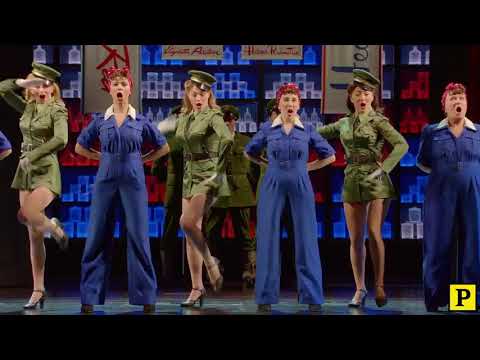
Review: what the lyrics are really doing
Can a musical about two billion-dollar egos afford to be polite? “War Paint” mostly tries, and that choice is the point. The show’s engine is not romance, not heroism, not even rivalry in the sports-movie sense. It is branding. Michael Korie’s lyrics keep returning to sales language, slogans, ingredients, instructions, the voice you hear in your head while you are “fixing” your face. That constant commercial grammar becomes the dramaturgy: when characters cannot say “I’m afraid,” they say “Better yourself.” When they cannot say “I feel replaced,” they say “Back on top.”
The score (Scott Frankel) sits in classic Broadway musculature, with period-aware flourishes that keep hopping decades without sounding like museum audio. It is frequently brassy, sometimes velvet, occasionally sharp enough to sting. The smartest structural idea is that the women each get an opening claim-stake, then the show keeps cross-cutting them like competing ad campaigns on adjacent pages. That editing rhythm creates momentum even when the book’s biography obligations (dates, products, lawsuits, husbands) threaten to turn the evening into a PowerPoint with hats.
Where “War Paint” succeeds is in how the lyric writing treats ambition as a bodily impulse. Everyone is “on display.” Even the men, especially the men, sing as if they are pitching themselves in a mirror. Where it struggles is the classic bio-musical problem: the songs are strongest when they stop explaining and start judging. Whenever the show pauses to narrate, the language tightens into caption-writing. Whenever it lets a character taste a line and hate the taste, the lyric work opens up.
Listener tip: if you are coming in cold, play “Best Face Forward,” “Face to Face,” and “Beauty in the World” first. You will hear the show’s argument in miniature: insecurity as chorus, conflict as duet, cost as reconciliation.
How it was made
The piece comes from the “Grey Gardens” team: book writer Doug Wright, composer Scott Frankel, lyricist Michael Korie, with Michael Greif directing. The source DNA is explicitly documentary and journalistic: Lindy Woodhead’s book “War Paint” and the documentary “The Powder & the Glory.” That matters because the musical keeps one foot in reported history and the other in theatrical invention, especially in the imagined encounters between rivals who, in real life, did not meet.
One of the more revealing craft notes from the writers is how deliberately the opening number is built as a traditional musical-theatre curtain-raiser that turns ominous as it interrogates beauty rituals. It is a neat mission statement: make the audience complicit, then make them laugh at their own complicity. If the show sometimes feels too well-behaved, it is because the authors are balancing two obligations: tell a decades-spanning business saga and still land a rhyme with bite.
In production history terms: the musical premiered at Goodman Theatre in Chicago in 2016, then transferred to Broadway in 2017 (Nederlander Theatre). The Broadway run closed earlier than initially announced, with reporting pointing to a scheduling need connected to Patti LuPone’s hip surgery.
Key tracks & scenes
"Best Face Forward" (Society Women, Ensemble)
- The Scene:
- Prologue. New York City, 1935. The stage behaves like a department-store mirror wall: faces appear, evaluate, disappear. The light is clinical, then suddenly cabaret-warm, like a lie you want to believe.
- Lyrical Meaning:
- The lyric is a group confession disguised as etiquette. It frames beauty not as pleasure but as compliance. The repeating phrases function like advertising copy that has been swallowed whole.
"Behind the Red Door" (Elizabeth Arden, Arden Girls)
- The Scene:
- The Red Door salon, New York City, 1935. A red threshold becomes a rite. Staff move with choreographed calm, as if selling serenity is their true product.
- Lyrical Meaning:
- This is Arden’s brand manifesto: aspiration delivered as service. The language flatters the customer while quietly asserting control. Every “welcome” is also a boundary.
"Back on Top" (Helena Rubinstein)
- The Scene:
- Ocean liner gangplank, then salon and lab spaces. Helena arrives like an acquisition. Lighting is colder than Arden’s world, with a laboratory sheen that sells “science” as authority.
- Lyrical Meaning:
- Helena’s lyric diction is conquest talk. Even when she sings about herself, she is really singing about the market. The metaphors are vertical: rise, tower, dominate.
"My Secret Weapon" (Helena, Harry, Tommy, Elizabeth)
- The Scene:
- A montage of offices and salon backrooms. The staging typically cross-cuts the two empires, as if the number is happening in split-screen.
- Lyrical Meaning:
- The song treats leverage as intimacy. Nobody says “I need you,” they say “I can use you.” Korie’s internal rhymes make the manipulation sound effortless, which is the chilling part.
"Face to Face" (Helena & Elizabeth)
- The Scene:
- A Senate hearing room, 1938. A public space forces private animus into “decorum.” The lighting wants to be patriotic, but the duet keeps pulling it toward interrogation.
- Lyrical Meaning:
- This is the show’s central collision: the lyric is written like a debate where both women are also prosecuting themselves. The verbal jabs land because they are product-specific, not just personality-specific.
"Now You Know" (Helena)
- The Scene:
- The restaurant at the St. Regis Hotel, 1951. It plays as a victory lap with a shadow behind it. Warm, expensive light; the kind that makes everyone look richer than they feel.
- Lyrical Meaning:
- A hard-earned thesis statement about what power costs. The lyric turns from conquest to consequence, and the consonants sharpen as the self-justifications run out.
"Pink" (Elizabeth)
- The Scene:
- Elizabeth Arden’s office, 1963. A brand color becomes a mood, then a trap. The stage picture often isolates her, with the prettiest palette in the room behaving like a cage.
- Lyrical Meaning:
- “Pink” is not cute. It is a defense mechanism sung as a palette choice. The lyric makes you hear how “taste” can be armor, and how armor eventually weighs you down.
"Beauty in the World" (Helena & Elizabeth)
- The Scene:
- A private suite at the Barclay Hotel, 1964. The show finally permits stillness. The lighting softens as if someone turned down the volume on judgment.
- Lyrical Meaning:
- The duet attempts a late-life accounting: what did they build, who did they hurt, who did they free. The lyric is careful, sometimes too careful, but it lands because it admits ambiguity.
Seat-math: for this show’s design-heavy storytelling, mid-orchestra (not too close) is ideal. You want full-body silhouettes for the decade-jumps, and enough distance to read hats, gloves, and posture as character choices.
Live updates (2025–2026)
Information current as of February 2026. The Broadway production ran from March 2017 previews to a November 2017 closing at the Nederlander Theatre. In the current ecosystem, “War Paint” is living as a licensing title: Concord Theatricals lists it with materials, instrumentation, and perusal options, and Playbill reported licensing availability shortly after the Broadway run.
On the recording side, the Original Broadway Cast Recording remains widely available on major platforms, and trade coverage at the time confirmed a digital release followed by a CD release window. If you are tracking the show in 2026, the most practical “where is it now” answer is: in regional seasons, conservatory programming, and any place that wants two virtuoso leading roles plus a design team’s dream budget.
Notes & trivia
- The Broadway setting window is explicitly 1935–1964, with the show hopping locations from salons to a Senate hearing room to CBS studios.
- Elizabeth Arden’s Red Door salon (a real brand icon) is staged as a literal threshold into self-invention.
- “Face to Face” is placed in a Senate hearing room in 1938, weaponizing “public record” as theatrical conflict.
- In at least one widely circulated character explainer tied to licensing, the show stresses that Arden and Rubinstein did not meet in real life, even though the musical dramatizes meetings.
- “Harry Fleming” is presented in some production notes as a composite figure rather than a single historical person.
- The Original Broadway Cast Recording was released by Ghostlight Records (with Sh-K-Boom branding appearing in trade and platform listings).
- Concord’s published orchestra breakdown points to a large pit with multiple reeds and two keyboards, consistent with the show’s period palette-hopping.
Reception
Critics largely agreed on two things: the stars are the event, and the show’s biography mechanics sometimes keep it from turning vicious or strange enough. The most pointed reviews framed “War Paint” as a luxury object with a slightly hollow center, which is either a devastating critique or accidentally thematically appropriate. Over time, the conversation has tilted toward the score and craft: the show is increasingly discussed as a vehicle for elite performers and designers, and as a case study in how to musicalize commerce without drowning in exposition.
“A musical about Catherine Zuber’s fabulous costumes and magnificent hats.” Variety (2017)
“Heavy on primer and contours but light on blending and shading.” Time Out New York (2017)
“An impressive façade. Just not much of a stunner under the makeup.” NY1 (2017)
Awards
- Tony Awards (2017): Nominations for Christine Ebersole and Patti LuPone (Leading Actress in a Musical), David Korins (Scenic Design of a Musical), Catherine Zuber (Costume Design of a Musical).
- Drama Desk Awards (2017): Catherine Zuber won for Outstanding Costume Design (Musical); David Brian Brown won for Outstanding Wig and Hair Design; additional nominations included Outstanding Lyrics (Michael Korie) and others.
- Outer Critics Circle Awards (2017): Catherine Zuber won for Outstanding Costume Design; nominations included performances for Ebersole and LuPone.
Quick facts
- Title: War Paint
- Broadway year: 2017 (previews began March 7; opened April 6; closed November 5)
- Type: Musical (biographical drama)
- Book: Doug Wright
- Music: Scott Frankel
- Lyrics: Michael Korie
- Director (Broadway): Michael Greif
- Orchestrations: Bruce Coughlin
- Music director (Broadway): Lawrence Yurman
- Original Broadway theatre: Nederlander Theatre (New York)
- Setting: 1935–1964, New York City
- Source material: Lindy Woodhead’s “War Paint” (book) and the documentary “The Powder & the Glory”
- Album: War Paint (Original Broadway Cast Recording), released digitally May 26, 2017; CD release followed in mid-July 2017 (as announced in trade coverage)
- Licensing: Listed for licensing and materials via Concord Theatricals
Frequently asked questions
- Is there an official cast album?
- Yes. The Original Broadway Cast Recording was released digitally in May 2017 with a later CD release window announced by major theatre outlets. It is also available on major streaming platforms.
- Did Elizabeth Arden and Helena Rubinstein actually meet?
- Most historical accounts say they did not meet face to face, which is why the musical’s confrontations carry a deliberate “what if” charge.
- Where does “Face to Face” happen in the story?
- The number is staged at a Senate hearing (1938), turning regulation and public scrutiny into a theatrical arena.
- What style of music is “War Paint” written in?
- It is written in a classic Broadway idiom with period-aware colors. The score can pivot from showroom sparkle to darker, more analytical textures depending on who is “selling” the moment.
- Is “War Paint” available for theatres to produce now?
- Yes. It is listed for licensing through Concord Theatricals, including information about materials and orchestra requirements.
- What should I listen to first to understand the plot fast?
- Start with “Best Face Forward,” then “Behind the Red Door” and “Back on Top” (the dual brand introductions), and finish with “Beauty in the World” (the show’s moral accounting).
Key contributors
| Name | Role | Contribution |
|---|---|---|
| Doug Wright | Book | Builds the biographical architecture and the show’s debate about ambition. |
| Scott Frankel | Composer | Classic Broadway craft with shifting period textures across decades. |
| Michael Korie | Lyricist | Sales language turned into character language; sharp, commercial-minded rhyme. |
| Michael Greif | Director | Glossy cross-cut staging that keeps two parallel empires in the same frame. |
| David Korins | Scenic design | A modular world that can be salon, lab, hearing room, and studio in quick succession. |
| Catherine Zuber | Costume design | Decade-by-decade silhouette storytelling; the hats became part of the critical narrative. |
| Kenneth Posner | Lighting design | Does the heavy lifting of time travel and status signaling. |
| Brian Ronan | Sound design | Supports a dialogue-forward book and big-voice leads in a design-dense environment. |
| Bruce Coughlin | Orchestrations | Large-pit writing that can shift from showroom polish to wartime urgency. |
| Lawrence Yurman | Music director | Musical leadership connecting the score’s stylistic pivots to performance clarity. |
| David Brian Brown | Wig and hair design | Award-winning decade-specific hair storytelling that tracks power and age. |
| Angelina Avallone | Makeup design | Historical research translated into stage-readable makeup evolutions. |
References & Verification: IBDB (Broadway League database) for production dates and credits; Tony Awards press site for 2017 nominations; Concord Theatricals for licensing details and published song list/orchestra notes; Playbill and Broadway.com/TheaterMania for cast recording release reporting; contemporary reviews from Variety, Time Out New York, NY1, The Hollywood Reporter, and additional trade features/interviews.