
Seussical Lyrics: Song List
- Act 1
- Overture
- Oh, The Thinks You Can Think
- Horton Hears A Who
- Biggest Blame Fool
- Here On Who
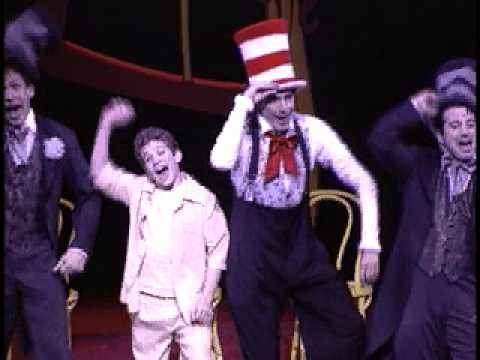
- Day For The Cat In The Hat, A
- It's Possible (In McElligot's Pool)
- How To Raise A Child
- Military, The
- Alone In The Universe
- One Feather Tail Of Miss Gertrude McFuzz, The
- Amazing Mayzie
- Amayzing Gertrude
- Monkey Around
- Chasing The Whos
- How Lucky You Are
- Notice Me, Horton
- How Lucky You Are (Mayzie's Reprise)
- Act 1 - Finale: Horton Sits On The Egg
- Act 2
- Egg, Nest and Tree
- Mayzie In Palm Beach
- Alone In The Universe (Reprise)
- Solla Solew
- Havin' A Hunch
- All For You
- The People Versus Horton The Elephant
- Finale/Oh, The Thinks You Can Think (Reprise)
- Green Eggs And Ham (Curtain Call)
About the "Seussical" Stage Show
Release date of the musical: 2001
"Seussical" – The Musical Guide & Song Meanings
Last verified: 2026-02-01. This guide focuses on lyrical meaning, narrative function, and the major soundtrack release, not full lyric reprints.
Review: what the lyrics are trying to solve
How do you make a coherent musical out of a writer whose whole brand is delightful incoherence? “Seussical” answers with a trick and a dare: it frames the evening as a child’s imagination being actively conducted, then uses rhyme as structural steel. When it works, the lyrics do the hard job of turning a mash-up into a moral argument. When it slips, you feel the show straining to be whimsical on schedule.
Lynn Ahrens’ lyric strategy is craft-first. She borrows Seussian bounce but keeps Broadway clarity in the verbs: Horton vows, JoJo doubts, Gertrude pleads, Mayzie reframes responsibility as a spa day. The recurring word “think” is not just cute branding. It becomes the show’s thesis about belief as an action. Songs keep returning to the same idea from different angles: imagining as escape (“It’s Possible”), imagining as companionship (“Alone in the Universe”), imagining as community proof (“YOPP”). That repetition is not accidental. It is the score’s way of taking scattered source material and giving it one spine.
Musically, Stephen Flaherty writes in a pop-pastiche toolbox. That matters because the characters are not naturalistic people; they are attitudes in costumes. The Cat can jump styles like a channel surfer, while Horton tends to sit in warmer, steadier melodic shapes. The contrast is dramaturgy: volatility versus devotion. Even the soundtrack album plays like a tour of genres with a recurring question under it: can sincerity survive in a room full of jokes?
How it was made: the messy birth story
The origin story is less “childhood dream fulfilled” and more “rights, producers, and sheer stubbornness.” In a detailed retrospective, Ahrens and Flaherty describe getting the Dr. Seuss rights through producer Garth Drabinsky, then watching the project become unstable as the producing landscape shifted around them. They were effectively building a new show while the floor moved, with Eric Idle initially involved as a co-conceiver and early Cat-in-the-Hat presence in development rooms. The team’s own memory of it is not glossy: it is friends called in, readings staged, and structure fought for line by line.
After a rocky tryout period, the Broadway run became famous for its public uncertainty. The reporting around the show in early 2001 even tracked how casting news moved the box office needle. That “work-in-progress under a microscope” quality is part of why the lyrics are so function-heavy: the score is constantly trying to tell you what the show is, while the discourse tells you what the show is not.
Then the afterlife rewrote the narrative. The same musical that took hits as a Broadway event became a licensing juggernaut. It is the rare case where the soundtrack and the school-auditorium circuit did more brand building than Times Square ever managed.
Key tracks & scenes: 8 moments that carry the plot
"Oh, the Thinks You Can Think" (The Cat in the Hat, Company)
- The Scene:
- An empty stage. A red-and-white hat appears like a dare. The Cat materializes and, in effect, turns on the lights of the story. Characters flood in as if the song is opening a toy chest and shaking it hard.
- Lyrical Meaning:
- This is not mere invitation. It is a contract with the audience: imagination is the engine, and the engine will be loud. The lyric keeps pushing possibility as a verb, setting up the show’s recurring argument that belief is a decision, not a mood.
"Horton Hears a Who" (Horton)
- The Scene:
- Horton splashes in a pool and catches a cry that seems impossible in the open air. He finds the speck and handles it with the careful attention of someone holding a secret no one else wants.
- Lyrical Meaning:
- The lyric turns empathy into action. Horton does not “feel bad.” He commits. The song introduces the show’s core ethical stance: protecting the unseen is not optional, even if it costs you social standing.
"Alone in the Universe" (Horton, JoJo)
- The Scene:
- Two solitudes in parallel. JoJo sits alone in his bunk after a brutal day at military school, while Horton sits alone guarding the clover. Their worlds “hear” each other across scale, like radio signals finally tuned.
- Lyrical Meaning:
- The song is the show’s emotional fulcrum: imagination stops being escape and becomes friendship. The lyric’s power is its plainness. It names loneliness without dressing it up, then offers belief as companionship: someone out there hears you.
"Amayzing Mayzie" (Mayzie La Bird)
- The Scene:
- Mayzie arrives with Bird Girls and a grin that reads like a sales pitch. She offers “advice” the way a lounge singer offers trouble, all sparkle and implication.
- Lyrical Meaning:
- Ahrens writes Mayzie as seduction-through-language. The lyric is built on self-mythmaking: Mayzie sells the fantasy of freedom without consequence. Dramatically, this is the show planting the temptation that will later trap Horton on that egg.
"Notice Me, Horton" (Gertrude McFuzz)
- The Scene:
- Gertrude arrives determined to be seen, dragging the absurd weight of her newly extravagant tail. Horton is searching clover by clover, eyes locked on duty, missing the person right in front of him.
- Lyrical Meaning:
- This is the score’s sharpest little human ache. The lyric is not about feathers. It is about invisibility in plain sight. It also sets up the show’s critique of Horton’s saintliness: devotion can become blindness.
"How Lucky You Are" (The Cat in the Hat)
- The Scene:
- The Cat freezes the action mid-disaster, stepping out of time to sing directly into the audience’s face. The world pauses while the emcee insists everything is fine, actually.
- Lyrical Meaning:
- The lyric is a mask. It uses cheerfulness as denial, which is why it lands like satire when staged well. Under the bright wording sits a real question: is optimism wisdom, or avoidance?
"Solla Sollew" (Horton, JoJo, Mr. and Mrs. Mayor)
- The Scene:
- Horton sings a lullaby to the egg, while the Who family echoes the same dream from their damaged world. The stage often plays this as a softening: fewer tricks, more listening.
- Lyrical Meaning:
- It is the show’s most direct piece of comfort writing. The lyric invents a place to project longing, but it also reveals character: the people who can imagine relief are the ones still capable of tenderness.
"Havin’ a Hunch" (JoJo, The Cat in the Hat)
- The Scene:
- JoJo, lost and frightened, turns on the Cat, blaming the ringleader for the chaos. The Cat pivots from instigator to guide, steering JoJo back by teaching him to trust his own inner signal.
- Lyrical Meaning:
- The lyric reframes imagination as responsibility. Not every “think” is harmless. The song argues for discernment: listen to the voice that brings you home, not the one that makes the loudest mess.
"The People Versus Horton the Elephant" (Company)
- The Scene:
- Back in the Jungle of Nool, Horton is put on trial for two crimes: believing in the invisible and keeping a promise. The stakes become physical, public, and fast.
- Lyrical Meaning:
- This is where the show cashes its lyrical checks. Everything about “a person’s a person” stops being slogan and becomes courtroom argument. The ensemble writing turns peer pressure into rhythm, so Horton’s dissent has to fight through sound.
Live updates (2025/2026): concerts, licensing life, and where it’s showing up
On paper, “Seussical” is a Broadway cautionary tale. In practice, it’s an ecosystem. Music Theatre International continues to license multiple versions of the show, and the company has actively marked the title’s longevity, including a 25-year framing on its official materials.
The most concrete 2025 headline: a “Seussical” 25th Anniversary Reunion Concert at 54 Below on October 20, 2025, with a livestream option and a cast list built from original Broadway, touring, and Off-Broadway alumni. That kind of event is a tell. Shows that vanish do not get reunion concerts with ticketed streams; shows with a living fan base do.
Regionally, “Seussical” remains a reliable summer and family-programming pick. A visible example: Pittsburgh CLO mounted it in 2024 as part of its season, leaning into the color and kid-forward appeal that Broadway critics often treated as a liability. If you are tracking it in 2026, the smartest “where can I see it?” answer is still local: professional regional runs, schools, and youth-theatre circuits are the show’s true long-running theatre district.
Notes & trivia
- The original Broadway production opened Nov. 30, 2000 and closed May 20, 2001 after 198 performances.
- MTI licenses multiple versions, including a version tied to the U.S. National Tour (2002) and youth-focused editions.
- Ahrens and Flaherty have described the project’s early producing path as volatile, with rights and producers shifting before the show stabilized.
- Eric Idle was involved as a co-conceiver in the early development history, including development-room Cat-in-the-Hat involvement recalled by the writers.
- After the Boston tryout period, Broadway reporting tracked substantial creative churn and “revamp” narratives before opening.
- The cast recording arrived during the Broadway run: released Feb. 6, 2001 on Decca Broadway, with reporting noting 28 tracks and “Green Eggs and Ham” as a curtain-call add.
- Playbill’s 2001 coverage also quantified a short-term box office bump when Rosie O’Donnell stepped into the Cat in the Hat role during David Shiner’s vacation window.
Reception: critics then, audiences later
The initial critical temperature was chilly, and not quietly. Mainstream reviews tended to call out the show’s hyperactivity and narrative sprawl. Yet even in negative notices, you can spot respect for the engine underneath: the music’s stylistic range and the sheer professionalism of the score’s construction.
Two decades later, the conversation is less about whether Broadway “worked” and more about why the material thrives elsewhere. The short answer is lyrical usability. The songs have clear objectives, clean jokes, and emotional lanes young performers can inhabit without needing irony training.
“It seems that ‘no-brainer’ is all too apt a description for the bright but bland and frenetic hodgepodge…”
“Oh, the mistakes you can make!”
“The good news is, it’s not so bad. The bad news is, it’s not so good.”
Quick facts (album + production)
- Title: Seussical (sometimes billed as “Seussical the Musical”)
- Broadway run: Nov. 30, 2000 to May 20, 2001 (Richard Rodgers Theatre)
- Type: Family musical comedy; Dr. Seuss character mash-up with Horton as the narrative anchor
- Book: Lynn Ahrens & Stephen Flaherty
- Music: Stephen Flaherty
- Lyrics: Lynn Ahrens
- Conceived by: Ahrens, Flaherty, Eric Idle
- Selected notable placements (story moments): Hat-on-empty-stage prologue (“Oh, the Thinks You Can Think”); parallel-solitude duet (“Alone in the Universe”); frozen-tableau emcee commentary (“How Lucky You Are”); courtroom climax (“The People Versus Horton”)
- Cast album: “Seussical: The Musical (A Decca Broadway Original Cast Album)” released Feb. 6, 2001 (reported 28 tracks; recorded Dec. 18, 2000)
- Label / album status: Decca Broadway commercial release; widely available via major music platforms depending on territory
- 2025 spotlight: 25th Anniversary Reunion Concert at 54 Below (Oct. 20, 2025) with livestream option
Frequently asked questions
- Is “Seussical” from 2001 or 2000?
- The Broadway production opened in late 2000 and closed in 2001. The original Broadway cast album was released in 2001, which is why many discographies tag it to that year.
- Who wrote the lyrics and the music?
- Lynn Ahrens wrote the lyrics and co-wrote the book with Stephen Flaherty, who composed the music. The show was conceived by Ahrens, Flaherty, and Eric Idle.
- What is the show actually about, underneath the Seuss mash-up?
- It’s about defending the unseen and refusing to surrender belief when the crowd calls you ridiculous. Horton’s promise to protect Whoville is the plot, and the lyrics keep translating that promise into specific choices.
- What should I listen for on the cast recording if I want “the point” fast?
- Try “Oh, the Thinks You Can Think,” “Horton Hears a Who,” “Alone in the Universe,” “How Lucky You Are,” and “Solla Sollew.” That sequence maps the show’s philosophy from hype to intimacy to consolation.
- Is it touring in 2025/2026?
- There is no single standing commercial tour to track in the way you would for a current Broadway export. The title’s real footprint is licensing: frequent regional, school, and youth-theatre productions, plus one-off events like the 2025 reunion concert at 54 Below.
- Why do some productions feel tighter than others?
- Because “Seussical” exists in multiple versions and has a long history of revisions after early tryouts. The best productions treat the Cat’s chaos as controlled storytelling, not random interruption.
Key contributors
| Name | Role | Contribution |
|---|---|---|
| Lynn Ahrens | Lyricist, co-bookwriter | Seussian rhyme with Broadway clarity; lyric motifs around “think,” belief, and community proof. |
| Stephen Flaherty | Composer, co-bookwriter | Pop-pastiche score that lets the Cat roam stylistically while giving Horton emotional steadiness. |
| Eric Idle | Co-conceiver | Early conceptual DNA in the Cat-as-emcee framing; cited in development history. |
| Frank Galati | Director (Broadway) | Broadway staging credit; production shaped amid extensive pre-opening scrutiny. |
| Kathleen Marshall | Choreographer (Broadway) | Movement vocabulary for a human cast playing storybook creatures without turning the stage into a costume parade. |
| Decca Broadway | Record label | Released the original Broadway cast album (Feb. 6, 2001). |
| Music Theatre International | Licensing | Multiple editions and ongoing licensing that fueled the show’s long-term popularity beyond Broadway. |
Sources: IBDB; Music Theatre International (Full Synopsis); Playbill (oral history + cast album reporting); Los Angeles Times; TheaterMania; 54 Below; AllMusic; TribLIVE.