Ragtime Lyrics – All Songs from the Musical
Ragtime Lyrics: Song List
- Act 1
- Prologue: Ragtime
- Goodbye, My Love
- Journey On
- The Crime of the Century
- What Kind of Woman
- A Shtetl Iz Amereke
- Success
- His Name Is Coalhouse Walker
- Getting' Ready Rag
- Henry Ford
- Nothing Like the City
- Your Daddy's Son
- The Courtship
- New Music
- Wheels of a Dream
- The Night That Goldman Spoke at Union Square
- Gliding
- The Trashing of the Car
- Justice
- President
- Till We Reach That Day
- Act 2
- Entr'acte
- Harry Houdini, Master Escapist
- Coalhouse's Soliloquy
- Coalhouse Demands
- What a Game
- Fire in the City
- Atlantic City
- Buffalo Nickel Photoplay, Inc.
- Our Children
- Harlem Nightclub
- Sarah Brown Eyes
- He Wanted to Say
- Back to Before
- Look What You've Done
- Make Them Hear You
- Wheels of a Dream (reprise)
- The Ragtime Symphonic Suite
About the "Ragtime" Stage Show
The performance's based on a book, written by E. L. Doctorow in 1975. Words and music are created by L. Ahrens & S. Flaherty. Premiere of this spectacle happened in LA in 1977. Displays lasted for one year, then the show moved to Broadway in 1978. Frank Galati became a director and Graciela Daniele was responsible for choreography. The actors of the original version included B. S. Mitchell, M. Mazzie, P. Friedman, A. McDonald, J. Kaye, M. Jacoby and L. Michele.In 2003, a West End version was created. The production was showed at Piccadilly Theatre. It was a limited run. Among the actors, there was Maria Friedman, who has received Olivier Award. The staging was revived for several times – in 2009, 2012, 2014. Two of them – in 2009 and in 2014 were for Broadway.
Release date: 1998
"Ragtime" – The Musical Guide & Song Meanings
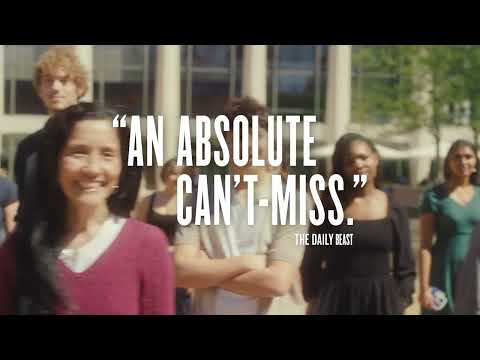
Review: what the lyrics actually do
“Ragtime” (Broadway, 1998) is a history musical that refuses to behave like a textbook. Lynn Ahrens’ lyrics do not just decorate Stephen Flaherty’s melodies. They distribute power. Who gets a clean, ringing chorus. Who gets clipped newsprint. Who gets prayer, and who only gets reported speech. That is the show’s main engine: America as a country where language can be a passport, a weapon, or a door that never opens.
The score moves on two tracks at once. One is period flavor: rag, vaudeville, hymn, march. The other is modern musical storytelling: recurring motifs, elastic time, and choral writing that can jump months in a few bars. The lyrics keep up by switching diction fast. Tateh sings in survival math. Mother sings in etiquette, then outgrows it. Coalhouse sings in certainty until certainty becomes a fuse.
The famous “big” numbers land because the lyric stance is so specific. “Wheels of a Dream” is plainspoken on purpose. The dream is not abstract. It is tactile. A car. A child. A country that might finally stop inventing rules mid-game. “Till We Reach That Day” is the opposite: communal and prophetic, like a hymn that is tired of waiting. In both cases, the lyric doesn’t beg for sympathy. It builds an argument and dares you to interrupt it.
How it was made: cassette auditions, overnight songs
The origin story is unusually concrete. Ahrens and Flaherty first delivered a cassette of audition songs in 1994 as a proving ground for whether they could write in turn-of-the-century American styles without sounding like a museum demo. They started serious collaboration in early 1995, with an August 1995 reading deadline driving a burst of writing in which major sequences arrived quickly and then got rebuilt, sometimes repeatedly.
Here is the useful part for lyric nerds: several early numbers were strong and still got cut. “Silhouette Man” and “The Heavy-Hearted Rag” did not survive, but they evolved into “Success” and “The Gettin’ Ready Rag.” “The Girl on the Swing” was replaced by a funnier vaudeville frame for “The Crime of the Century.” The craft is visible. The show is not “born complete.” It is revised into clarity.
The most human detail is also the most brutal. The team realized Sarah needed more than atmosphere. Audra McDonald was already in the cast, and the writers responded by bringing in “Your Daddy’s Son,” written overnight. Later, “Back to Before” was added as Mother’s late-act reckoning. Coalhouse’s climactic material also shifted: an earlier song was replaced by “Make Them Hear You,” then reworked so both pieces could serve the final build. You can hear the dramaturgy in the lyric choices. The most “famous” songs are the ones that arrived to fix a problem.
If you want Ahrens and Flaherty explaining their own motifs, they later published a track-by-track breakdown that talks through lyrical inspiration, musical themes, and cut sequences. It reads like a tour of the engine room, with the writers pointing at the pipes.
Key tracks & scenes: 8 lyrical turning points
"Prologue: Ragtime" (Company)
- The Scene:
- Act I opener. A turn-of-the-century panorama snaps into place: New Rochelle, Harlem, the Lower East Side. The stage often plays like a living photograph, bright and carefully composed, then crowded on purpose.
- Lyrical Meaning:
- The lyric introduces “types” and still makes them feel volatile. It sells the illusion of order, so the later rupture has somewhere to land.
"The Crime of the Century" (Evelyn Nesbit, Company)
- The Scene:
- Mid Act I. Vaudeville energy. A scandal is replayed as entertainment, with a wink that is not fully a joke. Lighting usually turns footlight-bright, then hardens into something more acidic.
- Lyrical Meaning:
- The show announces its media thesis. America loves morality stories most when they come with celebrity faces and a catchy chorus.
"Your Daddy’s Son" (Sarah)
- The Scene:
- Act I, intimate corner. Sarah sings to her baby. Many productions isolate her in a pool of light that feels like a confession booth.
- Lyrical Meaning:
- Ahrens writes a lullaby that is also a deposition. Sarah’s fear, shame, and love share the same breath, with no tidy exit.
"Wheels of a Dream" (Coalhouse Walker Jr., Sarah)
- The Scene:
- Late Act I. Coalhouse imagines a future for their son. Staging often gives the couple space and stillness, as if the world pauses to let them speak in full sentences.
- Lyrical Meaning:
- The lyric is deliberately direct. A dream is not a metaphor here. It is a plan for dignity that can be stolen.
"Gliding" (Tateh)
- The Scene:
- Act I. Tateh soothes his daughter while flipping through drawings. Productions frequently soften the stage picture with waltz-like motion and a gentler palette, a rare breath in a harsh immigrant grind.
- Lyrical Meaning:
- The lyric is small-scale hope. Tateh is inventing stability by inventing pictures, and the show treats that as real labor.
"Till We Reach That Day" (Company)
- The Scene:
- Act I finale. After Sarah’s death, grief becomes community. Many stagings move from private mourning into a public chorus, with lights widening as voices stack.
- Lyrical Meaning:
- The lyric turns protest into hymn. It refuses consolation and insists on a future that justice has delayed.
"Back to Before" (Mother)
- The Scene:
- Act II, late. Mother finally says the quiet parts out loud. Often staged with minimal movement, as if the room has decided to listen without interrupting.
- Lyrical Meaning:
- The lyric is a map of a marriage collapsing into self-knowledge. It is not about regret. It is about waking up and realizing the cost of staying asleep.
"Make Them Hear You" (Coalhouse Walker Jr.)
- The Scene:
- Act II, the moral peak. Coalhouse reframes personal vengeance as public reckoning. Lighting often tightens on him, then opens to the ensemble like a verdict.
- Lyrical Meaning:
- The lyric is an anthem built from imperatives. It is persuasion that turns into command, because the character has run out of polite options.
Live updates: 2025–2026 Broadway status
Information current as of 1 February 2026.
Ragtime returned to Broadway at Lincoln Center Theater’s Vivian Beaumont Theater in fall 2025, directed by Lear deBessonet. The production began performances September 26, 2025 and opened October 16, 2025. Originally announced as a limited engagement through January 4, 2026, it extended its run through June 14, 2026, with additional tickets released as the extension rolled out.
The revival’s public story has been demand. BroadwayWorld reported a new box office record at Lincoln Center Theater and detailed a creative setup that includes Ellenore Scott choreographing and a 28-piece orchestra under music director James Moore, using William David Brohn’s original orchestrations and Flaherty’s vocal arrangements.
There is also a major soundtrack update. The 2025 Broadway cast recording was announced for digital release on January 9, 2026, with CD and vinyl editions scheduled later (CD February 6, vinyl April 3), released by Concord Theatricals Recordings. Playbill also tied the album release to new music videos for “Wheels of a Dream” and “Journey On.”
One cast note, handled publicly with unusual candor: Shaina Taub, who plays Emma Goldman in the revival, announced a leave of absence from January 6 to March 29, 2026 to focus on her health after multiple pregnancy losses. The production continues through the extension window.
Notes & trivia
- The original Broadway cast album was released April 28, 1998.
- Discogs credits key recording dates at the Hit Factory in New York City (January 26 and February 2, 1998), with some material recorded earlier in 1996.
- The Masterworks Broadway album essay describes multiple strong early songs that were cut and then transformed into later numbers, a rare public paper trail of revision.
- “Your Daddy’s Son” is described in the album essay as an overnight write after the team realized Sarah needed more musical presence.
- In the same essay, “Back to Before” is explicitly positioned as an eleven o’clock number built to dramatize Mother’s doubts in Act II.
- In 2025, BroadwayWorld reported the revival uses a 28-piece orchestra featuring Brohn’s original orchestrations.
- For collectors and researchers, an archival pro-shot exists in the Theatre on Film and Tape collection (recorded December 9, 1998), viewable at the New York Public Library for the Performing Arts.
Reception: the praise, the complaints, the pattern
Ragtime has always attracted two kinds of criticism at once: awe at the craft, and impatience with the scale. In 1998, some reviewers heard a perfectly engineered machine and missed messier nuance. That complaint never fully dies, because the show is built like an American mural. It wants big types colliding, not quiet realism.
Yet the modern revival cycle has clarified what the piece does best. It gives every community a musical language, then forces those languages to share a stage. When a revival works, the score’s repeating motifs feel like history repeating, with better harmony and worse consequences.
Like a player piano, “Ragtime” has all its notes in their proper places.
Ahrens’ lyrics give every character their own means of externalizing their inner selves.
A powerhouse cast buoys the revival, even when the material leans on cliché.
Quick facts
- Title: Ragtime
- Broadway year: 1998 (opened January 18)
- Type: Historical musical adaptation
- Book: Terrence McNally
- Music: Stephen Flaherty
- Lyrics: Lynn Ahrens
- Based on: E.L. Doctorow’s novel “Ragtime” (1975)
- Signature lyric placements: “Prologue: Ragtime” (Act I opener), “Till We Reach That Day” (Act I finale), “Back to Before” (late Act II), “Make Them Hear You” (Act II climax)
- 1998 album: Original Broadway cast album released April 28, 1998 (RCA Victor era; now broadly distributed via Masterworks Broadway)
- 2025/26 album: 2025 Broadway cast recording released digitally January 9, 2026 (Concord Theatricals Recordings)
Frequently asked questions
- Who wrote the lyrics to Ragtime?
- Lynn Ahrens wrote the lyrics, with music by Stephen Flaherty and book by Terrence McNally.
- Is there a movie of the musical?
- There is a film adaptation of E.L. Doctorow’s novel (not the stage musical). The current headline on the musical side is the 2025 Broadway revival and its 2026 cast recording.
- Which recording should I start with?
- If you want the 1998 “classic” vocal blend and the original interpretive choices, start with the Original Broadway Cast Recording. If you want the current Broadway approach, start with the 2025 Broadway cast recording released in 2026.
- Why is “Wheels of a Dream” such a big deal?
- Because it is the show’s most direct statement of Black aspiration and legacy, written without irony. Its lyric simplicity is the strategy: it cannot be argued away as metaphor.
- Is the 2025 Broadway revival still running in 2026?
- Yes. The Lincoln Center Theater production extended through June 14, 2026.
- Did anything notable change for the 2025 revival?
- Public reporting emphasizes a major orchestral scale (28 players), updated staging and design teams, and a new cast recording rollout with music videos.
Key contributors
| Name | Role | Contribution |
|---|---|---|
| Lynn Ahrens | Lyricist | Built character-specific diction and chorus writing that turns civic argument into song. |
| Stephen Flaherty | Composer | Wove ragtime, vaudeville, hymn, and march styles into a motif-driven modern score. |
| Terrence McNally | Book writer | Shaped a novel’s sprawl into stage architecture that can jump time while staying legible. |
| William David Brohn | Orchestrator | Created the original orchestral language that gives the score its period muscle. |
| Lear deBessonet | Director (2025 Broadway revival) | Reframed the epic on the Vivian Beaumont stage with contemporary urgency. |
| James Moore | Music director (2025 Broadway revival) | Conducts the 28-piece orchestra and shapes the revival’s sonic identity. |
| Ellenore Scott | Choreographer (2025 Broadway revival) | Designed movement for a large ensemble while keeping story clarity in motion. |
| Joshua Henry | Performer (Coalhouse, 2025 Broadway revival) | Anchors the revival’s moral center and drives the new cast recording’s headline tracks. |
| Concord Theatricals Recordings | Label | Released the 2025 Broadway cast recording in 2026 across digital and physical formats. |
Sources: Playbill; Masterworks Broadway; New York Theatre Guide; Washington Post; Variety; Exeunt NYC; BroadwayWorld; Broadway.com; Billboard; People; Concord Theatricals/Concord Theatricals Recordings; ovrtur; Discogs; Wikipedia.