Oliver! Lyrics – All Songs from the Musical
Oliver! Lyrics: Song List
- Act 1
- Prologue / Overture
- Food, Glorious Food
- Oliver
- I Shall Scream
- Boy for Sale
- That's Your Funeral
- Coffin Music
- Where Is Love?
- Consider Yourself
- You've Got to Pick a Pocket or Two
- It's a Fine Life
- I'd Do Anything
- Be Back Soon
- Capture of Oliver / Robbery
- Act 2
- Oom-Pah-Pah
- My Name
- As Long as He Needs Me
- Where is Love (reprise)
- Who Will Buy?
- It's a Fine Life (reprise)
- Reviewing the Situation
- Oliver (Reprise)
- As Long as He Needs Me (Reprise)
- London Bridge / Chase / Death of Bill Sikes
- Reviewing the Situation (Reprise)
- Finale
About the "Oliver!" Stage Show
The author of the musical – L. Bart. Premiere was held in June 1960 at London's New Theatre. In January 1970, the musical was removed from the display. It survived through 2618 performances. Director – P. Coe, choreographer – M. Clare. The spectacular involved: K. Hamshere, R. Moody, G. Brown, M. Horsey, B. Humphries, D. Sewell. In 1962 in the USA has started the tour. The Broadway show was held from January 1963 to November 1964 at the Imperial & Shubert Theatres. It ran for 774 appearances. Director was P. Coe. The musical had cast: G. Brown, J. Call, C. Revill, W. Goddard, H. Jackman, B. Humphries, D. Jones, G. Lumb, D. Sewell & B. Prochnik. In 1965, at the Martin Beck Theatre, it was directed again by P. Coe. It survived for 64 performances. In the show were involved: V. Stiles, R. Ramsay, M. K. Wedge, J. Baio, D. Chianese, A. Crofoot, D. Sewell, B. Nossen & D. Protero.In 1977 on the stage of London's Albery Theatre, there was a demonstration of the original production. It has been in the theater for 2 years. In 1983, the musical was shown in Aldwych Theatre, Directed by P. Coe. The histrionics had such cast: R. Moody, J. Marks, L. Haft, M. Johnson, P. Bayliss, G. Toone, A. Pearson & D. Garlick. In 1984, the London version took place on Broadway in the Mark Hellinger Theater. In 1994 and in 2009 it was in London Palladium (Directed by Sam Mendes – the guy who shoot American Beauty with Kevin Spacey & Mena Suvari and the latter has not been remarkable since this role) and the Theatre Royal, Drury Lane (directors – R. Goold & M. Bourne). In 2011, began British tour performances. It lasted 2 years. The play was nominated for several awards and won some: Outer Critics Circle, Tony, Laurence Olivier, Gold Mask.
In 2002-2004, it was in the Australian tour and saw the Melbourne’s & Sydney’s audiences. This play was also shown in Singapore. The tour had cast: J. Waters, T. Carroll, S. Wagstaff, S. Bastoni, M. Orr, K. Joyce, M. Waters & T. Matthews. In 2003, began the North American national tour. It lasted almost 2 years. In October 2008, began another American tour. It was completed in March 2009. The tour director was C. Philips. At the beginning of the 1990s, this production was for the first time held in Estonia. In 2003, Estonia saw the re-run with such cast: A. Tommingas & E. Samuel. In Israel, show was in 1966 & 2008. In December 2010, it went in Netherlands & Belgian Antwerp. In 2011 – in Syrian Damascus. In 2012 – in Dubai, UAE.
Release date: 1960
"Oliver!" – The Musical Guide & Song Meanings
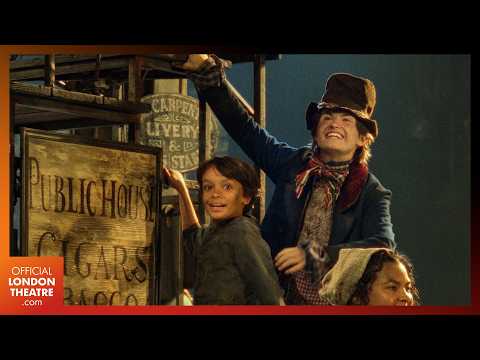
Review
Oliver! pulls a neat trick: it makes hunger sound like a chorus you can clap to, then asks if you feel proud of yourself for clapping. Lionel Bart’s lyrics are built from streetwise punchlines and plainspoken ache, and that mix is why the score still hits harder than the “family show” label suggests. The songs do not simply decorate Dickens. They translate social cruelty into singable slogans, which is exactly the point and the danger.
Bart’s writing leans on music-hall bounce, pop immediacy, and Cockney cadence, a specifically British answer to the mid-century American book musical. Scholars have noted how Bart fused pop and music hall to shift the British musical toward working-class idiom, and Oliver! is the prime exhibit. That style matters dramatically: the big ensemble numbers sell a community that feels bustling and alive, while the ballads isolate individuals who cannot bargain their way into safety. The lyric engine keeps returning to one word the plot rarely grants: love. Oliver asks for it, Nancy bargains for it, Fagin audits it like a retirement plan, and the city keeps offering substitutes.
How It Was Made
The show’s origin story is both glamorous and revealing. Bart wrote book, music, and lyrics, but he did not read or write music in the conventional sense. Accounts of the creation stress that composer Eric Rogers transcribed melodies Bart sang or hummed, a practical collaboration that shaped how direct the tunes feel on the ear. You can hear it in the writing: the songs arrive like something already in the air, which is why they survive across radically different productions.
The production history is its own proof of concept. The piece premiered at Wimbledon in June 1960, then transferred to the New Theatre in the West End later that month and ran 2,618 performances, a London record at the time. Broadway followed in 1963 via David Merrick. It became a machine that kept returning, sometimes with a velvet glove, sometimes with a clenched fist, depending on the director’s appetite for Dickensian grime.
Key Tracks & Scenes
"Food, Glorious Food" (Workhouse Boys)
- The Scene:
- A dining hall that feels engineered for obedience. Tin bowls. Thin light. The boys chant menus like prayers, staging fantasy as survival.
- Lyrical Meaning:
- The lyric weaponizes cheer. It turns deprivation into a sing-along, which makes the satire sting: the system has trained the kids to perform gratitude for nothing.
"Oliver!" (Mr Bumble, Widow Corney, Workhouse Company)
- The Scene:
- After Oliver asks for more, adults snap into bureaucratic panic. The staging often shifts from “institution” to “committee meeting,” with bodies forming a moral wall.
- Lyrical Meaning:
- A name becomes a warning label. The lyric shows how authority turns a child into a problem to be managed, not a person to be raised.
"Where Is Love?" (Oliver)
- The Scene:
- Oliver alone in the undertaker’s basement among coffins, the air cold and still. It is the show’s first true quiet, and it lands like a bruise.
- Lyrical Meaning:
- Yearning without ornament. Bart’s plain questions refuse cleverness, which makes the song feel honest and terrifying: the boy cannot even describe what he is missing.
"Consider Yourself" (Artful Dodger, Fagin’s Boys)
- The Scene:
- A welcome parade through London’s underworld, all elbows and swagger. The lighting usually brightens, because danger likes to look friendly.
- Lyrical Meaning:
- Found family as sales pitch. The lyric offers belonging with terms and conditions, and its warmth is precisely what makes the bargain tempting.
"You’ve Got to Pick-a-Pocket or Two" (Fagin, Boys)
- The Scene:
- Fagin teaches technique with the confidence of a seasoned tradesman. Hands, hats, and pockets become choreography. The room feels like a classroom that runs on fear.
- Lyrical Meaning:
- Ethics rewritten as economics. Bart’s lyric turns theft into a “skill,” then smuggles in the real motive: survival in a city that has already stolen from you.
"Oom-Pah-Pah" (Nancy, Company)
- The Scene:
- A pub number with a grin that’s slightly too wide. It can play as release, or as a room collectively deciding not to look too closely at the bruises.
- Lyrical Meaning:
- Community noise as anesthesia. The lyric celebrates rowdy togetherness, while hinting that the loudest room is sometimes where the truth is least welcome.
"As Long As He Needs Me" (Nancy)
- The Scene:
- Nancy alone after violence, trying to stitch herself back together with a melody. Most productions tighten the focus here: less spectacle, more confession.
- Lyrical Meaning:
- A love song written as self-persuasion. The lyric keeps arguing with itself, because Nancy is arguing with herself. It is devotion framed as destiny, and it breaks your heart because it almost convinces her.
"Reviewing the Situation" (Fagin)
- The Scene:
- Fagin takes stock of age, risk, and loneliness. In the newest West End staging, critics noted how the song can read as both wry comedy and sincere dread.
- Lyrical Meaning:
- Charm meets terror. The lyric is a cost-benefit analysis of a life lived outside respectability, and its jokes keep bumping into a fear of dying unclaimed.
Live Updates
Current through January 2026. Cameron Mackintosh’s reconceived production, directed and choreographed by Matthew Bourne (co-directed by Jean-Pierre van der Spuy), is running at the Gielgud Theatre in London, with tickets on sale through 4 October 2026. On the pricing front, the production has leaned into access tactics: an official weekly ticket lottery has advertised seats at £30, and the venue has promoted discounted midweek price bands for groups on select nights.
On record, the new London company cast album was released digitally and on CD on 10 January 2025 via First Night Records. The recording was captured in front of a live audience during the Chichester run, and it has also appeared in later physical formats, including a vinyl release window in 2025 according to retail listings. If your listening habit is “show first, album second,” this one reverses cleanly: the sound tells you what kind of Oliver! you’re getting. It is punchier, darker in color, and less interested in nostalgia varnish.
Cast stability has also been part of the story: UK theatre reporting in January 2026 noted that the original principal cast would remain with the production as it entered its second year, a practical sign that the show is selling and the company is valued.
Notes & Trivia
- The original run opened in the West End on 30 June 1960 after a Wimbledon tryout earlier that month, then reached 2,618 performances, a London record for a musical at the time.
- Lionel Bart is credited with book, music, and lyrics, but multiple accounts note he could not notate music conventionally; Eric Rogers transcribed the score from Bart’s sung ideas.
- The 2025 Olivier Awards gave Oliver! a major technical win: Best Lighting Design went to Paule Constable and Ben Jacobs for the Gielgud production.
- The current West End run has been publicly extended through 4 October 2026, with Ticketmaster listings showing 2026 performance dates at the Gielgud.
- The 2024 London cast recording was released 10 January 2025, recorded in front of a live audience in Chichester before the West End transfer.
- In the early 1970s, Bart sold his rights to Oliver! to Max Bygraves for £350, a deal later described in major obituaries as financially disastrous for Bart and lucrative for Bygraves.
- A 1994 rights dispute made headlines when school productions were threatened during a major commercial revival cycle, a reminder that “family classic” can be a fiercely protected asset.
Reception
Critical response has always hinged on tone. Some productions wrap the story in warm theatricality, letting the audience leave humming. Others insist you smell the river. The current London revival has been widely reviewed as more atmospheric and socially alert, with multiple outlets pointing to the staging’s fog, rain, and threat without sacrificing entertainment value. That balance is also where the lyrics get reinterpreted: ensemble joy reads as coping mechanism; the ballads read as case studies in need.
“This Oliver! is darker than most, strafed with rain and suffocated by pea soupers.”
“It’s a gem of a performance in a 24-carat staging.”
“Vibrant choreography, dynamic visual design, and emotional depth.”
Quick Facts
- Title: Oliver!
- Year: 1960 (West End premiere)
- Type: Book musical
- Book, Music & Lyrics: Lionel Bart
- Based on: Oliver Twist by Charles Dickens
- Original London opening: New Theatre (now Noël Coward Theatre), 30 June 1960
- Original run milestone: 2,618 performances in London
- Original orchestrations: Eric Rogers (with musical direction credited to Marcus Dods in original London documentation)
- Current West End production: Gielgud Theatre, directed and choreographed by Matthew Bourne, co-directed by Jean-Pierre van der Spuy; produced and revised by Cameron Mackintosh
- Notable modern design credits: Lez Brotherston (design); Paule Constable & Ben Jacobs (lighting); Adam Fisher (sound); George Reeve (video)
- Selected notable placements: Workhouse opening (“Food, Glorious Food”); undertaker’s basement (“Where Is Love?”); pub set-piece (“Oom-Pah-Pah”); Fagin’s self-audit (“Reviewing the Situation”)
- Recent album status: 2024 London Cast Recording released 10 January 2025 (First Night Records), recorded live at Chichester; additional physical retail formats listed in 2025.
Frequently Asked Questions
- Is Oliver! appropriate for kids?
- Often, yes, but it depends on the child. The show centers hunger, crime, and violence, and recent productions have leaned harder into the menace while keeping the big numbers exuberant.
- Who wrote the lyrics and music?
- Lionel Bart wrote the book, music, and lyrics, with the score’s melodies transcribed into formal notation by Eric Rogers during the original creation process.
- Is the current West End production still running?
- Yes. The London production at the Gielgud Theatre has been publicly extended with tickets sold through 4 October 2026, with official and major ticketing outlets reflecting 2026 dates.
- Is there a new cast recording?
- Yes. A London company recording tied to the current production was released digitally and on CD on 10 January 2025, recorded in front of a live audience during the Chichester run.
- Why do the “big happy” songs feel uneasy in some stagings?
- Because the lyrics are doing two things at once: selling joy and exposing the machinery that makes joy necessary. When directors emphasize the city’s brutality, the same words start sounding like coping strategies.
Key Contributors
| Name | Role | Contribution |
|---|---|---|
| Lionel Bart | Book, Music & Lyrics | Music-hall punch and pop clarity fused with Dickensian sentiment and cruelty. |
| Eric Rogers | Orchestrations / Transcription (original creation) | Transcribed Bart’s sung ideas into notated score; credited with original orchestrations. |
| Matthew Bourne | Director & Choreographer (current West End production) | Reframes the city as a stylized pressure cooker; lets ensemble joy rub against threat. |
| Jean-Pierre van der Spuy | Co-Director (current West End production) | Co-shapes the staging language and narrative pacing for the reconceived production. |
| Cameron Mackintosh | Producer / Revisions | Reconceived production framework; credited with new material and revisions. |
| Lez Brotherston | Designer | Industrial Victorian architecture and shifting spaces that keep the story kinetic. |
| Paule Constable | Lighting Design | Fog, glare, and shadow as storytelling; Olivier Award-winning lighting for this production. |
| Ben Jacobs | Lighting Design | Co-designed the production’s award-winning lighting architecture. |
| Graham Hurman | Music Supervision (current West End production) | Musical oversight and consistency across a large company and revised orchestration approach. |
| Stephen Metcalfe | Orchestrations Adaptation (current West End production) | Adapts original orchestrations for the current production’s sound world. |
Sources: Official Oliver! The Musical site; Playbill; Society of London Theatre (Olivier Awards); LondonTheatre.co.uk; Financial Times; The Guardian; Evening Standard; MTI Shows; Ticketmaster UK; Delfont Mackintosh Theatres; The Stage; The Independent; Oxford Academic (context on Bart and British musical style); Warner Classics.