
New Girl in Town Lyrics: Song List
- Act 1
- Overture
- Roll Yer Socks Up
- Anna Lilla
- Sunshine Girl
- On the Farm
- Flings
- It's Good to Be Alive
- Look at 'Er
- It's Good to Be Alive (Reprise)
- Yer My Friend Ain'tcha?
- Did You Close Your Eyes?
- At the Check Apron Ball
- There Ain't No Flies on Me
- Act 2
- Ven I Valse
- Sunshine Girl (Reprise)
- If That Was Love
- Chess and Checkers
- Look at 'Er (Reprise)
About the "New Girl in Town" Stage Show
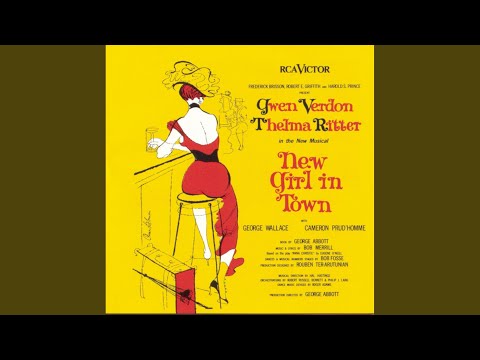
At the heart of this histrionics is the product of Eugene O'Neill. Songwriter – B. Merrill, G. Abbott wrote the libretto. Premiere on Broadway was conducted in 1957 in Theatre on 46th Street. Last performance was given in May 1958 after 431 exhibitions. Director was G. Abbott, choreographer – B. Fosse. Starring: G. Verdon, G. Wallace, C. Prud'homme, T. Ritter, E. Daniels, J. Aristides, M. Quinn, L. Bates, D. Davis, P. Ferrier & H. Fields. In 1958, the production was nominated for a Tony Award in four categories. G. Verdon & T. Ritter received awards.
Off-Broadway production was shown on the stage of New York Irish Repertory Theatre from July to September 2011, directed by C. Moore. Choreographer was B. McNabb. The cast involved: C. Bemis, M. L. Robinson, P. Cummings, D. Ferland, D. Caddell, A. Church, M. Gibson, K. D. Neumann, A. Puette, A. Stone & S. Zinnato.
Release date of the musical: 1957
"New Girl in Town" – The Musical Guide & Song Meanings
Review
How do you musicalize a bruising Eugene O’Neill drama without turning the heroine into a punchline? “New Girl in Town” answers with a careful trick: it keeps the waterfront grit, but hands its characters songs that argue for survival. The book by George Abbott reframes “Anna Christie” into something closer to a star-driven Broadway story, where jealousy, denial, and public shame become the plot engine and the choreography becomes the pressure valve.
Bob Merrill’s lyrics are blunt where they need to be and strategically coy where the characters cannot yet speak plainly. “On the Farm” is a confession disguised as small talk, with language that circles trauma without flattening it into a single “message.” Then “Did You Close Your Eyes?” lands like a contract Anna is terrified to sign, because romance is finally asking her to stop performing and start risking. The score’s surface is period-flavored musical comedy: ragtime bounce at the bar, social-dance energy at the Check Apron Ball, and a waltz that tries to civilize a room that does not stay civilized for long. Underneath, the show keeps returning to a single idea: reinvention is possible, but other people get a vote.
Listener tip: if you want the story cleanly on album, play these in order before sampling the rest: “Anna Lilla,” “On the Farm,” “It’s Good to Be Alive,” “Look at ’Er,” “Did You Close Your Eyes?,” then jump to “Chess and Checkers” and the “Look at ’Er” reprise. You will hear the full arc: denial, disclosure, idealization, rupture, repair.
How It Was Made
The origin story is unusually direct: George Abbott reportedly heard songs Bob Merrill had written with “Anna Christie” in mind and built the show from that seed, which explains why the score sometimes feels like character study interrupted by nightclub-ready numbers. The project was written as a vehicle for Gwen Verdon, and you can feel that intent in the way scenes keep turning into opportunities for her to pivot from guarded realism to full-bodied movement.
The most revealing behind-the-scenes detail is also the bluntest: during tryouts, a “Cathouse Ballet” was cut, and the producers went so far as to burn the scenery to prevent its return. That is not subtle dramaturgy. That is a company deciding, forcibly, what kind of show they are willing to be. It also clarifies the musical’s tightrope walk: Anna’s past must remain real enough to matter and contained enough to keep the audience leaning forward rather than recoiling.
Version note: the 2012 Irish Repertory Theatre revival became a case study in how fragile the show’s internal wiring can be. One prominent review argued that shifting songs and adding new material distorted the ending’s tone. That is a useful warning for future revivals: this piece can handle grit, but it hates fussiness.
Key Tracks & Scenes
"Roll Yer Socks Up" (Company)
- The Scene:
- Opening on the New York waterfront. Workers and locals wait for men to arrive from sea. The stage picture wants bustle, smoke, and a working-class chorus that functions like weather.
- Lyrical Meaning:
- This is the show’s street-level thesis: life is labor, and sentiment is a luxury you earn. It also sets up why Anna’s later softness feels radical here.
"Anna Lilla" (Chris)
- The Scene:
- Chris scrubs himself sober to meet the daughter he has not seen since childhood. Light narrows. The bar noise fades into private memory.
- Lyrical Meaning:
- It is not just nostalgia. It is Chris building a fantasy he will defend against evidence, including Anna’s own words.
"On the Farm" (Anna)
- The Scene:
- Anna tries to explain why “a farm” was not safety. The delivery is plain, the subtext is screaming, and the room does not know where to look.
- Lyrical Meaning:
- Merrill writes a confession that cannot quite say its name. The lyric’s restraint becomes the point: Anna learned early that clarity invites punishment.
"It’s Good to Be Alive" (Anna)
- The Scene:
- On the barge on a foggy night. Anna watches the sea and refuses to go to bed because the fog feels like anonymity. The soundscape should feel wet and soft.
- Lyrical Meaning:
- This is Anna’s first self-authored optimism, and it is cautious. She is not celebrating life. She is testing whether she is allowed to.
"Look at ’Er" (Matt)
- The Scene:
- Reporters press Matt for the rescue story. He dodges the facts and blurts out the feeling: Anna. The spotlight is public, but the obsession is private.
- Lyrical Meaning:
- The lyric turns gawking into devotion. Matt is so inexperienced he can only explain love as visual fixation, which makes his later judgment feel both moral and childish.
"Yer My Friend, Ain’tcha?" (Marthy, Chris)
- The Scene:
- Marthy pushes Chris to take her to the Check Apron Ball. He refuses. She turns hurt into a singable demand for recognition.
- Lyrical Meaning:
- It is a survival duet. Marthy is asking for status, not romance, because status is what keeps her from being discarded.
"Did You Close Your Eyes?" (Anna, Matt)
- The Scene:
- Before the ball, Anna finally admits she loves Matt, with the caveat that she has never loved before, no matter what comes next. The lighting should feel like a safe room that will not last.
- Lyrical Meaning:
- The lyric is a plea for temporary innocence. Closing your eyes is both erotic and defensive: if you do not look too hard, maybe the past cannot follow.
"Chess and Checkers" (Marthy, Company)
- The Scene:
- A year later on the waterfront. Marthy has reformed into a fundraiser for the Seamen’s Home, collecting donations with polished clothes and practiced charm.
- Lyrical Meaning:
- It is the show’s quiet redemption song. The title suggests strategy, and Marthy finally plays one that does not destroy someone else.
Live Updates
Information current as of January 29, 2026. “New Girl in Town” is not a title with an ongoing commercial tour footprint; its modern life shows up in revivals, concerts, and licensing. A notable New York revival ran at Irish Repertory Theatre in 2012, extending through mid-September, and it generated lively debate about whether revisions help or hurt the score’s dramatic balance.
For performers and directors, the most practical 2025 to 2026 reality is access: the show is actively licensed for secondary-stage productions, and the full synopsis and song list are readily available through licensing materials. For listeners, the 1957 original Broadway cast recording remains the easiest “official” way in, now widely distributed through modern reissues and streaming playlists.
Programming advice: if you are reviving it, protect the Check Apron Ball sequence. It is where the show’s social comedy and its moral panic collide. Overpunctuating the ending with added spectacle has been criticized as undermining the final tenderness.
Notes & Trivia
- The Broadway run opened May 14, 1957 and closed May 24, 1958, for 431 performances.
- Gwen Verdon and Thelma Ritter tied for the Tony Award for Best Actress in a Musical for the original production.
- MTI notes that Verdon’s success in the role helped push the “triple threat” expectation into the late 1950s mainstream.
- A cut “Cathouse Ballet” was removed during Boston tryouts, and the producers reportedly burned the scenery to prevent restoration.
- “New Girl in Town” is based on Eugene O’Neill’s “Anna Christie,” but the musical’s ending was reshaped toward reconciliation.
- The show’s second-act time jump is unusually blunt: a full year passes, and the story returns to the waterfront with different emotional weather.
- Myth check: despite the title’s “small-town comedy” vibe, this is not related to “The Matchmaker” or “Hello, Dolly!” It is O’Neill by way of Abbott.
Reception
On its first life, the show sold itself as star craftsmanship: Verdon at the center, Fosse shaping the dance language, and Abbott turning a serious play into Broadway pacing. The official record keeps the run solidly “hit-adjacent” for its period. Later revivals exposed how taste changes. Some viewers now value the score’s emotional candor more than its period comedy, while others find the tone shifts awkward when staged without a strong hand.
“A largely upbeat musical based on a downbeat story.”
“Shifting songs from scene to scene” can “do more harm than good.”
Merrill’s late-show writing is “wistful” and honest about how love can hurt.
Quick Facts
- Title: New Girl in Town
- Year: 1957
- Type: Book musical (2 acts)
- Book: George Abbott
- Music & Lyrics: Bob Merrill
- Based on: Eugene O’Neill’s play “Anna Christie”
- Original Broadway run: May 14, 1957 to May 24, 1958 (431 performances)
- Key set pieces: The waterfront bar, a coal barge in fog, the Check Apron Ball, the one-year-later return
- Notable musical placements: “It’s Good to Be Alive” on the foggy barge; “Look at ’Er” in a press scrum; the ball numbers driving the public unraveling
- Cast album: Original Broadway Cast Recording (RCA Victor, first LP release dates noted in 1957)
- Availability: Widely reissued and streamed under Masterworks Broadway distribution
- Licensing: Available for secondary-stage productions via Music Theatre International
Frequently Asked Questions
- Is “New Girl in Town” the same story as “Anna Christie”?
- It is an adaptation, but it reshapes tone and outcome. The musical leans harder into community dynamics and ends more hopefully than O’Neill’s play.
- Who wrote the lyrics?
- Bob Merrill wrote both music and lyrics, with a book by George Abbott.
- Where does “It’s Good to Be Alive” happen in the story?
- On the coal barge on a foggy night, with Anna alone on deck savoring anonymity and a rare moment of peace.
- Was there a major modern revival?
- Yes. Irish Repertory Theatre mounted a notable Off-Broadway revival in 2012, documented by Playbill photo coverage and contemporary reviews.
- Is there a movie musical?
- There is no definitive film version of the musical itself. The best “official” listening document remains the original Broadway cast recording.
- What should I listen to first to follow the plot?
- Start with “Anna Lilla,” “On the Farm,” “It’s Good to Be Alive,” “Look at ’Er,” and “Did You Close Your Eyes?,” then jump to “Chess and Checkers” and the “Look at ’Er” reprise.
Key Contributors
| Name | Role | Contribution |
|---|---|---|
| George Abbott | Book (and original Broadway director) | Adapted “Anna Christie” into a Broadway-forward structure; calibrated tone toward reconciliation. |
| Bob Merrill | Composer & Lyricist | Wrote the full score; lyrics balance period comedy with guarded confession. |
| Gwen Verdon | Original Anna | Star performance that defined the role’s mix of toughness and vulnerability; Tony-winning. |
| Thelma Ritter | Original Marthy | Anchored the jealousy and heartbreak that detonates the ball sequence; Tony-winning. |
| Bob Fosse | Original choreography | Shaped the dance language for the social numbers, including the ball’s escalating chaos. |
| Music Theatre International | Licensing | Current licensing home for secondary-stage productions; publishes synopsis and song list for producers. |
Sources: IBDB; Playbill Vault; Music Theatre International (show page, print synopsis, features); Masterworks Broadway; TheaterMania; Backstage; Ovrtur; Playbill photo gallery; Wikipedia (for widely-circulated trivia, cross-checked where possible).