Miss Saigon Lyrics – All Songs from the Musical
Miss Saigon Lyrics: Song List
- Act 1
- Overture/Back Stage Dreamland
- The Heat Is On In Saigon
- The Movie In My Mind
- The Transaction
- The Dance
- Why God Why?
- This Money Is Yours
- Sun And Moon
- The Telephone Song
- The Deal
- The Wedding Ceremony (Dju Vui Vai)
- Thuy's Arrival
- What's This I Find
- The Last Night Of The World
- The Morning Of The Dragon
- I Still Believe
- Back in Town
- This Is The Hour
- If You Want To Die In Bed
- Let Me See His Western Nose
- I'd Give My Life For You
- Act 2
- Bui-Doi
- The Revelation
- What A Waste
- Please
- Chris Is Here
- Kim's Nightmare
- The Fall Of Saigon
- Room 317
- Now That I've Seen Her
- The Confrontation
- Paper Dragons
- The American Dream
- The Sacred Bird
- Finale
About the "Miss Saigon" Stage Show
Release date: 1991
"Miss Saigon" – The Musical Guide & Song Meanings
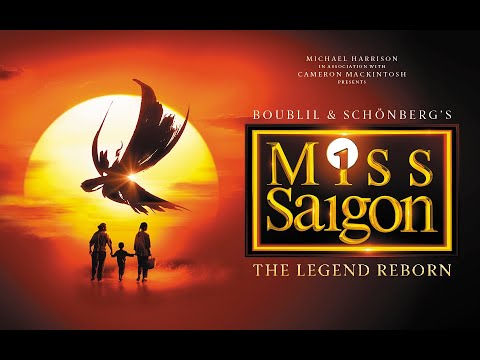
Review
How do you write love lyrics inside an evacuation? That’s the fundamental friction of Miss Saigon, and it remains the show’s most effective engine. The book is sung-through, so the words carry plot the way a camera cut does: fast, decisive, sometimes cruel. When it works, the lyric writing weaponizes repetition. Vows recur because the characters have nothing else stable to hold. Sales pitches recur because the Engineer is the one person who understands the market value of a human fantasy.
The score’s DNA is Boublil and Schönberg blockbuster romanticism: big harmonic turns, leitmotifs that function like emotional hashtags, and choruses designed to sound like crowds even when the stage is nearly empty. The lyrics tend to favor plain-spoken urgency over poetry. That bluntness can land as honesty in numbers like “I’d Give My Life For You,” and as questionable shorthand in early Dreamland sequences where Vietnam becomes atmosphere, scent, and heat. The show’s strongest writing move is its two competing vocabularies: devotion (Kim, Chris, Ellen) versus transaction (the Engineer). The musical keeps asking which language wins when the lights go out and the plane takes off.
Listener tip: if you are coming in cold, start with “The Heat Is On in Saigon,” then jump to “Sun and Moon,” then “I Still Believe,” then “Bui-Doi.” In four tracks you get the show’s entire argument: desire, idealization, denial, and consequence.
How It Was Made
The makers often describe a single image as the ignition. In the mid-1970s, a photograph of a Vietnamese mother sending her Amerasian daughter away became the emotional blueprint: separation as the price of survival. From there, Boublil and Schönberg reframed Madama Butterfly through the last days of Saigon and the long afterlife of the war. The core collaboration is practical: Schönberg supplies the melodic inevitability, Boublil supplies the moral trap, and Richard Maltby Jr. adapts and sharpens the English lyric line so it scans and sells.
Production history is inseparable from perception. The show’s scale made it a commercial phenomenon, but its depiction of Asian identity and power has generated decades of criticism and debate. Later versions, including the 2014-era revisions, added new material and adjusted emphasis, but the central lyric architecture stays the same: the romance is sung in promises, and the war is sung in announcements.
Myth-check: many people assume there was an “original Broadway cast album.” For years, the dominant English-language studio document was the original London cast recording, and later releases expanded the recording footprint.
Key Tracks & Scenes
"The Heat Is On in Saigon" (Company)
- The Scene:
- Dreamland, April 1975. Neon, sweat, a band that sounds like it’s playing for its life. Marines flood the room like a weather event, and the lighting feels hot enough to bruise.
- Lyrical Meaning:
- The lyric is a blunt instrument: it establishes the show’s moral marketplace in under three minutes. It also sets up the central problem the musical never stops wrestling with, that desire and exploitation can share a chorus.
"The Movie in My Mind" (Gigi, Kim, The Girls)
- The Scene:
- Backstage at Dreamland. The energy drops into a hush, spotlights isolate each woman, and the room becomes a confessional lined with mirrors.
- Lyrical Meaning:
- “Movie” is the key metaphor: the women narrate an imagined life with cinematic clarity because reality is unfilmable. The lyric does something ruthless and smart: it makes fantasy feel like labor.
"Why God Why?" (Chris)
- The Scene:
- After meeting Kim, Chris is alone with a bed and a conscience he can’t keep quiet. The lighting turns clinical, as if the room itself is interrogating him.
- Lyrical Meaning:
- This is the score’s thesis statement for the American characters: desire framed as confusion, responsibility framed as panic. The lyric keeps bouncing between Kim and the country, a conflation that has fueled both the song’s punch and its criticism.
"Sun and Moon" (Chris, Kim)
- The Scene:
- A small room that suddenly feels like a private planet. Softer edges, warmer light, and the war outside becomes a distant percussion line.
- Lyrical Meaning:
- The lyric reaches for fable because realism would break the spell. “Sun” and “moon” are complementary, but also incompatible: the romance is written as cosmic alignment while the plot is already writing the separation.
"The Last Night of the World" (Chris, Kim)
- The Scene:
- As Saigon collapses, the staging typically narrows: fewer people, fewer colors, more shadow. The outside world presses in without entering.
- Lyrical Meaning:
- Vows become a survival tactic. The lyric’s power is its refusal to be clever. It sounds like two people trying to talk over history.
"I Still Believe" (Kim, Ellen)
- The Scene:
- Split stage, two bedrooms in different countries. Cool light on one side, domestic lamplight on the other. The same melody travels like a message that never arrives.
- Lyrical Meaning:
- A shared lyric with different stakes: for Kim it is a lifeline, for Ellen it is a promise to carry a man’s silence. The number is the show’s cleanest demonstration of motif as storytelling.
"I’d Give My Life For You" (Kim)
- The Scene:
- In hiding, Kim sings to Tam. The stage often empties, the light tightens, and the orchestra becomes a heartbeat with strings.
- Lyrical Meaning:
- The lyric turns motherhood into strategy: sacrifice as a plan, not a mood. It also reframes the romance. The love story becomes a logistics problem, and Kim is the only character fluent in its cost.
"Bui-Doi" (John and Company)
- The Scene:
- Atlanta, years later. A conference room, projection footage, and the uncomfortable brightness of charitable intent. The staging often foregrounds images while the singers become witnesses.
- Lyrical Meaning:
- The phrase “bui-doi” carries the show’s most explicit social language. The lyric is designed as an anthem, which is why it can read as moving, troubling, or both depending on the production’s framing.
"The American Dream" (The Engineer)
- The Scene:
- Bangkok, under nightclub glare that looks like television. The Engineer sells America as a brand, with dancers and signage doing the persuasive work.
- Lyrical Meaning:
- The lyric is a satire that risks enjoying its own joke. It’s the show’s sharpest portrait of capitalism as theatre, and of theatre as a con.
Live Updates
Information current as of January 2026. Miss Saigon is actively touring the UK and Ireland in a new production that launched at Newcastle Theatre Royal (October 2025) and continues into 2026 with additional cities and spring-summer bookings. The official tour site lists multiple 2026 stops, including Bristol (late July to early August 2026) and Manchester (early August 2026), with major ticketing partners also carrying venue-by-venue on-sale windows.
Cast highlights for the 2025-2026 tour include Seann Miley Moore as the Engineer, Julianne Pundan as Kim, and Jack Kane as Chris, with Jean-Pierre van der Spuy directing. Regional listings and press updates suggest strong early demand in several markets, and the production has been releasing new photography and trailer assets as it moves city to city.
Staging note: contemporary tours tend to lean into speed and cinematic scene shifts, using video and lighting to compress geography. That matters for the lyrics, because a sung-through score can feel relentless when the stage pictures do not provide emotional punctuation. The best performances in this material find those commas anyway, inside the line.
Notes & Trivia
- The creators trace the show’s core premise to a 1975 photograph of a Vietnamese mother sending her Amerasian daughter to the child’s American father.
- “Bui-doi” is commonly translated as “dust of life,” referring to Amerasian children often shunned after the war.
- “I Still Believe” is structured as a two-woman mirror: same song, different self-deceptions, same melodic hook.
- “The American Dream” is written like an advertisement. Its brilliance and its moral risk are the same thing.
- Act Two relocates key action to Bangkok and an Atlanta conference, shifting the lyric lens from romance to aftermath.
- The show’s production history includes high-profile debate over casting and representation, which continues to shape how audiences hear the lyrics.
- Recording history surprises people: for a long stretch, the most prominent English-language studio document was not a Broadway cast album.
Reception
Critical response has always split along a fault line: craft and impact versus politics and portrayal. Even early reviews that admired the theatrical engineering questioned what the lyric writing was willing to simplify. Newer criticism tends to focus less on whether the show “works” and more on what it teaches an audience to feel good about.
“Miss Saigon” remains a machine built for velocity: romance, rupture, and spectacle arriving in the same breath.
“Without imparting one fresh or daring thought about the Vietnam War, the show still manages to plunge the audience back into the quagmire.”
“The lyrics are so entirely predictable that they are a disgrace.”
Quick Facts
- Title: Miss Saigon
- Broadway year: 1991
- Type: Sung-through megamusical
- Book: Alain Boublil, Claude-Michel Schönberg
- Music: Claude-Michel Schönberg
- Lyrics: Alain Boublil, Richard Maltby Jr.
- Basis: Puccini’s Madama Butterfly (reset in 1970s Vietnam)
- Signature settings: Dreamland (Saigon, April 1975), U.S. Embassy evacuation, Bangkok club scene, Atlanta conference
- Recording map: Original London cast studio recording; a later “complete score” recording; 2014-era live recording tied to the revival
- 2025-2026 availability: Major UK & Ireland tour with ongoing venue announcements and on-sale phases
Frequently Asked Questions
- Who wrote the lyrics to Miss Saigon?
- The English lyrics are credited to Alain Boublil and Richard Maltby Jr., with music by Claude-Michel Schönberg.
- Where does “The American Dream” happen in the story?
- It’s typically staged in Bangkok, framed as a nightclub fantasy where the Engineer sells America as a commodity and an escape route.
- What does “bui-doi” mean?
- It is often translated as “dust of life,” referring to Amerasian children born to American fathers and Vietnamese mothers, frequently marginalized after the war.
- Is Miss Saigon touring in 2025 or 2026?
- Yes. A UK and Ireland tour launched in 2025 and continues with multiple 2026 dates, with casting and venue details posted on official and major ticketing sites.
- Which recording should I start with?
- If you want a studio sound, start with the original London cast recording. If you want a performance feel with modern orchestral weight, try the 2014-era live recording.
Key Contributors
| Name | Role | Contribution |
|---|---|---|
| Claude-Michel Schönberg | Composer, Co-Book | Score architecture, recurring motifs, sung-through pacing |
| Alain Boublil | Lyricist, Co-Book | Original French text, dramatic structure, thematic framing |
| Richard Maltby Jr. | Lyricist | English lyric adaptation and line-level clarity |
| Cameron Mackintosh | Producer | Global production strategy and long-running brand identity |
| Jean-Pierre van der Spuy | Director (2025-2026 UK & Ireland tour) | Current tour staging, tempo, and visual storytelling approach |
| Seann Miley Moore | Performer (The Engineer, 2025-2026 tour) | Anchors the show’s “transaction” lyric language and satirical edge |
| Julianne Pundan | Performer (Kim, 2025-2026 tour) | Vocally drives the show’s vow-based lyrical core |
| Jack Kane | Performer (Chris, 2025-2026 tour) | Shapes the score’s conflicted American perspective in key solos |
Sources: Miss Saigon official site; Theatre Royal Newcastle; Playbill; Broadway Inbound study guide (PDF); The Guardian; American Theatre; Whatsonstage; West End Theatre.