
Memphis Lyrics: Song List
- ACT 1
- Underground
- The Music of My Soul
- Scratch My Itch
- Ain't Nothin' But a Kiss
- Everybody Wants to Be Black on a Saturday Night
- Make Me Stronger
- Colored Woman
- Someday
- She's My Sister
- Radio
- Say a Prayer
- ACT 2
- Crazy Little Huey
- Big Love
- Love Will Stand When All Else Falls
- Stand Up
- Change Don't Come Easy
- Tear the House Down
- Memphis Lives in Me
- Steal Your Rock 'N' Roll
About the "Memphis" Stage Show
This histrionics was created by composer D. Bryan & writer J. DiPietro. Filmmaker G. W. George elaborated the concept of a show. Pre-Broadway exhibitions were in 2002-2004. Also, the theatrical was on stage of La Jolla Playhouse in Sept. 2008. This spectacular featured at the 5th Avenue at the beginning of 2009.
On September 2009, preliminaries started at the Shubert Theatre stage. Broadway premiere took place in October, directed by C. Ashley, choreographed by S. Trujillo. The actors were C. Kimball, M. Glover, J. B. Calloway, D. Baskin, J. M. Iglehart, and others. The show was completed in August 2012 after 1165 shows. In 2011, the recording was made of the Broadway show with high-definition cameras.
National American tour took place in 2011-2013. Starring B. Fenkart & F. Boswell, Q. E. Darrington, W. Mann & R. George, W. Parry & J. Johnson.
The London’s premiere took place in October 2014 at the Shaftesbury Theatre’s stage. Performance ended in October 2015. In the creation of the piece were involved director & choreographer from Broadway. The cast was: K. Donnelly, M. Cardle, B. Knight, R. John, R. Bell, T. Huntley, J. Pennycooke. Production was also in Tokyo's Akasaka Act Theater in 2015. Director – E. S. Iskandar. Starring: K. Yamamoto & M. Hamada. Musical received several awards: Tony (8 nominations, 4 wins), Drama Desk (7 nominations, 4 wins), Laurence Olivier (9 nominations, 2 wins).
Release date of the musical: 2009
"Memphis" – The Musical Guide & Song Meanings
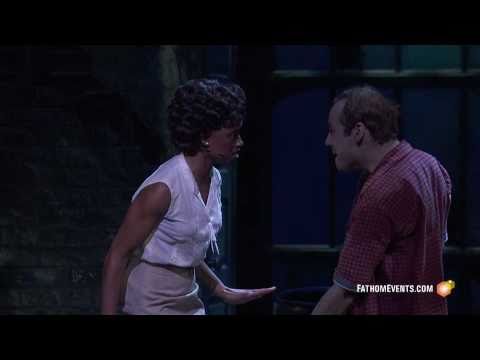
Review: a love story that keeps changing stations
How do you write a musical about musical revolution without turning it into a civics lecture with jazz hands? “Memphis” tries to solve that problem by making the lyrics behave like radio programming: short setups, immediate hooks, and emotional payoffs that arrive on the beat. The plot is essentially a battle over who gets heard. So the score keeps asking a lyrical question that feels simple until it starts costing people something: what do you do when your taste becomes a threat?
The show’s writing strength is its persuasive energy. Huey’s language is salesman-fast, but the lyrics keep letting his conviction leak out in places where patter cannot hide it. Felicia’s material, by contrast, tightens into declarations, not arguments. That contrast matters. “Memphis” is not only about crossing a line. It is about how different people justify crossing it. The best numbers make that logic audible, even when the characters are lying to themselves.
Musically, David Bryan writes in a deliberately familiar 1950s palette (R&B drive, gospel lift, early rock snap), but the dramaturgy is Broadway-clean. That tension is the whole trick. When the lyrics feel blunt, it is often because the show wants to mimic the period’s directness while still delivering modern narrative clarity. If you listen with that in mind, the “simplicity” becomes a strategy: the characters talk like they have sixty seconds before the next record spins.
How it was made
“Memphis” started as a concept project developed by producer George W. George, loosely inspired by the real-life story of DJ Dewey Phillips, one of the first white broadcasters to champion Black music in the 1950s. Joe DiPietro wrote the book and co-wrote lyrics, building a show that treats radio as both a job and a moral lever. David Bryan came to the project from the rock world, and his own explanation for saying yes is unusually practical: he read the script and claims he could already hear the score in his head, because he “loved the Memphis sound” and had lived inside horn-driven club music as a teen performer.
That backstory helps explain the album. The cast recording is engineered less like a museum piece and more like a nightly set: the brass punches, the grooves stay forward, and the lyric lines are written to land in a room. When the show was filmed live on Broadway in January 2011 (multi-camera capture, extensive audio recording), it reinforced the same point. “Memphis” is built to move, not merely to be admired.
Listening tip (the practical, non-romantic kind): if you are new to the show, play “Underground,” “The Music of My Soul,” and “Colored Woman” in that order before reading a synopsis. You will grasp the show’s three competing engines: community, obsession, and consequence.
Key tracks & scenes
"Underground" (Delray, Felicia & Company)
- The Scene:
- Beale Street club heat. A hidden room with a public secret. Huey slips in as an outsider while the floor becomes the argument: bodies saying what laws forbid.
- Lyrical Meaning:
- The lyric sells “underground” as both refuge and pressure cooker. It is not only a location, it is a coded identity: who gets to belong, and who is merely visiting.
"The Music of My Soul" (Huey, Felicia & Company)
- The Scene:
- Huey is confronted for showing up in a Black club and tries to talk his way into being trusted. The band and crowd are the jury.
- Lyrical Meaning:
- Huey’s language is pleading and promotional at once. The lyric is a self-portrait of a man who confuses love of music with permission, and the show uses that friction as fuel.
"Everybody Wants to Be Black on a Saturday Night" (Company)
- The Scene:
- Huey hijacks the mainstream radio booth, spins “race records,” and suddenly the switchboard lights up. White teens want the sound, safely packaged by a white voice.
- Lyrical Meaning:
- This is the show’s sharpest lyrical mirror. The line is funny until it is not. Desire, appropriation, and fantasy all share the same rhyme scheme.
"Colored Woman" (Felicia)
- The Scene:
- Felicia is alone enough to tell the truth. The room quiets. The light usually does too, because the song is a stop sign in a show that prefers speed.
- Lyrical Meaning:
- Felicia names what the culture refuses to name and refuses the euphemisms. The lyric shifts the show from “rock story” to “cost of the rock story.”
"Say a Prayer" (Gator & Company)
- The Scene:
- After violence erupts and the club’s celebration turns into emergency, Gator speaks. It lands like a microphone drop because the character has been silent.
- Lyrical Meaning:
- Prayer here is not comfort. It is a demand for change when argument has failed. The lyric uses gospel form to widen the show’s moral lens.
"Love Will Stand When All Else Falls" (Felicia & Company)
- The Scene:
- An audition opportunity opens northward possibilities. Huey tries to keep the future from happening by barging into the moment.
- Lyrical Meaning:
- The lyric is devotion with an exit plan. Felicia sings love as endurance, but the subtext is ambition refusing to apologize.
"Tear Down the House" (Huey & Company)
- The Scene:
- Network interest arrives with strings attached. Huey detonates his own success on live TV, using performance as protest and self-sabotage.
- Lyrical Meaning:
- Huey’s lyric is a tantrum that becomes a thesis: if the “house” only works by erasing people, burn the deal. The show frames it as both heroic and disastrous.
"Memphis Lives in Me" / "Steal Your Rock ’n’ Roll" (Huey; Huey, Felicia & Company)
- The Scene:
- Huey refuses to follow Felicia north and is left with a smaller life and a smaller station. Years later, she returns, invites him onstage, and forces him to narrate the cost of his choices through the very music he chased.
- Lyrical Meaning:
- These songs turn nostalgia into accountability. The lyric stops selling the dream and starts pricing it. The final number reframes “stealing” as borrowing with consequences.
Live updates (2025/2026)
Information current as of January 29, 2026. There is no Broadway or West End run of “Memphis” announced on the licensing pages as “now playing.” What “Memphis” does have, very loudly, is a steady afterlife in licensed productions. Theatrical Rights Worldwide lists multiple upcoming U.S. productions in 2026, including Star Center Theatre (Gainesville, Florida; Feb 13 to Mar 1, 2026), Mauldin Theater Company (Mauldin, South Carolina; May 8 to 24, 2026), and Imagine Productions of Columbus (Columbus, Ohio; Aug 21 to 30, 2026). If you want the show in the near term, that calendar is the most concrete public signal.
For at-home viewing, the filmed Broadway capture (“Memphis: Direct from Broadway”) remains the most useful reference point for staging, vocal style, and how the lyrics play in a live room. Availability changes by region, but JustWatch (U.S.) currently lists free streaming on Kanopy and purchase options via Amazon Video, with its last service check dated January 26, 2026. Treat that as a snapshot, not a promise.
Notes & trivia
- The original Broadway production opened October 19, 2009 at the Shubert Theatre and closed August 5, 2012 after 1,165 performances (plus 30 previews).
- The show won the 2010 Tony Award for Best Musical, and also won for Best Book and Best Original Score, plus Best Orchestrations (Daryl Waters and David Bryan).
- The cast recording had a nationwide release date of March 30, 2010, after being sold earlier at the Shubert Theatre and online starting in December 2009.
- Rhino’s release notes describe the album as distributed by Rhino Records and include a bonus acoustic “The Music of My Soul” performed by David Bryan (piano and vocals).
- The show was captured live on Broadway for a cinema event in January 2011 (multi-camera; extensive audio capture), later airing on PBS “Great Performances” in February 2012.
- The TRW licensing page lists a 9-musician orchestra setup (two keyboards, two reeds, trumpet, trombone, guitar, bass, drums), which is why the score can keep its horn bite without a large pit.
- Myth-check: Huey Calhoun is fictional. The show is “inspired by” true events and is loosely based on DJ Dewey Phillips, but it is not a documentary with showtunes.
Reception: then vs. now
“Memphis” has always been reviewed as two shows at once: a crowd-pleasing dance-and-brass machine, and a story that risks sanding down history so the night can end in applause. That split is visible in the record critics left behind.
“This slick but formulaic entertainment … barely generates enough heat to warp a vinyl record.”
“The lyrics accompany … a thoroughly entertaining score that … conjures up all the musical styles of the era, from gospel to rock’n’roll.”
“Instead of serving up the raw and the rough, … the score … offers … feel-good stomp-fests and preachy ballads.”
In 2026, the arguments have aged in interesting ways. The show’s best defense is still kinetic: watch the filmed capture or a strong regional production and the lyric lines land as theatrical speech, not poetry on a page. The strongest critique remains structural: a story about cultural theft and cultural change is hard to resolve cleanly in a commercial Broadway frame. “Memphis” chooses momentum. Whether that is honesty or evasion depends on how much weight you think a party should carry.
Quick facts (album + production)
- Title: Memphis
- Broadway opening: October 19, 2009 (Shubert Theatre, New York)
- Broadway closing: August 5, 2012
- Type: Original-book musical (rock, R&B, gospel vocabulary)
- Book: Joe DiPietro
- Music: David Bryan
- Lyrics: David Bryan, Joe DiPietro
- Concept development: George W. George
- Original Broadway cast recording: Nationwide release March 30, 2010
- Label/distribution notes: Rhino Records distribution; bonus acoustic “The Music of My Soul” (piano/vocal by David Bryan)
- Selected notable placements: “Everybody Wants to Be Black on a Saturday Night” during Huey’s radio takeover; “Tear Down the House” during the TV/network collision; “Steal Your Rock ’n’ Roll” as the late-stage reconciliation
- Filmed stage version: Captured live January 18 to 21, 2011; aired on PBS “Great Performances” in February 2012
- Licensing: Theatrical Rights Worldwide (including “Memphis: School Edition”)
Frequently asked questions
- Is “Memphis” based on a true story?
- Loosely. The show is inspired by real-world events around early rock-and-roll radio and is often linked to DJ Dewey Phillips, but the central characters and their romance are fictionalized for the stage.
- Who wrote the lyrics?
- David Bryan and Joe DiPietro share lyric credit. DiPietro also wrote the book.
- What is the best way to watch it if I cannot get to a theater?
- The filmed Broadway capture (“Memphis: Direct from Broadway”) is the clearest reference for how the lyrics land in performance. Streaming availability varies, and service listings shift by region.
- Is it a jukebox musical?
- No. The score is original, but it intentionally writes inside 1950s styles (R&B, gospel, early rock) to make the period’s musical grammar feel present.
- Which songs explain the plot fastest?
- Try “Underground,” “The Music of My Soul,” “Everybody Wants to Be Black on a Saturday Night,” and “Colored Woman.” You will get the setting, Huey’s mission, the cultural contradiction, and the cost.
- Is “Memphis” running anywhere in 2026?
- Not as an open-ended Broadway or West End run on the major licensing listings, but TRW posts multiple dated regional productions in the U.S. for 2026.
Key contributors
| Name | Role | Contribution |
|---|---|---|
| David Bryan | Composer, lyricist | Original score in 1950s rock/R&B idioms; co-wrote lyrics; co-wrote orchestrations (Tony-winning team credit noted by Tony Awards listings). |
| Joe DiPietro | Book, lyricist | Book structure and lyric voice; foregrounds radio as a dramatic engine. |
| Christopher Ashley | Director | Staged the Broadway production’s pace-first storytelling and emotional pivots. |
| Sergio Trujillo | Choreographer | Movement language that sells the show’s “music as liberation” thesis; won the Olivier for theatre choreography (West End production). |
| Daryl Waters | Orchestrator (co-credit) | Co-wrote orchestrations that keep the horn lines biting and danceable; Tony win for orchestrations (shared with Bryan). |
| Theatrical Rights Worldwide | Licensing | Rights-holder listing orchestra requirements and publicly posted upcoming productions (useful for 2026 planning). |
Sources: Internet Broadway Database (IBDB), Theatrical Rights Worldwide (TRW), Playbill, Rhino Media, TonyAwards.com, PBS Great Performances, Broadway.com, Broadway Educators study guide PDF, The Guardian, Musical Theatre Review, ArtsFuse, JustWatch, Kanopy, Wikipedia.