Matilda Lyrics – All Songs from the Musical
Matilda Lyrics: Song List
- Overture
- Miracle
- Naughty
- School Song
- Pathetic
- The Hammer
- The Chokey Chant
- Loud
- This Little Girl
- Bruce
- Telly
- When I Grow up
- I'm Here
- The Smell of Rebellion
- Quiet
- My House
- Chalk Writing
- Revolting Children
- When I Grow Up (Reprise)
- Other Songs
- Story 1: Once Upon a Time?
- Story 2: The Great Day Arrived?
- Story 3: The Trick Started Well?
About the "Matilda" Stage Show
The musical is based upon the novel created for the kids by Roald Dahl. The songs and music were made by Tim Minchin, while Dennis Kelly adapted the scenario. The West End premier of the performance came only after its trial run in 2010-2011. It lasted for twelve weeks and was staged at Stratford-upon-Avon. Thus, in 2011, the West End version took place at the Cambridge Theatre. A bit later, in 2013, the audience saw the Broadway production at Shubert Theatre.All the versions have turned to be extremely popular. That’s why the musical received several awards, including seven Oliviers obtained in 2012 for the Best Musical. It was the biggest number of such awards received by one show. The following year, the performance managed to get five more Tony Awards, among which there were one for the Best Book of a Musical. The musical is still famous enough. You can see the performances in London and in New York. Besides, the touring versions were also created, such as Australian and the US ones.
Release date: 2013
"Matilda" – The Musical Guide & Song Meanings
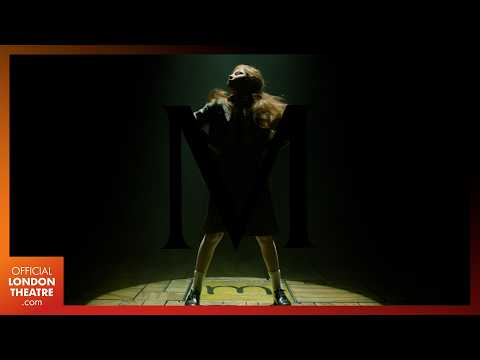
Review: what the lyrics are really doing
If Matilda were only cute, it would have stopped at “Naughty.” The trick is that the lyric writing never lets the grown-ups off the hook. It treats adult cruelty as a system, not a personality quirk, then hands the kids a vocabulary for revolt. Minchin’s signature move is musical: he’ll build a number like a playground chant, then lace it with internal rhyme, odd stresses, and bookish references that reward repeat listens. The words are not ornamental. They are the engine of plot and the method of escape.
The show’s thematic spine is literacy as self-defense. “School Song” turns spelling into battlefield code. “Quiet” turns dissociation into a superpower you can hear. Even the comic sleaze numbers (“Loud”) are doing character work: the lyric isn’t simply mocking the Wormwoods, it’s showing you how noise functions as camouflage for emptiness. Dennis Kelly’s book supplies structure; Minchin’s lyrics supply the pressure changes, the moments where you feel the room shift from gag to threat.
Listener tip: if you only know the Netflix film tracks, compare “School Song” and “Quiet” across recordings. You’ll hear how the same lyric idea can read as mischievous on one album and genuinely frightening on another, depending on tempo and vocal color. In the theatre, sit where you can see faces, not just the big pictures. This show’s best jokes are microscopic.
How it was made
In December 2008, director Matthew Warchus approached Tim Minchin to write music and lyrics for a Royal Shakespeare Company stage adaptation. Minchin’s reaction was not “I guess I can do that.” He had tried to secure the rights to Matilda years earlier, which makes the job offer feel less like a commission and more like fate finally returning his call. The page Minchin maintains about the show’s creation is unusually specific, including dates, early drafts, and how the team shaped the piece toward Stratford and then beyond.
One detail that matters for lyric-heads: “When I Grow Up” was the first song Minchin finished and shared with the core team in May 2009. That’s not just trivia. It explains why the number functions like the show’s emotional promise. It’s the early flag planted in the ground: the piece will be funny, yes, but it will also ache. The rest of the score is built to earn that ache.
Key tracks & scenes
"Naughty" (Matilda)
- The Scene:
- Matilda, small in a big, hostile home, decides “right” is something you sometimes have to manufacture. Light is tight and domestic, the kind that makes a child look even tinier against adult furniture. The number lands early in Act One as her moral manifesto.
- Lyrical Meaning:
- The lyric reframes misbehavior as ethics. It is not about being cheeky. It is about refusing to accept a rigged world as normal. The rhyme scheme itself feels like a child building logic blocks, one click at a time.
"School Song" (Children)
- The Scene:
- First day at Crunchem Hall. The older kids introduce the rules of survival while marching Matilda through a building that feels like it was designed to scold. The song sits in Act One and doubles as orientation and warning.
- Lyrical Meaning:
- Minchin turns letters into threats, then makes the threats catchy. It is a lyrical stunt that also reveals theme: education is power, but in the wrong hands it becomes a weapon. The kids reclaim it by singing it better than the adults speak it.
"Pathetic" (Miss Honey)
- The Scene:
- Miss Honey, alone after trying and failing to advocate for Matilda, admits how small her courage has become. Lighting isolates her, a soft pool that makes the school’s harshness feel larger.
- Lyrical Meaning:
- This is the show quietly admitting that niceness is not the same as bravery. The lyric is plain-spoken on purpose, a contrast to the kids’ verbal fireworks. Her simplicity is her shame, and later, her growth.
"The Hammer" (Miss Trunchbull)
- The Scene:
- Assembly as intimidation theatre. Trunchbull’s entrance is engineered as a full-body threat, with staging that often treats the children as a line of targets.
- Lyrical Meaning:
- The words are authoritarian nonsense delivered with absolute certainty. That mismatch is the joke, and it is also the warning: when power talks long enough, it starts sounding like truth.
"Bruce" (Children)
- The Scene:
- A cafeteria punishment escalates into a public trial. The children narrate as Bruce is forced through an ordeal, and the staging pivots from fear to communal support.
- Lyrical Meaning:
- The lyric turns a gross-out set piece into mythmaking. Bruce becomes a folk hero mid-song. The kids learn what solidarity sounds like, and the audience learns what kind of show this is willing to be: dark, but not cynical.
"When I Grow Up" (Children)
- The Scene:
- Swings appear and time bends. The stage becomes a playground and a confession booth at once, with adults watching children imagine futures they do not fully trust will arrive.
- Lyrical Meaning:
- Under the sweetness is a quiet accusation: children should not have to dream so hard just to feel safe. The lyric keeps the vows simple, then lets performance and orchestration supply the melancholy underneath.
"Quiet" (Matilda)
- The Scene:
- Trunchbull’s abuse pushes Matilda inward until the world seems to pause. The soundscape narrows, and the staging often creates a visual hush around her even as chaos continues beyond her.
- Lyrical Meaning:
- It is a song about mental escape that refuses to romanticize the reason it’s needed. The lyric sketches dissociation with frightening clarity, then pivots into agency as her powers arrive.
"Revolting Children" (Children)
- The Scene:
- After the spell breaks, the school erupts. The number plays as liberation with a bite, kids flooding corridors and reclaiming space that used to belong to fear.
- Lyrical Meaning:
- The word “revolting” is the masterstroke: insult becomes anthem. The lyric is built for collective singing, a final proof that language can be stolen back.
Live updates (2025-2026)
Current as of January 29, 2026. Matilda The Musical is still running in London’s West End at the Cambridge Theatre, with booking publicly extended through May 24, 2026. Ticketing on the official site advertises entry pricing starting from £20, and the production continues to rotate child casts while maintaining a steady adult company.
On the road, the Royal Shakespeare Company’s official UK & Ireland tour returns in October 2025, with announced dates running through April 2026 (and additional venues scheduled later in 2026 and into early 2027, including Cardiff). For audiences tracking the show like a band, the tour site and RSC news posts are the reliable home base for venue-by-venue scheduling and casting.
Notes & trivia
- Minchin was approached about the project by Matthew Warchus in December 2008, after Minchin had previously tried to secure stage rights years earlier.
- “When I Grow Up” was the first song Minchin finished and played for the creative team in May 2009, which explains why it feels like the score’s emotional north star.
- The RSC synopsis document lists the musical numbers by act, placing “Quiet,” “My House,” and “Revolting Children” in Act Two, with “School Song” and “The Hammer” in Act One.
- The Original Broadway Cast Recording release rolled out in fall 2013, with a digital release first and a physical CD release shortly after, on Broadway Records/Yellow Sound Label.
- The Broadway production opened April 11, 2013 at the Shubert Theatre and closed January 1, 2017, a long run for a show that never sanded down its cruelty.
- The Netflix film soundtrack (2022) credits Tim Minchin and Christopher Nightingale as producers and includes a newly written closing number for the film version.
Reception
Critics tend to praise Matilda in two different ways: either as a technical feat of kid-driven musical storytelling, or as a stealthy piece of social critique that happens to be funny. The strongest reviews do both, calling out the lyric intelligence and the show’s commitment to Dahl’s darkness rather than apologizing for it.
“Anarchically joyous, gleefully nasty and ingenious.”
“An explosion of joy, the most exhilarating and flat-out best musical since ‘Billy Elliot.’”
“The magic of storytelling... is central to the experience of this dazzlingly inventive musical.”
Quick facts
- Title: Matilda The Musical
- Year focus: 2013 (Broadway opening), with West End running since 2011
- Type: Stage musical (RSC), adapted from Roald Dahl’s 1988 novel
- Book: Dennis Kelly
- Music and lyrics: Tim Minchin
- Director: Matthew Warchus
- Choreography: Peter Darling
- Orchestrations / additional music / musical supervision (stage): Christopher Nightingale
- Selected notable placements: “School Song” (Act One school introduction), “Quiet” (Act Two turning point), “Revolting Children” (finale)
- Albums: Original RSC/West End recording (2011), Original Broadway Cast Recording (2013), Netflix film soundtrack (2022)
- Current availability: West End tickets through May 2026; UK & Ireland tour dates announced for 2025-2026 and beyond
Frequently asked questions
- Who wrote the lyrics to “Matilda”?
- Tim Minchin wrote the music and lyrics, working with book writer Dennis Kelly on the RSC adaptation.
- What’s the difference between the 2013 Broadway version and the London production?
- The Broadway transfer kept the UK setting but made small lyric and staging tweaks for the Shubert Theatre, while preserving the show’s darker edge.
- Where do the big songs sit in the story?
- Act One builds the world: “Naughty,” “School Song,” “The Hammer,” and “Bruce.” Act Two turns inward then detonates: “When I Grow Up,” “Quiet,” “My House,” and “Revolting Children.”
- Is “When I Grow Up” really the heart of the score?
- It’s a strong candidate, partly because it arrived early in the writing process and functions as the show’s emotional contract with the audience.
- Is the show still running and touring in 2025-2026?
- Yes. The West End production is booked through May 2026, and the official UK & Ireland tour begins in October 2025 with dates running through April 2026, with additional 2026 venues announced.
- Is there a movie version with the same songs?
- Yes. Netflix released a film adaptation of the stage musical, with a soundtrack album and some film-specific shaping of arrangements and staging.
Key contributors
| Name | Role | Contribution |
|---|---|---|
| Tim Minchin | Composer / Lyricist | Wrote the score’s wordplay-heavy songs and emotional pivots (“School Song,” “Quiet,” “When I Grow Up”). |
| Dennis Kelly | Book writer | Shaped Dahl’s plot into a stage engine that supports musical storytelling without sanding off the darkness. |
| Matthew Warchus | Director | Developed the RSC production and directed stage and film versions, defining the show’s tonal balance. |
| Christopher Nightingale | Orchestrations / Additional music / Musical supervision | Built the musical architecture that lets Minchin’s lyrics land cleanly and lets the darker moments breathe. |
| Peter Darling | Choreographer | Created the physical language for the kids’ rebellion and the show’s stylized brutality. |
| Rob Howell | Set & costume design | Designed the world that can flip from storybook to menace in a beat. |
Sources: Royal Shakespeare Company (RSC), Matilda official West End & tour sites, IBDB, MTI Shows, Playbill, LondonTheatre, What’s On Stage, The Guardian, Variety, The Hollywood Reporter, TimMinchin.com, Broadway Records, Wikipedia (soundtrack reference).