
Marie Christine Lyrics: Song List
- Act 1
-
The Map of Your Heart

- Before the Morning
- Mamzell' Marie / Ton Grandpere est le soleil
- Beautiful
- In an Instant / Way Back to Paradise
- When You Look at a Man
- The Storm / C'est l'amour / To Find a Lover
- Nothing Beats Chicago / Ocean is Different / Danced With a Girl
- Tout Mi Mi / He Is My Release / Miracles and Mysteries
- I Don't Hear the Ocean / Bird Inside the House
-
All Eyes Look Upon You / A Month Ago / Danced With a Girl (Reprise)
-
We're Gonna Go to Chicago / And You Would Lie / I Will Give
-
Act I Finale
- Act 2
-
Opening / I Will Love You
-
Cincinnati / You're Looking at the Man
- The Scorpion / Lover, Bring Me Summer
-
Tell Me / Billy Was Sweet / Paradise is Burning Down
-
Prison in a Prison
- Better and Best / Good Looking Woman
-
No Turning Back / Before the Morning (reprise)
-
Beautiful (reprise)
-
I Will Love You (Reprise)
-
Your Name / Innocence Dies / Finale
About the "Marie Christine" Stage Show
This is a play written by M. J. LaChiusa. Its scenario tells about the events that unfold in the late 19th century in city of witchcraft New Orleans. Chicago is also involved. To some extent, the story is a modern interpretation of Medea (the Greek theatrical). It highlights various magical practices, such as voodoo things. In the center is somewhere historical figure of Marie Laveau, whose life is shrouded in various myths and legends. The music & lyrics for the play were composed by M. J. LaChiusa.
The first Broadway’s show of this histrionics occurred on December 1999 in the Vivian Beaumont Theater, located in Lincoln Center. Closure of musical dated January 2000. For more than a month, on Broadway were held 42 performances & 39 preliminaries. The director & choreographer was G. Daniele. Starring: A. McDonald, A. Crivello, V. Reed & M. Testa.
The project has received several nominations for the Tony Award. In particular, the production claimed on the prize for the best book for the musical (LaChiusa), the best show (LaChiusa), as well as Best Leading Actress (McDonald). But it failed to win any, in which the existence of very serious competitors such as Amy's View, James Joyce's The Dead, and others, must be blamed.
Release date of the musical: 1999
"Marie Christine" – The Musical Guide & Song Meanings
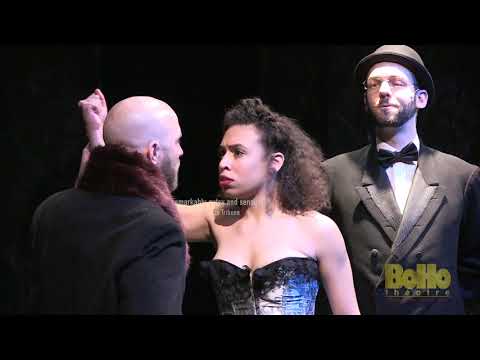
Review: What is this show trying to do, and does it pull it off?
How do you write a Medea retelling where the scariest weapon is not the spellwork, but a sentence? Michael John LaChiusa’s “Marie Christine” aims for operatic moral pressure: the words keep tightening, the music keeps shifting, and the story refuses the comfort of a single genre label. The show opens inside a women’s prison and treats memory like a summon, with the chorus of inmates pulling the past into the room. That frame matters, because the lyrics keep asking a blunt question: what does society call “unforgivable” when a woman runs out of legal options?
LaChiusa’s lyric writing here is less about punchlines than about collisions: Creole decorum versus hunger, romance versus transaction, New Orleans heat versus Chicago machinery. You hear it in how characters name places, name bodies, name power. Dante’s language sells movement and destiny. Marie Christine’s language keeps circling back to the price of belonging, then deciding the price is rigged. The result can feel deliberately demanding, even prickly, but it is not random. It is a libretto built to make the listener sit inside contradiction long enough to feel the burn.
Musically, it plays like operetta with American fingerprints: through-sung stretches, recurring motifs, and a vocal line that treats the lead as a marathoner, not a sprinter. Jonathan Tunick’s orchestration gives the score its sheen, but the point is dramaturgical, not decorative: the sound keeps re-coloring the same moral dilemma until you stop expecting a “lesson” and start recognizing an autopsy.
Reporting note for trust: This guide cross-checks official production records, licensing materials, and the cast album’s track-by-track synopsis. Information current as of January 29, 2026.
How it was made
“Marie Christine” was written by LaChiusa (book, music, lyrics) and developed with director-choreographer Graciela Daniele, tailored for Audra McDonald as a starring vehicle with a very specific kind of stamina. The Broadway production opened at Lincoln Center Theater’s Vivian Beaumont Theatre in late 1999, after an extended preview period, and it ran briefly. That short life has become part of the show’s legend, but it also explains why the cast recording functions like a primary text: if you want the architecture, the album is the blueprint most people can actually get their hands on.
One useful modern tell: the licensing listing spells out a smaller cast configuration (and even details the specific locations), which is a quiet admission that the show’s future depends on companies willing to build its world with fewer bodies and sharper choices. If you are looking for a “napkin story,” what’s verifiable is simpler and more theatrical: this was a prestige institution betting on a new, difficult score at the turn of a century. A romantic tragedy set in a prison is not exactly a seasonal crowd-pleaser, and LaChiusa never pretended it was.
Key tracks & scenes
"Before the Morning" (Prisoners, Marie Christine)
- The Scene:
- Chicago, 1899. A women’s prison cell. The inmates question the new arrival, and the air feels like it has no oxygen, only judgment. The past starts to appear because the room insists on it.
- Lyrical Meaning:
- This is the show’s thesis statement: Marie Christine does not “begin” with romance. It begins with consequence. The lyric strategy is interrogation, not exposition, and it turns the audience into a jury.
"Mamzell' Marie / Your Grandfather Is the Sun" (Marie Christine’s Mother)
- The Scene:
- Memory flashes back to Marie Christine’s mother teaching heritage, power, and limits, with the prison chorus hovering like witnesses at a ritual.
- Lyrical Meaning:
- The language sanctifies ancestry while warning against the fantasy of control. The show’s spiritual vocabulary is never a shortcut; it is a lens that makes social violence look even more intimate.
"Beautiful" (Marie Christine)
- The Scene:
- Blue Rose Park on Lake Pontchartrain. A public place that suddenly feels private. The light in most stagings is romantic on purpose, because the story needs you to understand why she jumps.
- Lyrical Meaning:
- The word “beautiful” is not decoration. It becomes a compass that later points her into catastrophe. The lyric is desire insisting it deserves a future.
"The Storm" (Dante)
- The Scene:
- Dante sells himself as a survivor and a man built for risk. The action is less “seafaring adventure” than a self-myth being pitched at full volume.
- Lyrical Meaning:
- Dante’s words are branding. The lyric makes charisma sound like fate, which is exactly how people like him get forgiven for what they do next.
"Nothing Beats Chicago / Ocean Is Different / Danced With a Girl" (Dante, Marie Christine)
- The Scene:
- A run of sequences that turns geography into ideology. Chicago is promised as reinvention, the ocean as loneliness, the dance as surrender. Shadows fall. Their chemistry reads as both erotic and transactional.
- Lyrical Meaning:
- This is the show’s seduction engine. The lyrics keep swapping “love” language for “escape” language until you can’t separate them. That confusion is the trap.
"Way Back to Paradise" (Marie Christine)
- The Scene:
- Marie Christine instructs Lisette in survival inside a world run by men. It lands like a warning passed down as practical advice.
- Lyrical Meaning:
- The lyric exposes how safety is negotiated, not granted. It also sets up the tragedy: Marie Christine can diagnose the system and still get swallowed by it.
"Cincinnati" (Magdalena)
- The Scene:
- A Chicago First Ward saloon. Magdalena entertains, the room smokes with appetite, and politics sits inches from pleasure.
- Lyrical Meaning:
- Magdalena’s lyrics are capitalism in costume. Entertainment becomes leverage. The song also clarifies the city’s moral weather: everything is for sale, including people.
"Prison in a Prison" (Marie Christine, Dante, Helena)
- The Scene:
- A feverish triangle where Marie Christine insinuates herself into Dante’s new life, while he tries to present normalcy with Helena. Staging often treats it as psychological choreography: bodies near each other, souls elsewhere.
- Lyrical Meaning:
- The lyric logic is possession, not romance. Marie Christine’s language stops asking for love and starts demanding recognition, which is when tragedy stops being avoidable.
"I Will Love You" (Marie Christine)
- The Scene:
- Marie Christine with her two young sons, preparing them as if for a ceremony. The quiet is so specific it feels dangerous.
- Lyrical Meaning:
- The lullaby lyric is the show’s cruelest irony: tenderness used as a veil. It turns “love” into a word that can no longer be trusted at face value.
Live updates 2025-2026
Status check (as of January 29, 2026): There is no Broadway or major commercial run currently announced on the primary licensing listing, and the show’s public life is mostly regional and academic. Concord Theatricals continues to license “Marie Christine,” including detailed location requirements and an estimated two-hour duration, which keeps it available for colleges and adventurous companies. If you are hunting for the “next big revival,” this is not one of those properties that casually drifts back onto a large stage. It tends to return when a company actively decides to wrestle with it.
What is new is the conversation around LaChiusa’s body of work. A 2025 critical companion volume focused on his musicals signals ongoing scholarly attention, and that matters for “Marie Christine,” which has always lived in the gap between mainstream appetite and serious-theatre ambition. The cast recording remains widely available digitally, and its track-by-track synopsis is unusually thorough, making it the best way to follow plot and lyrical turns without a libretto in your lap.
Listener tip: If you are new to the piece, listen in this order for clarity: “Before the Morning” (frame), “Beautiful” (spark), the Chicago sequence (“Nothing Beats Chicago” onward), then jump to “Prison in a Prison” and “I Will Love You.” The show’s story is linear, but its emotional logic is spiral-shaped. This sequence helps your ear catch the patterns.
Notes & trivia
- Broadway run: first preview October 28, 1999; opened December 2, 1999; closed January 9, 2000 (39 previews, 42 performances).
- Setting (official listing): a prison and locations in and around Lake Pontchartrain, New Orleans, and Chicago, spanning 1894-1899.
- The original production was directed and choreographed by Graciela Daniele, with scenic design by Christopher H. Barreca and costumes by Toni-Leslie James.
- Tony nominations included Best Book, Best Original Score, Best Actress (Audra McDonald), Best Lighting Design (Jules Fisher and Peggy Eisenhauer), and Best Orchestrations (Jonathan Tunick).
- The cast recording is a rare case where the “synopsis” section functions like a scene-by-scene guide, including the prison framing and major plot turns.
- Licensing details call the musical style “Operetta” and flag the vocal demands as “Difficult,” which is a polite way of saying the lead is not for the faint of throat.
- Myth-check: the show is not just “Medea in New Orleans.” It explicitly draws on the mythology around Marie Laveau as well, and the Chicago politics arc is not a side quest; it is the point.
Reception: then vs now
When “Marie Christine” arrived, critics often agreed on the ingredients (a serious score, a formidable lead performance, a bleak story) and disagreed on whether the full meal held together. In revival contexts, the conversation shifts: smaller companies frequently treat it less like Broadway product and more like repertory tragedy with music, which arguably fits its temperament better.
“...combine that New Orleans/voodoo vibe with cutthroat Chicago politics... the mix of passion, betrayal and corruption is absolutely irresistible.”
“These women journey with Marie Christine as she recounts her story, the events coming to life, as if conjured by her memory.”
“A brilliant reworking of Medea...”
Quick facts
- Title: Marie Christine
- Broadway year: 1999 (opened December 2, 1999)
- Type: Musical drama (often described as operetta-like in structure)
- Book, music, lyrics: Michael John LaChiusa
- Original director-choreographer: Graciela Daniele
- Orchestrations: Jonathan Tunick
- Original Broadway theatre: Vivian Beaumont Theater (Lincoln Center Theater)
- Selected notable placements (story locations): women’s prison in Chicago; Blue Rose Park on Lake Pontchartrain; a Chicago First Ward saloon; a small house by the river
- Cast album: “Marie Christine (Original Broadway Cast Recording)” (32 tracks; credited as 1999 digitally; ? 2000 BMG Entertainment; commonly associated with RCA Victor branding)
- Availability: Major digital platforms and Masterworks Broadway catalog page
Frequently asked questions
- Who wrote the lyrics for “Marie Christine”?
- Michael John LaChiusa wrote the book, music, and lyrics.
- Is “Marie Christine” based on a true story?
- It is a retelling of Euripides’ “Medea,” set in 1890s New Orleans and Chicago, and it draws on the mythology surrounding Marie Laveau.
- Why does the show start in a prison?
- The prison framing turns the plot into testimony. It forces the audience to experience the story as consequence first, romance second.
- Is there a movie adaptation?
- As of January 29, 2026, there is no widely released film adaptation. The cast recording is the most accessible version of the piece.
- What should I listen for if I care about the lyrics?
- Track how characters talk about place and power. Dante’s language markets possibility. Marie Christine’s language keeps returning to the cost of respectability, then rejects the bargain.
- Can theaters license the show today?
- Yes. Concord Theatricals licenses the title and publishes cast size, duration, and materials information.
Key contributors
| Name | Role | Contribution |
|---|---|---|
| Michael John LaChiusa | Book, Music, Lyrics | Author of the through-sung libretto and score; wrote the piece for Audra McDonald. |
| Graciela Daniele | Director, Choreographer | Staged the original Broadway production; shaped the movement vocabulary that supports the psychological storytelling. |
| Jonathan Tunick | Orchestrations | Orchestrated the score (Tony-nominated), giving its operetta-meets-Americana sound its bite. |
| Audra McDonald | Original Broadway Star | Created the title role on Broadway. |
| Anthony Crivello | Original Broadway Cast | Played Dante Keyes, the charismatic engine of the plot’s betrayal. |
| Vivian Reed | Original Broadway Cast | Played Marie Christine’s mother, anchoring the show’s spiritual and moral vocabulary. |
| Christopher H. Barreca | Scenic Design | Designed the original Broadway environment. |
| Toni-Leslie James | Costume Design | Designed the original Broadway costumes, supporting the Creole-society versus Chicago-world contrast. |
| Jules Fisher & Peggy Eisenhauer | Lighting Design | Tony-nominated lighting design for the original Broadway production. |
Sources: IBDB; Concord Theatricals; Masterworks Broadway; Apple Music; Chicago Sun-Times; Playbill production vault; Wikipedia (for high-level synopsis cross-check only).