
Turn It Off Lyrics
Turn It Off
ELDER MCKINLEY:I got a feeling,
That you could be feeling,
A whole lot better then you feel today
You say you got a problem,
well thats no problem,
Its super easy not to feel that way!
When you start to get confused because of thoughts in your head,
Dont feel those feelings!
Hold them in instead
Turn it off, like a light switch
just go click!
Its a cool little Mormon trick!
We do it all the time
When your feeling certain feels that just dont feel right
Treat those pesky feelings like a reading light
and turn em off,
Like a light switch just go bap!
Really whats so hard about that?
Turn it off! (Turn it off!)
When I was young my dad,
Would treat my mom real bad,
every time the Utah Jazz would loose.
Hed start a drinking,
and Id start a thinking,
How am I gonna keep my mom from getting abused?
Id see her all scared and my soul was dying,
My dad would say to me, Now dont you dare start crying.
Turn it off, (Like a light switch just go click!)
(Its our nifty little Mormon trick!)
Turn it off! (Turn. It. Off!)
My Sister was a dancer, but she got cancer,
My doctor said she still had two months more
I thought she had time, so I got in line
for the new I-phone at the apple store.
She lay there dying with my father and mother
Her very last words were "where is my brother?"
(Turn it off!) Yeah! (Bid those sad feelings a due!)
The fear I might get cancer too,
When I was in fifth grade, I had a friend Steve Blade,
He and I were close as two friend could be
One thing led to another, and soon I would discover,
I was having really strange feelings for Steve
I thought about us, on a deserted Island
Wed swim naked in the sea, and then hed try and...
WOAH! Turn if off, like a light switch,
there its gone! (Good for you!)
My hetero side just won!
Im all better now,
Boys should be with girls thats heavenly fathers plan
So if you ever feel you rather be with a man,
Turn it off.
ELDER PRICE:
Well Elder McKinley, I think its ok that your having gay thoughts,
just so long as you never act on them.
ELDER MCKINLEY:
No, because then your just keeping it down,
Like a dimmer switch on low, (On low!)
Thinking nobody needs to know! (Uh oh!)
ELDER PRICE:
But thats not true!
ELDER MCKINLEY:
Being gay is bad, but lying is worse,
So just realize you have a curable curse,
And turn it off! (Turn it off, turn it off!)
(Dance)
Turn it off!
Now how do you feel!
ELDER PRICE:
The same
ELDER MCKINLEY:
Then you only got yourself to blame,
You didnt pretend hard enough,
Imagine that your brain is made of tiny boxes,
and find the box thats gay and CRUSH IT!
Ok?
ELDER PRICE:
No, no, -Im- not having gay thoughts
ELDER CUNNINGHAM:
Alright! It worked!
(Yay!)
(Turn it off!)
(Turn it off, Turn it off!)
(Turn it off, turn it off like a light switch just go click click!
What a cool little Mormon Trick! Trick trick!
We do it all the time!)
ELDER MCKINLEY:
When your feeling certain feelings that just dont seem right!
Treat those pesky feelings like a reading light!
Turn it off! (Like a light switch, shut it off!)
(Now he isnt gay anymore!)
(Turn it, turn it, turn it, turn it...!)
(Turn it, turn it, turn it, turn it...!)
(Turn it...)
ELDER MCKINLEY: Turn it off!
Song Overview
Review and Highlights
Quick summary
- Act I showstopper led by Elder McKinley, built as a comedic coping manual for a rattled Elder Price.
- Classic Broadway pastiche with a brisk march-swing drive and a wink at mid-century production numbers.
- On the Original Broadway Cast Recording, it sits early in the sequence (track 5) and runs about five minutes.
- Staging usually plays like a coordinated pep talk - smiles up front, unease underneath.
The Book of Mormon (2011) - stage musical - diegetic. Act I, at the missionaries' quarters in Uganda, Elder McKinley coaches the newcomers on how to shut down panic and doubt, turning a spiritual pep talk into a regimented group number. On the cast recording, it appears as track 5. The placement matters because it sets the show's tonal trick: a bright exterior that can carry darker subtext without losing the grin.
Here is why the song lands so hard in a theater: it sells certainty as choreography. The melody moves like a tap routine even when the text is basically a set of instructions for denial. The joke is not only what is said, but how efficiently it is packaged - crisp rhymes, cheery cadences, and a chorus that snaps into formation as if comfort can be drilled like etiquette.
Musically, the writers lean into the vocabulary of "clean" Broadway - punchy brass cues, patter that rides the beat, and those tidy button endings that feel like a salesman closing a deal. The craft is the point. The number makes repression sound frictionless, like something you can learn in an afternoon and demonstrate with a smile.
Creation History
The song was written by Trey Parker, Robert Lopez, and Matt Stone as part of the show's long development arc, and it sits in a score built from intentional stylistic borrowing - a collage of familiar musical-theater textures used for satire. The cast recording sessions for the Original Broadway Cast Recording were captured at MSR Studios in New York, with Stephen Oremus among the core producers, translating the stage punch into a clean studio sequence that still feels like it is marching down an aisle.
Song Meaning and Annotations
Plot
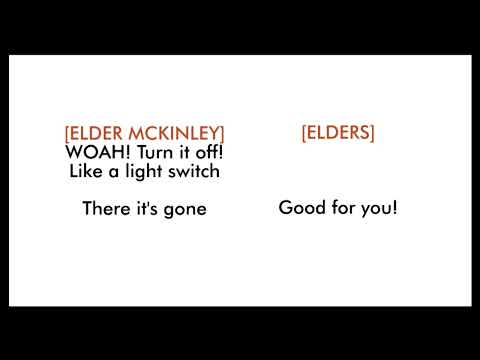
In Act I, Elder Price and Elder Cunningham arrive in Uganda and quickly realize the situation is harsher than their training prepared them for. At the missionaries' living quarters, Elder McKinley introduces a coping strategy: when doubt or fear shows up, you do not process it - you shut it down. The song plays as a group demonstration, with multiple elders offering tidy, smiling examples of how the method gets applied in real life.
Song Meaning
On the surface, the number is an upbeat self-help routine: switch off intrusive thoughts, keep moving, stay presentable. Under the surface, it is a satire of spiritual bypassing - the habit of covering discomfort with forced positivity and rules. The humor comes from the mismatch between the sunny musical language and the idea being sold. The arrangement keeps insisting everything is fine, even when the story hints that "fine" is a costume.
As stated on GRAMMY.com, the cast album's awards attention helped cement the recording as a major cultural artifact from a modern Broadway hit, and this track is one of the score's calling cards. That is not only because it is catchy, but because it captures the show's central technique: make the audience laugh first, then let the implications catch up.
Annotations
-
Turn it off, like a light switch
That hook is the song's sales pitch in one breath: feelings are treated as appliances. The phrasing is deliberately plain, the kind of advice you could imagine on a laminated card in a training manual.
-
Just go click
The tiny sound effect is a rhythmic gimmick and a character tell. It turns mental life into a beat-level action, something the ensemble can synchronize, which is funny and a little chilling.
-
It is a cool little trick
The lyric frames repression as a party trick. That framing matters: if it is "cool," you do not have to ask whether it is healthy, you just admire the technique.
-
We do it all the time
The line widens the joke from one person to a culture. It is not presented as a personal quirk, but as a normalized group practice, reinforced by harmony and formation.
-
Turn it off
Repetition here is not laziness, it is indoctrination-by-chorus. The refrain works like a slogan: short, memorable, and easy to chant when your brain is busy with anything else.
Style and rhythm
The groove is built for motion - an uptempo pulse that keeps the lyric from lingering. When a show wants you to stop and feel, it usually slows down. This one speeds up and smiles wider. The orchestration language evokes bright Broadway polish, and the ensemble writing is designed to feel like community support, even as it demonstrates conformity.
Satire and subtext
Elder McKinley is not written as a villain twirling a mustache. He is written as someone who believes in the method because it keeps him functional. The number invites laughter at the absurdity, but it also leaves room for a tougher reading: what does it cost to keep "turning off" anything that does not fit the approved narrative? That question hangs in the air long after the final button.
Cultural touchpoints
The song borrows the friendly confidence of old-school musical theater pep numbers - the kind that promise a new you by the end of the chorus. By placing that tradition inside a story about missionary certainty colliding with reality, the writers flip the expected moral. The tune sounds like reassurance, but the story context keeps testing whether reassurance is the same as truth.
Technical Information
- Artist: The Book of Mormon (The musical)
- Featured: Ensemble; led by Elder McKinley (originally performed by Rory O'Malley in the Original Broadway cast)
- Composer: Trey Parker; Robert Lopez; Matt Stone
- Producer: Stephen Oremus (among the principal producers credited for the cast recording)
- Release Date: May 17, 2011 (digital release of the cast album; hard copy followed later)
- Genre: Musical theatre
- Instruments: Nine-member pit setup (woodwinds, trumpet, trombone, drums-percussion, keyboards, strings, guitars, basses)
- Label: Ghostlight Records
- Mood: Upbeat satire; drill-sergeant cheer
- Length: About 5:00
- Track #: 5 (on the Original Broadway Cast Recording)
- Language: English
- Album (if any): The Book of Mormon: Original Broadway Cast Recording
- Music style: Broadway pastiche with march-swing brightness
- Poetic meter: Predominantly iambic-leaning conversational lines, tightened into rhyme-forward couplets for patter clarity
Questions and Answers
- Who leads the number in the story?
- Elder McKinley takes point, with the other missionaries reinforcing the lesson in tight ensemble blocks.
- What is the song trying to teach, on the surface?
- A simple rule: when doubt, fear, or discomfort shows up, shut it down instantly and keep smiling.
- Why does it sound like an old-fashioned Broadway pep number?
- Because the score weaponizes familiarity. The more "classic" the musical language, the funnier the mismatch with the advice being sold.
- Is it played as sincere encouragement or as a joke?
- Both, and that is the trick. In performance, it can feel like genuine group support while the audience clocks the satire underneath.
- What is the dramatic purpose in Act I?
- It gives Elder Price a technique for surviving shock, while also showing the culture of the missionaries as disciplined and performative.
- What is the key lyrical device?
- Slogan repetition. Short phrases come back like mantras, making the idea easy to remember and easier to obey.
- How does choreography usually amplify the message?
- By turning comfort into uniformity: lines, pivots, and synchronized gestures that suggest feelings are manageable if you move together.
- Does the show treat the technique as harmless?
- The staging makes it entertaining, but the surrounding story context hints that constant shutdown has consequences, especially for identity and honesty.
- Why do audiences quote the hook so often?
- It is compact, funny, and practical as a meme. The phrase travels because it sounds like advice you could use, even if the satire is the point.
- What makes it a strong audition cut for baritones?
- It combines patter clarity, comic timing, and sustained leadership energy, plus it lets you signal character through clean diction rather than sheer volume.
Awards and Chart Positions
According to Playbill, the cast album arrived digitally on May 17, 2011 and quickly became a commercial event for a Broadway recording, helped along by the show's awards-season momentum. The stage musical went on to win nine Tony Awards, and the cast recording later won the 2012 GRAMMY for Best Musical Theater Album.
| Category | Result | Date |
|---|---|---|
| US Billboard 200 peak (cast album) | No. 3 | 2011 (post-Tony momentum period) |
| GRAMMY - Best Musical Theater Album (cast recording) | Won | February 12, 2012 |
| Tony Awards (stage musical) | Nine wins (including Best Musical) | 2011 |
How to Sing Turn It Off
This is a baritone-led comedic uptempo that rewards clarity over brute force. Reported guidance sources place the range around C3 to B4, with the cast recording commonly analyzed around F major and a tempo near 142 BPM. Treat those numbers as practical rehearsal coordinates, not a sacred map: different productions shift keys for casting.
- Tempo first: Work at a slower click until every consonant lands, then climb toward performance speed without tightening your jaw.
- Diction: Keep vowels bright and forward. The humor lives in clean syllables, not extra volume.
- Breath plan: Mark where you can steal air during ensemble responses. Avoid big gasps - the character sells confidence.
- Flow and rhythm: Speak the text in rhythm like patter, then add pitch. If you sing it too "pretty" too early, you will lose the bite.
- Accents: Pop key words like instructions from a handbook. Think "demonstration," not "confession."
- Ensemble awareness: If you are in a group, lock the cutoffs. The number is funnier when it is militarily neat.
- Mic technique: If amplified, back off on the loudest punchlines and let the microphone do the work. Clarity beats push.
- Pitfalls: Rushing the jokes, swallowing consonants, and overplaying facial comedy. The song is already funny - stay in control.
- Practice materials: Drill tricky phrases on a single pitch, then reintroduce melody. Record yourself at tempo and listen for smeared words.
Additional Info
Internationally, the stage musical has traveled far beyond Broadway and the West End, and accessibility platforms have supported performances with subtitle translations in multiple languages for some venues. That matters for this number in particular, because its humor depends on timing and plain-language instruction - subtitles can preserve the rhythm of the joke even when an audience is processing a second language.
One more craft note I keep coming back to: the number is built like a demonstration in a classroom. Every new section adds a sharper example, and the arrangement keeps tightening the screws with brighter orchestration. You laugh because it is cleanly made. Then you replay it in your head and realize how much discipline that cleanliness implies.
Key Contributors
| Entity | Type | Relationship (S-V-O) |
|---|---|---|
| Trey Parker | Person | Trey Parker co-wrote music and lyrics for the stage musical. |
| Matt Stone | Person | Matt Stone co-wrote music and lyrics for the stage musical. |
| Robert Lopez | Person | Robert Lopez co-wrote music and lyrics for the stage musical. |
| Stephen Oremus | Person | Stephen Oremus produced the Original Broadway Cast Recording. |
| Casey Nicholaw | Person | Casey Nicholaw co-directed and choreographed the Broadway production. |
| Ghostlight Records | Organization | Ghostlight Records released the Original Broadway Cast Recording. |
| MSR Studios (New York) | Organization | MSR Studios hosted the cast recording sessions. |
| Eugene O'Neill Theatre | Venue | Eugene O'Neill Theatre housed the Broadway premiere production. |
| The Book of Mormon: Original Broadway Cast Recording | Work | The cast album contains the track Turn It Off as track 5. |
Sources: Playbill, GRAMMY.com, Wikipedia, StageAgent, Musicstax, TheatreAccess