Love Is A Chance Lyrics — Bajour
Love Is A Chance Lyrics
Cease it when it first fills your heart.
Be a little premature... love can grow and be mature.
Only if you trust it from the start.
Love is a chance, made to be taken.
Why should I take to my heels?
Why run away from mayhem that may come?
Maybe I'll like how it feels.
Love is a chance, flighty and fleeting.
Here like Quicksilver than gone!
High-ho Quicksilver, I'm riding with you, whether its hether or yon!
See how my heart's open wide?
Hey there, love take a good seat inside and stay there.
Love is a chance, chance to be happy,
in one fantastical stroke!
Now's my big chance, and I'm a gambler, ready to go for broke.
See how my heart's open wide?
Hey there, love take a good seat inside and stay there.
Love is a chance, chance to be happy,
in one fantastical stroke!
Now's my big chance, and I'm a gambler, ready to go...
ready to go...
ready to go... for broke!!
[Thanks to N.C. for lyrics]
Song Overview
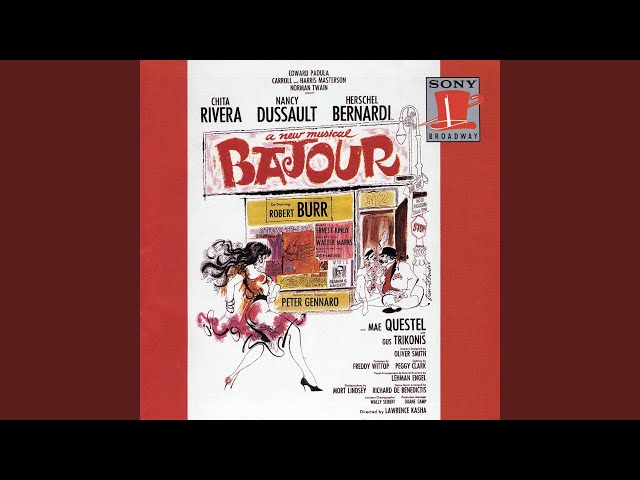
In Bajour, "Love Is a Chance" lyrics arrive as Emily Kirsten stops trying to outthink life and starts admitting that love may work without guarantees. It is not a stand-alone pop single in the cast album sequence, but the second half of a linked Act Two track that begins with her mother's "Guarantees." That setup matters. Walter Marks turns a practical warning into a romantic answer. Mrs. Kirsten says life offers no certainty. Emily replies that love asks for risk anyway. Simple idea, sharp dramatic use.
Review and Highlights
"Love Is a Chance" is one of those late-score numbers that quietly changes the weather. It is not flashy in the way "Where Is the Tribe for Me?" is flashy, and it does not circle doubt the way "Must It Be Love?" does. Instead it lands with a firmer pulse. Peter Filichia, writing for Masterworks Broadway, described Dussault's material here as "pulsating," and that gets at the song's energy well. Emily is no longer just examining a feeling under glass. She is moving toward a decision. The number plays like a modest release, but it carries real dramatic weight because it answers the caution that comes right before it.
Key takeaways:
- It is Emily Kirsten's Act Two response to her mother's warning song, "Guarantees."
- The cast album preserves it as a linked track, "Guarantees / Love Is a Chance."
- The song reframes romance as risk accepted rather than certainty won.
- Nancy Dussault sings it with forward motion instead of dreamy hesitation.
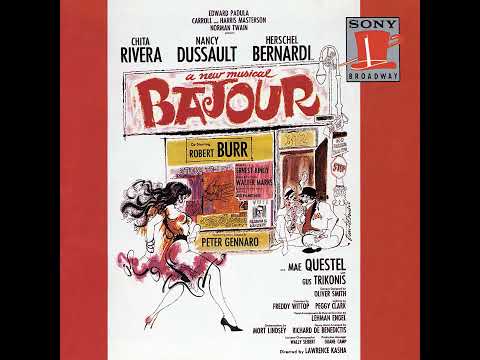
Bajour (1964) - stage musical number - diegetic within the world of the show. In Act Two, Mrs. Kirsten worries that Emily is still unmarried and argues that life offers no "Guarantees." Emily answers with "Love Is a Chance." The placement is clean and clever: motherly caution on one side, adult emotional choice on the other. Dramatically, the song matters because Emily stops treating love as a theory and starts treating it as something to be lived.
Creation History
Bajour opened on Broadway on November 23, 1964, with a book by Ernest Kinoy and music and lyrics by Walter Marks. The original company included Nancy Dussault as Emily Kirsten and Mae Questel as Mrs. Helene Kirsten. "Love Is a Chance" was written as part of the show's Act Two sequence and, on the Columbia Masterworks original cast album, appears in a combined recording with "Guarantees." Digital editions list the linked track at 3:30 and place it as track 14, with Thomas Z. Shepard credited as producer and Lehman Engel associated with the musical direction of the recording. The song's place in the score also explains its shape: it is born from dialogue and dramatic contrast, not from a separate set-piece built to stop the show cold.
Lyricist Analysis
Walter Marks writes this lyric with less nervousness than Emily's earlier songs, but he does not strip away her intelligence. The phrase "Love Is a Chance" is plain, almost proverb-like, and that plainness is the point. After all the classification, worry, and verbal motion elsewhere in the score, the line lands like a person finally putting down the notebook.
The meter leans toward speech-rhythm with a stronger melodic settle than "Where Is the Tribe for Me?" There is still conversational flexibility, yet the hook behaves more like a declarative refrain than a running thought spiral. Marks knows when to simplify. Good instinct. The lyric gains force by sounding less decorated than the character's earlier material.
Rhyme and phrasing help the number move forward. The stresses feel cleaner, the breath points more intentional, and the vowels open enough to let the melodic line carry warmth. This is not patter. It is conviction arriving in measured steps. Structurally, the song benefits from being paired with "Guarantees." The mother sets up the dilemma; Emily answers it. That call-and-response frame gives the lyric its backbone.
Song Meaning and Annotations
Plot
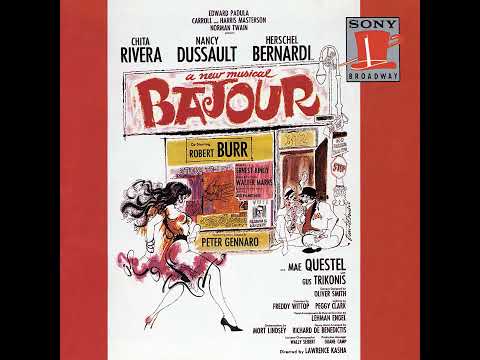
By Act Two of Bajour, Emily Kirsten has moved beyond pure fascination with the Dembeschti world and become emotionally entangled in it. Her mother, worried for her future and still thinking in practical terms, warns that life comes without guarantees. Emily's answer is "Love Is a Chance." The number is short, but it marks a real turn: she is no longer asking whether love exists. She is deciding what to do with the uncertainty that comes with it.
Song Meaning
The meaning is almost all in the title. Love is not presented as a reward for caution or a result you can secure with enough planning. It is a wager. Not reckless, exactly, but uninsurable. Emily accepts that. That acceptance matters because it shows growth in a character who began the show wanting to classify the world before entering it.
The song also works as a small argument between generations. Mrs. Kirsten voices the anxious logic of protection. Emily answers with the logic of participation. Neither position is absurd. That is why the exchange works. The older voice sees danger; the younger voice sees possibility. Marks turns that clash into a neat thematic handoff.
Annotations
life has to be taken on faith: it offers no "Guarantees." Emily agrees that "Love Is a Chance."
Masterworks Broadway's synopsis gives the scene its exact dramatic shape. This is not a vague romantic interlude. It is a direct answer to a maternal warning, which makes the song feel more active than dreamy.
pulsating
That one-word description from Peter Filichia says a lot. Emily's sound here is not hesitant or misty. The rhythm presses forward, which matches a character finally acting on feeling instead of circling it.
Love Is a Chance
The title functions as both thesis and surrender. Emily cannot guarantee the outcome, but she can choose participation. For a character who began by studying everyone else, that is a big leap.
Theme and message
The central theme is trust without proof. Love is framed not as blind fantasy but as a decision to move ahead while uncertainty remains. That distinction gives the number its adult tone.
Mood and dramatic arc
The mood is brighter and steadier than Emily's earlier romantic material. The arc moves from warning to answer, from caution to chosen vulnerability. It is a compact progression, but it has dramatic snap.
Style, rhythm, and instrumentation
Stylistically, the song sits in Broadway romantic writing with a more active pulse than a torch ballad. Filichia noted Mort Lindsey's orchestrations across the score, praising details like flute, piccolo, and bongos. In this number, what matters most is motion. The arrangement supports the lyric's sense of momentum rather than suspending it in soft-focus sentiment.
Cultural and historical touchpoints
As a 1964 musical-theater number, the song reflects a period when Broadway still loved turning a character's outlook into a concise, quotable refrain. Yet Emily is not a stock ingenue. She has already been written as analytical and academically ambitious, so her embrace of risk feels earned rather than decorative.
Metaphors and key phrases
The word "chance" does all the heavy lifting. It suggests luck, risk, opportunity, and a leap into the unknown. That single noun lets the song hold fear and hope in the same hand. Not bad for one syllable.
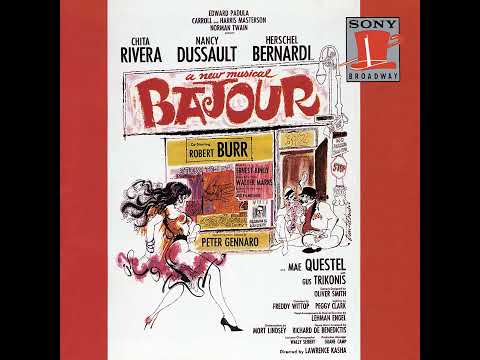
One reason the number stays memorable is that it answers the whole Emily arc in miniature. She begins Bajour looking for a tribe she can define. She reaches this point willing to enter a future she cannot define in advance. That is character development with a neat melodic ribbon tied around it.
Technical Information (Quick Facts)
- Song: Love Is a Chance
- Artist: Nancy Dussault with Mae Questel and the Bajour Original Broadway Cast
- Featured: Bajour Orchestra
- Composer: Walter Marks
- Producer: Thomas Z. Shepard
- Release Date: December 4, 1964 for the LP; many digital services list January 1, 1964
- Genre: Show tune, musical theater, romantic character song
- Instruments: Orchestra
- Label: Columbia Masterworks; digital reissue via Masterworks Broadway
- Mood: Hopeful, alert, accepting
- Length: 3:30 for the combined cast-album track "Guarantees / Love Is a Chance"
- Track #: 14 on most digital editions as part of "Guarantees / Love Is a Chance"
- Language: English
- Album: Bajour (Original Broadway Cast Recording)
- Music style: Broadway romantic number with linked-scene structure
- Poetic meter: Conversational lyric phrasing with a more settled refrain pattern
Frequently Asked Questions
- Who sings "Love Is a Chance" in the original cast recording?
- Nancy Dussault sings the Emily portion, and the cast-album track is linked with Mae Questel's preceding "Guarantees."
- Who wrote "Love Is a Chance"?
- Walter Marks wrote both the music and lyrics for the number as part of his score for Bajour.
- Where does the song appear in the musical?
- It appears in Act Two, after Mrs. Kirsten warns Emily that life offers no guarantees and Emily answers with her own view that love is worth the risk.
- Is it a solo or a duet?
- In dramatic terms it is Emily's answer song, but on the original cast album it is preserved as a linked track with Mae Questel's "Guarantees."
- What does the title mean inside the story?
- It means Emily accepts that love cannot be controlled or secured in advance. It is a chance taken, not a certainty purchased.
- How is it different from "Must It Be Love?"
- "Must It Be Love?" circles doubt after a kiss. "Love Is a Chance" sounds more resolved, with Emily moving from questioning feeling to accepting risk.
- Why is the song important to Emily's arc?
- Because it shows she has moved from observation to participation. Early Emily studies life; here she chooses to enter it.
- Was the song singled out by later commentators?
- Yes. Masterworks Broadway commentary noted that theater fans once heard it as a song that could have suited Barbra Streisand, which says a lot about how strong the melody seemed to listeners.
- Did the song chart as a single?
- No reliable single-chart run turned up in the available sources. The documented chart activity belongs to the cast album rather than this track alone.
- Is there an official YouTube upload?
- Yes. A Masterworks Broadway topic-channel upload exists for the combined cast-album track "Guarantees / Love Is a Chance."
Awards and Chart Positions
The song itself did not surface as a separate chart hit in the sources checked, but the show and its cast album did earn attention. Bajour received Tony nominations for Nancy Dussault and Peter Gennaro, while Walter Marks received a Grammy nomination tied to the original cast album. The album also reached the Billboard album chart.
| Type | Year | Recognition | Result |
|---|---|---|---|
| Tony Awards | 1965 | Nancy Dussault - Best Performance by a Leading Actress in a Musical | Nominated |
| Tony Awards | 1965 | Peter Gennaro - Best Choreography | Nominated |
| Grammy Awards | 1966 | Walter Marks - Best Score From An Original Cast Show Album for Bajour | Nominated |
| Billboard album chart | 1965 | Bajour original cast album | Peak No. 144 |
Additional Info
- Masterworks Broadway's editorial note recalled that many theater listeners once heard "Love Is a Chance" and thought it sounded like strong Barbra Streisand material. That is a revealing period compliment.
- The original Broadway production lists "Love Is a Chance" in Act Two as Emily's song, while the cast recording credits the linked track to Mae Questel and Nancy Dussault.
- The 2007 York Theatre Company Musicals in Mufti staging also retained the number, which shows it stayed part of the score's core identity.
- Because the cast album merges "Guarantees" and "Love Is a Chance," the song's recording history is tied to dramatic sequence rather than to a fully isolated track.
Key Contributors
| Entity | Type | Relationship |
|---|---|---|
| Walter Marks | Person | Wrote music and lyrics for Bajour and "Love Is a Chance" |
| Ernest Kinoy | Person | Wrote the book for Bajour |
| Nancy Dussault | Person | Originated Emily Kirsten and sang the song on the cast album |
| Mae Questel | Person | Played Mrs. Helene Kirsten and sang the linked lead-in, "Guarantees" |
| Lehman Engel | Person | Served as musical director for the Broadway production and recording |
| Thomas Z. Shepard | Person | Produced the original cast album |
| Columbia Masterworks | Organization | Issued the original cast album |
| Masterworks Broadway | Organization | Maintains the digital reissue and editorial archive |
| York Theatre Company | Organization | Presented the 2007 Musicals in Mufti revival that retained the song |
| Shubert Theatre | Venue | Hosted the Broadway opening of Bajour |
Sources
Data verified via Masterworks Broadway album and editorial pages, IBDB production records, Ovrtur score and recording entries, Grammy records, Billboard archive references, and track metadata from Apple Music, Spotify, Discogs, Presto Music, Amazon Music, Shazam, and YouTube topic-channel listings.
Bajour Lyrics: Song List
- Act 1
- Move Over, New York
- Where Is The Tribe For Me?
-
The Haggle
- Love-Line
- Words, Words, Words
-
Mean
- Bajour
- Must It Be Love?
- Act 2
- Soon
- I Can
- Living Simply
-
Honest Man
- Guarantees
- Love Is A Chance
- The Sew-Up
- Finale: Move Over, America