All I Need Lyrics — Ain't Too Proud
All I Need Lyrics
Oh, this heart of mine
Carries a heavy load
When I think about
How I've hurt you so
After you've been
Been so good to me
I've been unfaithful, darlin'
I've caused you misery
A feeling of guilt
How it tortures me
And only you, my darlin'
Oh, can set me free and
Darlin', all
All I need
Is just to hear you say
You'll forgive me
Forgive me, baby
All, all I need
To have you touch my hand
Say you'll understand
A moment of weakness, darlin'
Caused me to stray
Your trust in me, dear
I threw away
When I look
Look into your eyes
I can see the hurt, baby
That you feel inside
Although I hurt you, baby
You never once complained
It makes me feel, sweet darlin'
That much more ashamed
Tears of guilt, tears of guilt
Runnin' down my face
Tears that only you, baby
Only you can erase and
Darlin', all
All I need
Is just to hear you say
You'll forgive me
Forgive me, baby
All, all I need
To have you touch my hand
Say you'll understand
Forgive this fool, my darlin'
I know I made a big mistake
When all your love, darlin'
Yes, I did forsake
It's on my mind
It's in my heart
This guilty feeling
Tearin' me apart
With every step I make
Every breath I take
I'll make it up to you
I'll make it up to you
Undo the wrong I've done
Undo the wrong I've done
I've been unfaithful
I know it's true
But I'll make it up to you, baby
All, all I need
Is just to hear you say
You'll forgive me
Forgive me baby
All, all I need
To have you touch my hand
Say you'll understand
Song Overview
Review and Highlights
Quick summary
- Work: A 1967 Motown single, later folded into the jukebox score-world around Ain't Too Proud - The Life and Times of The Temptations in some iterations.
- Writers and producer: Frank Wilson, Eddie Holland, and R. Dean Taylor; produced by Frank Wilson.
- Stage function: a confessional number that plays like a door left ajar - contrition, not conquest.
- Performance angle: the lead has to sound cornered without turning small into weak.
Ain't Too Proud - The Life and Times of The Temptations (developmental versions) - stage musical number - typically non-diegetic, staged as an inner-life burst rather than a literal onstage gig. When it appears, it tends to read as the underside of the Temptations image: the suit stays crisp, the story does not. The number is useful because it shifts the palette from chase-and-charm to regret-and-repair, without stopping the show cold.
As a song choice, it is shrewd. A jukebox bio-musical lives on contrasts: fame versus private mess, the group pose versus the solo bruise. This cut leans into the bruise. The beat is propulsive enough to keep bodies moving, yet the text is an apology with the air let out - a perfect theatrical recipe when a director wants the ensemble to keep time while the lead tries to make amends in public.
- Key Takeaways: remorse as rhythm; a lead line that sounds like a promise made too late; harmonies that soften the blow while underlining the stakes.
- Listen for: how the backing voices frame the lead - not as a rival, but as a moral echo.
- Watch for: the moment a performer stops selling and starts admitting - that pivot is the scene.
Creation History
Released on Motown's Gordy imprint in April 1967, the single was part of a brief, telling shift: The Temptations stepped away from their usual hitmaking producer for a moment, letting Frank Wilson take the board. The result keeps the label's polish while steering toward a more direct apology narrative. In the stage-musical orbit, the song's appeal is practical: it gives the David Ruffin character space to show consequences, not just charisma, and it can be staged with minimal scenic fuss while still feeling like a plot turn.
Song Meaning and Annotations
Plot
In a theatrical reading, the number plays as damage control after wrongdoing. The speaker is not negotiating from strength - he is trying to patch a relationship before it becomes a headline in his own life. Even without explicit dialogue around it, the song implies a backstory of betrayal and a present tense of panic: he knows he has been reckless, and now he is asking for time he may not deserve.
Song Meaning
The meaning is simple, then it gets harder: "I messed up, I know it, and I need you to stay." What makes it stage-ready is the contradiction between forward motion and moral drag. The music pushes, the conscience resists. In performance, that split can land as a character trying to keep his public tempo while his private life demands a slower, uglier conversation.
Annotations
All I need is you, baby.
The line sounds tender until you notice the pressure baked into it. "Need" is not "want." A good actor lets the sweetness arrive, then lets the dependency leak through.
I know I done you wrong.
That plainspoken admission is the hinge. No clever metaphor, no flourish - just ownership. Theater likes a hinge because it gives a performer a playable action: confess, then ask.
Please forgive me, girl.
On a record, it is a plea. Onstage, it can become a strategy, a prayer, or both at once. The best readings do not pick one; they let the audience feel the indecision.
Rhythm and style fusion
The track sits in classic mid-60s Motown grammar: a tight backbeat, vocal call-and-response, and a lead that rides the groove rather than floating above it. That structure is already theatrical. It lets a director frame the lead as isolated even while surrounded by sound.
Arc and cultural touchpoints
This is the era when the Temptations brand was equal parts romance and discipline. The song flips the romance into repair work and keeps the discipline intact. That is why it can belong in a bio-musical: it holds the period's surface shine while hinting at what the spotlight costs.
Technical Information (Quick Facts)
- Song: All I Need
- Artist: The Temptations
- Featured: Lead vocal (David Ruffin on the original single) with group backing vocals
- Composer: Frank Wilson; Eddie Holland; R. Dean Taylor
- Producer: Frank Wilson
- Release Date: April 13, 1967
- Genre: Soul; pop-soul
- Instruments: Lead and backing vocals; drums; bass; guitar; keys; horns (typical arrangement profile)
- Label: Gordy (Motown)
- Mood: Contrite; urgent; repair-minded
- Length: About 3:19 (single reference listings vary slightly by release)
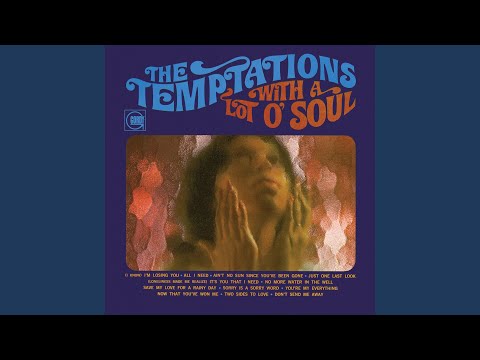
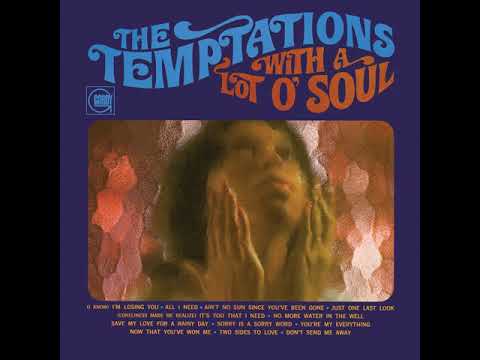
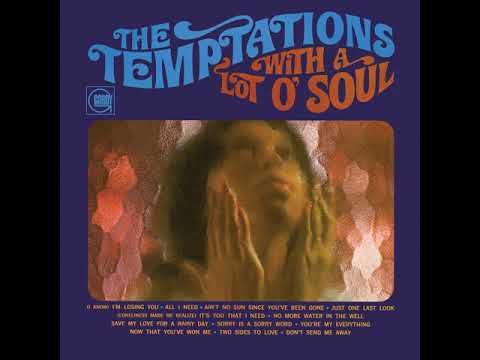
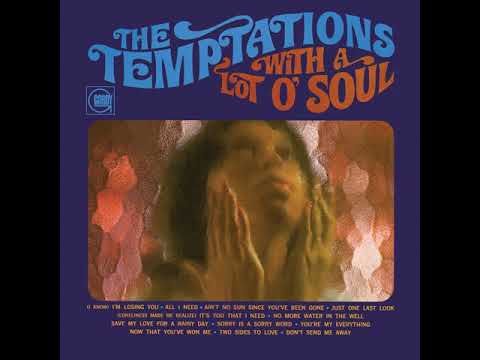
- Track #: Appears on The Temptations with a Lot o' Soul (album sequencing varies by edition)
- Language: English
- Album (if any): The Temptations with a Lot o' Soul
- Music style: Motown drive with apology-forward lyric focus
- Poetic meter: Accentual, speech-led phrasing with hook repetition
Frequently Asked Questions
- Is this number always in the Broadway production?
- No. It is documented in early musical-number lists, and a Playbill feature notes it was cut at one point to make room for another selection.
- Who wrote the original single?
- Frank Wilson, Eddie Holland, and R. Dean Taylor.
- Who produced the 1967 recording?
- Frank Wilson, in a notable one-off shift from the group's usual hitmaking pipeline of that era.
- What is the speaker asking for, dramatically?
- Forgiveness after wrongdoing, with the urgency of someone who knows the door is already closing.
- Why does the rhythm matter for stage performance?
- The groove lets blocking and choreography stay kinetic while the lead plays apology and fear, creating a useful split between body and confession.
- How is it different from a brag-heavy Temptations hit?
- The lyric is not conquest; it is repair work. The confidence is in the band, not in the speaker.
- Does it have a clear lead-and-response structure?
- Yes, which makes it easy to stage as a group frame around a single, exposed point of view.
- What is the cleanest acting choice on the hook?
- Sing it like a promise you are not sure you can keep, then let the backing voices sell the faith you are trying to borrow.
- Is it tied to a specific character in the musical?
- When used, it is commonly associated with the David Ruffin portrayal, aligning with the song's original lead-vocal identity.
Awards and Chart Positions
The 1967 single is a chart story with real lift: it reached the U.S. pop Top 10 and climbed near the summit on the R&B side. The stage show has its own set of milestones, but those belong to the production rather than this particular cut - still, the context matters when you are tracking how a catalog gets re-framed for Broadway.
| Item | Chart or award | Result | Notes |
|---|---|---|---|
| The Temptations - 1967 single | Billboard Hot 100 peak | No. 8 | Pop crossover |
| The Temptations - 1967 single | Billboard R&B peak | No. 2 | Strong genre-chart run |
| Ain't Too Proud (Broadway production) | Tony Awards (2019) | Winner - Best Choreography | Sergio Trujillo |
| Ain't Too Proud (cast album) | Grammy Awards (2020) | Nominated - Best Musical Theater Album | Production-level recognition |
How to Sing All I Need
For practice purposes, treat the tempo as about 98 BPM in 4/4, and expect many musicians to call the home key B-flat major in common references. Those are rehearsal anchors, not sacred text; singers and MDs transpose as needed.
- Tempo first: Set a metronome around 98 and speak the text in rhythm. The apology has to sit inside the pocket, not on top of it.
- Diction: Keep vowels forward and consonants quick, especially on phrases that start with confession - you want clarity without harshness.
- Breath map: Mark breaths before any long "need" phrases. The point is sustained intent, not a scramble for air.
- Dynamic plan: Start controlled, then let intensity rise only when the lyric forces the issue. If you peak too early, the plea has nowhere to go.
- Blend and handoffs: In an ensemble setting, decide where the group supports and where it steps back. This song reads best when the lead is briefly exposed.
- Style notes: Avoid belting like a rock anthem. Keep the tone firm, a little gritty if it is natural, and let the vulnerability come from phrasing.
- Mic choices: If amplified, lean in on admissions, pull back on emphatic words, and let the band carry the push.
- Pitfalls: Do not oversell remorse with extra ornament. The writing is direct - play it straight and let the groove do the persuading.
Additional Info
There is a small backstage comedy to this song's place in the show's ecosystem: it is the kind of number a performer can demolish nightly, which is not always the same thing as what the story needs. A Playbill feature quotes book writer Dominique Morisseau describing a version where Ephraim Sykes sang it, then explaining why it was removed to make room for another selection. That is the dramaturgy of a catalog musical in one anecdote: even a crowd-pleaser can lose its chair when the narrative seating chart changes.
And let us give the record its due. The single is also a snapshot of Motown's internal bench strength: Frank Wilson stepping in as producer, the group keeping its sonic identity, and David Ruffin delivering contrition without losing propulsion. In theater terms, it is an "act-and-sing" number hiding in plain sight.
Key Contributors
| Entity | Type | Relationship statement (S-V-O) |
|---|---|---|
| Frank Wilson | Person | Wilson co-wrote and produced the 1967 recording. |
| Eddie Holland | Person | Holland co-wrote the song as part of Motown's songwriting pipeline. |
| R. Dean Taylor | Person | Taylor co-wrote the song with Wilson and Holland. |
| David Ruffin | Person | Ruffin sang lead on the original Temptations single. |
| The Temptations | MusicGroup | The Temptations released the single on the Gordy label in 1967. |
| Gordy (Motown) | Organization | Gordy released the single and distributed it within the Motown system. |
| Dominique Morisseau | Person | Morisseau wrote the book for Ain't Too Proud and discussed song selection changes in press. |
| Ephraim Sykes | Person | Sykes portrayed David Ruffin on Broadway and was associated with the cut in at least one development account. |
| Sergio Trujillo | Person | Trujillo choreographed Ain't Too Proud and won the 2019 Tony Award for that work. |
Sources
Sources: Playbill, Ain't Too Proud (Wikipedia entry for musical numbers and awards), All I Need (The Temptations song) (Wikipedia entry for release and charts), Song metrics reference pages (Musicstax, SongBPM), YouTube official audio upload
Music video
Ain't Too Proud Lyrics: Song List
- Ain't Too Proud to Beg
- All I Need
- Baby Love
- Ball of Confusion (That's What the World is Today)
- Cloud Nine
- Come See About Me
- Don't Look Back
- For Once in My Life
- Get Ready
- Gloria
- I Can't Get Next To You
- I Could Never Love Another
- (I Know) I'm Losing You
- I Want A Love I Can See
- I Wish It Would Rain
- If You Don't Know Me By Now
- I’m Gonna Make You Love Me
- In the Still of the Night
- Just My Imagination (Running Away with Me)
- My Girl
- Papa Was a Rollin' Stone
- Runaway Child, Running Wild
- Shout
- Since I Lost My Baby
- Speedo
- Superstar (Remember How You Got Where You Are)
- The Way You Do the Things You Do
- War
- What Becomes of the Brokenhearted
- You Can’t Hurry Love
- You're My Everything