Lord of the Rings Lyrics – All Songs from the Musical
Lord of the Rings Lyrics: Song List
- Act 1
- Prologue ('Lasto I Lamath')
- Springle Ring
- The Road Goes On
- Saruman
- The Cat And The Moon
- Flight To The Ford
- The Song Of Hope
- Star Of Ea'rendil
- Lament For Moria
- Act 2
- The Golden Wood
- Lothlorien
- The Siege Of The City Of Kings
- Now And For Always
- Gollum/Sme'agol
- Act 3
- The Song Of Hope (Duet)
- Wonder
- The Final Battle
- City of Kings
- Epilogue (Farewells)
- Finale
About the "Lord of the Rings" Stage Show
Release date: 2008
"The Lord of the Rings" – The Musical Guide & Song Meanings
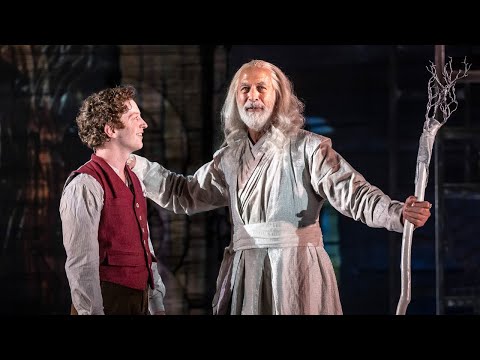
Review: what the lyrics have to do that the movies don’t
Turning Tolkien into a musical isn’t hard because it’s “epic.” It’s hard because the text is already musical in its own way: languages, poems, histories, rituals. The stage version’s lyrics have to perform triage. They must translate lore into impulse. They must tell you who wants what, right now, and then get out of the way before the plot stampedes to the next location.
Shaun McKenna and Matthew Warchus write lyrics that behave like captions with a heartbeat. When the show is moving, the words are blunt on purpose: roads, rings, warnings, vows. When it pauses, the lyric-writing leans into mythic shorthand, especially in Elvish-tinged numbers where sound matters as much as meaning. The best lyric choices are the ones that admit what a single-night adaptation can and cannot do: it cannot be exhaustive, so it aims to be pointed.
The score’s personality split is the feature. A.R. Rahman brings cinematic propulsion, Värttinä brings textured folk color, and Christopher Nightingale stitches it together with theatre logic. That mix creates a constant tension: is the show a campfire tale, a pop-driven quest, or a prayer? The answer shifts song to song, which is risky, but it also mirrors the story’s central conflict: the Ring keeps trying to rewrite everyone’s voice.
How it was made: why this score has three musical dialects
The original stage musical premiered in Toronto in 2006, then reworked for the West End, where it ran at Theatre Royal Drury Lane until July 2008. The authorship is unusually concentrated for a mega-title: book and lyrics by McKenna and Warchus, music credited to Rahman, Värttinä, and Nightingale. It is a collaboration that reads like a production strategy as much as an artistic one: combine a global composer, a folk band with a distinct sonic stamp, and a theatre music supervisor who can keep the seams from tearing.
There’s a paper trail of the creative team talking process early on, including a Playbill-hosted behind-the-scenes documentary segment where the composers and Nightingale discuss inspiration and writing style. That matters because the show’s “sound” is not one sound. It is a negotiated settlement between styles, with lyrics forced to be clear enough to survive the handoffs.
The more recent development story is almost a rebuttal to the original scale. In 2023, a smaller-staged reimagining titled “The Lord of the Rings: A Musical Tale” opened at the Watermill Theatre in Berkshire under director Paul Hart, leaning into actor-musicianship and close audience proximity. The material is recognizably the same lineage, but the method changes the listening experience: the words land differently when the people singing them are also the band and the crowd is practically in the Shire.
Key tracks & scenes: 8 lyrical pressure points
"Prologue (Lasto i Lamath)" (Company)
- The Scene:
- Before the quest has a map, it has a warning. The sound is ritualistic, built to make the theatre feel older than the audience. Light tends to isolate the Ring as an object with gravity, even when it is not yet named.
- Lyrical Meaning:
- This is the show choosing mood over exposition. The words are less about plot points and more about consent: the audience agrees to treat myth as present tense.
"The Road Goes On" (Bilbo, Frodo, Company)
- The Scene:
- Hobbiton’s warmth is staged as community choreography, often with instruments onstage and movement that reads like a village habit, not “dance break.”
- Lyrical Meaning:
- The lyric is comfort with a crack in it. It frames travel as destiny, which is exactly the lie that makes leaving easier to justify.
"The Cat and the Moon" (Company)
- The Scene:
- The Prancing Pony turns into a folk-party pressure cooker. One account of the staging describes a lively crowd, then a sudden theatrical trick: Frodo puts on the Ring and becomes isolated in a ray of light while everyone else, in darkness, can’t find him.
- Lyrical Meaning:
- The lyric is deceptively cheerful, which is the point. It makes the world feel safe enough that the first Ring moment registers as a violation, not a cool effect.
"Flight to the Ford" (Company)
- The Scene:
- Momentum song. The words are designed like a chase edit: short phrases, repeating cues, and vocals that feel like feet hitting ground.
- Lyrical Meaning:
- This number teaches the musical’s survival tactic: compress plot into rhythm. The lyric does not describe every threat; it makes panic singable.
"Lament for Moria" (Company)
- The Scene:
- After Moria’s loss, the stage language slows. The music shifts toward mourning, and the lighting tends to flatten the space into something like a memorial.
- Lyrical Meaning:
- The show can’t afford a long grief sequence, so it writes one concentrated elegy. The lyric’s job is to keep the dead from becoming “plot cost.”
"The Golden Wood" / "Lothlórien" (Galadriel, Company)
- The Scene:
- Arrival at the Elvish sanctuary is staged as a change in physics: bodies float, voices blend, and the palette turns toward gold and hush. In the newer touring production, critics note standout vocal leads for Galadriel and a band-like ensemble that shares instruments across scenes.
- Lyrical Meaning:
- The lyrics here lean into incantation. They are meant to sound like memory itself: seductive, polished, and slightly dangerous, because beauty is also a kind of power in this story.
"Gollum/Sméagol" (Gollum)
- The Scene:
- A solo that behaves like an argument with a mirror. The staging often makes the body do the split: crawling, snapping, turning, as if the voice is yanking the spine around.
- Lyrical Meaning:
- This is where the Ring’s psychological thesis gets a melody. The lyric externalizes addiction as dialogue, so the audience hears corruption as a beat-by-beat choice, not a single fall.
"The Song of Hope (Duet)" (Frodo, Sam)
- The Scene:
- Late in the journey, when spectacle has run out of road and all that’s left is two hobbits against exhaustion. A 2025 review highlights a friendship duet that triggers an audible emotional response in the house as Sam carries Frodo onward.
- Lyrical Meaning:
- The lyric finally refuses grandeur. Hope becomes practical: carry, wait, breathe, keep going. It is the show’s most honest moral statement because it is not dressed up as prophecy.
Live updates (2025–2026)
Information current as of January 28, 2026.
The headline in this era is the reimagined version, “The Lord of the Rings: A Musical Tale,” which grew out of the Watermill Theatre’s 2023 staging and then went international. Sydney hosted a major season at the State Theatre in January and early February 2025, with ticketing listings documenting the run and runtime. The Australian producing page also states the 2025 Australian tour has closed and notes an Asian premiere in Singapore.
As for 2026: there is no clearly announced, verified public schedule for a new tour leg on the official Australian producer page at the time of writing. If you see “Lord of the Rings in Concert” tour dates for 2026, note that those are film-with-live-orchestra events, not this stage musical. They share a title ecosystem and an audience, but they are different products.
Notes & trivia
- Creators: book and lyrics by Shaun McKenna and Matthew Warchus; music by A.R. Rahman, Värttinä, and Christopher Nightingale.
- West End run: the London production at Theatre Royal Drury Lane closed in July 2008 after hundreds of performances, and it received multiple major award nominations including Oliviers. Toronto won seven Dora Awards, including Outstanding New Musical. Watermill revival won Best Regional Production in 2024.
- The London original cast recording was released in early 2008 and presents a curated set of numbers rather than a full-through sung document.
- Key album track titles include “The Road Goes On,” “The Cat and the Moon,” “Lament for Moria,” “The Golden Wood,” “Lothlórien,” “Now and for Always,” and “Gollum/Sméagol.”
- The modern “Musical Tale” staging emphasizes actor-musicianship, with the ensemble sharing instruments while also playing multiple roles.
- A 2006 Time feature framed the Toronto production as a serious attempt to translate the saga to stage in one evening, praising its breadth and melancholy.
Reception: the love, the hate, the “wait, what?”
The show’s critical history is basically two arguments happening at once. One side judges it as adaptation: is the narrative intelligible, and does it preserve the spirit? The other side judges it as theatre craft: can stage language, design, and performance create Middle-earth without turning it into a theme park. The original mega-production invited both reactions, loudly. The newer “Musical Tale” iteration tends to earn kinder notices for its resourcefulness and its willingness to treat compression as a concept, not a compromise.
“A robust, serious, quite faithful transposition of the saga.”
“Hugely impressed by the manner of Matthew Warchus’s production.”
“Hard-working and joyful ensemble cast makes the daffy and daggy edges … easier to bear.”
Quick facts: show + album metadata
- Title: The Lord of the Rings
- Year: West End production era concludes 2008; London cast recording released 2008
- Type: Stage musical adaptation of J.R.R. Tolkien’s novel
- Book & Lyrics: Shaun McKenna, Matthew Warchus
- Music: A.R. Rahman; Värttinä; Christopher Nightingale
- Premiere: Toronto (Princess of Wales Theatre, 2006 shown in production histories)
- West End venue: Theatre Royal Drury Lane
- London cast album: “The Lord of the Rings (London Original Cast Recording)” released Feb 2008; 18-number selection
- Selected notable placements: “The Cat and the Moon” (Prancing Pony sequence), “Lament for Moria” (post-Moria mourning), “The Golden Wood/Lothlórien” (Galadriel’s realm), “Gollum/Sméagol” (split-self solo), late “Song of Hope” duet (Frodo/Sam)
- Current lineage: “The Lord of the Rings: A Musical Tale” (Watermill 2023-origin staging; international seasons including Australia 2025)
Frequently asked questions
- Can you provide the full lyrics here?
- No. Full lyric text is copyrighted. This guide focuses on song meaning, placement, and how the writing functions dramatically.
- Why do the lyrics sometimes feel simple?
- Because the show is doing compression math. When a musical has to sprint across continents and cultures, clarity beats ornament most of the time. The more poetic writing is saved for ritual and temptation moments.
- What’s the difference between the 2006–2008 mega-production and “A Musical Tale”?
- They share the underlying authorship and musical DNA, but “A Musical Tale” is staged for smaller-scale storytelling, often with actor-musicians and closer audience proximity, which changes how the words land.
- Is the 2008 cast recording a complete document of the score?
- No. It is a curated album with selected numbers. It gives you the show’s headline musical ideas, not every transition and underscore passage.
- Is “Lord of the Rings in Concert” the same thing?
- No. Concert events typically screen the film with a live orchestra performing the film score. The stage musical is a separate work with its own book, lyrics, and composers.
Key contributors
| Name | Role | Contribution |
|---|---|---|
| Shaun McKenna | Book & lyrics | Built the adaptation’s lyric vocabulary: clear plot propulsion plus ritual-inflected set pieces. |
| Matthew Warchus | Book & lyrics; original director | Shaped narrative compression and staging grammar, including audience-contact storytelling strategies. |
| A.R. Rahman | Composer | Supplied cinematic drive and melodic signatures within a theatre framework. |
| Värttinä | Composers / folk ensemble | Added folk timbres and vocal textures that help the show sound unlike standard Broadway-pop. |
| Christopher Nightingale | Composer / musical supervisor | Integrated musical languages and ensured the score functions as theatre storytelling. |
| Paul Hart | Director (2023–2025 “Musical Tale” staging) | Reconceived the staging with actor-musicianship and close-range theatricality. |
Sources: Time, The Guardian, Playbill, Wikipedia, Shaun McKenna official site, City of Sydney, GWB Entertainment, TodayTix, Chicago Shakespeare Theater, collector track listing notes.