It's Only Life Lyrics – All Songs from the Musical
It's Only Life Lyrics: Song List
- The Artist at 40
- Unexpressed
- Painting My Kitchen
- Sweet Dreams
- Playbill
- That Smile
- Love Quiz
- A Contact High
- What You Need
-
When You're Here
- It Feels Like Home
-
A Powerful Man
- I'm Not Waiting/Progression
- It's Only Life
- Love Will Find You in Its Time
- If I Ever Say I'm Over You
- This Moment
-
On My Bedside Table
-
I've Learned to Let Things Go
- Taking the Wheel
- Grateful
-
A Glimpse of the Weave
About the "It's Only Life" Stage Show
Some of those, whose names are listed in the Synopsis section, are not only performers of the songs on this collection of 23, but also the authors (co-authors). This is a short cycle of musical revues, written under the direction of Daisy Prince, so called It's Only Life, generalize ordinary emotional manifestations of people. They gathered under one roof songs from ones, who have achieved some success, but they are a cohort of not very famous actors. They don’t have bright success, which could be seen with the naked eye. Most of them on their page on Wikipedia does not even have a photo, that is, they are not public figures, although Billy Porter played in dozens of films and two more musicals, and his number of awards and nominations is about the same as all the other actors from this collection have combined. Maybe he has pages in the social networks, but they are not advertised (the impression that he wants to become even more covered with negligence than Keanu Reeves).Release date: 2006
It’s Only Life – The Musical Guide & Song Meanings
Review: what this revue is really doing
How do you review a musical where nobody has a name, nobody “wants” anything in Scene 1, and the big plot twist is emotional maturity? “It’s Only Life” is John Bucchino’s answer to that problem: a song cycle disguised as a revue, built as an internal progression rather than a story. It can feel like eavesdropping on five people mid-thought, mid-choice, mid-regret. When it works, it lands with the quiet force of someone finally saying the truthful sentence out loud.
Bucchino’s lyrical engine is the friction between desire and self-protection. The show’s central tension is not romance versus loneliness, but fear versus love. In practice, that means the early numbers tend to circle insecurity, performance, and comparison, while the later ones stop negotiating and start committing. If you want a “plot,” listen for the vocabulary to change: from hedging to claiming, from bitterness to specificity.
Musically, this is piano-driven theatre writing with cabaret DNA: harmonically alert, rhythmically conversational, and allergic to easy resolutions. The melodies often refuse to “park” on the obvious note. That restlessness is character. The score sounds like modern city life: busy mind, open heart, bruised optimism.
Practical listening tip: do not treat this like a playlist. The order matters. Those “Transition” interludes are not filler; they function like edits in a film, turning the revue into one long argument with itself. If you are reading along, use an official score or licensed vocal selections rather than random lyric scrapes. Bucchino’s word choices are precise, and the punctuation is part of the music.
How it was made
The show was co-conceived with director Daisy Prince, developed through a workshop pathway, then presented in a higher-profile concert form at Lincoln Center’s American Songbook series before being captured on album. That trajectory matters: “It’s Only Life” is theatre writing that grew up in cabaret rooms, where a lyric has to land without scenery doing any favors.
Bucchino has described the piece bluntly: no characters, no story, but an “internal emotional progression” structured as a spiritual arc from fear toward love. That mission statement is the staging blueprint. You can mount it with almost nothing, but you cannot mount it without intention.
One reason the writing feels so singer-forward is that Bucchino has long lived in the world of performers interpreting his songs. A Lincoln Center concert version featured major Broadway voices, with the composer at the piano. The album followed immediately after, produced by PS Classics with Tommy Krasker at the controls. The result is a recording that plays like a curated evening at a smart cabaret, but built with theatre architecture.
Key tracks & scenes
“The Artist at 40” (Company)
- The Scene:
- Five performers, minimal physical business. Bright, clean stage light. The group sounds like it is trying to laugh off a deadline that is not funny.
- Lyrical Meaning:
- A prologue about time, comparison, and the private panic behind public ambition. It announces the show’s favorite subject: what we tell ourselves when we are alone with our choices.
“Unexpressed” (Solo)
- The Scene:
- A single performer, tighter spotlight. The room feels smaller. The band is basically the pianist and the performer’s breathing.
- Lyrical Meaning:
- A study in restraint: the song’s ache comes from what is withheld, not what is confessed. It crystallizes Bucchino’s obsession with the cost of silence.
“Sweet Dreams” (Solo)
- The Scene:
- Storytelling mode. Softer side light, like a late-night apartment memory. The tempo gives the singer room to place each detail carefully.
- Lyrical Meaning:
- One of the revue’s purest narrative songs: a brief connection, then life moving on. The lyric’s power is its specificity, which makes the ending feel earned rather than sentimental.
“What You Need” (Solo)
- The Scene:
- Sharper lighting, quicker transitions. The performer plays confidence that might be armor. The song snaps into focus like a decision.
- Lyrical Meaning:
- A tough-love anthem that can read as empowerment or avoidance, depending on how it is performed. The best interpretations let both readings coexist.
“I’m Not Waiting” (Company)
- The Scene:
- The group re-forms. Forward-facing staging. A pulse of light builds across the ensemble as the decision becomes communal.
- Lyrical Meaning:
- The pivot from analysis to action. In the show’s emotional architecture, this is the hinge: fear talks; resolve moves.
“Love Will Find You In Its Time” (Duo)
- The Scene:
- Two voices, shared space, calmer light. The room finally stops spinning. The tempo feels like breathing in sync.
- Lyrical Meaning:
- Not a fairy-tale promise, more a reorientation. The lyric’s wisdom is that it refuses to bully the listener with certainty. It offers patience with a backbone.
“On My Bedside Table” (Solo)
- The Scene:
- Comedic release, quick lighting cues. The performer treats the stage like a confessional with punchlines, inventorying emotional clutter like props.
- Lyrical Meaning:
- A break-up song that uses humor as clarity rather than deflection. It is funny because it is accurate, and accurate because it is specific.
“Grateful” (Solo)
- The Scene:
- Endgame simplicity. Warmer light. The singer does less and means more. The room feels like a conclusion without a bow tied on it.
- Lyrical Meaning:
- The show’s thesis in one word: gratitude as an adult emotion, hard-won and non-performative. It completes the arc from fear to love by changing the narrator’s posture toward life.
Live updates (2025-2026)
“It’s Only Life” remains very much alive as a licensable title through Concord Theatricals, which is a big reason you keep seeing it pop up in smart, small-footprint productions: five singers, piano, and emotional accuracy.
Recent and upcoming examples signal the show’s current lane: educational programs and intimate professional houses that want sophisticated contemporary writing without a giant physical production. In Florida, The Sharon’s Studio Theatre listed performances at $25 (with $15 previews) and content advisories, underscoring how frequently the piece is programmed like premium cabaret in a theatre frame. Palm Beach Dramaworks also published a playbill for “It’s Only Life” dated January 9-11, 2026, complete with a full musical-numbers list and production team credits. And a Kansas City run is advertised for August 7-30, 2026 at Quality Hill Playhouse.
What has changed since 2006 is not the material, but the context: Bucchino’s specific brand of self-scrutiny now reads less like navel-gazing and more like survival skill. The show’s emotional literacy, once considered niche, has become an audience expectation.
Notes & trivia
- The official Concord listing frames the show as 2 women and 3 men, about two hours, and orchestrated for piano only in its licensed materials.
- The musical-number sequence includes multiple “Transition” interludes plus an instrumental “Progression,” which function as connective tissue rather than stand-alone songs.
- The piece was co-conceived with director Daisy Prince and developed through a workshop path before the Lincoln Center American Songbook concert performances.
- Lincoln Center’s American Songbook presentation of “It’s Only Life: The Songs of John Bucchino” was scheduled for January 27, 2006 with two showtimes (8:30pm and 10:30pm) at the Allen Room.
- PS Classics recorded the revue for release on CD, producing an album anchored by Broadway performers and the composer at the piano.
- The Rubicon Theatre run on the West Coast helped cement the title’s reputation, and the show won the 2008 Ovation Award for Book/Lyrics/Music for an Original Musical.
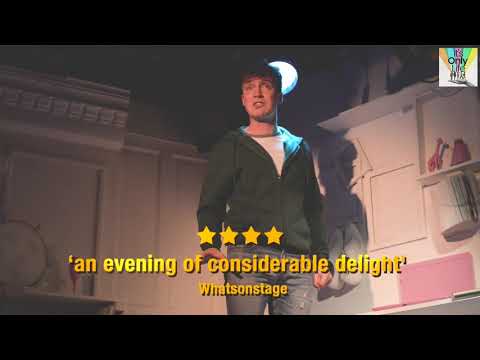
- A 2018 London staging highlighted how adaptable the piece is visually: one flexible set can suggest an apartment, a playroom, and everything in between with fast lighting shifts.
Reception
Critical response tends to split along a simple line: if you like contemporary theatre writing that thinks in paragraphs, you will probably admire it. If you need plot, you may feel stranded. But even skeptics usually concede the craft.
“These songs are well-crafted, witty and heartfelt… His lyrics are incisive… and the tunes sometimes go in directions one may not expect.”
“Flowing, finely made piano ballads… describe an urban life in which relationships come and go… with high expectations, high anxiety and open hearts.”
“There are no characters, and there is no story… [but] an internal emotional progression… from… fear to… love.”
Quick facts
- Title: It’s Only Life
- Year (album): 2006 (release date: May 30, 2006)
- Type: Musical revue / song cycle
- Music and lyrics: John Bucchino
- Conceived by: Daisy Prince and John Bucchino
- Development: Workshop path, including a Summer Play Festival workshop; later American Songbook concert at Lincoln Center (January 27, 2006)
- Label (cast album): PS Classics
- Album availability: Major streaming platforms and digital stores list the recording under the revue title
- Orchestra/orchestration notes: Licensed materials list piano-only orchestration; a more fully realized Rubicon version was orchestrated for a small band
- Selected notable placements: “Grateful,” “Sweet Dreams,” and “It Feels Like Home” are repeatedly cited as signature numbers in coverage of the revue
Frequently asked questions
- Is “It’s Only Life” a book musical with characters?
- No. It’s built as a musical revue or song cycle. Productions often treat the five singers as shifting points of view rather than fixed roles.
- Who wrote the lyrics?
- John Bucchino wrote both music and lyrics, and co-conceived the revue with director Daisy Prince.
- What’s the best way to follow the lyrics without running into inaccurate copies?
- Use an official score, licensed libretto/perusal, or published vocal selections from authorized publishers and licensing portals. That gives you correct words and cuts.
- Is there an “official” song order?
- Yes. Licensing and playbill materials list a specific musical-number sequence including multiple “Transition” sections and an instrumental “Progression.”
- Was the album recorded live?
- It was recorded as a cast album following the Lincoln Center concert presentation, with PS Classics producing and releasing the recording.
- Is the show being performed in 2026?
- Yes. Examples advertised or documented include dates in January 2026 (Palm Beach Dramaworks playbill) and an August 2026 run listed by Quality Hill Playhouse.
Key contributors
| Name | Role | Contribution |
|---|---|---|
| John Bucchino | Composer-lyricist | Wrote music and lyrics; performed at the piano for major presentations; central songwriting voice of the revue. |
| Daisy Prince | Conceiver / director | Co-conceived the revue and directed key versions, shaping the emotional sequence and theatrical framing. |
| Tommy Krasker | Producer (album) | Produced the PS Classics recording referenced in early coverage of the album’s creation. |
| PS Classics | Record label | Recorded and released the cast album following the Lincoln Center performances. |
| Brooks Ashmanskas, Andrea Burns, Gavin Creel, Jessica Molaskey, Billy Porter | Featured performers (Lincoln Center / album) | Headlined the American Songbook concert version and appear as the marquee voices associated with the recording. |
| Concord Theatricals | Licensing / materials | Current licensing home listing show specs, musical numbers, and performance materials. |
Sources: Concord Theatricals, Playbill, TheaterMania, The Santa Barbara Independent, What’s On Stage, The Sharon (Studio Theatre Tierra del Sol), Palm Beach Dramaworks playbill PDF, Broadway.com (Ovation Awards), Apple Music, AllMusic, YouTube.