Harmony Lyrics – All Songs from the Musical
Harmony Lyrics: Song List
About the "Harmony" Stage Show
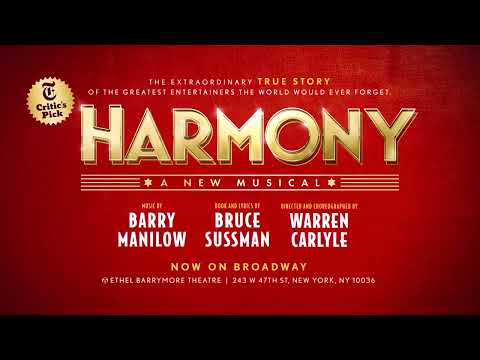
Six remarkably talented young men form a singing group who become international sensations: The Comedian Harmonists. They sell millions of records, star in major motion pictures, and play the biggest theaters around the world. By 1935, they were never heard from again. What happened? That’s the extraordinary true story of HARMONY.Release date: 2023
"Harmony" – The Musical Guide & Song Meanings
Review: what the lyrics are really doing
How do you write “funny boy-band harmonies” and the machinery of political hate in the same musical without either side feeling fake? “Harmony” tries a specific answer: it makes the words carry the warning while the arrangements carry the seduction. Bruce Sussman’s lyric-writing keeps circling one idea, again and again: the cost of staying pleasant when history stops being polite.
That tension is baked into the opening premise. The story is narrated by an older Rabbi, so nearly every lyric is shaded by after-knowledge: even celebration numbers feel like a photograph that’s already burning at the edges. Critics who liked the score often pointed to how the show’s musical language gets sharper as Act II closes in. A cast-album reviewer said the later songs hold many of the score’s most rewarding ideas, naming “Where You Go” and “Stars in the Night” as standout examples.
Musically, Manilow’s approach is an intentional collage. He and Sussman have been clear that this is not a jukebox night, and the songwriting is built to switch styles the way a performing act would: nightclub patter, big-band sheen, novelty-song bite, then, eventually, spare lament. That variety matters because it mirrors the Harmonists’ onstage “mask.” The lyrics keep asking: when your job is to charm a room, what happens when the room starts demanding a target?
How it was made
The origin story of “Harmony” is unusually concrete. Sussman traced the spark to encountering a documentary about the Comedian Harmonists, then urgently calling Manilow, convinced he’d found the subject that could hold both comedy craft and moral stakes. The project premiered in the late 1990s and spent decades trying to land on Broadway, with a major Broadway attempt collapsing for financial reasons before later versions found new paths through regional runs and a New York staging at the National Yiddish Theatre Folksbiene.
One revealing example of how the lyric-writing evolved sits inside “Come to the Fatherland!” Sussman has described it as one of the earliest pieces they wrote, and he’s talked about chasing a specific performance concept for the number: the Harmonists as menacing marionettes. In the same reporting, Manilow explains the score’s central rule: the Harmonists did not have a single “sound,” so the musical shouldn’t either. That is an artistic philosophy, but it is also production strategy: each song can be built as a tight theatrical unit, with lyric, vocal blend, and staging idea arriving as one package.
Viewer tip for the cast album: if you want a plot-forward listen, start at Track 2 (“Harmony”) and keep going in order. If you want the show’s emotional argument first, jump straight to “Come to the Fatherland!”, “Threnody,” then “Stars in the Night,” and circle back to hear how the earlier jokes set up the later guilt.
Key tracks & scenes
"Harmony" (Rabbi & the Group)
- The Scene:
- We begin inside memory. The older Rabbi frames the tale, and the Harmonists appear as if conjured: a concert tableau that keeps slipping into auditions and back again, like a record needle catching on a groove.
- Lyrical Meaning:
- The title word is treated as both technique and temptation. “Harmony” becomes a promise you can live inside, until the outside world makes that refuge feel like complicity.
"And What Do You See?" (Mary)
- The Scene:
- In Mary’s workroom, the world is visible through glass. She watches the street tensions from the safe square of a shop window, the light feeling domestic while the atmosphere outside turns brittle.
- Lyrical Meaning:
- This is the score’s early alarm bell. The lyric is built as a question that can’t be answered with romance alone: how do you plan a life when the public air is changing?
"This Is Our Time" (Young Rabbi, Mary, Ruth, Harry, the Group & ralliers)
- The Scene:
- A political rally sequence where costumes and movement do argumentative work: red accents, raised voices, bodies tightening into factions. The Harmonists are caught between stage careers and street certainty.
- Lyrical Meaning:
- The title phrase is a trap. It can mean hope, revolution, or self-delusion. Sussman writes the ensemble like a chorus of competing definitions, so the lyric itself becomes conflict.
"How Can I Serve You, Madame?" (Lesh & the Group)
- The Scene:
- A nightclub performance built on crisis improvisation: the group’s planned polish is wrecked, and physical comedy takes over. It is the moment the Harmonists learn that survival can be an act.
- Lyrical Meaning:
- The lyric is hospitality as performance, service as disguise. It’s funny on the surface, but it also teaches the show’s darker lesson: you can win a room while losing control of what you’re really doing there.
"Home" (Bobby, the Group & Rabbi)
- The Scene:
- A tour montage that includes the glamour of an international rise and the unease of returning to Germany. A Carnegie Hall milestone hangs in the air while politics tightens offstage.
- Lyrical Meaning:
- “Home” is treated as loyalty, then as a wager. The lyric asks whether belonging is a place, a language, or the crowd that applauds you. The show keeps proving that all three can betray you.
"Come to the Fatherland!" (the Group)
- The Scene:
- Satire with teeth: the Harmonists become puppet-like figures, tethered to imposing red strings, moving in sharp, controlled beats. Laughter lands, then curdles.
- Lyrical Meaning:
- This is the score’s most explicit collision of joke-form and threat-content. The lyric’s rhyme and pep function as a mask, and the mask is the horror: propaganda is catchy because it borrows the tools of entertainment.
"Threnody" (Rabbi)
- The Scene:
- Near the end, the story narrows to one body onstage. The older Rabbi confronts what he did not do, what he did not say, and what he can never revise. The light feels stripped of decoration.
- Lyrical Meaning:
- A threnody is a song of mourning, and the lyric refuses comfort. It frames guilt as a kind of lifelong accompaniment: always present, always in your ear, even when the band stops.
"Stars in the Night" (the Group)
- The Scene:
- The finale returns to the older Rabbi’s mission: to keep names alive. The staging often plays like a memorial, voices blending into a last act of collective witness.
- Lyrical Meaning:
- The lyric makes remembrance feel physical. “Stars” become both beauty and distance: the people you loved are above you now, and the only bridge left is the story you can still tell.
Live updates (2025/2026)
Information current as of January 27, 2026. “Harmony” played its final Broadway performance on February 4, 2024. The cast recording remains widely available on streaming, with the digital release dated August 31, 2023, and later CD availability reported in January 2024. Licensing has moved forward: in June 2025, multiple theatre-industry outlets reported that “Harmony” became available for professional, community, and international productions, with the first announced licensed staging scheduled at Hale Centre Theatre (Sandy, Utah) from May 25 through August 1, 2026. A Playbill licensing roundup in January 2026 also noted that “Harmony” is now in the licensing ecosystem, reflecting a shift from Broadway run to afterlife in regional and community theatres.
Notes & trivia
- Myth check: “Harmony” is not a Barry Manilow hits compilation. Reporting around the Broadway opening emphasized it as an original score written for the stage.
- IBDB lists the Broadway run at the Ethel Barrymore Theatre from November 13, 2023 through February 4, 2024, with previews beginning October 18, 2023.
- IBDB’s scene-by-scene song headings include “The Auditions” and “Concert at Carnegie Hall,” which is a useful roadmap for following the album as story.
- “Come to the Fatherland!” has been described by Sussman as an early-written number, anchored by the concept of the Harmonists as “demonic marionettes,” and shaped by listening to a real Harmonists “puppet show” style piece.
- A Guardian review highlighted the production’s “black-box-meets-hall-of-mirrors” design, emphasizing how the staging flips quickly between spaces (nightclub, alley, train).
- Time Out’s review quotes the show’s opening lyric idea as both charm and warning: harmony as trance, dancing while others march.
- Industry reporting in June 2025 tied the show’s next chapter to licensing, with Hale Centre Theatre named as the first announced licensed production for 2026.
Reception
“Harmony” has attracted a split critical conversation: praise for vocal blend, craft, and late-show emotional force, alongside criticism about tonal balance and how quickly the story moves through its early triumphs. Reading reviews side by side, a pattern emerges: many writers single out Act II for clarity and weight, and cite the staging’s visual shorthand (mirrors, puppetry) as the production’s way of making history feel present.
With “Harmony,” the show “doesn’t truly begin to sing until its second act.”
The set is described as a “black-box-meets-hall-of-mirrors” space that can become a nightclub, alleyway, or train.
“When you’re in harmony, you’re in a trance,” the opening number sings, framing escapism as both pleasure and risk.
Quick facts
- Title: Harmony (also billed as “Harmony: A New Musical”)
- Broadway year: 2023–2024 (opened Nov 13, 2023; closed Feb 4, 2024)
- Type: Original book musical (not a jukebox score)
- Music: Barry Manilow
- Book & lyrics: Bruce Sussman
- Director & choreographer: Warren Carlyle
- Selected notable placements (song-to-story map): “The Auditions,” “Concert at Carnegie Hall,” and other headings are listed in IBDB’s song breakdown for the Broadway production.
- Cast album: “Harmony (The Cast Recording)” (digital date listed as Aug 31, 2023; 16 tracks)
- Label/rights notes (album): Apple Music lists ? 2023 Stiletto Entertainment under exclusive license to Sh-K-Boom Records LLC (Warner Music Group); industry reporting names Ghostlight Records as the releasing label for the cast album.
- Availability: Streaming platforms plus physical CD availability reported in Jan 2024.
- 2026 stage afterlife: Licensing announced; first announced licensed production: Hale Centre Theatre (Sandy, Utah), May 25–Aug 1, 2026.
Frequently asked questions
- Is “Harmony” based on a true story?
- Yes. The musical dramatizes the Comedian Harmonists, a real German vocal group whose career collided with Nazi rule and antisemitic persecution.
- Is it a Barry Manilow jukebox musical?
- No. Major coverage around the Broadway run describes it as an original score written for the show, rather than a compilation of Manilow hits.
- What is the cast recording called, and when did it come out?
- The digital album is listed as “Harmony (The Cast Recording)” with a release date of August 31, 2023 on Apple Music; CD availability was reported in January 2024.
- Why is there an older Rabbi character?
- The older Rabbi functions as narrator and conscience. Dramatically, it turns the show into an act of testimony: we are watching a man try to keep a vanished history from disappearing again.
- What song should I listen to first if I only have time for one?
- If you want the show’s moral thesis in miniature, choose “Come to the Fatherland!” for satire, or “Threnody” for grief. If you want the final emotional landing, choose “Stars in the Night.”
- Can theatres license “Harmony” now?
- Yes. Trade reporting in 2025–2026 confirms the show is available for licensing, with early licensed productions already announced for 2026.
Key contributors
| Name | Role | Contribution |
|---|---|---|
| Barry Manilow | Composer; arranger | Wrote the original score and helped shape the show’s style-hopping musical identity. |
| Bruce Sussman | Book & lyricist | Built the narrative frame (memory/testimony) and wrote lyrics that pivot from comedy to warning. |
| Warren Carlyle | Director & choreographer | Staged the Broadway version and sculpted numbers as theatrical set-pieces. |
| Beowulf Boritt | Scenic designer | Designed the flexible space frequently described as mirror-like and transformable across locations. |
| Linda Cho & Ricky Lurie | Costume designers | Created period silhouettes that can pivot quickly between club glamour and political uniformity. |
| Chip Zien | Original Broadway cast (Rabbi) | Anchored the narration and the late-show reckoning numbers on Broadway. |
Sources: IBDB (Internet Broadway Database), Harmony official site, Playbill, Entertainment Weekly, Time Out New York, The Guardian, The New Yorker, Vanity Fair, Broadway News, New York Theatre Guide, Musical Theatre Review, Apple Music.