Guys and Dolls Lyrics – All Songs from the Musical
Guys and Dolls Lyrics: Song List
- Act 1
- Overture
- Runyonland
- Fugue for the Tinhorns
- Follow the Fold
- The Oldest Established
- I'll Know
- Bushel and a Peck
- Adelaide's Lament
- Guys and Dolls
- Havana
- If I Were a Bell
- My Time of Day
- I've Never Been in Love Before
- Act 2
- Entr'acte; Take Back Your Mink
- Adelaide's Lament (Reprise)
- More I Cannot Wish You
- Crapshooters' Dance
- Luck Be a Lady
- Sue Me
- Sit Down, You're Rockin' the Boat
- Marry the Man Today
- Finale
About the "Guys and Dolls" Stage Show
Release date: 1950
"Guys and Dolls" – The Musical Guide & Song Meanings
Review: what the lyrics are really doing
Why does Guys and Dolls still feel modern when its morality is so mid-century? Because Frank Loesser writes character before he writes plot. The lyrics do not simply decorate the action, they explain how these people think. Gamblers speak in clipped bravado that hides superstition. Mission workers speak in certainty that sometimes masks loneliness. Then, in the best numbers, those masks slip for a second and the whole show tilts toward tenderness.
Loesser’s trick is dialect. The musical borrows Damon Runyon’s street poetry, where slang and formal phrasing rub against each other like dice in a cup. That friction becomes comedy, but it also becomes emotional truth. Sky’s love songs are not just romantic, they are precision instruments: he is a man who treats risk like a religion, then finds himself afraid of winning. Adelaide’s material is even sharper. Her lyric voice is funny because it is self-aware, and brutal because she keeps noticing what she keeps tolerating.
When the score wants to move the plot, it goes brassy and public, a crowd you can smell. When it wants to reveal a secret, it becomes conversational, almost spoken in melody. That is why the show can pivot from “Fugue for Tinhorns” to “Adelaide’s Lament” without feeling like a compilation album. The lyric craft is the glue.
How it was made
The origin story is unusually instructive for lyric readers. In the early adaptation process, the book kept stalling, and Loesser started writing songs anyway, pulled from character rather than completed scenes. By the time Abe Burrows arrived to rework the libretto, much of the score already existed, which meant the book had to bend around the songs instead of the other way around. That pressure helped create a rare kind of integration: the lyrics sound like thought, not like “number time.”
The Damon Runyon source material also mattered in a practical way. The producers optioned Runyon’s world, and the show built its plot largely from “The Idyll of Miss Sarah Brown,” while raiding other stories for characters and secondary engines. Even “Fugue for Tinhorns,” which once seemed like a stray piece of cleverness, became essential once it was placed up front as a tone-setter for Runyonland’s rhythm.
Then there is the album history. The original cast recording was cut quickly, early in the run, and became a pop-chart event. That matters because it turned Loesser’s lyric wit into something people absorbed at home, not only in theatres. Guys and Dolls did not just live onstage. It lived in living rooms.
Key tracks and scenes
"Fugue for Tinhorns" (Benny, Nicely-Nicely, Rusty)
- The Scene:
- Act I begins in a crowded Times Square street picture. Neon energy. People crossing each other’s paths like they are late for different lives. Three gamblers huddle over the scratch sheet, half-singing, half-arguing, as if music is the most natural way to place a bet.
- Lyrical Meaning:
- It is a mission statement for the show’s language. The lyric makes expertise sound like gossip, then turns that gossip into counterpoint. You learn the men’s religion in under two minutes: odds, names, ritual phrases, and the need to sound certain even when you are guessing.
"Follow the Fold" (Sarah and Mission Band)
- The Scene:
- Same street, different temperature. The Mission Band enters with hymn-like resolve, a bright wash of light against the gamblers’ shadows. Sarah preaches to strangers who treat salvation like a sales pitch.
- Lyrical Meaning:
- The lyric is not simply pious. It frames Sarah as someone who believes order can be performed into existence. The show will test that belief, and it starts by putting her voice in direct competition with the street’s noise.
"Adelaide's Lament" (Adelaide)
- The Scene:
- Backstage or dressing-room intimacy, depending on the production. A showgirl alone with a medical book, a handkerchief, and a cold that feels like a punchline until it does not. The lighting tends to tighten, as if the room is finally telling the truth.
- Lyrical Meaning:
- The song weaponizes explanation. Adelaide reads about psychosomatic symptoms, and the lyric lets her realize she has been living inside her own compromise. The comedy is real, but it is comedy with consequences. Loesser gives her jokes that double as diagnoses.
"I'll Know" (Sarah and Sky)
- The Scene:
- Inside the Save-a-Soul Mission. A quiet pocket of air after the street scenes. Sky turns charm into strategy, then runs into something he cannot fully control: Sarah’s clarity about what she wants.
- Lyrical Meaning:
- This lyric is courtship as criteria. Both characters describe “the right one” like they are drafting a specification sheet. It is romantic, but it is also defensive. They are promising they will not be fooled, and that promise tells you how often they have been.
"If I Were a Bell" (Sarah)
- The Scene:
- Havana heat. Music everywhere, too loud, too close. Sarah thinks she is ordering something harmless, then the night changes her chemistry. After a brawl and a getaway, she breaks into song like a person surprised by her own happiness.
- Lyrical Meaning:
- It is the show’s most joyful loss of control. The lyric captures a woman who is used to discipline discovering pure impulse. It is not only love. It is self-forgiveness arriving in real time.
"Luck Be a Lady Tonight" (Sky)
- The Scene:
- Down in the sewer crap game. Hard angles, harsh light, and a crowd that smells trouble. Sky steps forward before the roll, suddenly less sure than he pretends to be, and he prays like a man who hates praying.
- Lyrical Meaning:
- The lyric is superstition dressed as swagger. Sky speaks to “luck” the way other characters speak to God. That parallel is the point: everyone in this show believes in something they cannot prove, and they keep calling it different names.
"Sit Down, You're Rockin' the Boat" (Nicely-Nicely)
- The Scene:
- After midnight at the Mission. The gamblers arrive in a flood, pretending contrition, then Nicely grabs the room with a “testimony.” The number starts like comic storytelling and grows into revivalist momentum, bodies clapping on the beat, faces lit as if the ceiling just opened.
- Lyrical Meaning:
- Nicely invents a dream to sound sincere, then the invented sincerity becomes contagious. The lyric shows how performance creates belief. In Runyonland, even repentance can start as a con and still end up feeling true.
"Marry the Man Today" (Sarah and Adelaide)
- The Scene:
- Early morning street light. Two women from opposite moral worlds find themselves in the same mess. The staging often plays this as a private pact made in public, with the city moving around them.
- Lyrical Meaning:
- The lyric is pragmatic, funny, and slightly feral. It lets Sarah and Adelaide admit they want love and stability more than they want to be right. The song is also a critique: the women have to strategize around men’s habits as if reform is a household chore.
Live updates (2025/2026)
Information current as of January 27, 2026.
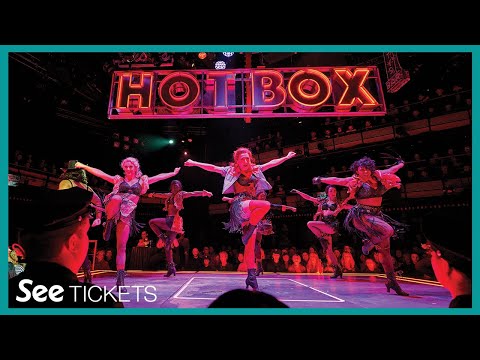
In London, the Bridge Theatre’s immersive revival ran from March 2023 through January 4, 2025, and it generated its own cast recording in 2023. That production is now part of the show’s modern performance history, not a footnote, because it re-framed Loesser’s lyric comedy as street-level, in-the-crowd storytelling.
In 2025, Opera Australia mounted Guys & Dolls as Handa Opera on Sydney Harbour, staged at Fleet Steps, Mrs Macquaries Point, with Cody Simpson as Sky Masterson and Annie Aitken as Sarah Brown among the headliners. It is a reminder that this title scales. You can play it in a Broadway house, or you can play it against a skyline and still keep the language crisp.
In the U.S., Shakespeare Theatre Company in Washington, D.C. scheduled Guys & Dolls for December 2, 2025 through January 4, 2026, with public cast updates during the run. Regionally, more 2026 calendars are already listing it, including summer-season programming at venues like Moonlight Stage (August 2026) where the score’s standards function as audience magnets.
Evergreen note for producers and performers: MTI’s synopsis and history pages remain a reliable quick reference for where songs sit in the action, which makes rehearsal planning easier when you are working from a licensed script and piano score.
Notes and trivia
- Loesser wrote much of the score before the final libretto was locked, then the book was shaped around songs that already worked. That is one reason the lyrics feel character-first.
- The Library of Congress notes that “Fugue for Tinhorns” was written early, felt incongruous for a time, and was ultimately placed near the start to set tone and style.
- The original cast album was recorded on December 3, 1950 and released by Decca on January 8, 1951, becoming a chart success beyond theatre audiences.
- The show is adapted largely from Damon Runyon stories including “The Idyll of Miss Sarah Brown,” while also borrowing characters and plot elements from other Runyon work.
- The Bridge Theatre revival extended well beyond its initial plans, running into 2025 according to the producing company’s official dates page.
- Opera Australia’s 2025 harbour production promoted visible “modern” inflections in performance and staging while keeping Loesser’s core language intact.
- “If I Were a Bell” became a major jazz standard outside theatre, reflecting how Loesser’s lyric rhythm translates across genres.
Reception and critic quotes
In 1950, the show was treated as a high-water mark for musical comedy craft, with the rare sense that every moving piece knew exactly what it was doing. Over time, the critique has shifted. Modern reviewers still praise the songs, but they also argue with the book’s gender politics and the romance mechanics. That tension has become part of the contemporary experience: you laugh, you wince, you keep listening, because the lyric writing is too clean to ignore.
“A solid-gold knockout.”
“Bold design, superb singing and chemistry.”
“Hopelessly outdated. Grit your teeth and see it anyway.”
Quick facts
- Title: Guys and Dolls
- Year: 1950 (Broadway premiere)
- Type: Musical comedy
- Music and Lyrics: Frank Loesser
- Book: Jo Swerling, Abe Burrows
- Based on: Damon Runyon stories, including “The Idyll of Miss Sarah Brown”
- Original Broadway opening: November 24, 1950 (46th Street Theatre)
- Original run: 1,200 performances (as commonly reported in production histories)
- Original cast recording: Recorded December 3, 1950; released January 8, 1951 (Decca)
- Selected notable placements: “Fugue for Tinhorns” after “Runyonland” opening; “Adelaide’s Lament” after she reads a medical explanation for her “cold”; “If I Were a Bell” in Havana after unintended alcohol; “Luck Be a Lady Tonight” before Sky’s throw; “Sit Down, You’re Rockin’ the Boat” during Mission testimonies after midnight
- Recent major staging landmark: Bridge Theatre immersive revival (March 2023 to January 2025)
- Current availability: Widely licensed; MTI resources provide synopsis and history context
Frequently asked questions
- Where does “Fugue for Tinhorns” happen?
- Early in Act I, right after the street-scene opening, with gamblers reading the horse-race scratch sheet and swapping betting tips.
- Why is “Luck Be a Lady” framed like a prayer?
- Because Sky’s faith is in odds. The lyric treats luck as a deity he can bargain with, which mirrors the Mission’s language without copying it.
- What is the dramatic purpose of “Adelaide’s Lament”?
- It turns a running gag into a character thesis. Adelaide’s body becomes the messenger for frustration she has been trained to laugh off.
- Is there a current tour in 2025 or 2026?
- There is no single global tour route to track, but major institutions and regional theatres continue to program it. Examples include Opera Australia’s 2025 harbour production and Shakespeare Theatre Company’s run spanning late 2025 into early 2026.
- Is there a movie version?
- Yes. The film adaptation was released in 1955, and it includes some material written specifically for the screen.
Key contributors
| Name | Role | Contribution |
|---|---|---|
| Frank Loesser | Composer and lyricist | Wrote the score and lyric voice that blends Runyon-style street talk with Broadway craft. |
| Abe Burrows | Book writer | Reshaped the libretto around songs that already existed, strengthening comic pacing and structure. |
| Jo Swerling | Book writer (credited) | Early book work credited in production history. |
| George S. Kaufman | Director (original Broadway) | Led rewrites and shaped the original staging and rhythm. |
| Michael Kidd | Choreographer (original Broadway) | Created defining dance architecture for the street and gambling worlds. |
| Nicholas Hytner | Director (Bridge Theatre revival) | Reframed the show with immersive staging that puts the audience inside Runyonland’s push and pull. |
| Bunny Christie | Set design (Bridge Theatre revival) | Designed the platform-based environment that reshapes the room for each location. |
| Arlene Phillips | Choreography (Bridge Theatre revival) | Built movement that reads up close, keeping lyric punchlines and dance beats aligned. |
Sources: Library of Congress (National Recording Registry essay on the 1950 cast recording), Music Theatre International (Full Synopsis; Show History), Opera Australia / Sydney Opera House, Shakespeare Theatre Company, The Guardian, Variety, The Washington Post, London Theatre Company (Bridge Theatre), Broadway Records, IBDB.