
Great Gatsby, The Lyrics: Song List
- Act I
- Roaring On
- Absolute Rose
- New Money
- For Her
- Valley of Ashes
- Second-Hand Suit
- For Better or Worse
- The Met
- Only Tea
- My Green Light
- Act II
- Shady
- Better Hold Tight
- Past Is Catching Up to Me
- La Dee Dah With You
- Go
- Made to Last
- For Better or Worse (Reprise)
- One-Way Road
- God Sees Everything
- For Her (Reprise)
- New Money (Reprise)
- Beautiful Little Fool
- Finale: Roaring On
About the "Great Gatsby, The" Stage Show
Plot Summary: The Great Gatsby – A New Musical.
Nick Carraway arrives in West Egg, Long Island, in the roaring summer of 1922.
He rents a modest house next to a grand mansion owned by the elusive Jay Gatsby.
From across the bay, Gatsby stares nightly toward a green light blinking at the end of Daisy Buchanan’s dock.
Dreams, Desire, and Deception.
Nick reconnects with his cousin Daisy, who lives in East Egg with her wealthy but brutish husband, Tom.
Through Daisy’s friend, Jordan Baker, Nick receives an invitation to one of Gatsby’s lavish parties.
There, he meets the man himself—elegant, haunted, and utterly fixated on reclaiming a lost love.
Gatsby confides in Nick: he and Daisy were once in love, before war and wealth tore them apart.
As the summer heat rises, Gatsby schemes to reunite with Daisy.
Nick arranges a quiet meeting between them, which reignites their old flame.
But the past is never simple. Secrets unravel and tensions ignite.
The Illusion Crumbles.
Tom grows suspicious. He exposes Gatsby’s criminal ties in front of Daisy.
Shaken, she retreats—torn between love and loyalty, freedom and security.
A tragic accident seals Gatsby’s fate.
Myrtle Wilson is killed in a hit-and-run involving Gatsby’s car—though Daisy was driving.
Her grieving husband, George, misled by Tom, believes Gatsby was behind the wheel.
He shoots Gatsby, then takes his own life.
In the end, Nick stands alone—disillusioned by the dream, haunted by Gatsby’s hope.
A Musical That Captures a Lost Era.
The musical adaptation amplifies the emotion of Fitzgerald’s classic.
With original songs and sweeping orchestrations, it transforms Gatsby’s rise and fall into a poignant anthem.
Themes of longing, reinvention, and the dark side of the American Dream echo through every note.
Release date of the musical: 2024
"The Great Gatsby" – The Musical Guide & Song Meanings
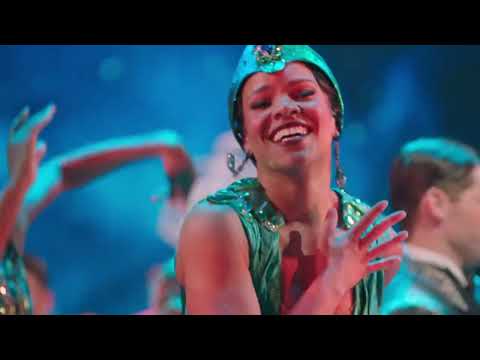
Review: a love story that keeps auditing itself
What if the green light is not romance at all, but an invoice? That question sits inside Nathan Tysen’s lyric strategy for The Great Gatsby (the 2024 Broadway production with music by Jason Howland, book by Kait Kerrigan). The words tend to move like a camera operator with a deadline: clear, forward, often explanatory, frequently pushing the plot into the next doorway. When it lands, it lands because the show’s central argument is simple and grim. Gatsby does not sing to confess. He sings to justify.
The score lives in jazz-era silhouettes, then snaps into contemporary pop muscle for the lovers. That tension matters. Period pastiche is the party mask. Pop is the private pulse. You hear it when the ensemble sells wealth as a chorus line, while Gatsby and Daisy talk in larger vowels, longer notes, and melodies that insist their feelings deserve a stadium. It creates a specific kind of irony: their “forever” language keeps blooming inside a story built to prove forever is fragile.
The best lyric turns are the ones that admit the characters are performing themselves. New money wants applause. Old money wants silence. Nick, stuck between them, becomes the show’s moral stenographer. His songs frame the story like a confession written after the damage is done, and that shapes how we hear every glittery rhyme: as evidence.
How it was made
This Great Gatsby has an unusually global origin for a quintessentially American title. An early spark came when producer Chunsoo Shin approached Howland, Tysen, and Kerrigan about building the musical for an international audience, with South Korea part of the initial horizon. The show’s later path, through Paper Mill Playhouse (2023) and onto Broadway (2024), reads like a modern commercial musical blueprint: develop it with a full production, tighten the song list, then scale the visuals to fit a major house.
Official production notes emphasize “translation” over reinvention: Kerrigan shaping Fitzgerald’s prose into stage dialogue, with Marc Bruni leading the staging team. In interviews around the London run, the writers have also discussed rebalancing the spotlight toward the women, a choice you can feel in the way Daisy and Jordan receive interior songs, not just reaction lines.
An E-E-A-T reality check: unlike older golden-age properties, this show does not have decades of documented rehearsal legend in the public record yet. The most reliable “how it happened” material comes from official outlets, trade reporting, and long-form theatre journalism. That is also why cast-recording evidence matters here. The album is currently the cleanest, most repeatable way to study how the lyric decisions land without the spectacle doing the persuasion.
Key tracks & scenes
"Roaring On" (Nick Carraway)
- The Scene:
- The show opens in Nick’s memory. He stands at the edge of the action while the stage turns into Gatsby’s engine of excess. Light hits him like an interrogation lamp, then explodes into gold as the party swallows the room.
- Lyrical Meaning:
- The lyric function is framing: Nick is telling you what kind of story this will be. The repeating party language is not celebration. It is a warning siren. Even the title phrase feels like a machine that cannot shut off.
"New Money" (Jordan Baker)
- The Scene:
- A Gatsby party as an assembly line. Dancers cut through Art Deco geometry. The lighting turns champagne into glare. Jordan, half thrilled and half clinical, rides the spectacle like she’s testing its structural integrity.
- Lyrical Meaning:
- Jordan’s lyric perspective is crucial: she names the social game with a smirk, then keeps playing anyway. The song makes “new money” sound like a brand campaign, and that is the point. In this world, wealth is a language you speak in public.
"For Her" (Jay Gatsby)
- The Scene:
- Gatsby alone inside the mansion he built as bait. The party noise fades. A colder light isolates him from his own luxury, as if the house is suddenly a giant echo chamber.
- Lyrical Meaning:
- Gatsby sings devotion, but the lyric keeps sliding into purpose. “For her” becomes the moral loophole that excuses everything: the money, the mythmaking, the self-erasure. The song turns love into a rationale.
"Valley of Ashes" (George Wilson)
- The Scene:
- The palette drops out. A garage and its grit. The air feels thick, as if the stage itself has soot in its lungs. Sound design does half the work here: industry as a constant pressure.
- Lyrical Meaning:
- Wilson’s lyric stance is plainspoken, almost hymn-like, because he has no reason to decorate his pain. The song exists to make the class divide audible, not just visible.
"My Green Light" (Daisy Buchanan & Jay Gatsby)
- The Scene:
- Night. Space. Two people trying to rebuild time. The staging often treats the green light as both literal distance and emotional target, with darkness around them doing the isolating.
- Lyrical Meaning:
- The lyric leans into the show’s thesis: desire becomes a symbol you can chase forever because it never has to become real. The phrase “green light” turns from Fitzgerald’s metaphor into a sung object, which is both helpful and slightly risky. It clarifies the story. It also forces the symbol to carry pop-ballad weight.
"Shady" (Meyer Wolfsheim)
- The Scene:
- A backroom mood. Angled light. Men who smile without warmth. Wolfsheim’s number feels like the production letting itself get meaner, for a few minutes, and enjoying it.
- Lyrical Meaning:
- Wolfsheim’s lyric world is transactional. He names the cost of Gatsby’s reinvention. The song’s bite is useful because it punctures the romance with the infrastructure that paid for it.
"Made to Last" (Tom, Gatsby, Daisy, Jordan & Nick)
- The Scene:
- A social showdown staged like a polite war. Bodies stay upright while the temperature rises. The lighting hardens. The air in the room becomes another character: thick, bright, suffocating.
- Lyrical Meaning:
- This is where the lyric argument becomes public. “Made to last” reads like a slogan until the characters weaponize it. Old money claims permanence. New money claims destiny. Daisy hears both and still has to survive.
"Beautiful Little Fool" (Daisy Buchanan)
- The Scene:
- Daisy in the aftermath, finally quiet. Warm, domestic light that feels smaller than the earlier glamour. The audience hears her without the party interrupting.
- Lyrical Meaning:
- The lyric reframes Daisy as someone who knows exactly what she is expected to be. The title phrase is self-defense, not sweetness. The song lands when it sounds like a woman choosing the least destructive persona available to her.
Live updates (2025–2026)
Information current as of January 2026.
- Broadway status: The show opened April 25, 2024 at the Broadway Theatre and continues its run, with cast turnovers typical of a long-running commercial musical.
- Near-term Broadway casting: Public notices and press releases confirm major spring 2026 transitions, including Reeve Carney joining as Gatsby (from March 30, 2026) and Eva Noblezada returning as Daisy (from February 2026), with interim Gatsby coverage scheduled in March.
- North American tour: Initial reporting places the tour launch in Baltimore (Hippodrome Theatre) in early 2026, with the official tour site listing dates and a named principal cast for Gatsby and Daisy. Additional cities continue to populate as presenters announce seasons.
- London run: The West End engagement at the London Coliseum played as a limited season in 2025 and has ended, according to official London marketing and trade reporting.
Practical “experience” tip if you are going in person: if you care about lyric clarity, prioritize seats where you can see mouths and not just chandeliers. Mid-orchestra tends to balance diction and sound mix. If you care about the spectacle, sit farther back and let the geometry read.
Listening tip before your first performance: play “Roaring On,” “New Money,” and “My Green Light” in that order. You will hear the show’s three engines: narration, social machinery, and romantic myth.
Notes & trivia
- There are two high-profile contemporary stage adaptations of Fitzgerald in circulation; this article covers the 2024 Broadway musical with Howland/Tysen/Kerrigan.
- The Original Broadway Cast Recording was released digitally in late June 2024 and runs 23 tracks (about 74 minutes) on major streaming services.
- Linda Cho won the 2024 Tony Award for Best Costume Design of a Musical for The Great Gatsby.
- Playbill production credits list Paul Tate dePoo III as scenic designer (and projection designer), with Cory Pattak (lighting) and Brian Ronan (sound) among the principal design team.
- The song list is split into two clear album acts, with “My Green Light” closing Act I on the cast recording track order.
- According to Broadway League and trade databases, the Broadway run began previews March 29, 2024 and plays approximately 2 hours and 30 minutes including intermission.
Reception
The critical split is consistent: reviewers tend to praise the visual production values and vocal firepower while questioning how the lyric writing handles Fitzgerald’s ambiguity. Some critics want more grit in the language. Others accept the show’s thesis as deliberately populist, a glossy romance built on a moral sinkhole.
“Nathan Tysen’s lyrics are mostly expositional, trying to fill gaps in the story.”
“Some songs come off a bit heavy-handed with their references to the text.”
“The old-fashioned craft of Nathan Tysen’s lyrics sits comfortably, sometimes even cleverly, on the melodies.”
My read: the “explanatory” critique is real, but it is also part of the show’s commercial design. This Gatsby is built to communicate at high volume in a very large room. When the lyric goes blunt, it is choosing legibility over subtext. That trade can feel costly in a story famous for unease.
Quick facts
- Title: The Great Gatsby (A New Musical)
- Broadway year: 2024 (previews began March 29; opening April 25)
- Type: Book musical adaptation of F. Scott Fitzgerald’s novel
- Book: Kait Kerrigan
- Music: Jason Howland
- Lyrics: Nathan Tysen
- Director: Marc Bruni
- Choreographer: Dominique Kelley
- Selected notable placements: “Roaring On” (opening frame), “New Money” (party centerpiece), “My Green Light” (Act I closer on album order)
- Running time: Approximately 2 hours 30 minutes, including intermission
- Cast recording: Original Broadway Cast Recording; 23 tracks; released June 2024 (digital) with physical editions released later
- Label: Masterworks Broadway (Sony Music)
- Availability: Streaming platforms and digital stores; physical formats vary by region
Frequently asked questions
- Is this the same Gatsby musical that played at A.R.T. with Florence Welch?
- No. There are multiple contemporary stage adaptations. This page covers the Broadway production that opened in 2024 with music by Jason Howland and lyrics by Nathan Tysen.
- Where should I start if I only want three songs?
- Start with “Roaring On” (Nick’s frame), then “New Money” (the social machine), then “My Green Light” (the romantic thesis). That sequence gives you the show’s core in under twenty minutes.
- Who sings “New Money” and why is it so central?
- On the cast recording, it is led by Jordan Baker with Nick and the ensemble. Dramatically, it is the show’s clearest translation of wealth into choreography and language.
- Is there a movie version of this musical?
- As of January 2026, there is no widely announced feature-film version of this specific stage musical. Check official production channels for any new screen announcements.
- What is the cast album, exactly?
- It is the studio recording of the score performed by principal singers and ensemble associated with the Broadway production, released as a commercial soundtrack album.
- Why do some lyrics quote famous phrases from the novel?
- It is a recognition strategy. Borrowed phrases create instant thematic shorthand (“green light,” “beautiful little fool”), and the show uses them as anchors for new scenes and pop structures.
Key contributors
| Name | Role | Contribution |
|---|---|---|
| Kait Kerrigan | Book | Adapted Fitzgerald’s narrative into a stage libretto built for large-scale musical storytelling. |
| Jason Howland | Composer | Wrote a jazz-pop score that shifts from period color to modern ballad language for the lovers. |
| Nathan Tysen | Lyricist | Crafted lyric structures that prioritize narrative clarity, with recurring Fitzgerald anchor-phrases. |
| Marc Bruni | Director | Staged the piece as high-gloss commercial theatre, emphasizing momentum and spectacle. |
| Dominique Kelley | Choreographer | Built the party language physically, turning social hierarchy into dance vocabulary. |
| Paul Tate dePoo III | Scenic & Projection Design | Designed the production’s environment and visual surfaces that carry the show’s glamour and scale. |
| Linda Cho | Costume Design | Created the show’s signature silhouette of glittering status; winner of the 2024 Tony Award in her category. |
| Cory Pattak | Lighting Design | Shapes the tonal shifts from party gold to moral chill. |
| Brian Ronan | Sound Design | Balances pop-forward vocals against big ensemble orchestration in a large Broadway house. |
Sources: IBDB (Internet Broadway Database), The Broadway League (Broadway.org), Playbill, Broadway.com, Masterworks Broadway, Apple Music, Entertainment Weekly, Time Out New York, The Guardian, American Theatre, Official show site (broadwaygatsby.com), London Coliseum (official venue listing), New York Theatre Guide.
Author note: Written in the voice of a Broadway journalist focused on lyric function, cast-recording evidence, and documented production reporting. Updates are time-stamped for reader trust.