
Forbidden Broadway, Vols. 1-4 Lyrics: Song List
- Disc: 1
- Forbidden Broadway
- Non Plu Andral
- Don't Cry for Me, Argentina
- Annie's Favorite Showtune
- Pirates of Penzance Sequence
- Be a Catholic
- Triplets
- Bankable Stars
- I'm Entertainment
- Angela Lansbury Sequence/If the Show Had Run Past Labor Day
- Audition Sequence: Soliloquy from Carousel/I'm Sick of Playin [Excerpt]
- Merman & Martin Sequence: It's de-Lovely/My Heart Belongs to Daddy/Mu
- Carol Channing Sequence/Call on Carol/Dolly Is a Girl's Best Friend
- Ambition (Tradition)
- Forbidden Broadway (Reprise)
- Disc: 2
- Opening and Who Do They Know?
- Forbidden Broadway, Vol. 2
- Fugue for Scalpers
- Patti LuponeI / Get a Kick Out of Me
- Into the Woods/Weekend in the Country
- Annie 2
- Poor Butterfly
- Madonna's Brain
- Never, Never Panned
- Somewhat Overindulgent
- Chita-Rita
- I Ham What I Ham
- Hey, Bob Fosse
- Almost Like Vegas in New York
- Teeny Todd
- Liza
- Ladies Who Screech
- Phantom of the Musical: Goldfinger/Lloyd Weber
- George M.!
- More Miserable Sequence
- Finale
- Disc: 3
- Carol Channing Sequence: Imitation Is the Sincerest Form of Flattery
- Forbidden Broadway Vol. III
- Trouble in New York City
- Guys and Dolls Sequence: Guys and Dolls/I Know I've Seen This Show ...
- If I Sing It Slower
- On the Ashkebad, Tbusi and Kiev Express
- I Could Have Danced All Night
- Grand Hotel/I Can't Learn This Song Quite So Quickly/Follies Bergere
- Someday
- Dear Antonio/The Sounds of Shakespeare
- Everything's Coming Up Merman/Old Fashioned Ballad/There's Nobody ...
- Tonight Who Will Play Miss Saigon?. You Are Hallmark, I Postcard
- Put on Your Phony Vocie/All I Ask of You
- Camelounge
- Mess of the Spider Woman: Prologue/Come and See Me/Mess of the ...
- Back to Broadway
- Tell Me It's Not True/I Think I'm Acting/Downshow
- Scenery, Fly Me, Amplify Me/Listening to Us
- Finale: What Happened to Heart?
- Disc: 4
- Parody Tonight: Oh What a Beautiful Moron/One Foot More (With One Look)
- Show Boat Medley: P.C. Show Boat/Make Believe/Ol' Show Show Boat
- My Souvenir Things
- Elaine Stritch
- Big
- Bernadette and Mandy in So Miscast (Wunderbar and So in Love)
- King Is Her/Whistle a Sondheim Tune/Shall We Boink?
-
Be Depressed

- Patti Lupone in Master Class/As If I Never Said Goodbye/Andrew ...
- You're the One I Want/Look at Me I'm Sandra Dee/There Are Worse Things
- Meow! I Hope I Get It (God I Hope I Get It)
- You Just Can't Sing
- Ann Reinking in Chicago
- Kiss Me Kate/Corrective Casting/Jerry and Liza
- Julie Hot
- Spoonful of Julie
- Tony Nominating Committee: Victor/Ignor-Ee-Ya
- Crazy Girl
- Rant
- Ouch! They're Tight
- Too Gay for You-Too Het'ro for Me
- Pretty Voices Singing: Think Punk
- Season of Hype
- This Ain't Boheme/Death and Resurrection
- Finale: Something Wonderful
- Encore-Ta-Ta Folks
- Exit Music: Julie the Star!
About the "Forbidden Broadway, Vols. 1-4" Stage Show
Various people participated in each part of the recording. The first: B. Carmichael, C. Webb, F. Barton, G. Alessandrini, N. M. Lyng. CD included the sequence of 15 songs.
Second part: L. Strasser, G. Alessandrini, W. Selby, T. DiBuono, K. Murphy, P. Fortenberry, M. McGrath, J. Freedson, R. Lucas, P. George, K. Ligon, D. Kiara. CD included the sequence of 21 songs.
The third part: H. Lackey, C. Wells, G. Alessandrini, B. Welsh, S. Blakeslee, S. Potfora, C. Channing, C. Pedi, B. Ellis, M. Pasekoff, J. Freedson, B. Oscar, D. Atcheson, N. M. Lyng, A. Bhattacherjee, R. Lucas, G. Kreiezmar. CD included the sequence of 19 songs.
The fourth part: J. Graae, C. Pedi, S. Blakeslee, G. McIntyre & B. Ellis. CD included the sequence of 26 songs.
Release date of the musical: 1997
"Forbidden Broadway, Vols. 1-4" – The Musical Guide & Song Meanings
Review: a love letter that sometimes bites
What makes a parody lyric land: cruelty, or accuracy? “Forbidden Broadway, Vols. 1-4” answers with a third option, craft. Gerard Alessandrini’s writing treats the Broadway songbook like a familiar street map, then redraws it with new signage. The jokes work because the syntax stays legible. He keeps the scansion, the internal rhyme patterns, the vowel placement on money notes. Then he swaps the moral center. That reversal is the engine of the box set.
This four-disc collection bundles the first three recorded editions plus the then-new “Forbidden Broadway Strikes Back” (Volume 4), packaged with complete printed lyrics. The result feels less like a souvenir and more like a reference text: how Broadway sells itself, how stars brand their belts, how producers monetize “event” theatre. The album’s wit is not only in punch lines. It’s in the decision to parody style, not just plot. An Andrew Lloyd Webber vamp becomes a joke about scale. A Sondheim-like patter becomes a joke about taste. A “new British mega-musical” texture becomes a joke about commerce.
Musically, the palette is intentionally opportunistic. The score is “various,” because the target is “various.” That matters for character. In traditional musicals, a song reveals interior life. Here, a song reveals public persona. Each track is a mask, then a mask peeling off. Listen for how often the lyric aims at a performer’s brand rather than a character’s psychology. It’s a show about how musicals get discussed at intermission, and it knows that’s where the power is.
If you want to follow the plot: don’t hunt for one. The “story” is the order of obsessions. Start with the opening tracks, then treat each disc like a time capsule of what Broadway was anxious about when those songs were written.
How it was made
“Forbidden Broadway” began as a small, piano-driven cabaret revue, opening in 1982 at Palsson’s Supper Club, built for a tight cast and fast transformations. Alessandrini has said he created the show for performer Nora Mae Lyng, and that origin story shows in the writing: it’s singer-forward, written for comic acting on a musical line. The format also makes the lyricist accountable. With no orchestral fog, every syllable is exposed.
The box set’s concept is simple and quietly radical. Instead of releasing one “definitive” cast album, the franchise records its eras. That’s why “Vols. 1-4” works in 2026 as more than nostalgia. It documents how Broadway’s language changes. The targets shift, the technique stays. And when “Strikes Back” arrived, it wasn’t just “more jokes.” It was decorated as an “unoriginal cast recording,” a self-aware branding move that acknowledges the industry’s obsession with albums, awards, and collectability.
Production struggles rarely get framed as “struggles” in this ecosystem; the engine is speed. The editions update to chase whatever Broadway is selling right now. That urgency can sharpen the satire, and it can date a reference overnight. The box set preserves both effects, which is precisely why it matters.
Key tracks & scenes
"Forbidden Broadway" (Company)
- The Scene:
- House lights dim. A bare stage, a piano, and performers who appear to be arriving a half-second late on purpose. The opening plays like a curtain speech that mutates into a roast, paced for laughter rather than applause.
- Lyrical Meaning:
- The title song establishes the central promise: the show will borrow Broadway’s sound, then weaponize Broadway’s habits. It’s a permission slip for the evening and a warning that every sacred cow is also a marketing asset.
"Don't Cry for Me Argentina" (Evita parody, solo)
- The Scene:
- A spotlight finds the singer in faux grandeur. The performance mimics “political sincerity” as a costume piece, with a knowing pause after each big vowel.
- Lyrical Meaning:
- The joke is not simply the reference. It’s the critique of how prestige gets performed. The parody lyric turns a grand address into commentary on theatrical self-mythmaking and audience complicity.
"Annie’s Favorite Show Tune (Tomorrow)" (Annie parody, solo)
- The Scene:
- Bright, almost aggressive lighting. The performer plays optimism like a product demonstration, smiling as if the smile is contractually required.
- Lyrical Meaning:
- This track skewers the industrial side of “uplift.” It treats cheer as a repeatable commodity. Underneath the laugh is a sharp question: how often does Broadway sell hope because hope sells.
"Be a Catholic (Be Italian)" (ensemble)
- The Scene:
- Quick-change chaos. The staging tends to read as a mini-vaudeville sprint: hats on, hats off, accents dropped, accents recovered. The piano anchors the speed.
- Lyrical Meaning:
- The lyric exposes how ethnic and cultural shorthand gets packaged as “character.” It’s funny because it’s rhythmically faithful, then uncomfortable because it’s observationally precise.
"Fugue for Scalpers (Fugue for Tinhorns)" (trio)
- The Scene:
- Three voices braid together, each one trying to “win” the bit. It’s staged like an argument that happens to be harmonized, the kind of number that makes you hear the audience lean in.
- Lyrical Meaning:
- The parody turns classic musical craftsmanship into an argument about commerce. The fugue structure itself becomes the joke: obsessive repetition as a mirror of obsessive buying.
"The Rain in Spain (Madonna’s Brain)" (ensemble)
- The Scene:
- A “training montage” energy, but theatrical. The performers imitate pop-star mannerisms with a fraction too much confidence, as if the stage itself is chasing radio play.
- Lyrical Meaning:
- This is Broadway’s identity crisis in miniature: the hunger to look contemporary, the fear of looking desperate. The lyric’s best move is how it rides the original’s diction while mocking the pursuit of relevance.
"Phantom of the Musical (Goldfinger)" (ensemble feature)
- The Scene:
- Lighting turns faux-gothic. The joke is visual as much as verbal: melodrama treated like a theme-park ride, timed for reveals.
- Lyrical Meaning:
- The number points at brand extension. The lyric implies that “mystery” can be manufactured, franchised, and sold back to audiences as authenticity.
"Season of Hype (Season of Love)" (Company)
- The Scene:
- The stage becomes a press cycle. Performers play critics, fans, and marketers in the same breath. The beat is familiar, the intent is sharper.
- Lyrical Meaning:
- This track is about critical consensus as a form of theatre. It satirizes how a hit gets narrated into inevitability, and how “importance” can become a sales strategy.
Live updates (2025–2026)
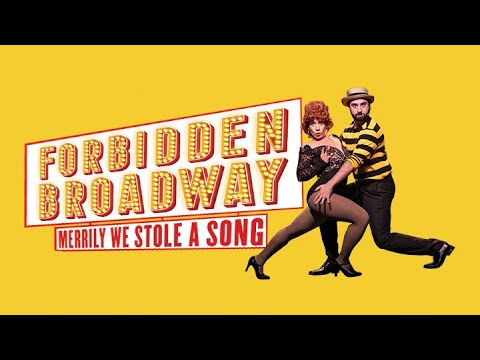
Even though “Vols. 1-4” is a 1997-era package, the franchise is current. The newest major New York edition, “Forbidden Broadway: Merrily We Stole a Song,” opened off-Broadway at Theater 555 in September 2024 and closed that November, then pivoted into bookings beyond New York. In 2025, it also landed major awards attention, including a Drama Desk win for Outstanding Revue. That matters because it signals the show’s continuing legitimacy: not just a cult joke machine, but a recognized writing achievement.
For the touring landscape, dates are actively posted for the 2025–2026 season, including January and February 2026 engagements. Ticket pricing varies by venue, but published tiers can be as low as the $30 range and up to around $60 for premium seating in at least one listed 2026 stop. If you’re going live: prioritize sightlines over distance. The fast costume swaps and precise physical caricature are part of the writing, even when the lyric is doing most of the work.
Information current as of January 2026.
Notes & trivia
- The “Vols. 1-4” set is explicitly marketed as a four-disc slipcased package that includes complete printed lyrics, bundling Vols. I–III plus “Forbidden Broadway Strikes Back.”
- “Forbidden Broadway Strikes Back” (the Volume 4 material inside this set’s scope) began previews in September 1996 and opened in October 1996 at the Triad Theater, later transferring to Ellen’s Stardust Diner’s basement space.
- The “Strikes Back” edition won the Drama Desk Award for Outstanding Lyrics for Alessandrini.
- The franchise’s default staging model is small-cast with piano accompaniment, which is why the jokes are written to read clearly without orchestral cover.
- A common misconception is that the project is “group-written” because it borrows from so many scores. The books and parody lyrics are credited to Alessandrini across editions.
- The current touring edition (“Merrily We Stole a Song”) has been promoted as parodying 30+ Broadway titles in roughly 90 minutes, which echoes the same density you hear in the box set’s medleys and sequences.
Reception
Critics have tended to reward the work when the satire feels specific rather than scattershot. In the late 1990s, “Strikes Back” was widely treated as a high point, and it also earned formal awards recognition for lyrics. In the 2020s, reviews of newer editions frequently praise the upgraded visual polish while still judging the writing on hit-to-miss ratio, which is the correct metric for a revue that lives on topicality.
“One of the best, if not the best, since the first edition.”
A revue pairing stolen melodies with “poison-pen lyrics” about Broadway’s latest habits.
A production upgrade that makes it “as much a visual experience as an aural one.”
Quick facts (album + context)
- Title: Forbidden Broadway, Vols. 1-4
- Year: 1997 (box-set listings also appear with early-1998 retail dates)
- Type: Cast recording box set / musical-theatre parody revue anthology
- Book & parody lyrics: Gerard Alessandrini
- Music: Various (parodied Broadway scores)
- Label: DRG Records
- Package: 4 CDs; marketed with complete printed lyrics and the inclusion of Vols. I–III plus “Forbidden Broadway Strikes Back”
- Selected notable placements (within the set): Opening title songs, multi-show “sequences,” and topical mega-hit riffs (including “Rent”-era commentary via “Season of Hype”)
- Awards context: “Strikes Back” won the Drama Desk Award for Outstanding Lyrics (Alessandrini); the 2024 edition later won Drama Desk Outstanding Revue in 2025
- Availability: The Volume 4 album release is widely listed on major digital services; the full Vols. 1-4 is sold as a physical four-disc set by multiple retailers
Frequently asked questions
- Is “Forbidden Broadway, Vols. 1-4” the same as one stage show?
- No. It’s a curated package of multiple recorded editions. The point is accumulation: Broadway trends changing across time, preserved as separate “eras” inside one box.
- Who wrote the lyrics in the box set?
- The parody lyrics and book are credited to Gerard Alessandrini, even though the music is borrowed from many composers because that’s the object of the satire.
- Does the set include “Forbidden Broadway Strikes Back”?
- Yes. Retail descriptions explicitly position the box as Vols. I–III plus the then-latest “Forbidden Broadway Strikes Back” (Volume 4).
- Why do so many tracks say “sequence” or “medley”?
- Because the revue’s signature move is compression. A “sequence” lets the lyric comment on a genre pattern, not only a single song.
- Is there a current tour connected to this album?
- Not of “Vols. 1-4” as a literal evening, but the franchise is touring with a newer edition (“Merrily We Stole a Song”), and dates for 2025–2026 are publicly posted by presenters and the show’s site.
- Can I quote the lyrics from the CD booklet online?
- You should assume the parody lyrics are copyrighted. For publishing, use short excerpts only when necessary, and prioritize analysis, attribution, and context.
Key contributors
| Name | Role | Contribution |
|---|---|---|
| Gerard Alessandrini | Creator, writer, director; parody lyricist | Conceived the revue format and wrote the spoof lyrics that define Vols. 1-4’s voice and targets. |
| Fred Barton | Music director / pianist (franchise cornerstone) | Represents the piano-led performance style that keeps the satire rhythmically exact and theatrically fast. |
| Christine Pedi | Performer (notable in the franchise) | A key comic interpreter across editions, praised for precision impersonation and musical clarity. |
| Michael McGrath | Performer (notable in the franchise) | Part of the performer lineage that sells the material by switching personae mid-phrase. |
| DRG Records | Label | Released the box set packaging the first four recorded volumes and their lyric materials for collectors. |
Sources: DRG Records (retailer listings), AllMusic, Playbill, Drama Desk Awards (official site), Variety, The Wall Street Journal, TalkinBroadway, TheaterMania, ForbiddenBroadway.nyc, ToursToYou, Weill Center for the Performing Arts, Emerson Colonial Theatre.