Footloose Lyrics – All Songs from the Musical
Footloose Lyrics: Song List
- Act 1
- Footloose/On Any Sunday
- Girl Gets Around
- I Can't Stand Still
- Somebody's Eyes
- Learning to Be Silent
- Holding on for a Hero
- Heaven Help Me
- I'm Free/Heaven Help Me
- Act 2
- Let's Make Believe We're in Love
- Let's Hear It for the Boy
- Can You Find It in Your Heart?
- Mama Says (You Can't Back Down)
- Almost Paradise
- Dancing Is Not a Crime
- I Confess
- Can You Find It in Your Heart? (Reprise)
- Footloose (Finale)
About the "Footloose" Stage Show
Release date: 1998
"Footloose" – The Musical Guide & Song Meanings
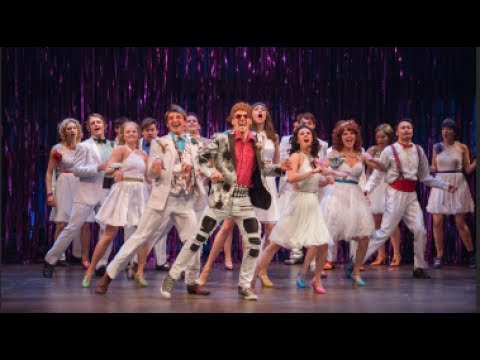
Review
Why does a dance ban feel so personal in this show, even when you know the premise is heightened? Because "Footloose" makes repression audible. It turns rules into rhythm. When the town clamps down, the score does not go silent. It gets more impatient. The lyrics keep returning to movement as a need, not a hobby, and that single idea pushes every relationship into confrontation.
Dean Pitchford’s lyric voice is unusually direct for Broadway. He prefers blunt verbs, tight hooks, and phrases that land like a dare. That simplicity is the point. In Bomont, nobody has time for poetry. They are busy policing each other. Tom Snow’s musical language sits in rock and pop structures that know how to build a payoff, then the show aims those payoffs at plot pressure: a sermon becomes a number, a hallway scuffle becomes choreography, a family argument becomes harmony.
The show’s smartest trick is its split musical morality. Party songs are written as public sound, wide and communal. The private songs are narrower and more charged. "Learning to Be Silent" is not a big statement. It is three women admitting how they have been trained to disappear. "Heaven Help Me" is a prayer that can’t decide whether it wants comfort or control. In a piece best known for release, the lyric work is often about containment.
Viewer tip: if you can, pick a seat that keeps you level with the band mix and gives you a clean view of entrances. This show’s storytelling lives in kinetic cross-traffic. Mid-orchestra or front mezzanine often lets you read both the dancing and the reactions, especially during the town meetings and the school sequences.
How It Was Made
"Footloose" arrived on Broadway at the Richard Rodgers Theatre in October 1998, carrying the advantage and the burden of a movie title everybody already knew. The team’s problem was not the hits. It was turning a film’s montage energy into stage cause-and-effect. Walter Bobbie framed the adaptation goal with unusual clarity before opening: the production was not attempting to place the film onstage, but to build a new musical with theatrical solutions, including giving the minister, the wife, and the daughter songs that clarify their interior lives.
The development story is also a business story. Producers talked openly about the way a recognizable name and pre-sold songs can shorten the grind of musical development. That speed shows up in the final product as a kind of engineered momentum. It is a score designed to move the room, then the book keeps asking what happens after the rush fades.
The licensed version most audiences meet today reflects post-Broadway revisions. By the mid-2000s, the show was adjusted: some material was cut or repositioned, and the current score commonly foregrounds "Still Rockin’" as an Act II ignition. That history matters for lyric analysis, because it explains why certain emotional beats land as spoken scenes instead of sung confession.
Key Tracks & Scenes
"Footloose / On Any Sunday" (Company, Rev. Shaw Moore)
- The Scene:
- A hard cut from a Chicago dance floor to Bomont’s church. Lighting often shifts from club color to stark Sunday brightness. The congregation becomes a living wall, and the sermon rides on the same pulse the town claims to hate.
- Lyrical Meaning:
- The lyric collision sets the thesis: freedom is physical, and control is performative. Shaw’s language is moral certainty, Ren’s world is motion. The show’s argument starts before anyone speaks in dialogue.
"I Can’t Stand Still" (Ren)
- The Scene:
- A school hallway. A new kid trying to charm his way out of trouble. The staging usually makes the hallway feel like a trap: lockers, lines, eyes. Ren dances anyway, as if defiance is a reflex.
- Lyrical Meaning:
- This is not only about dancing. It is a manifesto for nervous energy. The words frame movement as self-regulation, the way some people pace to keep from breaking.
"Learning to Be Silent" (Vi, Ethel, Ariel)
- The Scene:
- A domestic space with quiet corners. Often softened light, a sense of listening for footsteps. Three women share the stage like they share a secret, each line passed with caution.
- Lyrical Meaning:
- The lyric is about inheritance. Silence is taught, then rewarded, then resented. It is the show’s clearest statement that the ban is not only civic. It is personal and gendered.
"Holding Out for a Hero" (Ariel and the girls)
- The Scene:
- Usually a high-voltage sequence that feels like a collective daydream. Strong side light, fast spacing, athletic shapes. Ariel sings like she is daring herself to believe in rescue.
- Lyrical Meaning:
- Under the pop surface, the lyric is a critique of the town’s options. If power is locked behind fathers, preachers, and boyfriends, a “hero” becomes a fantasy substitute for agency.
"Heaven Help Me" (Rev. Shaw Moore)
- The Scene:
- A solitary moment that often arrives after public certainty. The space clears, the sound narrows, and Shaw is left with his grief. Lighting typically isolates him, not as a villain, but as a man trapped inside his own authority.
- Lyrical Meaning:
- The lyric is a prayer that doubles as self-justification. It reveals how grief can harden into policy. Shaw does not sing “I am wrong.” He sings “I am afraid,” and the show lets you hear the difference.
"Let’s Hear It for the Boy" (Rusty)
- The Scene:
- Training wheels for romance. Rusty turns teasing into encouragement, often with bright, open lighting that contrasts Bomont’s tighter scenes. The choreography usually sells joy as a social skill you can learn.
- Lyrical Meaning:
- This lyric functions as advocacy. Rusty is publicly naming a boy’s value before he believes it. In a show obsessed with permission, she grants it.
"Mama Says" (Willard and the boys)
- The Scene:
- A comic release with a choreographic backbone. The number often plays in a communal hangout, where the town’s boys try on confidence like a costume. Foot-stomps and claps turn into a lesson plan.
- Lyrical Meaning:
- The lyric is a folk logic engine. It exposes how “common sense” rules get passed down as jokes, then become laws. The humor lands because it is true enough to be dangerous.
"Almost Paradise" (Ren, Ariel)
- The Scene:
- A pocket of calm. Often warmer light, slower blocking, fewer bodies onstage. The world pauses long enough for two teenagers to imagine a future that is not supervised.
- Lyrical Meaning:
- The lyric sells temporary escape as destiny. It is sweet, but it is also a warning: “almost” is the word that haunts them. The town will not let the dream stay private.
Live Updates
Information current as of January 24, 2026. "Footloose" remains a high-circulation title in licensing, largely because its pop vocabulary is easy for audiences to read and its dance demand is a clear selling point for schools and regional houses. Concord Theatricals continues to license the full show and a Youth Edition, which keeps the material in constant rotation.
The biggest professional headline for 2025 to 2026 is Australia. A national tour has been marketed as a remastered production, with Adelaide dates publicly listed for 11 to 19 April 2026 at Her Majesty’s Theatre. Ticketing and venue details have been carried on the Adelaide Festival Centre’s official listing, while the tour’s own site frames the run as a national rollout.
On the audio side, the Original Broadway Cast Recording has had a long second life beyond its initial late-1990s release. Ghostlight Records reissued the album in 2011 with revised packaging and an added track, "Still Rockin’," a song that had been cut earlier and later reinstated to the licensed score. If you are tracking lyric evolution, that single reissue tells you how the show has been curated for modern productions.
Notes & Trivia
- The Broadway run opened October 22, 1998 at the Richard Rodgers Theatre and closed July 2, 2000.
- The show’s core credits are unusually clean for a jukebox-adjacent property: music by Tom Snow, lyrics by Dean Pitchford, book by Pitchford and Walter Bobbie.
- Myth-check: not every song is “by Kenny Loggins.” The stage score mixes film hits with new musical-theatre writing, plus additional music credited to multiple artists.
- The Original Broadway Cast Recording was recorded November 2, 1998 at the Hit Factory in New York.
- Playbill reported the album’s original production credit as Tommy Krasker, and later coverage adds Tom Snow as co-producer on the original recording.
- The licensed version reflects revisions over time, including changes documented in educational materials and production guides, which affects which moments are sung versus spoken.
- "Still Rockin’" became a flag for those revisions, reintroduced to the score and later added to the album on the 2011 re-release.
Reception
"Footloose" has always been reviewed on two tracks: craft and pleasure. Critics who wanted bite often found the show cautious. Critics who valued momentum tended to praise its color, its design efficiency, and its capacity to make a crowd move. That split is baked into the material. The lyrics are pop-forward and slogan-sharp, which can read as thin on the page, yet they can land with force when the staging makes the town’s control feel intimate.
“Brightly colored, energetic and very, very nice, ‘Footloose’ is a musical so relentlessly innocuous it makes ‘Grease’ look hard-hitting.”
“We’re not trying to put the film on stage... We’re using it as a source for a whole new Broadway musical...”
“It became clear that we were slowly building a heart and soul into the show...”
Quick Facts
- Title: Footloose
- Year: 1998 (Broadway premiere)
- Type: Book musical adapted from a film
- Music: Tom Snow (with additional music credited to multiple artists)
- Lyrics: Dean Pitchford (with additional lyrics credited in the show’s publishing and licensing materials)
- Book: Dean Pitchford and Walter Bobbie
- Broadway venue and run: Richard Rodgers Theatre, Oct 22, 1998 to Jul 2, 2000
- Selected notable placements: “Footloose / On Any Sunday” as the thesis collision; “Learning to Be Silent” as the domestic cost; “Heaven Help Me” as the grief pivot; “Mama Says” as inherited rulemaking
- Cast album: Original Broadway Cast Recording released in 1999 (Q Records), later reissued by Ghostlight Records with added track
- Availability: Major streaming platforms carry the cast album; physical reissues circulated after the original label shut down
Frequently Asked Questions
- Is the stage musical the same story as the 1984 film?
- It follows the same core conflict, but the stage version leans harder into giving Shaw, Vi, and the adults sung perspective, because theatre needs interior life in real time.
- Who actually wrote the lyrics?
- Dean Pitchford is the primary lyricist. The show also credits additional lyric work connected to specific songs that originated outside the theatre score.
- Why does the first big number combine “Footloose” with “On Any Sunday”?
- Because the show wants the audience to hear the argument immediately: pleasure and prohibition share the same heartbeat, and that is why the town’s ban feels unstable from the start.
- What changed in the revised licensed version?
- Revisions over time adjusted song order and emphasized different story beats, with some material cut and other pieces, such as “Still Rockin’,” becoming more central in later versions.
- What recording should I start with if I’m focused on lyrics and story clarity?
- The Original Broadway Cast Recording is the baseline for vocal interpretation and pacing, and the Ghostlight reissue is useful for tracking how the show’s musical identity was later curated.
- Is there a current professional tour?
- Yes in Australia for 2026, with Adelaide dates publicly listed and marketed as part of a national tour.
Key Contributors
| Name | Role | Contribution |
|---|---|---|
| Tom Snow | Composer | Built the stage score’s pop-rock spine and its theatre-ready transitions. |
| Dean Pitchford | Lyricist / Book (co-author) | Wrote the lyric voice that frames dance as autonomy and silence as policy. |
| Walter Bobbie | Book (co-author) / Director (original Broadway) | Translated film momentum into stage storytelling and adult emotional stakes. |
| A.C. Ciulla | Choreographer (original Broadway) | Made dance carry plot, not only celebration. |
| John Lee Beatty | Scenic Design (original Broadway) | Delivered pragmatic spaces that could flip fast between school, church, and home. |
| Ken Billington | Lighting Design (original Broadway) | Used contrast to separate public righteousness from private heat. |
| Tommy Krasker | Cast Album Producer | Produced the original Broadway cast recording sessions. |
| Ghostlight Records | Reissue Label | Re-released the album with refreshed packaging and an added track in 2011. |
Sources: IBDB, Concord Theatricals, Variety, Los Angeles Times, The Washington Post, Playbill, AllMusic, Ghostlight Records, Adelaide Festival Centre, OVRTUR, Footloose: The Musical (Australia tour site), Jefferson Performing Arts Society (study companion).
Editorial note: This guide prioritizes primary and industry sources (rights holders, trade press, venue listings, and recording documentation). Song meaning commentary is interpretive and separated from verifiable production facts.