
Finian's Rainbow Lyrics: Song List
- Act 1
- Overture
- This Time Of The Year
- How Are Things In Glocca Morra?
- Look To The Rainbow
- Old Devil Moon
- Something Sort Of Grandish
- If This Isn't Love
- Something Sort Of Grandish (Reprise)
- Necessity
- That Great Come-And-Get-It Day
- Act 2
- When The Idle Poor Become The Idle Rich
- The Begat
- When I'm Not Near The Girl I Love
- Finale: That Great Come-And-Get-It Day
About the "Finian's Rainbow" Stage Show
Production first opened on Broadway at the beginning of 1947, which went very well for 725 hits. B. Windust was the director, M. Kidd was responsible for the choreography and music was hold by two – R. R. Bennett & D. Walker. Actors were: L. M. Singers, E. Logan, A. Sharpe, D. Richards & D. Wayne. Last won a Tony Award and Theatre World Award. This Tony was remarkable in that it was the first one in the category of Best Actor for all time. There were also two more Tony awards granted to this spectacle.
After success on Broadway, London opening was in 1947 but there it gave only 55 hits. Later there were many resurrections – 3 times on Broadway, in 1955 (this year it was lead by Hammerstein, production gained 1 Tony nomination), 1960 and 1967. The latest renewals were in 2004 and in 2009 on Broadway, in the framework of Encores!. In 2009, it went only 4 days in March.
At the end of the same 2009, Broadway experienced a full revival, which was closed after a season in the beginning of 2010. The reasons for the closing of show its creators named not very favorable financial situation in the world and on Broadway in particular, because during the 15 weeks of this histrionics, the fullness of the hall was 66% at best. One of the producers of the show tried to save it financially and to take it in a tour in Canada, but it never came true.
In 2014, in frames of Off-West End, another renewal took place, which goes so far, in the Charing Cross Theatre, moved there from the Union Theatre, where the opening was. Actors: J. Peters, A. Odeke, J. Horne, R. Walsh & C. Bennington. Choreography was by T. M. Voss, and the director was Richard Baker.
Release date of the musical: 1947
"Finian’s Rainbow" – The Musical Guide & Song Meanings
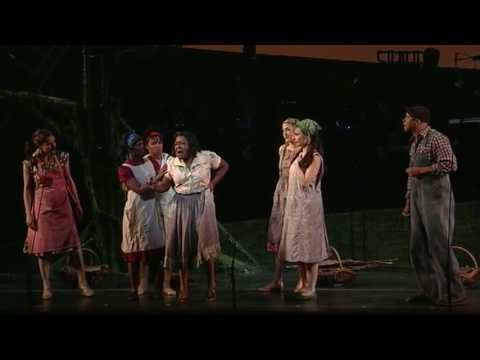
Review: the sweet talk that cuts
Why does this score feel like comfort food while the book keeps throwing elbows? Because the lyrics keep smiling while they argue. “Finian’s Rainbow” sells you Ireland-on-the-tongue and Tin Pan Alley bounce, then uses that easy language to poke at land theft, racism, and the stupidity of money worship. The writing is bold enough to be silly. It also insists that silliness is a delivery system for politics.
Harburg’s lyric voice is conversational, even when the ideas are big. He loves a clean setup, a punchy internal rhyme, and a slangy wink that makes doctrine feel like gossip. Lane answers with music that can pivot in a bar: pastoral warmth for Sharon’s homesickness, a nightclub glow for the lovers, and brassy “get rich” energy when the town buys into credit-fueled fantasy. The plot gets magical, but the language stays pointed. When the songs work best, they do not pause the story. They push it, like a crowd leaning forward.
How it was made
“Finian’s Rainbow” arrived in 1947 with a strange promise: a fantasy musical that wanted to be socially literate in the aftertaste. Burton Lane wrote music that could sound plush without getting precious, while E.Y. Harburg wrote lyrics with a streetwise grin and a reformer’s temper. The book, by Harburg and Fred Saidy, makes “Missitucky” a joke you can hum and a warning you can recognize. Scholarship around the show often frames it as purposeful satire aimed at racism and economic injustice, even when it uses fairy-tale mechanics to get there.
It also launched careers and reputations in a hurry. The original Broadway run began in January 1947, and its early awards history is part of Broadway lore: David Wayne won the first Tony Award ever given for featured actor in a musical, and Michael Kidd’s choreography won, too. The craft was never subtle about its professionalism. The sharpness was the point. The sweetness was the camouflage.
Key tracks & scenes
"This Time of the Year" (Rainbow Valley sharecroppers, Susan)
- The Scene:
- Rainbow Valley holds its breath. A tax auction looms. The community stalls for time, bodies clustered in anxious half-light, the mood somewhere between prayer meeting and work song.
- Lyrical Meaning:
- The lyric turns waiting into action. “Time” becomes a weapon: the poor do not have leverage, so they have persistence. The song plants the show’s core idea early: survival is a collective rhythm.
"How Are Things in Glocca Morra?" (Sharon)
- The Scene:
- Sharon is newly arrived in “Missitucky,” homesick and polite about it until the melody opens the ribcage. The lighting softens. Everything loud in the plot goes quiet around her.
- Lyrical Meaning:
- Harburg writes nostalgia as a physical ache, not a postcard. The questions are the hook. She is measuring America against a remembered place, and realizing she cannot bargain with longing.
"Look to the Rainbow" (Sharon, Woody, ensemble)
- The Scene:
- Woody comes back short on the money. Finian and Sharon help cover the difference, and Sharon tries to explain her father’s dream logic. The moment plays like a porch sermon, warm front light and open faces.
- Lyrical Meaning:
- This is the show’s central persuasion technique. Hope is framed as a practice, not a mood. The lyric romanticizes belief, then dares you to notice how belief can be exploited later.
"Old Devil Moon" (Woody and Sharon)
- The Scene:
- Night. Moonlight. The lovers find each other while Finian is caught up in gold and hiding places. The stage turns intimate, corners disappearing, the outside world held back by dark blue.
- Lyrical Meaning:
- The lyric blames the sky for desire, as if lust is weather. That’s the joke, and it’s also character truth: Woody and Sharon want permission to be reckless. The “devil” is a flirtation with consequences.
"Necessity" (ensemble, mostly the Valley women)
- The Scene:
- Work is visible. Hands are busy. The music makes labor percussive, the staging often built on repetitive motions that become choreography.
- Lyrical Meaning:
- It is comic, but it is also a thesis statement. Need drives everything in this town: love, theft, bargains, and moral compromise. The lyric laughs because the truth would sting otherwise.
"That Great Come-and-Get-It Day" (Finian, townspeople)
- The Scene:
- Credit arrives like a parade. Merchants offer accounts. The Valley people rush in, and the stage fills with bustle and purchase-driven joy.
- Lyrical Meaning:
- Harburg writes consumer euphoria as a chant. The language is simple on purpose, like advertising copy that becomes a hymn. The show is mocking the dream while admitting its dopamine hit.
"When the Idle Poor Become the Idle Rich" (Sharon, ensemble)
- The Scene:
- Two weeks later, the evidence of “prosperity” is everywhere. The tone is bright, but cluttered. The lighting feels a bit too cheerful, as if it is selling something.
- Lyrical Meaning:
- The lyric turns class critique into a party trick. “Rich” does not fix emptiness, it changes its costume. The joke lands because the melody keeps dancing even as the words raise an eyebrow.
"The Begat" (Senator Rawkins, gospel singers)
- The Scene:
- Rawkins has fled into hiding. Og corners him with a cruelly clear idea: prejudice is internal, and magic can only expose it. A trio arrives, and the scene shifts into stylized gospel energy.
- Lyrical Meaning:
- This number is a pressure point. The lyric uses religious genealogy as a musical engine, then turns it into a communal identity lesson. It is funny, loud, and morally aggressive.
"When I’m Not Near the Girl I Love" (Og)
- The Scene:
- Morning light, new tenderness. Og, turning mortal, discovers his desire has consequences. The reveal that his “girl” is Susan lands gently, like the stage itself relaxes.
- Lyrical Meaning:
- Harburg writes Og as a creature of appetite who stumbles into sincerity. The lyric’s roguish brag is the mask; the real point is that wanting another person makes him human.
Live updates (2025/2026)
The title is not in an open-ended Broadway run right now, but it is actively produced and regularly reinterpreted. One of the clearest 2026 signals is Prague’s Theatre Hybernia, which lists multiple “Finian’s Rainbow” performances across early 2026, positioning it as a family-friendly musical event on a large commercial stage. The Hybernia materials emphasize the Czech tradition of adapting the piece (often known locally as “The Magic Pot”), and identify a current director on the production page.
For theatres planning their own versions, licensing infrastructure is stable: Concord Theatricals flags that multiple versions exist and urges producers to confirm which script version they are applying for before renting materials. That warning matters for any modern staging because cuts and revisions change how the satire reads, especially around Rawkins and the show’s race mechanics.
On the recording side, the two most useful listening anchors remain the 1947 original cast recording (now widely reissued) and the 2009 Broadway revival cast recording released by PS Classics. The revival album is a practical reference for contemporary tempos, orchestrational clarity, and how modern Broadway singers articulate Harburg’s conversational punch.
Notes & trivia
- The original Broadway production opened January 10, 1947 and ran 725 performances.
- David Wayne’s Tony win for Og is often cited as the first Tony Award given for featured actor in a musical.
- Masterworks Broadway notes the first LP release date for the original cast recording as June 6, 1948.
- The 2009 Broadway revival played the St. James Theatre and later yielded a widely streamed cast recording.
- The 1968 film adaptation was directed by Francis Ford Coppola and starred Fred Astaire and Petula Clark.
- Concord Theatricals warns there are multiple versions of the title available for licensing, which can affect structure and content.
Reception: then vs. now
In 1947, the show landed as a big, tuneful crowd-pleaser that also had opinions, and that mix helped it travel. Over time, the book’s broad caricatures and its magical handling of racism have drawn harder scrutiny. Modern revivals often succeed because the music is so strong it can carry awkwardness, and because directors can tune the tone without sanding off the bite.
“But director Warren Carlyle's spunky Broadway revival does right by the great Burton Lane-Yip Harburg score.”
“Building the illusion of wealth on nothing more than a dream and a credit line.”
“No one ever said musicals had to be realistic, but they can be relevant.”
Quick facts
- Title: Finian’s Rainbow
- Year: 1947 (Broadway premiere)
- Type: Musical comedy with fantasy and social satire
- Music: Burton Lane
- Lyrics: E.Y. Harburg
- Book: E.Y. Harburg and Fred Saidy
- Original Broadway opening: January 10, 1947 (46th Street Theatre)
- Original Broadway run: 725 performances
- Signature lyrical placements (selected): “This Time of the Year” delays the auction; “Look to the Rainbow” sells Finian’s dream logic; “Old Devil Moon” lands as the lovers’ moonlit turn
- Cast recordings (key reference points): 1947 Original Broadway Cast Recording (first LP release noted as June 6, 1948); 2009 Broadway Revival Cast Recording (PS Classics release, widely available on streaming)
- Film adaptation: 1968 musical fantasy film directed by Francis Ford Coppola
- Licensing note: Multiple versions exist; confirm the intended version before renting materials
Frequently asked questions
- Who wrote the lyrics to “Finian’s Rainbow”?
- E.Y. Harburg wrote the lyrics, paired with Burton Lane’s music and a book co-written with Fred Saidy.
- Where do “How Are Things in Glocca Morra?” and “Look to the Rainbow” sit in the story?
- “Glocca Morra” is Sharon’s early homesickness moment after arriving in Missitucky; “Look to the Rainbow” follows when she explains Finian’s dream philosophy to Woody.
- Is there a cast album worth starting with?
- Start with the 2009 Broadway revival cast recording for modern pacing and vocal clarity, then go back to the 1947 original cast recording to hear the period accent and comedy timing.
- Is there a movie version?
- Yes. A 1968 film adaptation was directed by Francis Ford Coppola and stars Fred Astaire and Petula Clark.
- Why is the show sometimes considered controversial today?
- Its satire tackles racism through magical transformation and broad caricature. Some modern audiences find the mechanism uncomfortable, even when the intent is anti-racist.
- Are there current productions in 2025 or 2026?
- Yes. Theatre Hybernia in Prague lists multiple performances across early 2026, reflecting an ongoing European life for the title in Czech adaptation tradition.
Key contributors
| Name | Role | Contribution |
|---|---|---|
| Burton Lane | Composer | Music that blends ballad warmth with swing-era snap and satirical punch. |
| E.Y. Harburg | Lyricist, co-book writer | Lyrics that sound conversational while carrying political intent; co-shaped the story’s satire. |
| Fred Saidy | Co-book writer | Helped build the book’s comedic scaffolding and topical targets. |
| Bretaigne Windust | Director (original Broadway) | Staged the 1947 original production that established the show’s tonal balance. |
| Michael Kidd | Choreographer (original Broadway) | Tony-winning movement language that kept the comedy physical and the community vivid. |
| Robert Russell Bennett | Orchestrator (original Broadway) | Broadway-standard orchestration muscle, helping Lane’s melodies read at scale. |
| Don Walker | Orchestrator (original Broadway) | Co-orchestrations that supported the score’s genre shifts. |
| PS Classics | Label | Released the 2009 Broadway revival cast recording for modern listening and reference. |
Sources: Masterworks Broadway, IBDB, Concord Theatricals, TIME, Variety, The Guardian, Theatre Hybernia Prague, Prague Ticket Office, Apple Music, YouTube.