
Fame Lyrics: Song List
- Act 1
- Pray I Make P.A.
- Hard Work
- I Want to Make Magic
- Can't Keep It Down
- Tyrone's Rap
- There She Goes! /Fame
- Let's Play a Love Scene
- Bring on Tomorrow
- Teacher's Argument
- Hard Work (Reprise)
- Act 2
- I Want to Make Magic (Reprise)
- Mabel's Prayer
- Think of Meryl Streep
- Dancin' on the Sidewalk
- These Are My Children
- In L.A.
- Let's Play a Love Scene (Reprise)
- Bring on Tomorrow (Reprise)
- Curtain Calls: Hard Work / Fame
About the "Fame" Stage Show
The original composition of cast on Broadway was: J. Metz, H. Perrineau Jr., M. Cintron, T. Brown & J. Malina. Preliminary readings were in Philadelphia, where for 1 month the show deserved rating of "hit" and loyal audience. Off-Broadway depicting began in 2003 and until 2004, 304 performances were given, if counting with previews. Following changes in the composition, the actors shifted on: C. Freeman, M. Lynche, S. Evans, C. J. Hanke & N. Leach.
After a Broadway show, there was an incredible variety of productions. The first American tour took place in 2003 (covering more than 100 locations). This was followed by 200 hits in 2012 in North America. Then the musical went on an international tour, visiting more than a quarter of hundreds of countries, where among others were: Czech, Ireland, Germany, Norway, South Africa, Hungary, Australia, Estonia, Switzerland, Denmark, Finland, Japan, Italy, South Korea, Sweden (here the musical was staying for 4 years).
In the West End, production came in 2002 and won three Olivier awards. Show gathered 56 million pounds-sterling, setting a record for the number of parallel shows in the same place – as much as 7. The national tour on the UK was launching several times between 2002 and 2011 years. The most eminent among actors in various musical productions were: M. Ayesa, B. Dickson & N. Sullivan. In Italy, the play was in 2003, 2004–2006 and 2009–2010. Spain beheld histrionics over the period of 2004–2009, Estonia – 2006, Portugal – 2005, Puerto Rico – 2005, Denmark – 2008, France – 2008, the Netherlands – 2013, Australia – 2010, Dublin – 2010, Thailand – 2011.
In addition to these, there were other production, less notable, the last of which happened in the middle of 2015 and we are confident that this will not be the end, because the show has turned out bright and colorful.
Release date of the musical: 2003
"Fame" – The Musical Guide & Song Meanings
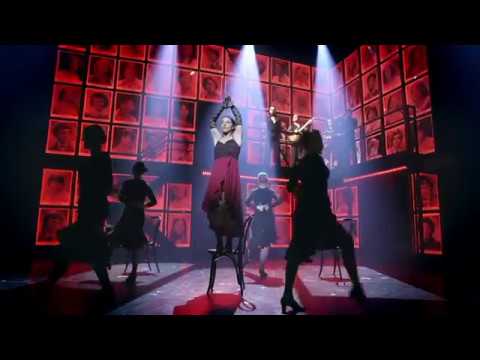
Review: why the lyrics still sting
Why does a show called “Fame” spend so much time talking you out of fantasy? Because this book and score keep insisting on labor. The central lyric idea is blunt: talent does not rescue you from time, money, or homework. The words push forward like a rehearsal schedule. They name the grind, they repeat it, they turn it into a chorus. That insistence is the show’s best dramatic engine, even when the writing slips into slogan.
Musically, “Fame” lives in the late-20th-century theatre-pop pocket: rock combo drive, clean hooks, and ensemble sections designed to flip from classroom to hallway to stage with minimal breath. When the lyric writing is sharpest, it works by contrast. The students sing about success in bright, public language, then the story forces private consequences. Carmen’s star talk becomes survival talk. Tyrone’s swagger turns into literacy, then fear. Mabel’s jokes become prayer. The score doesn’t romanticize the building. It makes the building a pressure cooker.
How it was made
“Fame” began as a real-world fixation. Producer David De Silva was fascinated by the actual High School of Performing Arts in New York, even without a personal connection to it, and that curiosity shaped the 1980 film and later the stage adaptation. Onstage, the creators rebuilt the concept with a mostly new score, keeping the film’s title song as the famous holdover. When the show reached New York Off-Broadway in 2003, it carried a practical subtitle, “Fame on 42nd Street,” named after its address, and the production was recorded quickly as a cast album on Q Records.
The interesting craft problem is structural, not sentimental. This story is an ensemble mosaic, so the lyric writing has to do double duty: define character fast, and still leave oxygen for dance and scene transitions. That is why the lyric voice often chooses directness over poetry. It’s built for cues, group movement, and the sound of a whole class answering back.
Key tracks & scenes
"Pray I Make P.A. / Hard Work" (Students / Company)
- The Scene:
- Auditions and first-day nerves. A corridor of bodies trying to look casual while counting every mistake. Bright rehearsal lights. Clipboards. A teacher’s stare that lands like a downbeat.
- Lyrical Meaning:
- The show tells you its thesis immediately. The lyric doesn’t flatter talent. It names effort, repetition, and the price of wanting in public. “Fame” starts as a fantasy, but “Hard Work” is the first real vow.
"I Want to Make Magic" (Nick)
- The Scene:
- Before class, an early confession. One student speaking too honestly, too soon. The staging is usually still, like a private monologue trapped in a hallway.
- Lyrical Meaning:
- Nick’s language is yearning without irony. The word “magic” is not about tricks. It’s about effect: making an audience feel. It’s also a warning, because “effect” can become addiction.
"There She Goes / Fame" (Carmen)
- The Scene:
- Lunch turns into a runway. Carmen imagines the cafeteria as a spotlight and the students as a cheering press line. The number blooms into an ensemble dance that looks like a daydream taking over the building.
- Lyrical Meaning:
- Carmen sings in headlines. She speaks her name into existence. The lyric sells confidence as armor, but it also shows the risk: if you only know how to be seen, you are easy to use.
"Bring on Tomorrow" (Schlomo & Carmen)
- The Scene:
- A writing session that turns into intimacy. A melody in the air, a lyric draft in someone’s hand, and the electricity of being understood. Softer lighting. Fewer bodies. More focus.
- Lyrical Meaning:
- This is the show’s cleanest metaphor for collaboration. Two voices revise each other. The lyric treats the future as something you can build, not something you wait for. It’s also Carmen’s most human moment, because she pauses her performance persona.
"The Teachers' Argument" (Miss Sherman & Miss Bell)
- The Scene:
- Adults fight in the same hallways as the kids. The tension is fluorescent. The stakes are grades, festivals, and whether the school protects students or sorts them.
- Lyrical Meaning:
- The lyric frames two kinds of care: discipline versus belief. Tyrone’s future sits between them. It’s one of the few times the show admits that “hard work” is not evenly distributed, because systems decide whose mistakes are forgiven.
"Mabel's Prayer" (Mabel)
- The Scene:
- Dance rehearsal. A joke that suddenly can’t stay funny. The room quiets as Mabel speaks to God like it’s the only audience that won’t measure her.
- Lyrical Meaning:
- Mabel’s lyric turns comedy into vulnerability. It refuses the fake confidence demanded of performers. In a show full of ambition, this is ambition redirected: a plea for dignity first.
"In L.A." (Carmen)
- The Scene:
- Carmen returns, depleted. The building that once felt like a launchpad now feels like a mirror. The staging often isolates her in a hard-edged pool of light while the school continues to move around her.
- Lyrical Meaning:
- The lyric flips the promise of stardom into aftermath. The glamour words are gone. What remains is consequence, and the show’s moral becomes specific: the industry loves the idea of youth, not the person.
"Bring on Tomorrow (Reprise)" (Schlomo & Company)
- The Scene:
- A farewell party that cannot hold the grief it’s avoiding. Everyone dressed up, everyone trying to keep the night alive. Then a revelation cuts through the noise.
- Lyrical Meaning:
- The reprise turns optimism into memorial. The words have to carry absence. It’s the moment when “tomorrow” stops being a slogan and becomes an ethical demand: live, but remember who didn’t get to.
Live updates (2025–2026)
“Fame” is in a fresh visibility cycle because producers keep re-framing it for new student generations. In the UK, National Youth Music Theatre has scheduled “Fame: The Musical” for August 2025 in Birmingham (Patrick Studio at Birmingham Hippodrome), a reminder that the show’s ensemble structure makes it a natural training ground. In 2026, Theatre Royal Plymouth has announced a “bold, new” revival running 28 July to 15 August 2026, directed and choreographed by Tom Jackson Greaves with design by Soutra Gilmour. The Plymouth on-sale page lists ticket prices starting from £14.50 for select performances, positioning the revival as both a repertory event and an access play.
In the US, licensed productions continue to populate regional calendars, with listings already posted into 2026 via MTI’s production database. If you track the title as a soundtrack property, the 2003 Off-Broadway cast album remains the key “New York” audio artifact: recorded in late October 2003 and released in November, it captures the show’s tightened Off-Broadway pacing and the period pop of that era’s theatre mixing.
Notes & trivia
- The stage musical was conceived and developed by David De Silva, with book by José Fernandez, music by Steve Margoshes, and lyrics by Jacques Levy.
- The title song “Fame” is the major musical carryover from the 1980 film, credited to Dean Pitchford and Michael Gore in theatre materials.
- “There She Goes / Fame” is staged as a lunchroom fantasy that swells into an ensemble dance sequence in synopsis materials.
- “Bring on Tomorrow” is written in-story as a collaboration between Carmen and Schlomo, making songwriting part of the plot, not decoration.
- The 2003 Off-Broadway run (“Fame on 42nd Street”) opened at the Little Shubert Theatre after previews that began October 7, 2003.
- The 2003 cast album was recorded on October 27, 2003 at the Hit Factory in New York and released November 18, 2003 on Q Records.
- For the 2026 Plymouth revival, performances are scheduled 28 July to 15 August 2026, with accessibility-tagged dates (captioned, BSL, audio described) listed on the venue page.
Reception, then vs. now
Critics have never agreed on what “Fame” is trying to be. Some hear a canny stage translation of a screen property, built for movement and quick character sketches. Others hear writing that leans on cliché because it needs to serve choreography and story traffic. That split often maps onto how much patience a reviewer has for earnestness in a teen ensemble.
“This would be ‘Fame,’ the indestructible musical adapted from the 1980 movie about teens with showbiz dreams.”
“The musical for children of all ages, provided they have no standards, ‘Fame’ … was originally performed in Swedish.”
“Yes, it’s got energy, but that energy is dissipated by a cliché-ridden script, banal songs …”
What has changed over time is the audience context. Today, the show reads less like a single era’s idea of stardom and more like an early draft of influencer culture: attention as currency, a school as content factory, and a constant push to convert private life into performance. In that light, even the bluntest lyrics can land as brutally honest, because the system they describe now feels familiar.
Quick facts
- Title: Fame (also staged as “Fame on 42nd Street” for the 2003 Off-Broadway run)
- Year focus for this guide: 2003 (Original Off-Broadway cast recording era)
- Type: Stage musical based on the 1980 film
- Conceived & developed by: David De Silva
- Book: José Fernandez
- Music: Steve Margoshes
- Lyrics: Jacques Levy
- Title song credits: Dean Pitchford (lyrics) and Michael Gore (music)
- Off-Broadway production: Little Shubert Theatre, previews from Oct 7, 2003; official opening Nov 11, 2003; closing June 27, 2004
- 2003 cast album: “Fame on 42nd Street (Original Cast Recording)” released Nov 18, 2003; recorded Oct 27, 2003 at the Hit Factory; label Q Records
- Selected notable placements: “Hard Work” at auditions and early school warnings; “There She Goes / Fame” as lunchroom fantasy; “Mabel’s Prayer” in dance rehearsal; “In L.A.” as Carmen’s crash back to reality
- Current staging signals (2025–2026): NYMT Birmingham dates in Aug 2025; Theatre Royal Plymouth revival announced for Jul–Aug 2026
Frequently asked questions
- Is “Fame” the same story as the 1980 film?
- It shares the school and the core premise, but the stage musical is substantially rewritten, with many new characters and a mostly new score, while retaining the title song “Fame.”
- What is “Fame on 42nd Street”?
- It’s the title used for the 2003–2004 Off-Broadway run at the Little Shubert Theatre on West 42nd Street, and it’s also the name on the 2003 cast recording.
- Which song best explains the show’s point of view?
- “Hard Work.” It turns the dream into a contract. The lyric insists that ambition has a daily cost, and the story keeps collecting that debt.
- Why is “Bring on Tomorrow” so central?
- Because it makes creation visible. The song is built inside the plot, with characters shaping language together, which gives the show one of its few moments of genuine tenderness.
- Is the show active in 2025–2026?
- Yes. Listings include a National Youth Music Theatre staging in Birmingham in August 2025 and a newly announced revival at Theatre Royal Plymouth running late July through mid-August 2026.
Key contributors
| Name | Role | Contribution |
|---|---|---|
| David De Silva | Conceived & developed | Originating producer figure behind the screen property and its stage life |
| José Fernandez | Book | Built the stage narrative architecture and character grid |
| Steve Margoshes | Composer | Wrote the theatre score built around pop-rock momentum and ensemble drive |
| Jacques Levy | Lyricist | Wrote lyrics that balance direct emotional statement with fast storytelling |
| Dean Pitchford | Lyricist (title song) | Co-wrote the film’s “Fame” song retained for the stage property |
| Michael Gore | Composer (title song) | Co-wrote the film’s “Fame” song retained for the stage property |
| Drew Scott Harris | Director (Off-Broadway 2003) | Staged the Little Shubert run under the “Fame on 42nd Street” banner |
| Lars Bethke | Choreographer (Off-Broadway 2003) | Structured the show’s dance language for Off-Broadway scale |
| Nicole Leach | Performer (Carmen, 2003 cast recording era) | Anchored Carmen’s ambition and collapse in the Off-Broadway cast |
| Shakiem Evans | Performer (Tyrone, 2003 cast recording era) | Centered Tyrone’s charisma and vulnerability in the Off-Broadway cast |
Sources: MTI Shows, MTI Europe, Playbill, Variety, New York Magazine (NYMag), TheaterMania, Whatsonstage, Theatre Royal Plymouth, AllMusic, Overture (ovrtur), New York Theatre Guide, Wikipedia.