
Drowsy Chaperone, The Lyrics: Song List
- Overture
- Hello
- Fancy Dress
- Percy Human
- Cold Feets
- Ooops Girl
- Show Off
- Beatrice Stockwell
- As We Stumble Along
- Roman Bartelli
- I Am Aldolpho
- Accident Waiting to Happen
- Tall Brothers
- Toledo Surprise
- Act 1 Finale
- Message from a Nightingale
- Bride's Lament
- Love Is Always Lovely in the End
- George's Triumph
- I Do, I Do in the Sky
- As We Stumble Along (Reprise)
- I Remember Love
About the "Drowsy Chaperone, The" Stage Show
The development of this musical began in 1997, when a few friends decided to make a creative mix of old and successful musicals and, based on them, to make a new one. Man in Chair was not only the character. In his head, events are born, but also he is a storyteller. The original version was as a little play, for less than 100 spectators. Then one of the producers has made it to the hall of 160 people, and after the subsequent success, expanded it to 1,000 viewers. All these production were in Toronto, and then it was decided to move a show to New York, where in 2004 it opened as first readings, preparation for Broadway. Bosses at the Broadway liked the idea and staging has begun as a full-scale readings and after a preview in the Ahmanson Theatre in 2005, in Los Angeles, it was transferred to Broadway in 2006, following some changes. The opening took place in Marquis Theatre and closed after pretty nice 674 nominal displays. Actors: J. Kravits, B. Saget, B. Martin, J. Smith, S. Foster, L. Wolpe, G. Engel, D. Burstein, E. Hibbert, E. Korbich, B. Leavel, G. Kravits & T. B. Johnson.
Arrival in the West End was in 2007 and it closed after only 100 exhibitions. Even the main role by Elaine Paige did not save a musical from cool reception. Despite this, however, the musical was back in the West End in 2013, with a different people – N. French, J. Partridge, S. Pemberton, S. Strallen, S. Perrington, J. Alessi, M. Goldthorpe, A. Rogers, P. Iveson, N. Grace, N. French, N. Holder, C. Jack, S. Chilton, A. Stafford & S. Kingsley. Due to the reduction of the cost on the most expensive places in the first row, production on West End reduced the enthusiasm of the actors, and it closed down six months earlier than originally planned.
Release date of the musical: 2006
"The Drowsy Chaperone" – The Musical Guide & Song Meanings
Review
“The Drowsy Chaperone” is a comedy that hides a bruise. The premise is goofy: a lonely theatre obsessive drops a needle on a beloved cast album and the 1928 show spills out into his apartment. But the score keeps letting reality seep through the cracks. The lyrics are written as pastiche, yes, but they are also written as commentary on why people need pastiche in the first place.
Lambert and Morrison’s lyric style is the show’s double engine. Inside the “record,” the writing chases Jazz Age punch and clean rhyme, a bright surface where every feeling can be solved by a chorus. Outside the record, the Man in Chair narrates with a contemporary bluntness that refuses easy uplift. That contrast makes the funny songs land harder. You hear a party number, then you hear a man admit he uses party numbers like medication.
Even the silliest lyric choices do narrative work. “Show Off” turns self-display into a survival reflex. “As We Stumble Along” is a big belting anthem about alcoholism that the Man in Chair calls out as irrelevant. That irrelevance is the point. A “star” wants her anthem, and the show bends around her. The lyric becomes a case study in ego, craft, and the strange ways musicals are built.
How It Was Made
The legend is true because the creators kept repeating it until it became fact. “The Drowsy Chaperone” began as a short spoof written as a wedding gift for Bob Martin, built by friends in the Toronto comedy and theatre scene. The “gift” version was small, quick, and designed to make one person laugh in one room. Then it kept expanding. Fringe success led to deeper Toronto development, then a larger commercial scale, then a reading for the National Alliance for Musical Theatre in 2004, and finally the American producing path that led to Broadway.
That origin story explains the lyric DNA. Lambert and Morrison write like people who learned musical theatre by loving it, not by imitating prestige. They mimic the era’s patterns, then smuggle in modern edges. The book writers sharpened the trick by inventing the Man in Chair as both narrator and critic. He is the audience member who cannot stop talking back. He is also the reason the lyrics matter. He keeps insisting the songs saved him, and then he makes you wonder what he needed saving from.
Key Tracks & Scenes
"Show Off" (Janet)
- The Scene:
- At Mrs. Tottendale’s estate, a wedding morning turns into a runway. Janet is the center, and the room behaves like it was built for her entrances. Bright party lighting, fast movement, bodies making space for a star.
- Lyrical Meaning:
- The lyric is a declaration and a warning. Janet’s confidence is written as performance, not inner peace. The song frames attention as oxygen, which makes the later “I don’t want to show off” reversal feel like an identity crisis, not a whim.
"As We Stumble Along" (The Drowsy Chaperone)
- The Scene:
- In Janet’s bedroom, the Chaperone turns advice into a torch song. The stage picture often narrows to a single figure who suddenly wants the whole theatre. The light feels like a nightclub spotlight dropped into a bridal suite.
- Lyrical Meaning:
- The lyric is a roaring confession dressed up as comic belting. The Man in Chair calls the number “not particularly relevant,” then explains it was demanded by the actress. That meta-note changes everything. The song becomes a portrait of how stardom can hijack storytelling, and how audiences forgive it when the pain sounds good.
"Toledo Surprise" (Gangsters, Feldzieg, Kitty, Mrs. Tottendale, Company)
- The Scene:
- Two gangsters disguised as pastry chefs crash the wedding prep with dessert carts and threats. It plays best with crisp comic timing and busy stage traffic. The lighting stays cheerful, which makes the menace funnier.
- Lyrical Meaning:
- The lyric treats violence like banter. That is the parody. It also mocks how older musicals could toss danger into a chorus line and call it charm.
"Message from a Nightingale" (Kitty, Gangsters, Aldolpho, Chaperone)
- The Scene:
- Kitty is pressured into performing a faux-Asian specialty number, complete with stage business that is meant to look “exotic.” Often played under stylized lighting that announces “show within the show.”
- Lyrical Meaning:
- This is where the score’s pastiche gets uncomfortable on purpose. The lyric and staging point at a history of musical comedy that used cheap stereotypes as seasoning. The laugh can catch in your throat. That friction is part of the show’s honesty.
"Accident Waiting to Happen" (Robert, Janet)
- The Scene:
- A romantic duet caught between sincerity and chaos, usually staged in a pocket of calm while other plots scramble. Softer light, fewer bodies, the sense of a private agreement forming.
- Lyrical Meaning:
- The lyric frames love as risk management. Janet is drawn to danger because danger feels like agency. The song gives her a reason to step away from the “perfect bride” script.
"Bride’s Lament" (Janet, Company)
- The Scene:
- Janet implodes. The wedding fantasy turns claustrophobic. Staging often places her inside her own spectacle, surrounded by people trying to keep the show moving.
- Lyrical Meaning:
- The lyric is a breakdown written in neat musical-comedy structure. That contrast is the gag and the tragedy. A woman is having a crisis and the genre insists she do it on the beat.
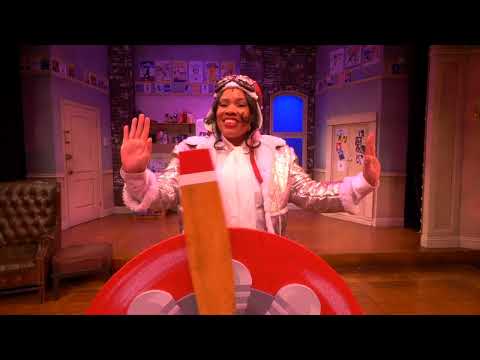
"I Do, I Do in the Sky" (Trix, Company)
- The Scene:
- A plane lands in the garden like a punchline with wings. Trix, the aviator, solves the minister problem by brute theatrical logic. Light becomes celebratory again, as if reality has surrendered.
- Lyrical Meaning:
- The lyric celebrates nonsense as problem solving. It is also the show’s purest statement of musical theatre faith: if you sing it confidently enough, the world will accept it.
"As We Stumble Along (Reprise)" (Company, with Man in Chair)
- The Scene:
- After the final chord, the power goes out in the Man in Chair’s apartment. When it returns, he is alone again, until the characters acknowledge him for the first time. The lighting shifts from “show” to “room,” then blurs the border.
- Lyrical Meaning:
- This reprise is the score’s emotional reveal. The lyric becomes communal, and the Man in Chair’s private coping mechanism turns into a shared gesture. The show lets him be seen, briefly, then lets him go.
Live Updates
The show’s 2025 and 2026 life is less about a commercial tour and more about events and licensing power. On October 20, 2025, “The Drowsy Chaperone” played Carnegie Hall as a one-night concert launching Breaking the Binary Theatre Festival, with an all-trans and non-binary cast highlighted in both the Carnegie listing and coverage afterward. That kind of concert does not rewrite the Broadway history, but it does refresh the show’s cultural footprint. It also reframes the piece’s core idea, a “record” that can be played again in a new body, a new room, a new era.
On the licensing side, the title remains a staple for regional houses, colleges, and schools. MTI’s listings and callboard entries show steady production activity, and “The Drowsy Chaperone JR.” has been available for licensing since 2023, making the property even easier to program for younger casts. In practice, that means the lyrics keep circulating. Not as a museum object. As a living script that keeps getting re-voiced.
Notes & Trivia
- The Broadway production opened May 1, 2006 at the Marquis Theatre and closed December 30, 2007 after 674 performances and 32 previews.
- It won five Tony Awards in 2006, including Best Original Score, Best Book, and Best Featured Actress in a Musical for Beth Leavel.
- IBDB credits the show with a Drama Desk Award for Outstanding Lyrics (Lambert and Morrison), a rare public stamp that the pastiche writing was craft, not imitation.
- The piece began as a short wedding-gift spoof in Toronto before becoming a full musical through Fringe and commercial development paths.
- MTI’s synopsis explicitly jokes that “As We Stumble Along” exists because an actress demanded a big anthem in every show she did, and the producers gave in.
- The original Broadway cast recording was released by Ghostlight Records, with recording sessions reported in April 2006 ahead of a June release.
- A one-night Carnegie Hall concert on October 20, 2025 positioned the show inside a contemporary conversation about gender inclusion in musical theatre.
Reception
Critics largely praised the concept and comic execution, then argued about the score’s staying power. That argument is baked into the show itself. It is a musical that keeps asking you why you love musicals.
“Though this revved-up spoof … seems poised to become the sleeper of the Broadway season, it is not any kind of a masterpiece.”
“Sure, the score … is pastiche … But …”
The Carnegie Hall concert “kicks off the fourth annual Breaking the Binary Theatre Festival.”
Quick Facts
- Title: The Drowsy Chaperone
- Broadway year: 2006
- Type: Musical comedy; meta-theatre pastiche
- Book: Bob Martin; Don McKellar
- Music and lyrics: Lisa Lambert; Greg Morrison
- Director and choreographer (Broadway): Casey Nicholaw
- Broadway venue: Marquis Theatre
- Broadway run: May 1, 2006 to December 30, 2007 (674 performances; 32 previews)
- Selected notable placements: “Show Off” (Janet’s wedding-morning persona); “As We Stumble Along” (Chaperone’s anthem); “Toledo Surprise” (gangsters disrupt the estate); “Bride’s Lament” (Janet’s crisis); “I Do, I Do in the Sky” (Trix solves the minister problem); “As We Stumble Along (Reprise)” (Man in Chair is finally seen)
- Album: The Drowsy Chaperone (Original Broadway Cast Recording)
- Album release context: Ghostlight Records release announced for June 13, 2006; recorded April 2006 per coverage and discographic listings
- Licensing: Available via Music Theatre International (MTI); “The Drowsy Chaperone JR.” available for licensing
- Recent headline event: One-night Carnegie Hall concert on October 20, 2025
Frequently Asked Questions
- Is “The Drowsy Chaperone” a parody or a love letter?
- Both, at once. The lyrics imitate 1920s musical comedy patterns, then let a modern narrator critique why those patterns still comfort people.
- Why does the Man in Chair keep interrupting the songs?
- He is the show’s truth-teller. The interruptions keep the score from becoming pure nostalgia and turn it into a story about loneliness and memory.
- Where does “As We Stumble Along” happen in the plot?
- In Janet’s bedroom, when the Chaperone is supposed to give bridal advice and instead breaks into a full-throttle anthem, which the narrator jokes is irrelevant.
- What is the main lyrical theme?
- Performance as coping. Characters in the “record” sing to control chaos, and the Man in Chair listens to survive his own.
- Is there an official cast album?
- Yes. The Original Broadway Cast Recording was released by Ghostlight Records in 2006.
- Is the show active in 2025 and 2026?
- Yes, mainly through licensing and special events. A major example is the one-night Carnegie Hall concert in October 2025, and MTI listings show ongoing productions.
Key Contributors
| Name | Role | Contribution |
|---|---|---|
| Lisa Lambert | Composer-lyricist | Wrote the score’s Jazz Age pastiche and its modern emotional reveals. |
| Greg Morrison | Composer-lyricist | Co-wrote music and lyrics, balancing parody craft with character clarity. |
| Bob Martin | Book writer; original performer | Co-wrote the book and originated the Man in Chair, the show’s narrator and critic. |
| Don McKellar | Book writer | Co-wrote the book’s meta structure and comic pacing. |
| Casey Nicholaw | Director; Choreographer (Broadway) | Built the production’s tight timing and big-number staging language. |
| Beth Leavel | Original Broadway cast | Created the Chaperone as both joke and ache, winning the Tony for Featured Actress. |
| Sutton Foster | Original Broadway cast | Played Janet, anchoring the score’s “Show Off” persona with real vulnerability. |
| Ghostlight Records | Label | Released the Original Broadway Cast Recording. |
Sources: MTI (show page and synopsis); IBDB; Playbill; The Canadian Encyclopedia; Variety; Broadway.com; Carnegie Hall; People; Wikipedia; Stage Door (Toronto review); YouTube.