Disney's Beauty And The Beast Lyrics – All Songs from the Musical
Disney's Beauty And The Beast Lyrics: Song List
- Act 1
- Prologue (The Enchantress)
- Belle
- No Matter What
- No Matter What (Reprise)
- Me
- Belle (Reprise)
- Home
- Home (Reprise)
- Gaston
- Gaston (Reprise)
- How Long Must This Go On?
- Be Our Guest
- If I Can't Love Her
- Act 2
- Entr'acte/Wolf Chase
- Something There
- Human Again
- Maison des Lunes
- Beauty and the Beast
- If I Can't Love Her (Reprise)
- A Change in Me
- Mob Song
- Battle
- End Duet/Transformation
- Beauty and the Beast (Reprise)
About the "Disney's Beauty And The Beast" Stage Show
Release date: 1994
"Beauty and the Beast" – The Musical Guide & Song Meanings
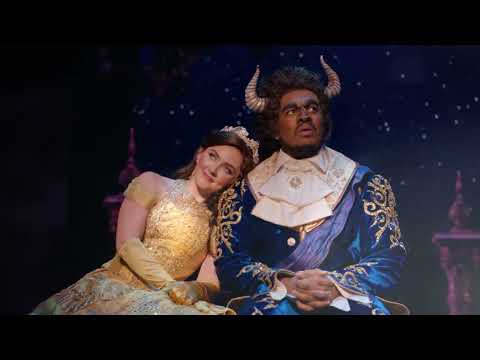
What makes a family title survive a two-act Broadway night, when the plot is already tattooed into pop memory? The answer is the lyric writing’s control of point of view. The stage version gives Belle language that sounds like thought, not slogan. It also gives the Beast interiority the film only hinted at. When this score is at its best, it is not “pretty” writing. It is agenda. It pushes choices forward, then makes the characters pay for them.
Review: Why the Lyrics Still Work
The 1994 Broadway adaptation stretches a fast, elegant animated story into a full evening. That could have meant padding. Instead, the text frequently sharpens motive. Howard Ashman’s film lyrics stay brisk and conversational, full of internal rhyme that feels tossed off, like smart talk in a small town. Tim Rice’s added stage lyrics aim for a more classical theatre “argument,” especially when the Beast and Belle are forced into solitude. You can hear the handoff. Ashman is wit under pressure. Rice is conscience under pressure.
Musically, Alan Menken’s writing is built around recognisable motifs that behave like stagecraft. Themes return with new harmonic weight once the curse feels real. Even comic numbers carry plot mechanics: in this show, spectacle is often a distraction the characters use to avoid saying the frightening thing out loud. The lyric design keeps exposing that avoidance, then removes the hiding place.
How It Was Made
Linda Woolverton adapted her own screenplay into a stage book and has spoken about the early pivot that unlocked the whole enterprise: the objects needed voices, which meant making the castle staff into singing characters with their own point of view. That single structural choice is why the musical can expand without collapsing. It gives the score more mouths, and it gives the story a constant witness inside the house.
The stage score is also a story about loss and substitution. Ashman died in 1991, so Rice joined Menken to write new material for Broadway. The most important additions are character songs, not ornamental extras. The Beast gets a real soliloquy. Belle gets an interior ballad that re-frames “freedom” as emotional risk, not simply escape. Later, “A Change in Me” was added in 1998 for Toni Braxton’s Belle, and the show kept it because it clarifies the plot’s moral engine: Belle’s transformation is not incidental, it is the whole mechanism.
Key Tracks & Scenes
"Belle" (Belle, Company)
- The Scene:
- A bright provincial morning. The town moves in patterns: vendors calling, doors swinging, gossip traveling faster than truth. Belle is lit like she does not belong to the same weather as everyone else.
- Lyrical Meaning:
- This is social anthropology set to melody. The lyric sketches a community that mistakes conformity for virtue. Belle’s lines introduce her hunger for a life with wider vocabulary, and the townspeople’s lines introduce the cost of being articulate in public.
"Gaston" (Gaston, LeFou, Ensemble)
- The Scene:
- A tavern that behaves like a courtroom, with Gaston as both judge and evidence. The staging is rhythmic chaos: claps, stomps, mugs, bodies turning bragging into choreography.
- Lyrical Meaning:
- The lyric is a propaganda poster in real time. It teaches the town how to adore a bully by making his arrogance sound communal. Pay attention to how the rhyme makes violence feel like a punchline. That is the point.
"Be Our Guest" (Lumière, Mrs. Potts, Company)
- The Scene:
- The castle’s dining room erupts into a managed fantasy. Light multiplies. The servants create luxury as persuasion, trying to keep Belle from running, and trying to keep the Beast from ruining his own chance.
- Lyrical Meaning:
- Hospitality becomes a strategy. The lyric sells comfort, but it is really selling time. The subtext is urgent: if Belle stays long enough to see a person inside the monster, everyone survives.
"Home" (Belle)
- The Scene:
- Late night in the castle after the first shocks. Belle is alone with the architecture. Shadows feel taller than walls. The space is grand, but it does not feel safe yet.
- Lyrical Meaning:
- “Home” is not nostalgia here. It is a debate with herself. The lyric turns captivity into a moral puzzle: can she protect her father without giving up her identity? The song makes Belle’s courage specific, not generic.
"If I Can't Love Her" (The Beast)
- The Scene:
- The West Wing fallout. Belle has fled. The castle goes still. The Beast is left with the sound of his own temper echoing back at him, and the rose functioning like a countdown clock.
- Lyrical Meaning:
- This is where Rice’s lyric approach earns its keep. The Beast does not ask for pity. He indicts himself. The words convert rage into grief, and grief into a reason to change. It is the show’s emotional hinge.
"Something There" (Belle, Beast, Castle Staff)
- The Scene:
- A sequence of small, almost embarrassing kindnesses. The castle staff watch like conspirators. The lighting softens because the danger has shifted from physical threat to emotional exposure.
- Lyrical Meaning:
- The lyric is cautious. Nobody wants to speak first. That restraint is dramatic intelligence: attraction is treated as a discovery, not an announcement.
"Human Again" (Lumière, Cogsworth, Mrs. Potts, Company)
- The Scene:
- The staff clean and restore the castle in anticipation of the ballroom. Movement becomes purpose. The number feels like work transformed into hope.
- Lyrical Meaning:
- This song is the ensemble’s thesis statement. The lyric gives the servants a stake beyond comic relief: they are running out of time too. Their optimism is practical. It is a survival plan with harmony.
"A Change in Me" (Belle)
- The Scene:
- Back in the village after Belle returns to help Maurice. The world looks the same, but she does not. The staging often makes the village feel tighter, as if it shrank while she was gone.
- Lyrical Meaning:
- The lyric explains the plot’s most important shift: Belle has moved from dreaming about “more” to understanding what “more” costs. It also prepares the audience to accept her defense of the Beast as earned, not naive.
Live Updates 2025–2026
As of 2025, “Beauty and the Beast” is back on the road in a reimagined 30th anniversary North American tour. The official tour site is advertising the production as currently touring, and industry listings place the tour’s opening on June 25, 2025, with a scheduled run extending into 2026. On the tour’s current promotional materials and production photography, Kyra Belle Johnson is billed as Belle and Fergie L. Philippe as the Beast.
Critically, the tour is not treating the 1994 stage script as untouchable. A recent review notes modernised staging elements such as projections and lighting updates, plus score tweaks and cuts that remove a few songs written for the original stage version. That kind of revision signals something practical: Disney’s theatre brand is protecting the strongest lyric beats, while trimming connective tissue that can slow a contemporary audience’s ear.
If you are tracking song choices for this era, pay attention to what stays: the lyric-driven character turns, the ensemble numbers that set social pressure, and the Beast’s interior ballads. Those are the structural pillars. Everything else is negotiable.
Notes & Trivia
- The original Broadway production opened April 18, 1994, and later became one of Broadway’s longest-running shows.
- The Original Broadway Cast Recording is widely listed with an April 26, 1994 release date, and it remains available on major streaming platforms.
- Several key stage songs were written to deepen character psychology: Belle’s “Home,” Gaston’s “Me,” and the Beast’s “If I Can't Love Her.”
- “Human Again” began life as a film song that was cut for pacing, then revived and reworked for the stage.
- “A Change in Me” was added in 1998 for Toni Braxton and then retained, because it clarifies Belle’s transformation in plain dramatic terms.
- In current tour discourse, reviewers have called out orchestration refreshes and a willingness to cut weaker material rather than inflate the runtime.
Reception Then vs. Now
In 1994, a major part of the conversation was scale. Could Disney’s animation language survive the blunt physics of Broadway? Some critics admired the polish more than the risk. Others acknowledged that the score already had Broadway DNA. Over time, the show’s reputation has become less about whether it “belongs” and more about what it taught the industry: popular musical storytelling can be formal, lyrical, and still sell tickets.
“Three unnecessary songs ... are cut. New orchestrations ... enliven the score.”
“An extravagant, memorable update on a tale that’s as old as time, but as exhilarating as ever.”
“A delight! The astonishments rarely cease!”
Quick Facts
- Title: Beauty and the Beast
- Broadway Opening: 1994 (Palace Theatre, New York)
- Type: Stage musical adaptation of Disney’s 1991 animated film
- Music: Alan Menken
- Lyrics: Howard Ashman (film songs), Tim Rice (new stage material and additions)
- Book: Linda Woolverton
- Original Broadway Leads: Susan Egan (Belle), Terrence Mann (Beast)
- Original Broadway Cast Recording: Released April 26, 1994; recorded at Sony Music Studios (New York City); commonly credited to Walt Disney Records
- Selected notable placements in the stage narrative: “Be Our Guest” (dinner spectacle), “Home” (Belle alone in the castle), “If I Can't Love Her” (Beast’s Act I crisis), “Human Again” (castle staff preparing for the ballroom), “A Change in Me” (Belle’s Act II self-report)
- Current status: A reimagined 30th anniversary North American tour launched in 2025 and continues into 2026
Frequently Asked Questions
- Does the stage musical use the same lyrics as the 1991 film?
- Partly. Many film songs keep Howard Ashman’s lyrics, while the Broadway expansion adds new songs with lyrics by Tim Rice to deepen character arcs and stage pacing.
- What is the single most important new lyric moment for the Beast?
- “If I Can't Love Her.” It gives him a full interior argument, turning the story’s curse into a personal reckoning rather than a plot device.
- Where does “Home” happen, and why does it matter?
- It typically lands after Belle’s early days in the castle. The lyric frames her isolation as an active choice to endure, which makes the romance feel earned later.
- Why was “Human Again” added to the stage version?
- It expands the castle staff into emotional stakeholders. Dramatically, it raises urgency and makes the household’s hope tangible.
- Is “A Change in Me” part of the 1994 cast album?
- No. It was added later, in 1998, and the original cast recording predates it.
- Is the musical touring in 2025–2026?
- Yes. A 30th anniversary North American tour opened in June 2025 and is scheduled to continue through 2026, per industry listings and the official tour site.
Key Contributors
| Name | Role | Contribution |
|---|---|---|
| Alan Menken | Composer | Music for film and stage; co-created new stage songs and signature motifs. |
| Howard Ashman | Lyricist | Film lyrics retained in the stage score; foundational character voice and comic precision. |
| Tim Rice | Lyricist | New stage lyrics and additions that expand character psychology and plot clarity. |
| Linda Woolverton | Book writer | Adapted her screenplay into a two-act stage book; expanded the castle staff’s dramatic function. |
| Matt West | Director and choreographer (tour); choreographer (original Broadway) | Revisited staging and movement language for the 30th anniversary touring production. |
| Stanley A. Meyer | Scenic design | Credited on current tour materials as part of the reuniting creative team. |
| Ann Hould-Ward | Costume design | Credited on current tour materials; iconic silhouette work for enchanted-object characters. |
| Natasha Katz | Lighting design | Credited on current tour materials; modern lighting language supporting stage magic. |
| Danny Troob | Orchestrations | Orchestration identity referenced in contemporary discussion of refreshed tour sound. |
| David Friedman | Music supervisor | Commonly credited for music supervision in production documentation. |
Sources: IBDB; Official tour site (beautyandthebeastthemusical.com); Playbill; MTI Shows; Times Union; London Evening Standard; BroadwayWorld; D23 (Walt Disney Archives); Apple Music; AllMusic; PBS American Masters (Tim Rice interview); Wikipedia (development and song context pages).