
Best Foot Forward Lyrics: Song List
- Act 1
- Don't Sell the Night Short
- Three Men on a Date
- That's How I Love the Blues
- The Three B's
- Everytime (Ev'ry Time)
- The Guy Who Brought Me
- I Know You By Heart
- Shady Lady Bird
- Shady Lady Bird (Reprise)
- Act 2
- Buckle Down, Winsocki
- My First Promise
- What Do You Think I Am?
- Just a Little Joint With a Juke Box
- Where Do You Travel?
- Everytime (Ev'ry Time) (Reprise)
- I'd Gladly Trade
About the "Best Foot Forward" Stage Show
George Abbott, the director, has already worked before with Hugh Martin, who wrote to George several other musicals. He successfully replaced his other companions, who were unable to work while suffering because of personal injuries and drinking large amounts of alcohol due to this, which adversely affected the general tone of their efficiency. The basis for the musical was taken by one of the stories of John Cecil Holm, however, at that time it was not published yet. Holm also agreed to write a libretto for the musical that he successfully managed. While musicals about seniors on Broadway experienced considerable favor, it was decided to continue the trend. It has been dealt to hire freshly actors for high school students, whose faces were not famous yet, with no regular employment in other theater productions expected. Therefore, the risk that they will drop out during the project, exchanged it for the other, has been minimal.
The show was bright because it had a lot of positive choreography and good humor that sparkled brightly from all the actors. Many critics praised the show, noting how strong it was in everything – choreography, book & play of actors. However, some old farts noted that it was too much youth on the stage – but this is quite normal, because there will always be dull boredoms that won’t like something good.
For the first time it was delivered in 1941, and in 1943 musical had a spin-off in the direction of film with the same plot. Broadway saw the premiere at fall of 1941, after a successful test shows out of town. Choreography has been worked out by Gene Kelly, and a famous then actress Rosemary Lane starred in it. She was the most beautiful among her sisters, who began their singing careers as a quartet, then became a trio. There were 5 sisters, but the fifth did not enter the showbiz.
Release date of the musical: 1941
"Best Foot Forward" – The Musical Guide & Song Meanings
Review
“Best Foot Forward” sells innocence with a straight face. In 1941, that was not a small thing. George Abbott builds a show around kids and a Hollywood starlet, but the lyrics keep exposing the adult machinery underneath: publicity, reputation, discipline, desire. Hugh Martin and Ralph Blane write in bright, clipped phrases, like teenagers trying to sound older than they are. The characters live in a world of rules. Their main act of rebellion is singing faster than the rules can keep up.
The score’s secret is contrast. “Buckle Down, Winsocki” is a fight-song number with a hard spine, a chorus that sounds like it could recruit you. Then “Ev’ry Time” arrives and pulls the air out of the room, a private lyric in a show that mostly moves in crowds. That emotional whiplash is the point. The show is about a campus that pretends it’s a machine, then betrays itself with yearning. :contentReference[oaicite:1]{index=1}
Even the comedy is lyric-driven. The words keep measuring status: who’s dating whom, who’s famous, who’s embarrassed, who’s “in trouble.” The central plot device, a fan letter that becomes a real invitation, turns celebrity into a kind of teenage religion. When the star actually shows up, the songs don’t worship her. They swarm her. The lyrics make fame feel less like glamour and more like a fire alarm everyone runs toward at once. :contentReference[oaicite:2]{index=2}
How it was made
The musical opened on Broadway October 1, 1941 at the Ethel Barrymore Theatre and ran 326 performances, closing July 4, 1942. Abbott produced and directed. Gene Kelly choreographed, and the creative team included scenic and lighting design by Jo Mielziner and costumes by Miles White. :contentReference[oaicite:3]{index=3}
One origin detail explains why the show feels built for young voices: the prep-school theme let Abbott hire a large group of inexpensive unknowns at a time when the draft could pull performers away. It is a practical reason that shaped an aesthetic. The result is a musical that moves like a youth stampede. :contentReference[oaicite:4]{index=4}
The best creation story is personal. Hugh Martin later said he wrote “Ev’ry Time” as an audition piece, on a clanging New York subway, to prove himself for Abbott and the Broadway world he was trying to enter. It is almost funny to picture. A ballad that gentle, composed in rush-hour noise. It also tracks with Martin’s gift: he could hide softness inside hustle. :contentReference[oaicite:5]{index=5}
And the choreography’s family tree is real Broadway history. When Kelly was hired, Stanley Donen became his assistant. If the show’s dancing feels like it wants to burst out of the proscenium, that may be why. :contentReference[oaicite:6]{index=6}
Key tracks & scenes
"Don't Sell the Night Short" (Minerva, Blind Date, Students and Girls)
- The Scene:
- Early school-life bustle. A gym and dorm rhythm, lights bright and institutional. The students treat the night like it’s a resource to spend before it disappears. :contentReference[oaicite:7]{index=7}
- Lyrical Meaning:
- The lyric is teenage time pressure. It sets the show’s emotional clock: everyone is young, everyone is in a hurry, and nobody knows what the world is about to demand.
"Ev'ry Time" (Helen)
- The Scene:
- A quiet pocket inside the school comedy. Helen steps out of the crowd and sings like she’s finally alone, the lighting narrowing to something almost confession-booth intimate. :contentReference[oaicite:8]{index=8}
- Lyrical Meaning:
- This is the show admitting heartbreak is real even when the plot is silly. The lyric is simple on purpose. It has the directness of a girl who cannot afford fancy phrasing.
"The Guy Who Brought Me" (Gale, Jack, Bud, Dutch and Hunk)
- The Scene:
- Scene 5, “Room at the Eagle House.” A hotel room that smells like publicity. Gale Joy is suddenly in the boys’ world, and everyone starts bargaining with their tone.
- Lyrical Meaning:
- The lyric is social math. Who is owed attention. Who is being used. Who is pretending not to care. It turns dating into a transaction, then laughs so you do not notice it hurts.
"Shady Lady Bird" (Helen and Students)
- The Scene:
- First in the corridor outside the girls’ room, then exploding in the gymnasium as the student body joins in. It’s rumor as choreography, gossip with a drumline under it.
- Lyrical Meaning:
- The song is a warning disguised as fun. The lyric shows how quickly a school can turn moral judgment into entertainment, especially when a celebrity is involved.
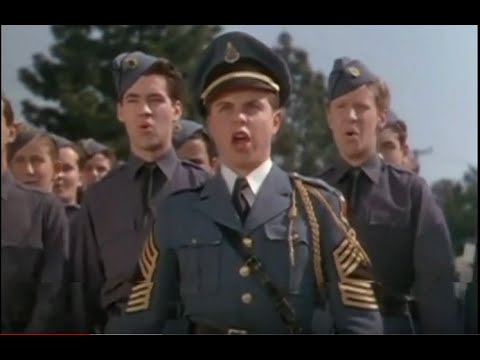
"Buckle Down, Winsocki" (Hunk, Old Grad and Chorus)
- The Scene:
- Act II, Scene 1, “The Gymnasium.” Flags, pep energy, military-school pride. The lighting is rally-bright, with the chorus moving like a single organism. :contentReference[oaicite:11]{index=11}
- Lyrical Meaning:
- It’s discipline as song. The lyric sells obedience as identity. That’s why it’s catchy and a little unsettling: it makes the school’s control system sound like joy.
"Where Do You Travel?" (Jack, Helen, Miss Delaware Water Gap, and Singers)
- The Scene:
- Scene 8, “The Gymnasium,” in the later stretch of Act II. A show-within-the-show flavor, with performers stepping into silly personas. The room feels like it’s trying to forget consequences. :contentReference[oaicite:12]{index=12}
- Lyrical Meaning:
- The lyric treats romance like geography. It’s comic, but it also hints at escape fantasies. Everyone wants out of the rules. Some characters just want out of town.
"I'd Gladly Trade" (Gale and Company)
- The Scene:
- Late Act II, after the chaos has curdled into real stakes. Gale, the professional, sees the emotional mess she helped create, and the ensemble tightens around her like a verdict. :contentReference[oaicite:13]{index=13}
- Lyrical Meaning:
- It’s the closest the show gets to remorse. The lyric suggests that fame and attention are not clean currency. You spend them, and somebody else pays.
Scene placement references above are grounded in Playbill Vault interior pages that list scenes and the musical numbers attached to them (notably the Eagle House room and the gymnasium sequences).
Live updates
In 2025 and 2026, “Best Foot Forward” is active primarily through licensing, not commercial Broadway production. Concord Theatricals lists the title for licensing and presents the full synopsis and materials request paths, which is the practical sign the show remains production-ready for schools and regional theatres that want a big ensemble comedy. :contentReference[oaicite:15]{index=15}
The show also has a small but steady concert-life afterlife. The York Theatre Company included it in its “Musicals in Mufti” staged-concert series (a reminder that the score is often revived as a “listen first” piece). Archival coverage of that 2004 presentation remains widely cited in theatre databases and announcements. :contentReference[oaicite:16]{index=16}
Streaming-era visibility leans on the fight song. “Buckle Down, Winsocki” continues to circulate in recordings and uploads, which keeps the title alive even when most people cannot name the plot. :contentReference[oaicite:17]{index=17}
Notes & trivia
- The original Broadway run opened October 1, 1941 and closed July 4, 1942, totaling 326 performances. :contentReference[oaicite:18]{index=18}
- George Abbott produced and directed; Gene Kelly choreographed. :contentReference[oaicite:19]{index=19}
- Hugh Martin said he wrote “Ev’ry Time” as an audition piece on a clanging New York subway. :contentReference[oaicite:20]{index=20}
- Stanley Donen became Gene Kelly’s assistant on the production, linking the show to the later Kelly-Donen film-musical pipeline. :contentReference[oaicite:21]{index=21}
- Nancy Walker’s Broadway debut and June Allyson’s early breakout are tied directly to this production’s youth casting strategy. :contentReference[oaicite:22]{index=22}
- The show spawned an MGM film adaptation in 1943 starring Lucille Ball, with multiple original stage performers retained. :contentReference[oaicite:23]{index=23}
- The 1963 Off-Broadway revival at Stage 73 featured Liza Minnelli and Christopher Walken, and Minnelli won a Theatre World Award. :contentReference[oaicite:24]{index=24}
- The tune of “Buckle Down, Winsocki” was later repurposed in political parody as “Buckle Down With Nixon.” :contentReference[oaicite:25]{index=25}
Reception
“Best Foot Forward” is usually remembered as a pre-“Oklahoma!” crowd-pleaser that understood its audience: people who wanted youthful energy without heavy moral homework. Contemporary summaries emphasize lively staging and catchy tunes, and later writing tends to focus on how much Broadway talent the show incubated. A 1963 reference point is unavoidable because it marks Liza Minnelli’s stage debut and proves the material can survive a generational shift when cast with real teenage voltage. :contentReference[oaicite:26]{index=26}
“I’m alive and kicking” goes one of the songs from Best Foot Forward, and I’m glad to say that at the age of 88 composer-lyricist Hugh Martin remains alive and kicking…
“Best Foot Forward is a show that seems to offer a bushel of lucky four-leaf clovers to those who become involved with it.”
“In 1963 … Liza Minnelli made her stage debut in ‘Best Foot Forward’…”
Technical info
- Title: Best Foot Forward
- Year: 1941 (Broadway premiere) :contentReference[oaicite:27]{index=27}
- Type: Musical comedy (prep-school ensemble farce)
- Book: John Cecil Holm :contentReference[oaicite:28]{index=28}
- Music & lyrics: Hugh Martin and Ralph Blane :contentReference[oaicite:29]{index=29}
- Producer / director (1941): George Abbott :contentReference[oaicite:30]{index=30}
- Choreography (1941): Gene Kelly :contentReference[oaicite:31]{index=31}
- Design (1941): Jo Mielziner (scenery and lighting), Miles White (costumes) :contentReference[oaicite:32]{index=32}
- Broadway run: Ethel Barrymore Theatre; Oct 1, 1941 to Jul 4, 1942; 326 performances :contentReference[oaicite:33]{index=33}
- Selected notable placements: Scene 5, Eagle House room (“The Guy Who Brought Me”); corridor-to-gym rumor sequence (“Shady Lady Bird”); Act II gym pep rally (“Buckle Down, Winsocki”); Act II gym revue slot (“Where Do You Travel?”) :contentReference[oaicite:34]{index=34}
- Film adaptation: MGM film (1943), adapted from the stage musical :contentReference[oaicite:35]{index=35}
- Album status: A widely circulated cast album is the 1963 Off-Broadway revival recording (Cadence Records), available on major streaming platforms :contentReference[oaicite:36]{index=36}
- Availability: Licensed by Concord Theatricals :contentReference[oaicite:37]{index=37}
FAQ
- Who wrote the lyrics to “Best Foot Forward”?
- Hugh Martin and Ralph Blane wrote the music and lyrics, with a book by John Cecil Holm. :contentReference[oaicite:38]{index=38}
- Where does “Buckle Down, Winsocki” happen in the show?
- In Act II, the number is staged in the gymnasium as a pep-rally style sequence, according to the scene-and-song listings in surviving Playbill pages.
- Why does the score jump from pep songs to torchy ballads?
- Because the show’s emotional design is contrast: crowds and discipline versus private longing. “Ev’ry Time” is the clearest example, written as a tender, direct confession inside a comedy. :contentReference[oaicite:40]{index=40}
- Is there a movie version?
- Yes. MGM released a 1943 film adaptation starring Lucille Ball, adapted from the Broadway musical. :contentReference[oaicite:41]{index=41}
- Can theatres license it today?
- Yes. Concord Theatricals lists it for licensing and materials requests. :contentReference[oaicite:42]{index=42}
Key contributors
| Name | Role | Contribution |
|---|---|---|
| Hugh Martin | Composer-lyricist | Co-wrote the score; later described writing “Ev’ry Time” as an audition piece on a New York subway. :contentReference[oaicite:43]{index=43} |
| Ralph Blane | Composer-lyricist | Co-wrote the score, including the enduring fight-song architecture of “Buckle Down, Winsocki.” :contentReference[oaicite:44]{index=44} |
| John Cecil Holm | Book writer | Built the prep-school farce and its celebrity-invasion premise. :contentReference[oaicite:45]{index=45} |
| George Abbott | Producer / Director (1941) | Shaped the show as a youth-driven Broadway comedy and anchored its staging pace. :contentReference[oaicite:46]{index=46} |
| Gene Kelly | Choreographer (1941) | Created the dance identity of the original production; early major full-musical choreography credit. :contentReference[oaicite:47]{index=47} |
| Jo Mielziner | Scenic / Lighting | Designed scenery and lighting for the 1941 Broadway production. :contentReference[oaicite:48]{index=48} |
| Miles White | Costume designer | Costumed the 1941 production with a clean, institutional school look that supports the show’s discipline theme. :contentReference[oaicite:49]{index=49} |
| Concord Theatricals | Licensing | Current licensing home and materials access for modern productions. :contentReference[oaicite:50]{index=50} |
Sources: IBDB, Playbill Vault, Concord Theatricals, Playbill (Steven Suskin), TheaterMania, Variety, WKAR, Los Angeles Times, Wikipedia, The Songbook (Great American Songbook Foundation), YouTube.