Zorba Lyrics – All Songs from the Musical
Zorba Lyrics: Song List
- Act I
- Life Is
- The First Time
- The Top of the Hill
- No Boom Boom
- Vive La Difference
- Mine Song
- The Butterfly
- Goodbye, Canavaro
- Grandpapa
- Only Love/The Bend of the Road
- Act II
- Yassou
- Woman
- Why Can't I Speak/That's a Beginning
- Easter Dance
- Miner's Dance
- The Crow/Happy Birthday
- I Am Free/Life Is(Reprise)
About the "Zorba" Stage Show
Zorba is a musical with a book by Joseph Stein, lyrics by Fred Ebb, and music by John Kander. Adapted from the 1946 novel Zorba the Greek by Nikos Kazantzakis and the subsequent 1964 film of the same name, it focuses on the friendship that evolves between Zorba and Nikos, a young American who has inherited an abandoned mine on Crete, and their romantic relationships with a local widow and a French woman, respectively.The musical premiered on Broadway in 1968 in a production directed by Harold Prince. The original production ran for 305 performances, and a 1983 Broadway revival ran for 362 performances with a cast starring Anthony Quinn.
It took only four years to bring Zorba’s affirmative antics, which seemed a nice match for the peculiarly moralistic hedonism of the 1960s, to Broadway. But as staged by Harold Prince, fresh off the success of another Kander-Ebb collaboration, “Cabaret,” the 1968 musical adaptation was said to be darker than the film, and closer in spirit to Kazantzakis’s book. It began with the forbidding lyrics, “Life is what you do while you’re waiting to die.”
Still, audiences didn’t seem to mind the morbidity; the show, starring Herschel Bernardi, was declared by The New York Times critic Clive Barnes to be better than “Cabaret,” and it ran for 305 performances. A 1983 revival, which brought in Mr. Quinn to recreate his signature film role onstage, ran even longer. But by that time, Frank Rich wrote in The Times, Zorba’s “grabby philosophy” felt tedious: “While it once seemed liberating and romantic, it now sounds juvenile.”
As if conscious of the dangers of affirming that assessment, Mr. Bobbie’s production presents itself less as a declamatory yelp than as a wistful sigh. And playing a big-hearted erotomane, who teaches an inhibited young American (a sweet-sounding Santino Fontana) to lead with his loins, Mr. Turturro (an excitingly intense presence in Coen brothers movies like “Barton Fink”) is subdued to the point of depressiveness.
Adapted for Encores! by John Weidman, the script is an episodic portrait of one man’s sentimental education. Niko (Mr. Fontana), a former schoolteacher, comes to a village in Crete to check out an old lignite mine he has inherited. En route, he is befriended by Zorba, a Yannis-of-all-trades who immediately places himself in charge of Niko’s professional and personal affairs.
Zorba immediately begins a liaison with his landlady, Hortense (a wonderfully dithery and touching Zoë Wanamaker), a fading French cocotte. Niko gravitates, more slowly, toward the village’s resident beautiful widow (a serenely anxious Elizabeth A. Davis). But in this primal world, love is conducted in the shadow of death.
That grim reality is reflected in the philosophical musings of a Greek choral leader (Marin Mazzie, wry and voluptuous), who kibitzes on the action, with her backup squad of singing townspeople, and keeps telling us, to use the show’s opening song title, what “Life Is.” So what is it?
Well, it’s “what you feel, till you can’t feel at all,” and “learning that a tear drops anywhere you go, finding it’s the mud that makes the roses grow.” Zorba makes his own repeated contributions to this general pool of wisdom.
“The future is a pig’s behind. Now is what counts,” he says. And, “Logic is a woman’s behind.” And, “The only real death is the death we die every day by not living.” At times, “Zorba!” feels like a big, heaping plate of Greek butter fortune cookies.
Such adages don’t grow in depth by being set to music. The bouzouki-accented score — played impeccably by the Encores! Orchestra, directed by Rob Berman — has little of the showstopping brassiness associated with Kander and Ebb. Though it has moments of meditative beauty (especially in a love duet for Mr. Fontana and Ms. Davis), the music tends to trickle, as if the life under such robust consideration were but a rivulet.
The show has been given the sort of handsome, full-dress production we now expect from Encores! (Remember the days when its offerings really were concerts and didn’t seem to be auditioning for a Broadway transfer?) The choreographer, Josh Rhodes, has provided ensemble numbers for the villagers that are more notable for their enthusiasm than their synchronicity.
Mr. Turturro — who plays Zorba as a wily comic manservant type, more Sancho Panza than Don Quixote — is not a natural dancer (nor singer, but then neither was Mr. Quinn). When he leaps to his feet, to show Niko how to trip the light (and dark) fantastic, it seems less like an eruption of joy than yet another of those obligations that unescapable fate demands we fulfill.
Release date: 1983
"Zorba!" – The Musical Guide & Song Meanings
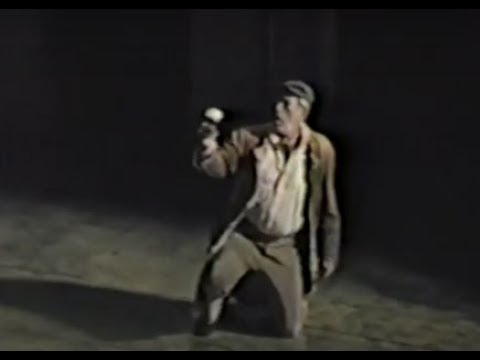
Review
“Zorba!” sells joy the way a seasoned bartender sells whiskey: straight, no ice, and with the warning already baked in. Fred Ebb’s lyrics do not pretend life is fair. They argue something harder: life is still worth meeting head-on, even when the village meets you back with superstition, cruelty, and blades. John Kander’s score gives that argument a pulse you can dance to, then yanks the floor away when tragedy arrives. It is not a “sunny” Greek postcard musical. It is a musical about the price of living out loud.
The central lyrical tension is between speech and silence. Zorba talks. A lot. Nikos hesitates, edits, intellectualizes. The Widow barely speaks, until her not-speaking becomes the loudest thing on stage. Even Madame Hortense, who performs romance like a practiced job, has lyrics that reveal a private terror: being forgotten. The songs keep returning to the same question in different costumes: what do you do with desire when your community wants it contained?
If you are approaching this through the 1983 revival lens, the writing lands with a particular irony: casting a movie star in the title role makes the show’s philosophy feel less like theatre poetry and more like a personal credo. The text is still Ebb’s, but the delivery becomes closer to a charismatic sermon. That shift changes how “Life Is” plays. In the right hands it is an anthem. In other hands it can sound like a dare.
How It Was Made
“Zorba!” (often seen simply as “Zorba”) has two key Broadway identities: the 1968 original and the 1983 revival. Joseph Stein adapted the book from Nikos Kazantzakis’ novel “Zorba the Greek,” with Kander and Ebb providing the music and lyrics. The 1983 revival opened October 16, 1983 at the Broadway Theatre, directed by the film’s director Michael Cacoyannis and starring Anthony Quinn and Lila Kedrova, both repeating their film roles. That casting is not trivia. It is dramaturgy. The show becomes, in part, a negotiation between musical-theatre craft and screen-icon gravity.
There is also a concrete staging difference often noted in retrospective writing: the original’s theatrical framing device, built around a bouzouki-circle concept, was reduced or reshaped in the 1983 approach, and the narrating “Leader” shifted into “The Woman.” That matters for lyrics because the narrator songs are the score’s moral commentary. Change the narrator, and the show’s point of view changes, even when the words do not.
On album, the 1983 revival is unusually helpful for lyric study because its official synopsis spells out who is singing what, and why, song by song. You can follow the plot by tracking the words that repeat: strangers, freedom, judgment, the village, the body, and that blunt refrain that doubles as the show’s thesis and its warning label.
Key Tracks & Scenes
"Life Is" (The Woman & Company)
- The Scene:
- A communal opening that feels like a circle closing around you. The village watches, comments, predicts. Light is bright but not forgiving, the kind that reveals everything you thought you could hide.
- Lyrical Meaning:
- Ebb frames “life” as action, not philosophy. The lyric is a manifesto against waiting. It also plants the show’s darker subtext: the same community that sings about living will later decide who gets to live safely.
"The First Time" (Zorba)
- The Scene:
- Zorba recruits Nikos with stories, appetite, and charm. The atmosphere is warm, almost conspiratorial, like an older man teaching a younger one how to stop flinching.
- Lyrical Meaning:
- The lyric is about discovery, but it is also about permission. Zorba sells experience as a form of courage. The hook works because it sounds simple, then reveals how radical “simple” can be.
"No Boom Boom" (Hortense, Zorba, Nikos & Admirals)
- The Scene:
- Hortense drinks and remembers. The tone is comic, flirtatious, a little desperate. The staging usually treats her past as a parade of uniforms and fantasy, with Zorba grinning at the performance and hearing the loneliness underneath.
- Lyrical Meaning:
- Ebb uses innuendo as camouflage. The lyric sells laughs, then sneaks in a portrait of aging and survival. Hortense is not “comic relief.” She is the show’s future, previewed early.
"The Butterfly" (The Widow, Nikos & The Woman)
- The Scene:
- Nikos approaches the Widow, then stalls. She retreats, then pauses. The village energy hangs at the edges like surveillance. Lighting often tightens here, isolating two people who cannot afford to be isolated.
- Lyrical Meaning:
- The lyric is about fragility, yes, but also about control. The Widow’s silence becomes a defense the men resent. Nikos’ gentleness becomes a provocation. The song makes desire feel dangerous because the environment makes it dangerous.
"Yassou" (Company)
- The Scene:
- A simulated betrothal, a celebration that is partly sincere and partly theatre inside theatre. Zorba gives Hortense what she wants “for a little while.” The music lifts; the audience laughs; the show quietly keeps score.
- Lyrical Meaning:
- The word itself is greeting and blessing. The lyric functions as communal approval, which is exactly why the scene stings: approval is temporary, conditional, and often bought with performance.
"The Crow" (The Woman, Crows & Monks)
- The Scene:
- Hortense is dying. The village women gather to pick her life clean. The staging often turns grotesque on purpose, with bodies clustering, whispering, reaching. Light goes colder, shadows sharper.
- Lyrical Meaning:
- The lyric is a moral indictment disguised as folk ritual. It shows what happens when a community treats vulnerability as property. It is one of the score’s most unsentimental moments.
"Happy Birthday" (Hortense)
- The Scene:
- Hortense drifts into memory. The room shrinks around her; the sound softens. It can play like a lullaby and a reckoning at the same time.
- Lyrical Meaning:
- The lyric refuses to make death neat. It grants Hortense dignity by letting her imagine herself young again, while never denying what the village has done to her.
"I Am Free" (Zorba)
- The Scene:
- After everything: murder, ruin, loss, and an exhausted friendship that is still intact. Zorba prepares to leave with nothing, which he calls freedom. The staging often clears space, making the exit feel like a horizon.
- Lyrical Meaning:
- This is Zorba’s creed in its final form. The lyric is not optimism. It is defiance. The show does not promise happy endings. It promises motion.
Live Updates
Info current as of February 2026. “Zorba!” remains active primarily through licensing and concert-style revivals rather than long commercial runs. Concord Theatricals continues to license the title, listing a two-hour-plus duration, a flexible cast size, and the score’s best-known numbers (“Life Is,” “No Boom-Boom,” “The Butterfly,” “I Am Free”).
In New York, the show received a high-profile modern concert revival at New York City Center Encores! in 2015, starring John Turturro, which renewed interest in the material and its lead role’s acting-first demands. Separately, the show continues to appear in semi-professional repertory programming: Playbill reported J2 Spotlight Musical Theater Company scheduled “Zorba” for April 24 to May 4, 2025 at AMT Theater in Manhattan.
Ticket-trend reality: you are more likely to encounter “Zorba!” as an event than as a long sit-down. That suits the piece. Its score hits hardest when it feels like a gathering, a village, a crowd deciding what it believes tonight.
Notes & Trivia
- The 1983 Broadway revival opened October 16, 1983 at the Broadway Theatre and ran 362 performances after 14 previews.
- In the 1983 revival, the narrating character is credited as “The Woman,” a shift from the original’s “Leader” framing.
- The official 1983 cast recording synopsis maps the plot song-by-song, including where “The Butterfly,” “The Crow,” and “I Am Free” sit in the story.
- The 1983 revival cast recording lists bouzouki among the featured instruments, reinforcing the score’s Greek color inside a Broadway orchestration.
- Concord’s licensing page notes the original production earned eight 1969 Tony nominations, including Best Musical, and won the 1969 Drama Desk Award for Outstanding Lyrics.
- Retrospective commentary has often singled out a practical truth: Anthony Quinn was not a “Broadway singer,” but his charisma made the revival a commercial draw.
- Modern revivals frequently emphasize the show’s darkness more openly than many remember: suicide, murder, and public shaming sit at the center of the Widow plotline.
Reception
“Zorba!” has always carried a split reputation: a robust score admired by theatre people, and a story whose tragedies make some audiences shift in their seats. In 1983, the revival’s reception added a second argument: can a musical be built around a lead actor who is essentially acting on top of the music? The show’s defenders answer yes, because Zorba is not meant to be pretty. He is meant to be persuasive.
From beginning to end: “fire and spirit,” with lyrics that are “witty and true.”
“Quinn couldn't sing much, but it didn't matter: He was Zorba.”
Quinn “made up in charisma” what he “lacked in vocal range.”
Awards
- 1969 Tony Awards: nominated for Best Musical as part of eight Tony nominations (original Broadway production).
- 1969 Drama Desk Award: Winner, Outstanding Lyrics (Fred Ebb), as listed in licensing and awards databases.
- 1969 Tony Awards: Winner, Best Scenic Design (Boris Aronson) for the original production, per Broadway production records.
Quick Facts
- Title: Zorba! (often listed as Zorba)
- Year focus: 1983 Broadway revival (opened October 16, 1983)
- Book: Joseph Stein
- Music: John Kander
- Lyrics: Fred Ebb
- Based on: “Zorba the Greek” by Nikos Kazantzakis (and its 1964 film adaptation)
- 1983 revival director: Michael Cacoyannis
- 1983 revival choreographer: Graciela Daniele
- 1983 principal cast (highlights): Anthony Quinn (Zorba), Lila Kedrova (Madame Hortense), Robert Westenberg (Niko), Taro Meyer (The Widow), Debbie Shapiro (The Woman)
- 1983 cast recording: First LP release listed as June 1, 1983; includes plot-synced synopsis and credits (Masterworks Broadway)
- Signature songs: “Life Is,” “The First Time,” “No Boom Boom,” “The Butterfly,” “The Crow,” “I Am Free”
- Licensing: Concord Theatricals
Frequently Asked Questions
- Who wrote the lyrics for “Zorba!”?
- Fred Ebb wrote the lyrics, with music by John Kander and a book by Joseph Stein.
- Why do some sources call it “Zorba” and others “Zorba!”?
- The title is commonly stylized with an exclamation point in licensing and promotional materials, while databases and recordings sometimes list it without punctuation.
- What is the 1983 revival, specifically?
- It is the Broadway Theatre revival that opened October 16, 1983, directed by film director Michael Cacoyannis and starring Anthony Quinn and Lila Kedrova.
- Is there a cast recording I can use to study the lyrics?
- Yes. The 1983 revival cast recording is commercially available and includes a detailed track-by-track story synopsis that helps match songs to plot beats.
- Where does “The Butterfly” land in the story?
- It sits at the moment Nikos and the Widow hesitate at the edge of intimacy, with the village’s gaze and violence hovering in the background.
- What song best captures Zorba’s philosophy?
- “I Am Free” is the final distilled statement. “Life Is” is the communal thesis. Hearing both gives you the show’s argument and its cost.
Key Contributors
| Name | Role | Contribution |
|---|---|---|
| Joseph Stein | Book | Turns Kazantzakis’ episodic philosophy into a stage narrative where community pressure becomes a dramatic engine. |
| John Kander | Composer | Builds a Greek-inflected Broadway score that can celebrate, threaten, and mourn without changing its musical DNA. |
| Fred Ebb | Lyricist | Writes the show’s core vocabulary: freedom, appetite, judgment, and the hard truth that joy does not cancel grief. |
| Michael Cacoyannis | Director (1983 revival) | Brings film-authentic authority and star casting to the revival’s storytelling tone. |
| Graciela Daniele | Choreographer (1983 revival) | Shapes the village as a physical force, using dance as communal opinion. |
| Harold Prince | Director (1968 original) | Defined the original’s theatrical framing, often discussed as more concept-driven than later revivals. |
| Anthony Quinn | Performer (Zorba, 1983 revival) | Acts the role with star charisma, shifting emphasis from vocal polish to persuasive presence. |
| Lila Kedrova | Performer (Madame Hortense, 1983 revival) | Gives Hortense comedy and devastation; her songs make aging feel like a plot point, not a punchline. |
| Debbie Shapiro | Performer (The Woman, 1983 revival) | Holds the narrator function that frames the score’s commentary and guides audience focus. |
| Concord Theatricals | Licensing | Current licensing home and reference hub for score highlights, duration, and accolades. |
References & Verification: Concord Theatricals (show summary, music samples list, accolades, embedded critic pull-quotes); Ovrtur production database (1983 revival song list and run dates); IBDB (1968 original and 1983 revival/tour production records); Masterworks Broadway (1983 cast recording synopsis, credits, and first LP release date); Broadway.com retrospective (1983–84 season commentary and staging differences); Deadline and The Hollywood Reporter (2015 Encores! review context); Playbill (1983 revival vault and 2024 announcement for a 2025 NYC run); J2 Spotlight production page (2025 dates and venue).