
You're a Good Man, Charlie Brown Lyrics: Song List
About the "You're a Good Man, Charlie Brown" Stage Show
Songs were composed by C. Gesner. The libretto was written by J. Gordon. Premiere of the play took place in Theatre on 80 St. Marks. From 1967 to beginning of 1971, there were 1597 regular performances. Production was directed by J. Hardy and choreographed by P. Birch. The show had cast: B. Balaban, G. Burghoff, B. Hinnant & S. Hinnant. In February 1968, Fortune Theatre hosted the premiere in West End. 116 performances were exhibited. Show was developed by J. Hardy and P. Birch. The histrionics had cast: D. Rhys-Anderson, B. Enten, D. Potter & G. Kidwell. From late 1968 to early 1970 were held the 1st North American tour with the participation of K. Kube, J. Hadary, T. D. Johnston & A. Gibbs. The 2nd national tour began in 1969. The actors were: A. Lofft, D. Phillips & M. Gaster.
In May 1971, the John Golden Theatre hosted the tryouts for Broadway. The play’s premiere took place in June 1971. It was lasting for 15 preliminaries and 32 regular theatricals. It was directed by J. Hardy and choreographed by P. Birch. The cast was: C. Cole, G. Cowan, S. Fenning, L. O'Neal & D. Stolber. In November 1998, pre-Broadway tour began, displaying the revised version. The adaptation of the libretto was done by M. Mayer. New songs and arrangements were created by A. Lippa. Tryouts began in the Ambassador Theatre in the beginning of 1999. The musical was on Broadway from February to June 1999 with 14 preliminaries and 150 regulars, directed by M. Mayer and choreographed by J. Mitchell with actors: K. Chenoweth, R. Bart, I. Levine & A. Rapp. In June 2016, York Theatre at St. Peter's Church took the off-Broadway production, directed by M. Unger. The cast involved J. Colley, G. Diaz, A. Gemme & M. Shapiro.
Release date of the musical: 1999
"You're a Good Man, Charlie Brown" – The Musical Guide & Song Meanings
Review
Why does a musical about six-year-olds land so cleanly on grown-ups? Because the lyrics talk like adults who have been shrunk down, then asked to explain themselves in public. "You're a Good Man, Charlie Brown" (in the 1999 revised Broadway version) is built out of vignettes, but the writing keeps returning to one stubborn theme: identity as a daily negotiation. Charlie Brown wants proof he is good. Lucy wants proof she is right. Linus wants proof his comfort object is rational. Snoopy wants proof the universe is paying attention.
Clark Gesner’s lyric voice is direct and conversational, with punch lines that arrive one beat late, like an anxious thought that will not stop editing itself. The 1999 revision adds a sharper Broadway engine: new material for Sally and fresher musical pacing. That shift matters because this score is not trying to sound like childhood. It is trying to sound like memory: compact, repetitive, and weirdly precise about small humiliations.
Musically, the show sits in classic Broadway territory, but scaled down: short forms, clear hooks, and character-first phrasing. The best numbers treat melody as psychology. When the line rises, it is usually because a kid is overcommitting to an idea they cannot possibly defend. That is the joke, and also the tenderness.
How it was made
The origin story is unusually clean for musical theatre: it began as recorded songs before it became a stage piece. In 1966, Gesner wrote and recorded Peanuts character songs that effectively functioned as a proof-of-concept, then producers pushed the project into a theatrical shape. That early DNA still shows. Even in the revised version, you can feel the score’s instinct to build a character, land a comic turn, and move on.
The 1999 Broadway revision is the more interesting production case study. The creative team treated the show like a small classic that needed contemporary muscle without losing its sketch-comedy bones. Material was re-ordered, some scenes were swapped out, and Andrew Lippa wrote new songs and revised sections of the existing score. The biggest structural change was character logic: replacing the earlier “Patty” slot with Sally, which rebalanced the show toward sibling chaos and gave the lyric writing a new weapon, namely a kid who intellectualizes at full speed.
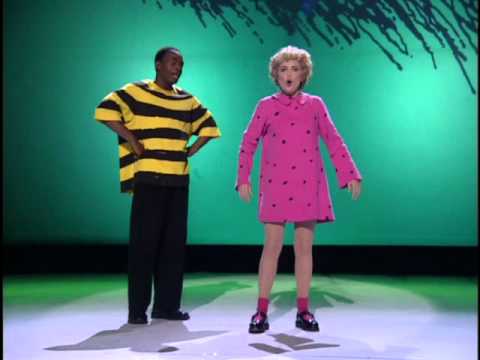
Staging notes for the revised prompt book make the intent explicit: scenes should read like frames of a cartoon strip, with minimal props and colored light doing much of the location work. The production choice is also an editorial choice. If you keep the world simple, you force the lyric to carry the meaning. That is the whole game here.
Key tracks & scenes
"Opening" (Company)
- The Scene:
- The stage is dark. Each kid gets a spotlight for spoken lines. Faces hang above them like a row of comic-strip close-ups. The world assembles itself out of voice and timing.
- Lyrical Meaning:
- This is the show’s thesis statement: Charlie Brown is defined by group commentary. The lyric introduces a community that cannot stop narrating him, which becomes its own pressure cooker.
"You're a Good Man, Charlie Brown" (Company with Charlie Brown)
- The Scene:
- A pep rally with a wink. Praise is offered, then immediately qualified. Charlie Brown stands in the middle of it, trying to figure out whether this is affection or a practical joke.
- Lyrical Meaning:
- The song turns “good” into a moving target. The lyric is bright, but it also sets up Charlie Brown’s core wound: he can never bank the compliment.
"Schroeder" (Lucy)
- The Scene:
- Lucy tries to stage-manage romance while Schroeder is busy worshipping his piano. Her confidence has the snap of someone reading from an imaginary handbook titled “How to Win.”
- Lyrical Meaning:
- Lucy’s lyric is control disguised as desire. It is funny because it is too articulate for the situation, and revealing because it is the only language she trusts.
"My Blanket and Me" (Linus)
- The Scene:
- Linus defends his blanket with the solemnity of a courtroom argument. The others orbit him like a chorus of skeptics who secretly envy his certainty.
- Lyrical Meaning:
- Comfort is framed as identity. The lyric makes a child’s dependency sound like a philosophy, which is exactly how dependency feels from the inside.
"The Doctor Is In" (Lucy and Charlie Brown)
- The Scene:
- Lucy runs a psychiatric booth with the confidence of a tiny tyrant. Charlie Brown arrives hopeful, then leaves poorer, which is an honest business model.
- Lyrical Meaning:
- The lyric is transactional therapy: pay up, get judged. It exposes Charlie Brown’s need for external permission and Lucy’s need to monetize authority.
"My New Philosophy" (Sally with Schroeder)
- The Scene:
- Sally spins through big ideas at top speed while Schroeder tries to anchor her to a single musical thought. The comedy is the mismatch: she is building a worldview out of slogans.
- Lyrical Meaning:
- This song is the revised version’s gift to the score. It is a lyric about intellectual fashion, and it nails how kids borrow language to feel powerful.
"Suppertime" (Snoopy with Company)
- The Scene:
- Lights reveal Snoopy high on the doghouse. The number becomes a mock-epic, with offstage voices backing him like a gospel choir. Charlie Brown enters with the food dish, baffled by the spectacle.
- Lyrical Meaning:
- Snoopy’s lyric is pure performance hunger. He turns a routine need into a showstopper, which is how attention works in this world: magnify the small until it sings.
"Happiness" (Company)
- The Scene:
- After a day of small defeats, the kids name what counts. Simple images stack up. The finale lands on a handshake and a line that finally sticks.
- Lyrical Meaning:
- The lyric refuses irony. It defines happiness as ordinary connection, which is why it hits. After a show full of anxious narration, it stops explaining and starts agreeing.
Live updates
This title is not “currently touring” in the glossy, one-ticketing-platform sense. Its real life is licensing. In 2025–2026, the revised version keeps popping up in regional houses, schools, and youth companies because the cast is small, the orchestra is manageable, and the audience promise is clear: families will show up.
Recent listings underline the pattern. Constellation Stage & Screen programmed the show for early November 2025 in Bloomington, Indiana, and local tourism coverage pegged tickets in a modest range, closer to a night-out play than a premium Broadway splurge. Theatre Denton scheduled the revised version for a February to March 2026 run, the kind of calendar slot that screams “reliable crowd-pleaser.” Meanwhile, the licensing page continues to foreground that the revised version is a distinct package with specific songs and rules, which matters because many producers still accidentally mix versions and wonder why paperwork gets tense.
If you want a historical pricing tell, Playbill Vault’s grosses for the 1999 Broadway run show an average ticket in the mid-$30s to around $40 range near the end of the engagement, with a top ticket well below modern Broadway ceilings. That does not translate cleanly to 2026, but it does reveal the show’s Broadway identity: popular, approachable, and not built to flex as an event-priced spectacle.
Notes & trivia
- The revised prompt book staging notes explicitly ask for a “cartoon strip” look: minimal props, colored light, and clean drops rather than naturalistic clutter.
- The 1999 Broadway revival played the Ambassador Theatre, and the licensed “Revised” version is the one that includes “My New Philosophy.”
- “Suppertime” is staged as a full-blown production number, complete with offstage vocal support, while Charlie Brown tries to keep it ordinary.
- On the Concord licensing page, the show is positioned as friendly to young audiences and also “cutting approved,” which helps explain its competition-season popularity.
- The 1999 revision’s creative logic is partly casting logic: adding Sally creates a comic engine that can carry a major new song.
- Playbill’s later critical commentary on recordings frames the original Off-Broadway sound as “piano and xylophone” minimalism, a reminder that scale is a choice, not a requirement.
Reception
The show’s reputation splits into two conversations: the material, which most people trust, and the scale, which critics tend to police. The more you inflate the world, the more you risk smothering the lyric’s featherweight timing. That tension was visible in the 1999 Broadway response and still shows up when revivals try to “upgrade” a piece that already knows what it is.
“I found it overblown and underwhelming.”
Playbill (Steven Suskin, 2000)
“A combination of miscasting, poor direction, and a play that runs out of steam.”
BroadwayWorld (Jonas Schwartz-Owen, 2021)
“An initial taste of Broadway” for young audiences, and “an introduction to major talents.”
TheaterMania (2016)
Awards
- Tony Awards (1999): Best Featured Actor in a Musical (Roger Bart), Best Featured Actress in a Musical (Kristin Chenoweth).
- Tony Awards (1999): Best Revival of a Musical (nomination); Best Director of a Musical (nomination).
Quick facts
- Title: You're a Good Man, Charlie Brown (Revised)
- Broadway year for the revised version: 1999
- Based on: Peanuts by Charles M. Schulz
- Book, music & lyrics: Clark Gesner
- Additional dialogue (revised version): Michael Mayer
- Additional music & lyrics (revised version): Andrew Lippa
- Musical style: Classic Broadway; small/compact orchestration typical of a combo
- Notable song placements (revised version): “My New Philosophy,” “Suppertime,” “Happiness”
- Album status: 1999 Broadway revival cast recording widely available on major streamers
- Staging note headline: comic-strip frames, minimal properties, lighting as location
Frequently asked questions
- Is this the same score people did in school?
- Maybe. Many schools use the original version. The revised version is a separate licensed package and includes “My New Philosophy” (and other revisions), so you need to choose intentionally.
- Why does “Happiness” hit so hard for such a light show?
- Because it stops trying to be clever. The lyric stacks ordinary images until the audience realizes the show has been arguing for simplicity all along.
- What changed in the 1999 revision that audiences actually feel?
- Pacing and personality balance. Adding Sally gives the show a new comic frequency, and the revised song order pushes Charlie Brown’s self-questioning closer to the front.
- Is there a movie of the Broadway version?
- No definitive filmed Broadway capture is widely released as a standard commercial “movie.” What you can find are televised performances and promotional clips, plus recordings.
- What makes the lyrics work onstage instead of just as songs?
- They behave like dialogue with a melody. Even the punch lines are character facts, and the rhyme tends to land as thought process rather than decoration.
Key contributors
| Name | Role | Contribution |
|---|---|---|
| Charles M. Schulz | Creator | Created the Peanuts characters and comic-strip world the musical adapts. |
| Clark Gesner | Composer-Lyricist / Book (core) | Wrote the score and the foundational vignette structure. |
| Michael Mayer | Director / Additional Dialogue (revised) | Re-shaped the revised version’s structure and dialogue for Broadway pacing. |
| Andrew Lippa | Additional Music & Lyrics (revised) | Wrote new songs and revised sections to match the expanded Broadway approach. |
| Steven Suskin | Critic / Historian | Provided influential commentary on how scale affects this material’s musical identity. |
References & Verification: IBDB production listings; Concord Theatricals licensing page and music list; Playbill editorial commentary and Playbill Vault grosses; Masterworks Broadway album notes; prompt book/libretto staging pages used for scene-level placement descriptions; recent regional listings and local tourism coverage for 2025–2026 scheduling and ticket ranges.