Witches of Eastwick, The Lyrics – All Songs from the Musical
Witches of Eastwick, The Lyrics: Song List
- Eastwick Knows
- Something / Make Him Mine
- Eastwick Knows (reprise)
- I Love a Little Town
- The Eye of the Beholder
- Waiting for the Music to Begin
- Words, Words, Words
- Something
- Dirty Laundry
- I Wish I May
- ACT TWO
- Another Night at Darryl’s
- Dance With the Devil
- Another Night at Darryl’s (reprise)
- Evil
- Dirty Laundry (reprise)
- Waiting for the Music to Begin (reprise)
- Three Little Ladies
- Words, Words, Words (reprise)
- I Love a Little Town (reprise)
- Darryl Van Horne (Reprise)
- I Wish I May (reprise)
- The Glory of Me
- The Wedding
- Finale
About the "Witches of Eastwick, The" Stage Show
Release date: 2000
"The Witches of Eastwick" (2000) – The Musical Guide & Song Meanings
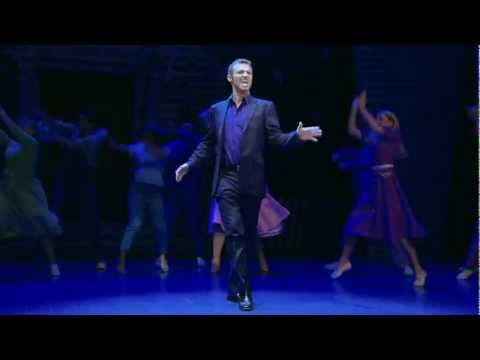
Review: what the lyrics are really doing
This score has a sneaky thesis: Eastwick is the villain, not the Devil. John Dempsey’s lyrics keep returning to surveillance, conformity, and the weird civic thrill of judging your neighbors. That’s why the opening number matters so much. The town sings like it is polishing silverware, and you can hear the knives underneath. Dana P. Rowe’s music answers with a book-musical logic that rarely tries to sound “cool.” It wants to sound inevitable, like the next piece of gossip arriving before you have finished swallowing the last one.
The lyric strategy is also practical. The show is based on a novel and a famous film, and those versions can lean on vibe and star power. The musical has to make choices, fast. Dempsey solves it by giving each major song a clear job: conjure, seduce, expose, punish, reverse. When the women sing together, the rhymes and parallel phrasing act like spellwork. When Darryl sings with them, the language tilts toward persuasion and permission. He does not just_toggle_ them toward pleasure; he offers them a new grammar for wanting it.
The show’s best trick is tonal whiplash with control. A number can be funny and ugly in the same breath, especially when the ensemble is weaponized as the town’s chorus. “Dirty Laundry” is the prime example: it is a comic set-piece that tells you exactly how communities enforce obedience, one remark at a time. The lyrics are light on metaphor there because the behavior is the metaphor.
How it was made
“The Witches of Eastwick” was developed as a major West End project: produced by Cameron Mackintosh, directed by Eric Schaeffer, and built to fill the Theatre Royal, Drury Lane in 2000. The original run began previews June 24, opened July 18, then later transferred to the Prince of Wales Theatre in 2001 with revisions to fit the smaller space. During that move, the show swapped a key song, replacing “Who’s the Man?” with the gospel-styled “The Glory of Me,” and reworked scenes and lyrics. That production history is not trivia. It explains why fans sometimes argue about “the” song list as if the show were a moving target, because it was. The official show-history notes describe the transfer, restaging, and cast turnover as part of the show’s London life.
Rowe and Dempsey have described their partnership as fast, direct, and low on “fluff,” which tracks with how the score behaves. The numbers are constructed like scenes that happen to sing. Even the big, supernatural theatricality is anchored to readable dramatic steps: the women want something specific, they say it out loud, and the world answers too literally.
If you want a tactile detail about the original production’s technical ambition, it is right there in the lighting documentation: the Drury Lane version relied heavily on moving-light automation, built for sudden weather shifts, spectacle, and a Devil who arrives like a lighting cue with teeth. That machinery served the storytelling. Eastwick is a normal town until the design says it is not.
Key tracks & scenes
"Eastwick Knows" (Little Girl, Townspeople)
- The Scene:
- Morning in Eastwick, framed as a child’s love letter to her town. The chorus joins in and the “sweetness” curdles into a civic warning: everybody watches, everybody remembers.
- Lyrical Meaning:
- The lyric sets the rules of the world: reputation is currency, gossip outruns truth, and women’s desire is treated as a public problem. It is exposition disguised as a hymn.
"Make Him Mine" (Alexandra, Jane, Sukie)
- The Scene:
- In Alexandra’s living room, the three friends drink, complain, and dare each other to admit what they want. The wish takes shape as a collective spell, equal parts joke and hunger.
- Lyrical Meaning:
- Dempsey writes desire as negotiation with shame. The women do not ask for love, exactly. They ask for “all manner of man in one man,” a lyric idea that invites the Devil by specifying the product.
"Waiting for the Music to Begin" (Jane, Darryl)
- The Scene:
- Darryl visits Jane in her studio while she plays cello. Their flirtation turns into a musical duel, staged in many productions like seduction by sound, with the instruments doing what people cannot say plainly.
- Lyrical Meaning:
- This is the show’s signature metaphor made literal: art becomes permission. The lyric and the scene make sexuality feel like an aesthetic awakening, which is exactly how Darryl sells it.
"Words, Words, Words" (Sukie, Darryl)
- The Scene:
- Sukie, the shy journalist, finds Darryl waiting for her. He pushes her past politeness and into honesty, like he is editing her self-censorship in real time.
- Lyrical Meaning:
- The lyric is about voice, not volume. Sukie’s arc is learning to stop apologizing mid-sentence. Darryl is the catalyst, but the song’s real subject is self-permission.
"Dirty Laundry" (Townswomen, Ensemble)
- The Scene:
- The town gathers to wash and gossip, turning domestic routine into a public tribunal about Darryl and the women he is seeing. The comedy lands because it is organized cruelty with a beat.
- Lyrical Meaning:
- It is a warning song disguised as a party number. The lyric shows how social control works: it sounds like chatter, but it functions like a verdict.
"I Wish I May" (Alexandra, Jane, Sukie, Darryl)
- The Scene:
- The three women appear in new, bold looks and sing through childhood insecurities, then Darryl teaches them witchcraft. The spell escalates into a showy coup: they curse Felicia via an enchanted object, and the women end the sequence literally flying above the audience in the London staging.
- Lyrical Meaning:
- The lyric is a group self-portrait that refuses to be polite. It ties private wounds to public rebellion, then turns that insight into power. The Devil’s gift is not magic; it is a shortcut around shame.
"Another Night at Darryl’s" (Alexandra, Jane, Sukie)
- The Scene:
- Act II begins with Darryl inviting Alexandra to a themed night at his mansion, and Alexandra tracking her own obsession like she is both thrilled and slightly horrified.
- Lyrical Meaning:
- The lyric is the hangover portion of empowerment. Pleasure is still pleasure, but now it comes with the question: who is steering, and who is being steered?
"Dance With the Devil" (Darryl, Michael, Ensemble)
- The Scene:
- At a diner, Darryl decides Eastwick’s men are bad at pleasing their wives and offers a public lesson. Some stagings underline the spectacle by putting bodies in the air and lighting the scene like a burlesque sermon.
- Lyrical Meaning:
- The song is propaganda wrapped in anatomy jokes. Darryl’s lyric pitch is liberation, but it also normalizes him as the town’s new authority on intimacy, which is how the Devil wins in a respectable place.
"Look At Me" (Alexandra, Jane, Sukie)
- The Scene:
- Late Act II, after the damage has been done and the women have learned what Darryl’s attention costs. The number functions as a collective turning point, aimed outward, aimed at the town, and aimed at the man they conjured.
- Lyrical Meaning:
- This is the reclamation song that does not beg. The lyric insists on visibility on their terms, not as scandal and not as fantasy. It is the show’s clearest “we are not your story” statement.
Live updates (2025–2026)
Information current as of February 2, 2026. “The Witches of Eastwick” is firmly in its post-West End life, which is another way of saying it keeps getting produced. Licensing infrastructure and the show’s three-star female casting requirements make it attractive to regional and amateur companies, and recent listings confirm that pattern: a sold-out 2025 run is documented by at least one venue page, and UK-area listings show multiple 2026 dates across different towns. The show is behaving like a cult title that programmers trust to sell when they have the right trio and a confident Darryl.
The most important “recent” London-facing moment remains the one-off West End concert at the Sondheim Theatre (June 20, 2022), directed by original cast member Maria Friedman, with major West End names announced in the cast. That event matters for the album-and-lyrics audience because concerts tend to clarify diction. If you have ever wondered whether certain jokes are in the orchestration or in the consonants, a concert answers it quickly.
Ticket trend you can actually use: when the show sells, it sells on casting and marketing tone. Sell it as campy witchcraft and you get curiosity. Sell it as a glossy, adult comedy with a spine and you get repeat business. Venues reporting sold-out status are not doing it by accident.
Notes & trivia
- The original West End production began previews June 24, 2000, opened July 18 at Theatre Royal, Drury Lane, then transferred to the Prince of Wales Theatre in 2001 before closing October 27, 2001.
- During the transfer, “Who’s the Man?” was replaced with “The Glory of Me,” and multiple scenes and lyrics were revised.
- The opening premise is openly about gossip as power. The first big ensemble number establishes Eastwick as a town where “everyone looks through their curtains,” which becomes the show’s social engine.
- One of the signature staging images in the London run was the trio flying out over the audience late in Act I.
- The 2022 West End concert at the Sondheim Theatre was directed by Maria Friedman, who originated Sukie in the 2000 London production.
- Lighting documentation for the original production describes a heavily automated moving-light rig designed for rapid shifts and spectacle.
- The Original London Cast Recording is commonly listed with an 18-track program and a UK release event dated November 6, 2000 on First Night Records.
Reception
The critical record is more interesting than the “mixed reviews” shorthand suggests. Reviewers who wanted a new mega-musical miracle heard a pleasant, well-made book show and shrugged. Reviewers who missed the concept of a book show in the first place often sounded relieved. The lyrics were a dividing line: when Dempsey leans into punchy musical-comedy innuendo, critics tend to smile. When the show turns sincerely self-affirming, some reviews describe the moral as too tidy for material that begins as satire.
“Dempsey’s book and lyrics have a nice snap and crackle that evoke the lost art of musical comedy.”
Michael Billington, The Guardian (July 20, 2000)
“Lyrics like ‘Now I see everything I needed was inside of me’ have a right-on correctness that sits oddly with the story’s satirical verve.”
Michael Billington, The Guardian (July 20, 2000)
“Lyrics are very relevant to the story,” with “Dirty Laundry” named as the comedy high spot.
Sheila Connor, British Theatre Guide (tour review, 2008)
Awards
- Laurence Olivier Awards (2001): nominated for Best New Musical.
- Laurence Olivier Awards (2001): Joanna Riding nominated for Best Actress in a Musical for creating the role of Jane Smart.
Quick facts
- Title: The Witches of Eastwick
- Year: 2000 (West End opening July 18, 2000)
- Type: Musical comedy with fantasy elements
- Based on: John Updike’s novel (1984) and the Warner Bros. film adaptation
- Book & lyrics: John Dempsey
- Music: Dana P. Rowe
- Producer (original London): Cameron Mackintosh
- Director (original London): Eric Schaeffer
- Original West End venues: Theatre Royal, Drury Lane (2000–2001); Prince of Wales Theatre (2001)
- Key staging motif (London): Act I ends with the trio flying out over the audience
- Cast recording: Original London Cast Recording (First Night Records); widely available on streaming platforms
- Album program highlights discussed: Eastwick Knows; Make Him Mine; Waiting for the Music to Begin; Dirty Laundry; I Wish I May; Dance With the Devil; Look At Me
- Availability: Active licensing ecosystem and frequent regional/amateur productions documented in 2025–2026 listings
Frequently asked questions
- Who wrote the lyrics for The Witches of Eastwick?
- John Dempsey wrote the book and lyrics, with music by Dana P. Rowe.
- Is the cast recording the same as the final London version?
- The most commonly circulated Original London Cast Recording reflects the show’s West End life, but the London production itself went through revisions, especially around the 2001 transfer, including the replacement of “Who’s the Man?” with “The Glory of Me.”
- What is the show’s main lyrical theme?
- How communities police women’s desire. The lyrics keep returning to observation, judgment, and the price of being talked about, until the witches decide they would rather be feared than managed.
- Is there a recent London performance?
- There was a one-off West End concert at the Sondheim Theatre on June 20, 2022, directed by Maria Friedman, with a West End-heavy cast.
- Why is “Dirty Laundry” such a fan-favorite?
- Because it is the show’s social satire in one tight package: comedy, ensemble momentum, and cruelty presented as “just conversation.” It tells you how Eastwick works.
- Can I legally read the full lyrics online?
- Full lyrics are typically copyright-controlled. For authorized text, use licensed materials and official publications from the rights-holders.
Key contributors
| Name | Role | Contribution |
|---|---|---|
| John Dempsey | Book & Lyrics | Built the show’s small-town satire and wrote lyrics that balance innuendo, empowerment, and ensemble storytelling. |
| Dana P. Rowe | Composer | Wrote a book-musical score that supports clear scene objectives while letting big set-pieces breathe. |
| Cameron Mackintosh | Producer | Mounted the original West End production and shepherded revisions including the 2001 transfer. |
| Eric Schaeffer | Director (original London) | Directed the 2000 West End staging and its major spectacle beats. |
| Maria Friedman | Original Sukie; Director (2022 concert) | Originated Sukie in 2000 and later directed the West End concert performance in 2022. |
| Ian McShane | Original Darryl Van Horne | Created the West End Devil as a charismatic disruptor with showman instincts. |
| Joanna Riding | Original Jane Smart | Created Jane in London and earned an Olivier nomination for the role. |
| Lucie Arnaz | Original Alexandra Spofford | Originated Alexandra in the first London cast. |
| Bob Crowley | Designer (original London) | Defined the “storybook America” look with a Devil’s mansion as a visual rupture. |
| Howard Harrison | Lighting designer (original London) | Built a highly automated lighting approach supporting storms, supernatural cues, and large-scale transitions. |
References & Verification: Production dates, transfer details, revisions, and plot beats verified via MTI Europe show history and production summaries. Scene-to-song placements cross-checked against the published musical-numbers lists and the libretto/vocal-book perusal. Contemporary critical perspectives represented via The Guardian and a touring-era review via British Theatre Guide. 2022 West End concert details verified via Playbill, BroadwayWorld, WhatsOnStage, and Musical Theatre Review. Cast-album program and release metadata cross-checked via Ovrtur, MusicBrainz, and Spotify.