Wildcat Lyrics – All Songs from the Musical
Wildcat Lyrics: Song List
- Act 1
- I Hear
- Hey, Look Me Over!
- Wildcat
- You've Come Home
- That's What I Want for Janie
- What Takes My Fancy
- You're a Liar!
- One Day We Dance
- Give a Little Whistle
- Tall Hope
- Act 2
- Tippy, Tippy Toes
- El Sombrero
- Corduroy Road
- Finale
About the "Wildcat" Stage Show
The libretto was written by N. R. Nash. Lyrics composed by C. Leigh. Music was written by C. Coleman. Pre-Broadway show was held in Philadelphia Erlanger Theatre in October 1960. Try-outs were hosted by Alvin Theatre. They began in mid-December 1960. The theatrical was on Broadway from December 1960 to June 1961. There were held two preliminaries and 171 regular performances. Production was realized by the director and choreographer M. Kidd. In the musical, the cast was the following: L. Ball, K. Andes, P. Stewart, K. Ayers, C. Braswell, D. Tomkins & C. David. In August 1962, the play was showed on Storrowton Music Fair in West Springfield Exposition Park. Production was carried out by the director R. Barstow and choreographer B. Foster. The show had cast: M. Raye, R. Gallagher, N. Doggett, R. Hall, D. Potter & A. Nunn.In July 1963, the spectacular was hosted by Starlight Theatre. The production was developed by the director G. Jordan and choreographer H. Dorn. The actors were: M. Raye, M. MacRae, J. Macaulay, E. King, G. Wallace, R. Hall, J. Powers & D. Tomkins. In May 2009, the musical was held in Eureka Theatre, developed by K. Thibodeaux and choreographed by T. Segal. This version of the performance had cast: M. McVerry, R. Pingree, R. Hatzenbeller, J. Torres, R. Pardini, C. Altman, P. Budinger, R. Cowan, D. Collard, J. Featherstone & M. Ianiro. In December 2010, NY’s Julia Miles Theatre hosted a one-time showing of the concert version of the play. It was directed and choreographed by J. Shoesmith-Fox. In the show were involved: J. Mendez, L. Mason, R. Cuccioli, B. Fowler, L. Wolpe, J. Gambatese, V. D'Elia & L. E. Street. The album recording was made in 1960 with participation of Broadway actors. In 1961, the musical has received an award from the Outer Critics Circle.
Release date: 1960
"Wildcat" – The Musical Guide & Song Meanings
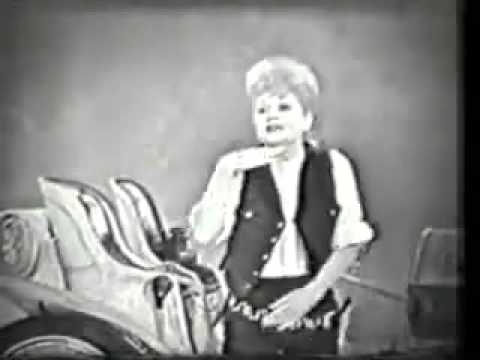
Review: what the lyrics are really doing
“Wildcat” (1960) is an oil-boom fairy tale with grit under its fingernails. The plot is simple: Wildy Jackson arrives in a 1912 border town, talks her way into a drilling crew, and refuses to be laughed out of her own ambition. The lyric job is less simple. Carolyn Leigh has to make Wildy sound tough without turning her into a cartoon, romantic without turning her into a punchline, and musical without pretending her star is a trained Broadway belter.
That constraint becomes the show’s secret engine. Leigh’s smartest lines are built like vaudeville patter: crisp, percussive, funny on contact. The songs don’t float; they jab. And when the score wants warmth, Cy Coleman leans on swing and bounce rather than long, operatic phrases. Even the big hit, “Hey, Look Me Over,” is a sales pitch masquerading as confidence. It is a character introduction, an audition for the town, and a public dare, all packed into a tune that can survive a limited range.
The show’s lyrical themes are not subtle, because the setting isn’t subtle. Money is religion. Oil is the town’s weather. Romance is a negotiation with witnesses. Wildy’s language keeps landing on the same idea: agency as a performance. She must be louder than the men, funnier than the gossip, and stubborn enough to look like certainty. The lyrics keep asking: if you act fearless long enough, does it become real?
Listener tip: if you only have time for three tracks, do “Oil!” for the town’s appetite, “Hey, Look Me Over” for Wildy’s self-invention, and “Tippy, Tippy Toes” for the show’s best joke about respectability.
How it was made
“Wildcat” arrived as a classic Broadway star vehicle with an unusually modern production problem: the star was already a national icon with a very specific audience expectation. N. Richard Nash’s book was built around a brassy heroine, but Nash originally imagined her much younger. Once Lucille Ball committed to starring and financing, the role was rewritten to fit her and the project’s business math. Desilu, Ball’s company, invested heavily, and the production carried the extra pressure that comes with a celebrity-led capitalization plan.
Then there was the musical reality. Cy Coleman later described the songwriting challenge as writing for a performer with “five good notes.” Instead of hiding that, Coleman and Leigh wrote toward it. You can hear the strategy on the cast album: short phrases, comic emphasis, rhythmic clarity, and punchy rhetorical turns that let Ball “act” the song more than “sing” it. In other words, the lyrics are engineered for personality delivery, not vocal acrobatics.
The Broadway production opened December 16, 1960 at the Alvin Theatre, directed and choreographed by Michael Kidd. Behind the curtain, the story got messier: illness-related hiatuses, attempted shutdown-and-reopen plans, and the practical impossibility of pausing a Broadway orchestra payroll for long stretches. That turbulence matters for the soundtrack, too. The cast recording is not just a souvenir; it is the cleanest version of a show that could not stay stable in performance.
Key tracks & scenes
"Oil!" (Townspeople)
- The Scene:
- Act I opener in Centavo City. A border-town chorus turns desire into civic policy. Staging is typically crowded and kinetic, like the street itself is singing.
- Lyrical Meaning:
- The town’s “want” is the antagonist. The lyric reduces life to one commodity, setting up Wildy’s conflict: she has to beat a whole community at its own obsession.
"Hey, Look Me Over" (Wildy, Janie)
- The Scene:
- Wildy and her sister Janie arrive and introduce themselves in public, like a two-person press release. The number plays best with bright front light and a sense of “new act in town.”
- Lyrical Meaning:
- Wildy markets herself before anyone can define her. The lyric is bravado with a grin, designed to land hard on first hearing and to fit a speaking-singing star.
"You've Come Home" (Joe Dynamite)
- The Scene:
- Joe, the crew foreman, gets a solo that frames him as more than the skeptical love interest. It usually sits in a quieter pocket of the show, away from the town’s racket.
- Lyrical Meaning:
- This is the score giving Joe a private vocabulary. It shifts the romance from bickering to recognition, and it sets up why he cannot fully resist Wildy’s momentum.
"What Takes My Fancy" (Wildy, Sookie)
- The Scene:
- A sparring duet where Wildy and Sookie trade jabs about independence and desire. Staging often leans on physical comedy and quick footwork.
- Lyrical Meaning:
- Leigh writes Wildy’s credo as a joke that doubles as a boundary. The lyric is a manifesto in colloquial language: freedom, said plainly, with no apology ribbon.
"You're a Liar!" (Wildy, Joe)
- The Scene:
- Wildy and Joe collide at peak friction. The song is built for two strong personalities in a small space, like an argument that suddenly finds a melody.
- Lyrical Meaning:
- This is romance as negotiation. The lyric exposes what both characters do when cornered: Wildy escalates, Joe retreats, and the truth sits in the rhythm between them.
"Tall Hope" (Crew)
- The Scene:
- The drillers fantasize about what oil money will buy. This is the show’s purest “workforce chorus,” usually staged with tools, swagger, and a sense of brittle optimism.
- Lyrical Meaning:
- The lyric paints a future built on a maybe. It is the musical’s clearest portrait of how desperation becomes entertainment.
"Tippy, Tippy Toes" (Wildy, Countess)
- The Scene:
- Act II: the Countess coaches Wildy in “lady” behavior before a fiesta. It plays like finishing-school parody, with precise physical business and a wink at class performance.
- Lyrical Meaning:
- The lyric treats etiquette as costume. Wildy is not being civilized; she is being rebranded, and the song makes that absurdity the joke.
"Corduroy Road" (Company)
- The Scene:
- Later Act II, as the party energy curdles and consequences get closer. The mood often darkens, with the ensemble feeling less like celebration and more like fate.
- Lyrical Meaning:
- The lyric turns the town into a pressure chamber. Roads, clothes, and social rules become metaphors for rough texture: you can move forward, but you will feel every inch.
Live updates
Information current as of February 2, 2026. “Wildcat” is not an active Broadway property, but it is very much alive in secondary life. Concord Theatricals lists the show for licensing, with rental materials and orchestra parts available through application. The Original Broadway Cast Recording remains widely available on major streaming platforms, with “Hey, Look Me Over” still functioning as the score’s export: it is the song that escaped the show.
If you are hunting the closest thing to “new” Wildcat content in 2026, it is usually archival: cast-album revisits, essays by musical-theatre historians, and the evergreen circulation of that Ed Sullivan clip, which has become, for many fans, the show’s de facto trailer.
Notes & trivia
- Broadway engagement: opened December 16, 1960 and closed June 3, 1961 after 171 performances, with illness-related hiatuses documented in production records.
- Setting: Centavo City, a border town, in 1912.
- Creative core: music by Cy Coleman, lyrics by Carolyn Leigh, book by N. Richard Nash; directed and choreographed by Michael Kidd.
- “Hey, Look Me Over” was written as a high-stakes first impression song and became the show’s enduring standard, widely covered beyond theatre.
- Multiple songs were cut after opening night, including “Wildcat” and “That’s What I Want for Janie,” per song lists and production documentation.
- The cast album was issued by RCA Victor (often cataloged as LOC-1060) and preserves a cleaner narrative arc than the show’s later performance turbulence.
- Audio history note: the cast recording is frequently titled in reissues with Lucille Ball’s name foregrounded, a marketing choice that says the quiet part out loud.
Reception
Critics tended to agree on two things: the score had pop and professionalism, and the evening leaned hard on Ball’s charisma. The problem was expectation management. Audiences arrived primed for Lucy Ricardo, while the show asked them to accept a tougher, less cuddly con artist chasing an oil well. When Ball reportedly adjusted her performance to meet the crowd halfway, it underlined the show’s central irony: Wildy is a woman performing toughness, and Ball was a star performing “Ball.”
“A tremendous disappointment,” while praising the score as “bright and pleasant.”
Richard Watts, New York Post (as quoted in Ron Fassler’s 2025 essay)
A star-driven 1960 gamble that framed Coleman’s first Broadway moment under intense commercial pressure.
The Wall Street Journal (2015)
“Plagued by problems almost from the start,” despite a “sparkling score.”
Playbill (feature on the show’s anniversary)
Awards
- Tony Awards: the official 1961 nominations list does not include “Wildcat,” and it did not win major Broadway awards in its original run.
- Legacy award, unofficial: “Hey, Look Me Over” became the hit that outlived the production, entering the larger pop-vocal repertoire through cover versions.
Quick facts
- Title: Wildcat
- Year: 1960 (Broadway opening December 16, 1960)
- Type: Musical comedy
- Book: N. Richard Nash
- Music: Cy Coleman
- Lyrics: Carolyn Leigh
- Director / choreographer: Michael Kidd
- Original Broadway theatre: Alvin Theatre (now the Neil Simon Theatre)
- Setting: Centavo City, 1912
- Breakout song: “Hey, Look Me Over”
- Cast recording: Original Broadway Cast Recording (RCA Victor; commonly reissued and streamed)
- Licensing: Available for production licensing via Concord Theatricals
Frequently asked questions
- Who wrote the lyrics for “Wildcat”?
- Carolyn Leigh wrote the lyrics, with music by Cy Coleman and a book by N. Richard Nash.
- Is “Wildcat” the show where “Hey, Look Me Over” came from?
- Yes. The song was introduced in “Wildcat” and became the score’s lasting standard through covers and concert performance.
- Why do the lyrics feel so conversational?
- Because they are built for character delivery and comic emphasis. The writing leans on rhythm, punch lines, and clear intention rather than long, rangy melodic lines.
- Did “Wildcat” run long on Broadway?
- No. It ran 171 performances (December 1960 to June 1961), with documented hiatuses linked to Lucille Ball’s health.
- Is the cast album the best way to experience the show today?
- For most listeners, yes. The Original Broadway Cast Recording preserves the songs and the show’s basic storytelling without the production’s later instability.
- Can I legally read the full lyrics online?
- Full lyrics are typically copyright-controlled. For authorized text, use licensed materials from the rights-holder or official printed editions when available.
Key contributors
| Name | Role | Contribution |
|---|---|---|
| Carolyn Leigh | Lyricist | Wrote sharp, rhythm-forward lyrics that prioritize character punch and comic timing. |
| Cy Coleman | Composer | Delivered a swing-smart score and shaped songs to suit a celebrity performer’s vocal profile. |
| N. Richard Nash | Book writer | Built the oil-town narrative framework and adapted the central heroine to a star-led production model. |
| Michael Kidd | Director / choreographer | Staged the show with athletic musical-comedy craft, balancing vaudeville energy and romantic plot. |
| Lucille Ball | Original star (Wildy Jackson) | Anchored the production’s identity and shaped how the show’s songs were written, marketed, and remembered. |
References & Verification: Production dates and hiatus notes verified via IBDB. Plot, song list, and background financing details cross-checked with production summaries and historical notes. Track list and album availability verified via Apple Music and Masterworks Broadway’s album notes. Licensing availability verified via Concord Theatricals. Songwriting constraint quote about Ball’s range and cover-history notes verified via “Hey, Look Me Over” documentation. 1961 Tony nominations checked against the official Tony Awards nominations list.