White Christmas Lyrics – All Songs from the Musical
White Christmas Lyrics: Song List
- Act 1
- Overture
- Happy Holidays
- White Christmas
- Let Yourself Go
- Love and the Weather
- Sisters
- The Best Things Happen When You Are Dancing
- Snow
- What Can You do With A General?
- Let Me Sing and I AM Happy
- Count Your Blessings
- Blue Skies
- Act 2
- I Love A Piano
- Falling Out of Love
- Love , You didn't Do Right By Me
- How Deep Is The Ocean?
- We'll Follow the Old Man
- I've Got My Love to Keep Me Warm
About the "White Christmas" Stage Show
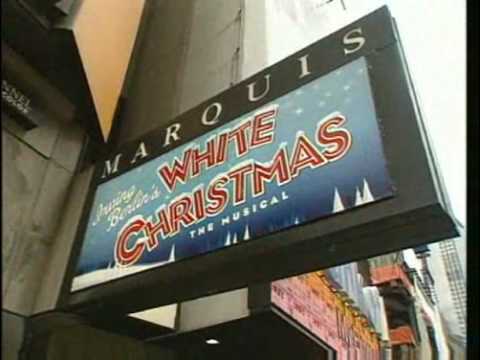
Libretto wrote P. Blake & D. Ives. Songs composed by Irving Berlin. The world opening night was in the mid of 2000 in Muny Theater. Director C. Repole & choreographer T. Walsh have created this performance. This play included the following actors: H. Keel, K. Mason, L. R. Reams, L. Teeter & L. Kennedy. In the last two months of 2004, the histrionics was held in Currant Theatre. This version had director W. Bobbie & choreographer R. Skinner. Histrionics involved: J. Denman, A. Barzee, M. Patterson, C. Dean, B. d'Arcy James & H. R. Kornfeld. In 2006-2007 started the first Britain voyage with the following cast: C. McLachlan, R. Stanley, E. K. Nelson & T. Flavin. In 2007-2008 was started the 2nd UK voyage. From November 2008 to January 2009 was exhibited the Broadway production, with 12 preliminaries & 53 regular shows. This resurrection had been developed by R. Skinner & W. Bobbie. The actors’ list consisted of: S. Bogardus, J. Denman, K. O'Malley & M. Patterson.From Nov. 2009 to Jan. 2010, the Marquis Theatre hosted an updated version of the show. There were 13 preliminaries & 51 regular performances. The actors’ list was: J. Clow, T. Yazbeck, M. Davi & M. Errico. In 2009-2010 was started the third UK tour with the following actors: A. Jones, S. Shaw, A. Cooper, L. Plowright & R. Stanley. In 2010-2011 took place the fourth UK voyage with actors: T. Chambers, A. Cooper, R. Stanley & L. Bowden. In November 2014, Dominion Theatre hosted the premiere of West End performance. The play had cast: T. Chambers, A. Jones, R. Stanley & L. Bowden. In 2014-2015 was started the first North American voyage. Production realized director & choreographer R. Skinner. The musical had this cast: J. Benton, J. Clow, K. Davidson & T. Moldovan. The show was nominated for several awards.
Release date: 2008
"White Christmas" – The Musical Guide & Song Meanings
Review
“White Christmas” (the stage musical) has a straightforward job: turn a beloved film into a reliable holiday-night-out without flattening Irving Berlin into background music. It mostly succeeds by leaning into what Berlin did best: lyrics that sound conversational, then land like a clean rim-shot. The show is a two-couple comedy with a feel-good mission, but the score carries the real persuasion. When the book is busy lining up entrances and misunderstandings, Berlin is quietly doing character work through diction, internal rhyme, and the way a melody makes a sentence feel inevitable.
Berlin’s lyric voice is disarmingly plain. He writes in short units that performers can throw away or savor, which is why this musical plays well in big houses and dinner theatres alike. Songs like “Count Your Blessings Instead of Sheep” are structured as comfort you can sing yourself into. Meanwhile the comic numbers (“I Love a Piano,” “Let Me Sing and I’m Happy”) are engineered to create momentum: they are not just entertainment; they are scene shifts in disguise. And when the title song arrives, it functions like a communal memory cue. The audience tends to lean in, because most of them have been carrying that hook for years.
Musically, this is a choreography-first evening. The major set pieces are built to justify dance, especially tap. That matters dramaturgically: the story is about performers solving problems the way performers do, by putting on a show. The score keeps rewarding that premise with numbers that feel like rehearsals turning into performances in real time.
How It Was Made
The Broadway “White Christmas” that many people date to 2008 arrived after years of seasonal “sitdown” runs in major cities. The show’s stage life accelerated in the mid-2000s as producers treated it like a repeatable holiday attraction, testing it in regional markets before bringing it to New York. A Ghostlight Records album (released in 2006) helped give the stage version an audio identity long before the Broadway engagement, which is unusual for a show that trades so heavily on familiarity.
There is also a second origin story hiding in plain sight: the title song itself. “White Christmas” began as a film song for “Holiday Inn” in 1942, and it went on to win the Academy Award for Best Original Song. The lyric is famously simple, which is why it travels. Berlin understood that nostalgia works better when you do not over-explain it. The song suggests a whole emotional weather system with very few words, and performers can color it as private longing or public ritual depending on the scene.
Berlin’s working methods became part of his mythology. Accounts from recent theatre writing about his process describe him packing feathers and felt into a piano to keep his late-night composing quieter. Whether you treat that as anecdote or as a metaphor, it fits: Berlin’s writing often sounds effortless, and effortlessness takes engineering.
Key Tracks & Scenes
"Happy Holiday / White Christmas (Pre-Reprise)" (Bob, Phil, Ralph, Ensemble)
- The Scene:
- A WWII-era performance frame. Bright stage lights inside the story, with uniformed bodies and showbiz polish trying to keep morale upright.
- Lyrical Meaning:
- The show declares its thesis early: entertainment is a public service. “Happy Holiday” is pep talk; “White Christmas” is the ache underneath the pep talk.
"Sisters" (Betty, Judy)
- The Scene:
- A dressing-room or backstage-adjacent pocket of warmth. Softer light, fewer bodies, the rare moment where performance drops into family rhythm.
- Lyrical Meaning:
- The lyric is deliberately plain because the relationship is the point. It sells the Haynes sisters as a unit, which later raises the stakes when romance threatens to separate them.
"The Best Things Happen While You're Dancing" (Phil, Judy, Ensemble)
- The Scene:
- A dance-floor seduction played as a lesson. Movement becomes the flirtation language, with the ensemble shaping space like a spotlight you can step into.
- Lyrical Meaning:
- This is Berlin’s cleverest kind of romantic lyric: it makes falling in love sound like a social skill. The characters hide sincerity inside showmanship.
"Snow" (Bob, Phil, Betty, Judy, Ensemble)
- The Scene:
- Vermont arrival. The stage turns into a postcard: chill air implied by lighting, breathy orchestration, and bodies leaning together like they are sharing heat.
- Lyrical Meaning:
- The lyric turns weather into permission. Snow means the characters can stop running and start nesting, at least for a scene.
"Count Your Blessings Instead of Sheep" (Bob, Betty)
- The Scene:
- Late-night quiet, often staged with a dim wash and minimal movement. This is where the show stops selling spectacle and risks intimacy.
- Lyrical Meaning:
- Comfort becomes courtship. The lyric frames love as steadiness, not fireworks, and it gives the relationship moral weight in a show built on performance.
"Blue Skies" (Bob, Ensemble)
- The Scene:
- A show-within-the-show release valve. Brighter color, stronger tempo, choreography that announces, “Yes, we are doing the classic now.”
- Lyrical Meaning:
- Optimism as strategy. The lyric is not naive; it is a decision to perform happiness until the room believes it.
"I Love a Piano" (Phil, Judy, Ensemble)
- The Scene:
- A comic explosion, usually staged like a musical act hijacking the narrative. Tap rhythms and crisp group formations turn the inn into a nightclub.
- Lyrical Meaning:
- The lyric is a manifesto for performers: joy is a craft, and instruments are accomplices. It is also character exposition. Phil is happiest when he is working.
"White Christmas" (Bob, Company)
- The Scene:
- The climactic communal number. Snowfall effects often arrive with a deliberate “here it comes” pause, so the audience can register the tradition they paid for.
- Lyrical Meaning:
- The lyric’s power is its restraint. It never demands. It suggests. That suggestion leaves room for every spectator’s personal version of the holiday.
Live Updates
Information current as of 2 February 2026. “White Christmas” remains a working seasonal property rather than a museum piece. Licensing through Concord Theatricals keeps the show circulating, and the evidence is in the calendars: major regional houses continue to mount it as a marquee holiday run, with performances extending into early 2026 in some venues.
Three current examples illustrate the model. Chanhassen Dinner Theatres lists “White Christmas” on its 2025-26 main stage from November 14, 2025 through February 7, 2026. Goodspeed Musicals scheduled “Irving Berlin’s White Christmas” from November 14 through December 31, 2025. And Paramount Theatre Aurora lists a “Broadway Series” engagement on January 2, 2026.
Practical listening advice for 2026 audiences: if you want the show’s stage architecture in one clean line, the Ghostlight cast album track list is a useful map because it follows the stage sequence of the major numbers. If you mainly want “the hits,” you can cherry-pick, but the show works best when you hear how “Snow” flips the story into Vermont mode and how “Count Your Blessings” slows the temperature down before the second-act showbiz sprint.
Notes & Trivia
- The Broadway engagement opened November 23, 2008 at the Marquis Theatre and closed January 4, 2009 (12 previews, 53 performances).
- IBDB lists a return engagement at the Marquis Theatre running November 22, 2009 through January 3, 2010.
- The stage musical’s book is credited to David Ives and Paul Blake, using Irving Berlin’s music and lyrics.
- Ghostlight Records released a stage cast recording on October 17, 2006, years before the Broadway run, with a track list that matches the stage score’s core structure.
- “White Christmas” (the song) was written for the 1942 film “Holiday Inn” and won the Academy Award for Best Original Song.
- Guinness World Records has credited Bing Crosby’s “White Christmas” recording with sales figures that place it among the best-selling singles ever.
- Recent theatre writing about Berlin’s composing habits describes him muffling a piano with feathers to keep late-night writing quieter, a small detail that matches how engineered his “simple” songs can be.
Reception
Reviews tend to agree on one blunt point: the Berlin catalog is the main attraction, and the production rises or falls on whether the staging earns those songs rather than merely presenting them. When it works, it works as crowd-pleasing craft, with choreography and scenic transitions doing the heavy lifting. When it does not, you feel the book straining to connect highlights that were born in different decades and different media.
“The producers were right to add Irving Berlin’s name to the title since the tunesmith’s work is the major attraction.”
“About as fresh and appealing as a roll of Necco wafers found in a mothballed Christmas stocking.”
“The visuals, too, are wonderful, starting with Anna Louizos’s stellar scenic design.”
Quick Facts
- Title: Irving Berlin’s White Christmas
- Year (Broadway): 2008
- Type: Musical comedy
- Book: David Ives; Paul Blake
- Music and Lyrics: Irving Berlin
- Based on: Paramount Pictures’ 1954 film “White Christmas” (screenplay credited to Norman Krasna, Norman Panama, Melvin Frank)
- Broadway venue and dates: Marquis Theatre, November 23, 2008 to January 4, 2009
- Return engagement: Marquis Theatre, November 22, 2009 to January 3, 2010
- Selected notable placements: “Snow” as the Vermont switch; “Count Your Blessings Instead of Sheep” as the intimacy reset; “I Love a Piano” as a second-act dance engine; “White Christmas” as the communal finale
- Label / album status: Ghostlight Records stage cast recording released October 17, 2006; widely available via major platforms and the Ghostlight store
- Rights and licensing: Concord Theatricals (current licensing portal)
Frequently Asked Questions
- Who wrote the lyrics for “White Christmas” (the musical)?
- Irving Berlin wrote the music and lyrics. The stage musical’s book is credited to David Ives and Paul Blake.
- Is the stage musical the same as the 1954 film?
- It is an adaptation built around Berlin songs associated with the film’s world. The stage version also emphasizes dance, especially tap, to justify the show-within-the-show structure.
- Where does “Snow” land, dramatically?
- It is the story’s hinge: the moment the action commits to Vermont and the tone shifts from touring-show chaos to holiday refuge.
- Is there a good album for the stage version?
- Yes. Ghostlight released a cast recording in 2006 with the stage show’s major numbers in sequence, which makes it useful as a listening roadmap.
- Is “White Christmas” still being staged in 2025 and 2026?
- Yes. It continues as a seasonal mainstay in regional theatres and other licensed productions, with runs that often cluster from mid-November through late December and sometimes into early January or February.
Key Contributors
| Name | Role | Contribution |
|---|---|---|
| Irving Berlin | Composer; lyricist | Wrote the core catalog of songs that define tone, character, and the audience’s emotional memory. |
| David Ives | Book writer | Shaped the stage structure and comedic pacing around the film’s premise and Berlin numbers. |
| Paul Blake | Book writer; producer (credited in production materials) | Helped develop the stage adaptation and its seasonal producing model. |
| Walter Bobbie | Director (credited for the stage version) | Built a Broadway-ready staging language that keeps scenes moving toward dance events. |
| Randy Skinner | Choreographer | Anchored the show in tap-forward musical theatre craft, turning nostalgia into kinetic spectacle. |
| Larry Blank | Orchestrator | Translated Berlin’s songs for a modern theatre pit while keeping the mid-century sheen. |
| Bruce Pomahac | Vocal and dance arrangements | Helped the show’s ensemble sound and move like a touring act that can sell a big finale. |
| Rob Berman | Music director (credited) | Kept the score’s swing and tempo discipline tight enough for dance-driven storytelling. |
| Anna Louizos | Scenic designer (credited) | Delivered the “postcard” transitions that make the Vermont world feel immediate. |
| Ken Billington | Lighting designer (credited) | Used warmth and winter contrast to cue mood shifts quickly, especially around ballads and finales. |
| Carrie Robbins | Costume designer (credited) | Supported the show-within-the-show frame and the period fantasy audiences expect. |
| Acme Sound Partners | Sound design (credited) | Balanced dialogue clarity with big ensemble numbers in large seasonal houses. |
Sources: IBDB, Playbill, Concord Theatricals (US and Germany pages), Ghostlight Records, Variety, The New York Times, TalkinBroadway, Guinness World Records, Goodspeed Musicals, Chanhassen Dinner Theatres, Paramount Theatre Aurora, Wikipedia (song and musical background), The Guardian.