Water for Elephants Lyrics – All Songs from the Musical
Water for Elephants Lyrics: Song List
- Act I
- Anywhere/Another Train
- The Road Don’t Make You Young
- Easy
- The Lion Has Got No Teeth
- I Choose the Ride
- Ode to an Elephant
- Just Our Luck
- I Shouldn't Be Surprised
- Silver Stars
- The Grand Spec
- Act II
- Funny Angel
- Zostan
- Squeaky Wheel
- You've Got Nothing, Part 1
- You've Got Nothing, Part 2
- What Do You Do?
- Wild
- Go Home
- I Choose the Ride (Reprise)
About the "Water for Elephants" Stage Show
The critically acclaimed, bestselling novel WATER FOR ELEPHANTS comes to vivid life on Broadway in a unique, spectacle-filled new musical.After losing what matters most, a young man jumps a moving trai,n unsure of where the road will take him and finds a new home with the remarkable crew of a traveling circus, and a life and love beyond his wildest dreams. Seen through the eyes of his older self, his adventure becomes a poignant reminder that if you choose the ride, life can begin again at any age.
Directed by Tony Award nominee Jessica Stone (Kimberly Akimbo), with a book by three-time Tony nominee Rick Elice (Jersey Boys, Peter and the Starcatcher) adapted from Sara Gruen’s novel, and a soaring score by the acclaimed PigPen Theatre Co., WATER FOR ELEPHANTS unites innovative stagecraft with the very best of Broadway talent in an authentic and deeply moving new musical that invites us all to give ourselves to the unknown.
Ever since its debut, WATER FOR ELEPHANTS has enthralled viewers with its captivating fusion of narrative, melodies, and striking visual effects. The show brings the magic of the touring circus to life on stage with amazing circus acts that are skillfully woven into the story. The performance has garnered accolades from critics for its creative use of stagecraft, with lavish sets and lighting intended to immerse viewers in the colorful yet harsh world of the 1930s circus.
Among the rising Broadway talents in the cast of the musical are John Doe as the younger Jacob and Jane Smith as the great equestrian performer Marlena. The production's main strength, which gives the main love tale more nuance, has been emphasized as the protagonists' chemistry.
PigPen Theatre Co.'s score, which combines folk, rock, and classical musical theater components to create a soundscape that enriches the tale, has been praised for its originality and emotional impact. Hits like "Life Begins Again" and "Jump the Train" have grown to be crowd favorites and highlight the band's distinct sound.
Through its outreach initiatives, WATER FOR ELEPHANTS has also had an influence off-stage. By collaborating with nearby educational institutions and civic associations, the musical has offered workshops and educational materials that are connected to its themes. This project has received recognition for its attempts to interact with and support the local community.
With a heartfelt, spectacular, and inventive blend, WATER FOR ELEPHANTS has all the makings of a beloved Broadway classic. The narrative of Jacob and Marlena and the enchanted world of the circus will continue to amaze theatergoers for years to come thanks to the production's continued success in drawing huge audiences and receiving positive reviews.
Release date: 2024
"Water for Elephants" – The Musical Guide & Song Meanings
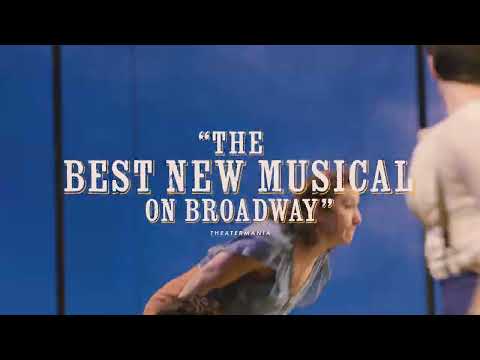
Review
What happens when a folk band gets hired to score a circus, and Broadway insists the circus actually show up? You get a musical that behaves like a high-wire act: it keeps moving because stopping would be dangerous. The book frames everything as an older Jacob replaying the ride in his head, which gives the evening permission to cut hard between tenderness and spectacle without apologizing for the seams. That structure matters because this story is basically two stories at once: a young man’s panic sprint away from grief, and an old man’s attempt to narrate his way out of loneliness.
Lyrically, PigPen Theatre Co. writes in plain American sentences. The recurring idea is motion as self-mythology: trains, roads, tours, “the ride.” It works best when the words feel like found speech, something a roustabout would say between towns, or a ringmaster would weaponize mid-threat. The score is deliberately anti-calliope. Playbill reports PigPen built a palette that pulls from bluegrass, jazz, folk, African American spirituals, plus left-field flavor like Yma Sumac, aiming for “1931 America” heard from a passing train. That mission statement shows up in the writing: tunes arrive like radio signals, then fade as the scenery shifts.
The skeptical take, and it is a fair one: a show with this much acrobatics risks treating songs as breathers. Yet when it clicks, the lyrics are doing the heavier lift. “The Lion Has Got No Teeth” is essentially a thesis about illusion and cruelty. “I Choose the Ride” turns community into a decision rather than a birthright. Even the love material has teeth: “Wild” makes romance feel like a jailbreak, which is exactly what Marlena needs it to be.
Listener tip if you’re starting with the cast album: begin with “Anywhere/Another Train,” jump to “The Road Don’t Make You Young,” then “I Choose the Ride,” then “The Grand Spec.” That sequence gives you plot, aesthetic, philosophy, and the marketing pitch of the Benzini circus, in under 20 minutes. It also tells you what the evening is: roots music as survival gear.
How It Was Made
The project’s long fuse matters. TheaterMania reports producer Peter Schneider approached Rick Elice in 2015; Elice connected personally to the novel’s dual timeline of loss, and to the way an older man watches his younger self make irreversible choices. PigPen, meanwhile, had been writing the music since 2015 as well, per Playbill’s Spring Preview feature, which frames their bond as near-family and their road history as a real-world analogue to circus life. That shared travel DNA explains why the score resists Broadway polish. It wants dust on its boots.
PigPen’s most revealing creative decision is what they did not do: they avoided the “circus music” cliche. In Playbill’s cast-album deep dive, they describe the show as a memory play from the first bars, with fragments of later material bleeding into the opening and motifs that keep promising “the best is yet to come.” That is a composer’s way of saying: the circus is the soundtrack of a life, not just a setting. It also helps the staging. When the puppets arrive in pieces and the scaffolding reconfigures, the music already told you to expect collage.
The pre-Broadway run at Atlanta’s Alliance Theatre in 2023 functioned as a practical lab for integrating circus artists and narrative. By the time the production hit Broadway in 2024, critics were already describing it as a fully integrated circus musical, not a book musical with party tricks attached.
Key Tracks & Scenes
"Anywhere/Another Train" (Jacob)
- The Scene:
- After Jacob’s world collapses, he opts for motion over mourning and hops a train in 1931. The staging often emphasizes precarious balance, with the physical language of climbing and clinging matching the lyric’s insistence on “anywhere but home.”
- Lyrical Meaning:
- The song turns escape into a credo. The key idea is geographic displacement as emotional anesthesia: if you keep moving, grief cannot catch you. It is also the first hint that the show will treat “home” as something you build, not something you inherit.
"The Road Don’t Make You Young" (Company)
- The Scene:
- A bluegrass-flavored travel montage introduces the Benzini crew as they grind through town after town. The instrumentation (harmonica, banjo, fiddle) telegraphs a worn economy, and the physical staging tends to feel like labor dressed up as entertainment.
- Lyrical Meaning:
- This is the show’s first real sociology. The lyric makes touring sound like weather: it happens to you, it takes what it takes, and it ages you. It also quietly recruits Jacob. If the road hurts everyone, then everyone belongs.
"Easy" (Marlena)
- The Scene:
- Marlena tries to soothe her injured horse Silver Star, a moment staged as a fragile lullaby while the horse’s struggle is rendered through aerial movement. The scene is intimate, almost hushed against the industrial look of the circus infrastructure.
- Lyrical Meaning:
- The lyric is a coping spell: naming calm as if naming it can make it real. It also establishes Marlena’s ethics. She is a caretaker trapped in a business that treats bodies as expendable assets.
"The Lion Has Got No Teeth" (August)
- The Scene:
- August lectures Jacob on illusion, with the darker backstage economy surfacing in the same breath as showman patter. It plays like a charm offensive with a knife in its pocket.
- Lyrical Meaning:
- The title image is a neat moral collapse: safety achieved through mutilation, wonder manufactured through violence. The lyric turns the circus into a metaphor for any system that demands cruelty to keep the crowd clapping.
"I Choose The Ride" (Camel)
- The Scene:
- Camel, the veteran worker, offers Jacob a blunt, almost pastoral warning: if you can go back, go back. The song sits in the show like a campfire. It is community speaking in a lower register.
- Lyrical Meaning:
- It reframes belonging as consent. The lyric argues that chosen family is still family, maybe more so because it is chosen. In a story full of people bought and sold, “choose” is a radical verb.
"Ode to an Elephant" (Jacob, Marlena, August, Older Jacob)
- The Scene:
- Rosie arrives as promise and problem, introduced with theatrical restraint: shadow play and partial glimpses before the full reveal later. The scene often reads as reverence, with multiple characters projecting salvation onto an animal.
- Lyrical Meaning:
- The lyric turns Rosie into a mirror. Everyone sees what they need: money, freedom, redemption, proof that gentleness can survive in a brutal enterprise. It is also where Jacob’s vocation and desire finally align.
"The Grand Spec" (August, Company)
- The Scene:
- Act I’s big sell: August whips the crowd into anticipation as the show’s “most spectacular” identity finally arrives. The moment is designed around reveal, including the first full appearance of the elephant puppet amid full-out circus sound.
- Lyrical Meaning:
- This is marketing as music. The lyric demonstrates how August survives: by promising something bigger than the truth. Dramatically, it also clarifies why Jacob and Marlena are trapped. Spectacle pays the bills, until it does not.
"Zosta?" (Jacob, Company)
- The Scene:
- Jacob realizes Rosie responds to Polish commands and the company erupts into a celebratory number that doubles as a training breakthrough. It plays like luck, heritage, and empathy lining up at once.
- Lyrical Meaning:
- “Stay” is both instruction and plea. The lyric makes language a bridge between species, and between Jacob’s past and present. It is also a rebuke to August’s coercion: Rosie responds to patience, not fear.
"Wild" (Jacob & Marlena)
- The Scene:
- A hotel-room escape song, staged as a private exhale from a public life. The lyric’s animal imagery lands differently because the show has already taught you that “wild” is both beauty and danger.
- Lyrical Meaning:
- The romance is framed as feral selfhood, not polite courtship. Marlena is not asking for love; she is asking for oxygen. Jacob is not pursuing a fantasy; he is choosing a risk that finally feels honest.
Live Updates
On Broadway, Water for Elephants opened March 21, 2024, and played its final performance December 8, 2024 at the Imperial Theatre, according to IBDB. The original Broadway cast recording arrived digitally May 17, 2024, with a CD release on August 16, 2024 via Ghostlight Records, per Playbill and Apple Music’s album listing.
Casting note for anyone tracking vocal and lyrical interpretation: Grant Gustin set his departure for September 1, 2024, and Kyle Selig began performances as Jacob on September 3, 2024, reported by Playbill and TheaterMania. That switch is meaningful on album listening because the recording preserves the original Broadway voices even if your live memories come from later in the run.
For 2025 and 2026, the show has a North American tour. Playbill reports the first tour launch begins September 27, 2025 in Baltimore at the Hippodrome, led by Zachary Keller (Jacob) and Helen Krushinski (Marlena), with Connor Sullivan as August and Robert Tully as Mr. Jankowski. Regional venues have already announced 2026 stops, including Hartford dates in early June 2026, reflecting how quickly this title moved from Broadway run to road life.
Practical seat tip for live viewing: because the production’s storytelling relies on vertical action and puppet scale, a front mezzanine or mid-orchestra sightline usually gives you the best read on height and full-stage pictures. If you sit too close under the overhang, you risk losing the top of the rigging and some of the aerial vocabulary.
Notes & Trivia
- The Broadway production ran from March 21, 2024 to December 8, 2024 at the Imperial Theatre, with 301 performances listed by IBDB.
- PigPen told Playbill they intentionally veered away from traditional “circus music,” building a 1931-America sonic collage heard “from a passing train.”
- Playbill’s score notes describe the opening as explicitly “memory play” language, with later motifs (including “Zosta?” and “The Grand Spec”) leaking into early scenes.
- “Zosta?” is Polish for “stay,” and the number hinges on Jacob discovering Rosie understands Polish commands, per New York Theatre Guide’s song guide.
- The cast recording is 19 tracks and 58 minutes, credited to Sh-K-Boom Records LLC and Big Top Music LLC with Ghostlight branding, according to Apple Music.
- Grant Gustin’s final Broadway performance as Jacob was September 1, 2024, and Kyle Selig began September 3, 2024, per Playbill.
- The North American tour begins September 27, 2025 in Baltimore, and published venue announcements include 2026 dates such as Hartford, signaling a multi-city 2025–26 itinerary.
Reception
Critical response tended to agree on one thing: the circus craft is the show’s headline, whether you think the songs match it or merely support it. Some reviewers praised the score’s rootsy personality and its ability to carry motif across a memory structure. Others argued the music functions more like narrative glue than standalone hits. Either way, the lyrics are rarely ignored, because the writing is where the show admits what the spectacle would rather distract you from: coercion, hunger, ownership, and fear.
“PigPen has a knack for showmanship and a keen understanding of what music can do onstage.”
“In Broadway’s ‘Water for Elephants,’ circus parts are good, songs are meh.”
“The main attraction is the pull of the circus itself.”
Quick Facts
- Title: Water for Elephants
- Broadway year: 2024
- Type: Broadway musical adaptation (memory-play framing)
- Book: Rick Elice
- Music & lyrics: PigPen Theatre Co.
- Director: Jessica Stone
- Circus design / co-choreography: Shana Carroll (with choreography/co-choreography by Jesse Robb noted in reporting)
- Signature musical identities: bluegrass and folk textures, jazz color, spiritual inflection, plus recurring motif writing across scenes
- Selected notable placements: “Easy” staged with an aerial-silks depiction of Silver Star’s struggle; “Ode to an Elephant” introduced with shadow play; “The Grand Spec” structured as an Act I reveal culminating in the full Rosie puppet
- Cast album: Water For Elephants (Original Broadway Cast Recording), digital release May 17, 2024; CD release August 16, 2024
- Label/album status: Ghostlight Records (Sh-K-Boom), 19 tracks, 58 minutes
- 2025–26 status: National tour launching September 27, 2025 in Baltimore (cast announced), with 2026 regional dates publicly posted by presenting venues
Frequently Asked Questions
- Who wrote the lyrics for Water for Elephants?
- PigPen Theatre Co. wrote the music and lyrics, with the book written by Rick Elice.
- Is there an official cast recording?
- Yes. The Original Broadway Cast Recording released digitally May 17, 2024, with a CD release on August 16, 2024 via Ghostlight.
- Where does “Zosta?” fit in the story?
- It arrives after Jacob discovers Rosie understands Polish training commands. The song becomes both a breakthrough in the act and a character moment about heritage and empathy.
- Did the Broadway cast change during the run?
- Yes. Grant Gustin played his final performance as Jacob on September 1, 2024, and Kyle Selig began performances on September 3, 2024.
- Is Water for Elephants touring in 2025 or 2026?
- Yes. A North American tour begins September 27, 2025 in Baltimore, with additional 2026 stops announced by venues, including Hartford dates in June 2026.
- What should I listen to first if I only try a few tracks?
- Start with “Anywhere/Another Train,” then “The Road Don’t Make You Young,” “I Choose the Ride,” and “The Grand Spec.” That run covers premise, tone, philosophy, and the Act I sell.
Key Contributors
| Name | Role | Contribution |
|---|---|---|
| PigPen Theatre Co. | Music & Lyrics | Wrote the score and lyric language blending roots textures with motif-driven memory structure. |
| Rick Elice | Book | Adapted Sara Gruen’s novel into a memory-play frame built for theatrical compression and motion. |
| Jessica Stone | Director | Staged the integrated circus-musical form at the Imperial Theatre (following the Alliance tryout). |
| Shana Carroll | Circus design / Co-choreography | Guided the circus vocabulary and its narrative integration. |
| Jesse Robb | Choreography / Co-choreography | Built dance and movement language that bridges musical theatre bodies and circus bodies. |
| Takeshi Kata | Scenic design | Created a reconfigurable scaffolding world that suggests a train and a traveling big top. |
| David Bengali | Projection design | Supported time shifts and travel with projections that complement the memory structure. |
| Bradley King | Lighting design | Shaped the production’s sharp industrial angles and softer dream states. |
| Walter Trarbach | Sound design | Helped keep the lyrics intelligible inside an acoustically busy circus environment. |
| Ray Wetmore & JR Goodman (More Good Productions), Camille Labarre | Puppet design | Designed the animal puppets, including Rosie’s incremental reveal and full-stage presence. |
| Mary-Mitchell Campbell & Ian Kagey | Cast album producers | Produced the Original Broadway Cast Recording releases in 2024. |
Sources: IBDB; Playbill; TheaterMania; New York Theatre Guide; The Washington Post; Time Out; Apple Music; Broadway News; Alliance Theatre; CT Insider.