Victor / Victoria Lyrics – All Songs from the Musical
Victor / Victoria Lyrics: Song List
About the "Victor / Victoria" Stage Show
The preliminaries of the histrionics took place in the mid of 1995 in Chicago. Afterwards, in late summer of 1995, this theatrical opened in Marquis Theatre on mid of the autumn 1995 on Broadway. The performance had 734 main exhibitions & 25 preliminaries. It was closed on 1997’s summer. Musical’s libretto was written by B. Edwards, choreography staged R. A. Marshall, composer – L. Bricusse. Songs’ lyrics made by F. Wildhorn. The following cast was in the play: R. York, G. Jbara, J. Andrews, M. Nouri, R. Ashford, T. Roberts & R. B. Shull.In the period of 1998-1999, the spectacular went into national tour with such cast: T. Tennille, D. Cole, J. Ross, D. L. Mauro & A. J. Irvin. In 1995, the histrionics was televised in Japan. In 2012, the theatrical was also staged in London.
A record amount was spent to produce the staging – 15 million dollars. There are no data about profitability of this production. But, judging by the fact of 700+ runs, it should have been recouped. In 1997, when J. Andrews was in a four-week vacation, the main role in the play performed inimitable Liza Minnelli.
Release date: 1995
"Victor/Victoria" – The Musical Guide & Song Meanings
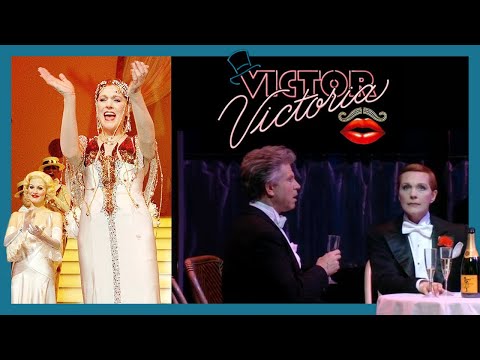
Review: a farce about gender that’s secretly about power
Victor/Victoria is often pitched as a classy 1930s Paris romp, but the musical’s real subject is leverage. Who gets to work. Who gets to be believed. Who can walk into a room and be taken at face value. Leslie Bricusse’s lyrics keep poking at that social math, usually with a grin, sometimes with a wince. The show’s comic engine is disguise, but its emotional engine is hunger: Victoria needs a career, Toddy needs safety, King needs certainty, and Norma needs attention that does not evaporate the moment she stops performing it.
Musically, the score lives in that Mancini lane of brassy nightclub elegance, then swerves when the show needs a Broadway belt release valve. That swerve is partly historical accident: Henry Mancini died before completing the stage score, and Frank Wildhorn came in to add and finish material. The result is a two-author sound, which you can hear most clearly when the show shifts from witty patter and pastiche into full-throated confession. On paper, that should feel stitched together. In practice, it matches the story: the whole plot is a seam.
The best lyric writing happens when the show lets its characters narrate their own self-deception. King’s macho certainty keeps collapsing into panic. Toddy’s jokes are often camouflage for loneliness. Victoria’s “success” is literally a costume she cannot take off in public. If you are listening to the cast album, treat the dialogue tracks as part of the music. The recording was designed to keep the plot legible, and the plot is the point.
How it was made: a film adaptation, a midstream composer change, and a very public awards protest
The stage musical adapts Blake Edwards’ 1982 film (itself a remake of a 1933 German comedy). After the film’s success, a stage version was discussed with Julie Andrews and Robert Preston in mind, but Preston reportedly bowed out early, skeptical about the project’s prospects. The musical finally took shape in 1995 with out-of-town tryouts in Minneapolis and Chicago before opening on Broadway at the Marquis Theatre on October 25, 1995, directed by Edwards with choreography by Rob Marshall.
The score’s backstory is unusually relevant to lyric analysis. Mancini’s music carries the nightclub sheen and cinematic swing people expected from the film. Wildhorn’s added work leans more modern and more direct, especially in the show’s big emotional statements. That split is why some songs feel like they arrive from different emotional decades, and why the show can jump from feather-boas comedy to a serious ballad without apologizing.
Then there is the offstage drama that became part of the show’s legend. In 1996, Julie Andrews withdrew her name from Tony consideration after Victor/Victoria received only her leading-actress nomination. It was part protest, part headline generator, and it hardened the story people told about the production: a star vehicle that also had a deep bench of craft around her.
Key tracks & scenes
"Paris by Night" (Toddy & Les Boys)
- The Scene:
- Chez Lui, a Left Bank club. Low, smoky lighting; sequins and cigarette glow. Toddy works the room like he’s both host and shield, keeping the mood buoyant so nobody looks too closely at anyone’s private life.
- Lyrical Meaning:
- This opener teaches the show’s rule: identity is performance, and performance is survival. The lyrics are breezy, but the subtext is transactional. Paris is “safe” because it’s an agreement.
"If I Were a Man" (Victoria)
- The Scene:
- Toddy’s small apartment. A wet winter night outside, cramped warmth inside. Victoria tries on the idea of masculinity the way she will soon try on a suit, with curiosity and dread.
- Lyrical Meaning:
- It’s a wish song framed as a cost-benefit analysis. The lyric is blunt about privilege: being a man is not romance, it’s access.
"Trust Me" (Toddy & Victoria)
- The Scene:
- Toddy pitches the scheme: Victoria becomes “Count Victor Grazinski,” a man performing a woman. Brighter light, quicker tempo, the feeling of a con being sold with charm and urgency.
- Lyrical Meaning:
- The lyric is persuasion as intimacy. Toddy is asking for trust, but also insisting on control. It’s the show’s first big example of how love and manipulation can share a rhyme.
"Le Jazz Hot!" (Victor & Ensemble)
- The Scene:
- Victor’s debut. Spotlights snap on. The band hits with nightclub brass. The “reveal” is staged as pure spectacle: a voice that does not match the visual logic the audience thinks it understands.
- Lyrical Meaning:
- This number is the show’s thesis in sequins: people believe what they see, until sound rewrites the picture. The lyric keeps the attitude playful so the gender confusion reads as thrilling, not clinical.
"The Tango" (Victor & Norma)
- The Scene:
- A party for Victor’s success. King sets a trap by pushing Norma into a tango with Victor. The lighting gets sharper, more theatrical; a social test disguised as a dance.
- Lyrical Meaning:
- It’s seduction used as interrogation. The lyric and rhythm weaponize intimacy. Everybody is watching, which is exactly why the scene is dangerous.
"Paris Makes Me Horny" (Norma)
- The Scene:
- Hotel-suite comedy with Norma in full brassy mode. Bright, unapologetic lighting; the song lands like a cabaret act that refuses subtlety.
- Lyrical Meaning:
- Norma’s lyrics are a survival tactic. She turns desire into a punchline so she never has to admit she’s afraid of being replaced. It’s funny, then it’s suddenly sad if you listen too closely.
"Almost a Love Song" (King & Victoria)
- The Scene:
- King’s bedroom, after the attraction has become a crisis. The staging tends to isolate them from the party world: softer light, more stillness, fewer jokes.
- Lyrical Meaning:
- The lyric circles commitment while dodging it, because public perception is the real antagonist here. Love is possible; being seen is the problem.
"Living in the Shadows" (Victoria)
- The Scene:
- Act II, after the disguise has stopped being fun. The stage often empties around Victoria. A long piano intro can feel like her thoughts taking the microphone before she does.
- Lyrical Meaning:
- This is the show’s emotional spine, and also its clearest Wildhorn fingerprint: direct, anthemic, built to turn private pain into public sound. The lyric frames fame as a kind of isolation, which is the cost of her “success.”
"Victor/Victoria" (Company)
- The Scene:
- The final nightclub showdown where exposure threatens everything. Fast costume shifts, stage business as misdirection, and Toddy’s theatrical competence used as a rescue rope.
- Lyrical Meaning:
- The finale insists that performance can be protection, not just pretense. The lyric celebrates the con while admitting why the con was necessary in the first place.
Notes & trivia
- Broadway: opened October 25, 1995 at the Marquis Theatre and closed July 27, 1997, after 25 previews and 734 performances.
- Liza Minnelli replaced Julie Andrews during Andrews’ vacation in January 1997; Raquel Welch later took over near the end of the run.
- During Minnelli’s stint, the show swapped out “Crazy World” for a new Act I closer, “Who Can I Tell?” (music and lyrics credited to Bricusse in reporting).
- “Louis Says” (one of the added Wildhorn numbers) was cut early in the Broadway run, per song lists in production records.
- The original Broadway cast album (1995) runs 27 tracks and includes dialogue to keep the story clear on audio.
- The cast album earned a Grammy nomination in the Best Musical Show Album category (39th Annual Grammys, covering 1997 awards).
- A filmed performance of the Broadway production was broadcast on TV in 1995 and has circulated on home video formats; availability varies by region and storefront.
Reception: then vs. now
In 1995, the reception split in a familiar way: admiration for star power and production gloss, skepticism about whether the stage version justified itself beyond the film’s charm. Over time, the show’s reputation has become less about “is it necessary?” and more about “what is it good at?” The answer is consistent: it’s a vehicle for performers who can sell sophistication without losing comedic bite, and a rare mainstream musical that makes queer-coded survival tactics part of the plot instead of window dressing.
The score adds new numbers, including an Act II anthem for Victoria. Variety (review, Oct. 26, 1995)
“I have searched my conscience and my heart.” Julie Andrews, quoted in Playbill (May 8, 1996)
A replacement song “gives Minnelli a standard pop ballad.” Variety (review, Jan. 13, 1997)
Awards
- Tony Awards (1996): Best Actress in a Musical (Julie Andrews), nominated (she withdrew from consideration).
- Drama Desk Awards (1996): Outstanding Actress in a Musical (Julie Andrews), won; Outstanding Featured Actress in a Musical (Rachel York), won.
- Outer Critics Circle Awards (1996): Outstanding New Broadway Musical, won; Outstanding Actress in a Musical (Julie Andrews), won.
- Grammy Awards (39th Annual, 1997): Best Musical Show Album (cast album), nominated.
Live updates (2025-2026)
Victor/Victoria’s 2025-2026 life is not a commercial Broadway revival. It is a licensing title with steady regional visibility. Concord Theatricals actively lists the show for performance rights, with casting parameters and materials access, which is the clearest signal that the piece remains in circulation for theatres that want big comedy, classic Broadway sound, and a star-forward leading role.
Recent production chatter is real, not nostalgic. In spring 2025, Palm Canyon Theatre in Palm Springs mounted the show and drew local critical coverage, a reminder that the musical still functions as a crowd-pleaser when the lead performance is strong and the comedy stays sharp.
If you are hunting for the taped Broadway version, storefront availability changes. One current tracker indicates the 1995 filmed stage production is not consistently available on major subscription streaming, but it is commonly found for purchase on DVD through retail listings. Check your region before you promise anyone a watch party.
Quick facts
- Title: Victor/Victoria
- Broadway year: 1995
- Type: musical comedy; stage adaptation of the 1982 film
- Book: Blake Edwards
- Music: Henry Mancini (with additional musical material by Frank Wildhorn)
- Lyrics: Leslie Bricusse (with additional material credited to Wildhorn on stage)
- Director (original Broadway): Blake Edwards
- Choreographer (original Broadway): Rob Marshall
- Original Broadway venue: Marquis Theatre (New York)
- Run: Oct 25, 1995 to Jul 27, 1997; 25 previews; 734 performances
- Original cast album: Victor/Victoria (Original Broadway Cast Recording), 1995, 27 tracks
- Album label credits: commonly documented as Philips (with storefront listings also appearing under Decca Broadway/Universal family cataloging depending on region)
- Notable song swaps: “Crazy World” replaced by “Who Can I Tell?” during Liza Minnelli’s run; “Louis Says” cut early in the run
- Licensing: Concord Theatricals
Frequently asked questions
- Who wrote the lyrics for Victor/Victoria?
- Leslie Bricusse wrote the lyrics, with additional musical material credited to Frank Wildhorn in the stage version alongside Henry Mancini’s music.
- Where does “Living in the Shadows” happen in the story?
- It appears in Act II after Victoria’s success has trapped her. The song functions as her private reckoning with the cost of living publicly as “Victor.”
- What songs should I start with if I only want the essentials?
- Try “Paris by Night” (world), “If I Were a Man” (premise), “Le Jazz Hot!” (breakout), “Paris Makes Me Horny” (Norma’s comic fuel), and “Living in the Shadows” (emotional center).
- Did the show change during the Broadway run?
- Yes. Records and reporting note that “Louis Says” was cut early, and that “Crazy World” was replaced by “Who Can I Tell?” during Liza Minnelli’s stint in the lead role.
- Is there a cast recording?
- Yes. The 1995 original Broadway cast recording is widely available on major digital music services and includes dialogue to clarify plot beats.
- Where can I license the show?
- Concord Theatricals lists Victor/Victoria for licensing and materials access.
Key contributors
| Name | Role | Contribution |
|---|---|---|
| Blake Edwards | Book; director (original Broadway) | Adapted his film for stage and steered the production’s farce-meets-nightclub tone. |
| Henry Mancini | Composer | Core musical vocabulary: brassy Paris nightlife, cinematic swing, classic comedy shading. |
| Leslie Bricusse | Lyricist | Lyrics balancing sophisticated banter with direct character statements. |
| Frank Wildhorn | Additional musical material | Completed/added stage material after Mancini’s death; signature contribution includes “Living in the Shadows.” |
| Rob Marshall | Choreographer | Dance language that sold both nightclub glamour and comic set pieces. |
| Julie Andrews | Original Victoria Grant | Star performance shaping the show’s vocal and comic profile; central to the show’s public narrative. |
| Tony Roberts | Original Carroll “Toddy” Todd | Comic engine and emotional anchor for the friendship at the story’s core. |
| Michael Nouri | Original King Marchan | Played the macho certainty-to-confusion arc that drives much of the plot tension. |
| Rachel York | Original Norma Cassidy | Scene-stealing comic performance; award-winning featured turn for the Broadway production. |
| Ian Fraser | Music director; vocal arrangements; conductor (album) | Shaped the musical presentation and led the cast recording’s story-forward structure. |
| Thomas Z. Shepard | Cast album producer | Produced the original Broadway cast recording (per album credits reporting). |
References & Verification: Broadway run data verified via IBDB and Playbill Vault. Licensing verified via Concord Theatricals. Cast album existence/track count verified via Spotify and Apple Music storefront pages and reference databases. Song-change reporting and awards verified via Playbill reporting and IBDB song/award records; Outer Critics Circle winner lists cross-checked via an award summary page. 2025 regional-production activity verified via Palm Canyon Theatre reviews. Filmed performance availability context cross-checked via a streaming-availability tracker and retail listings.